
Introduction
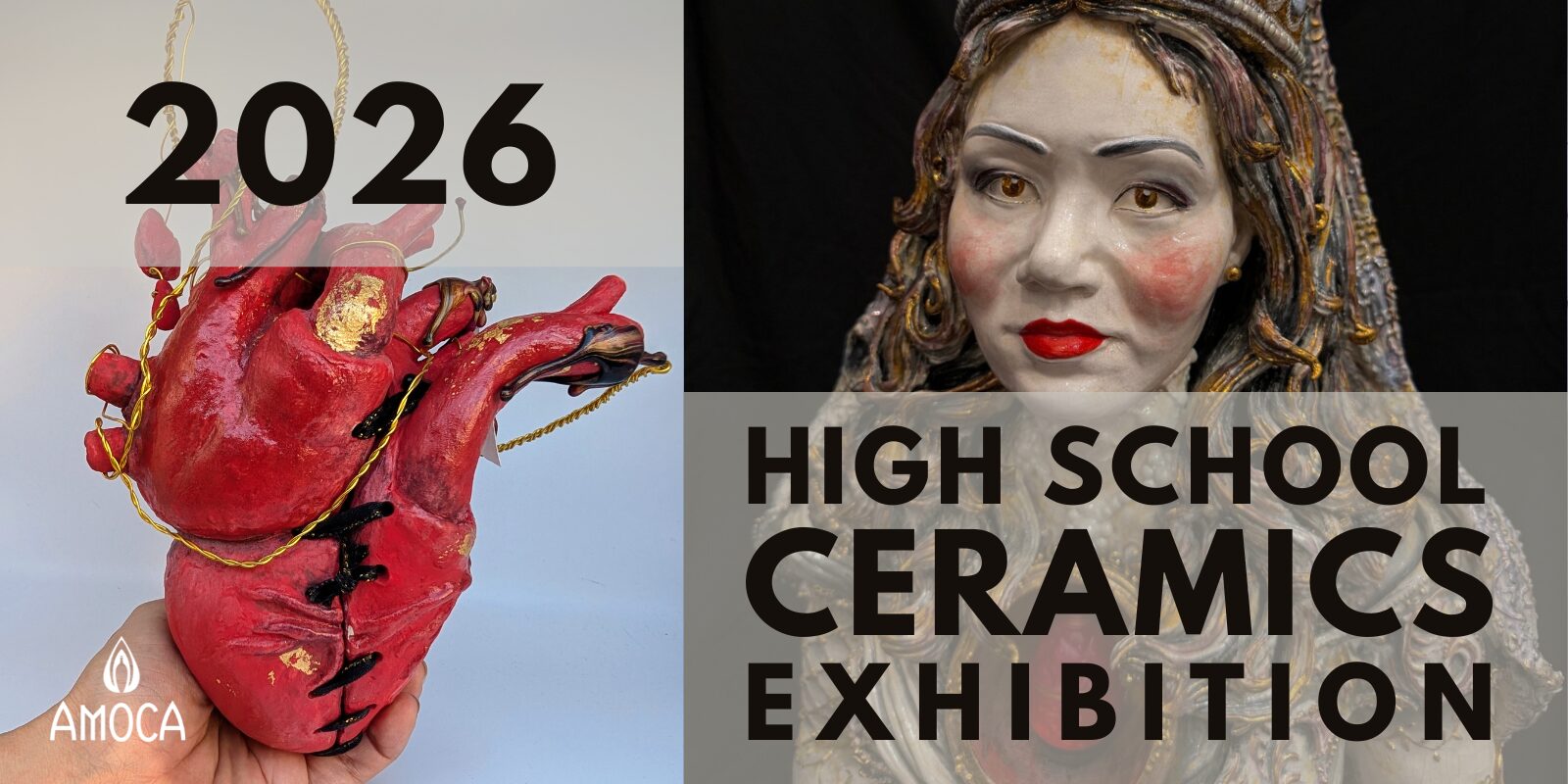
Since 2014, AMOCA has hosted an annual juried exhibition showcasing the remarkable talents of high school students studying the ceramic arts. Starting in 2020, the exhibition has been virtual. This year, the exhibition is virtual with an added in-person component; the winners and finalists for each grade level have been invited to exhibit their pieces at the museum! 325 students submitted over 400 pieces for the 2026 exhibition, and 138 pieces were selected by Museum staff through a collective jury process; the pieces are featured in the virtual exhibition on this page.
To learn more about the program and view past exhibitions, visit the link below.
Teen Council
With support from the Ruth and Joseph C. Reed Foundation for the Arts, AMOCA hosts an internship and professional development group for high school students. Students receive access to exclusive museum areas and events, develop their college resume, meet professional artists, and receive complimentary access to the AMOCA Ceramics Studio. Council membership is free thanks to grant funding.
To learn more and apply to join the program, visit the link below.
Exhibition Acknowledgments
This program generously funded provided, in part, through grants from Ruth and Joseph C. Reed Foundation for the Arts and the DEW Foundation.

Exhibition Awards Ceremony
On Saturday, May 16, 2026 at 10am, AMOCA premiered a pre-recorded awards ceremony that included a presentation of the entire virtual exhibition.
Exhibition Award Winners
9th & 10th Grade
Best of Show: Abby Wildman
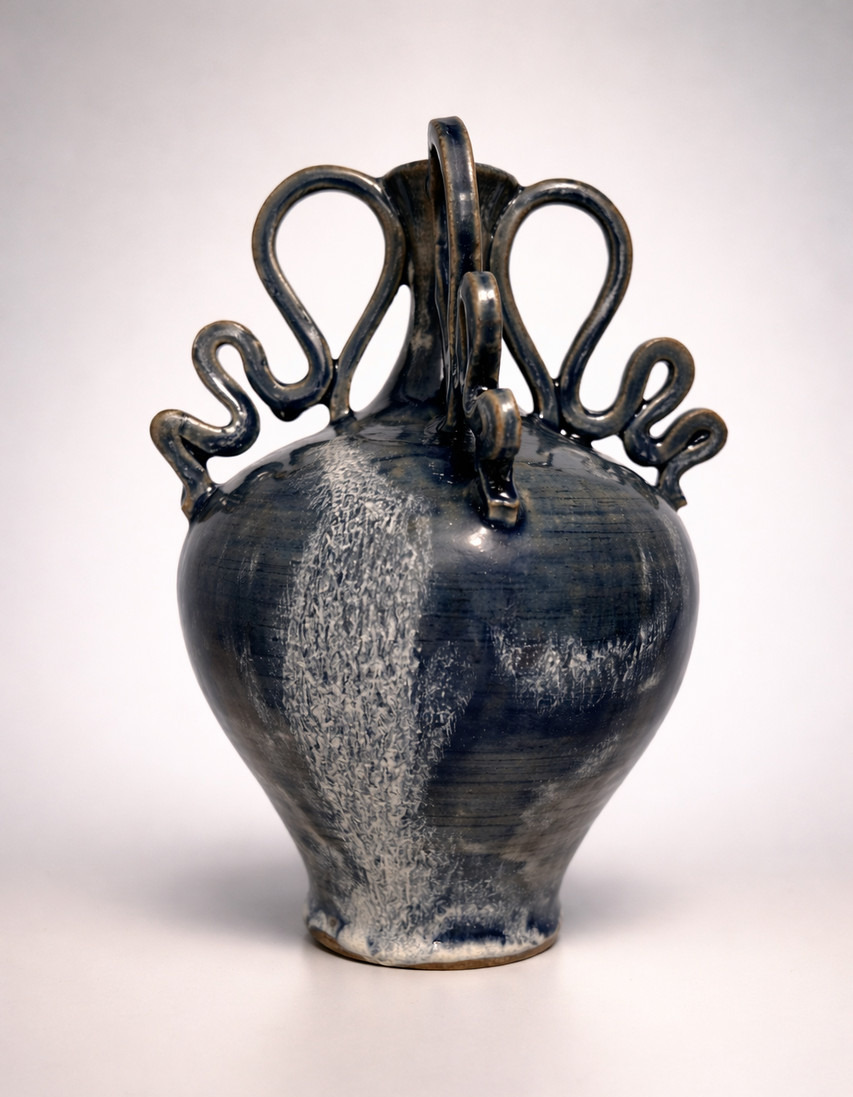
Abby Wildman, Uncontained, 2026. Brown clay, blue and white glaze. 11” x 8” x 8.” Mount Tabor High School, NC.
Honorable Mention: Isis Hernandez
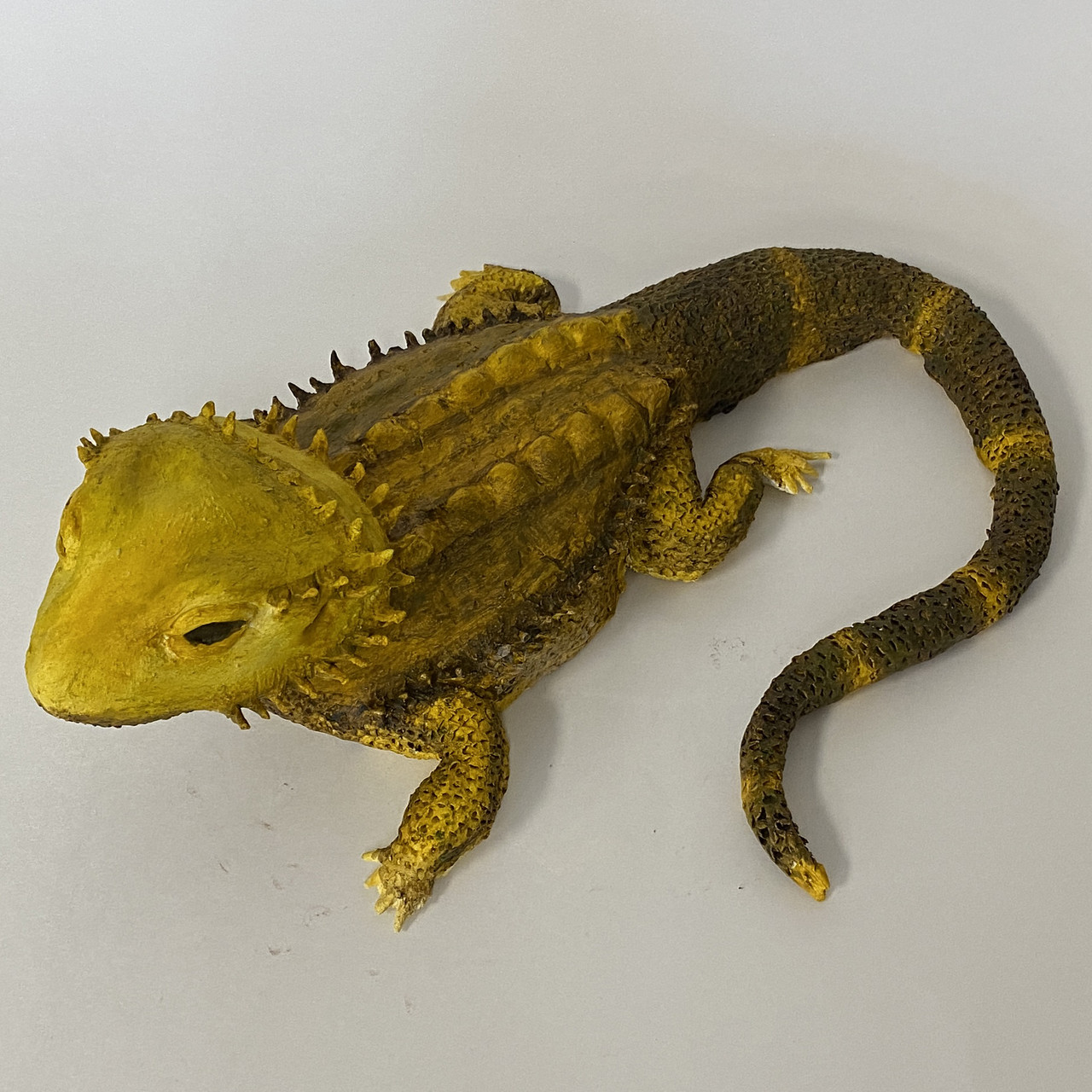
Isis Hernandez, Samson, 2026. Clay, Acrylic Paint. 9″ x 4″ x 3″ Liberty High School, OR.
Honorable Mention: Vedant Kotahwala
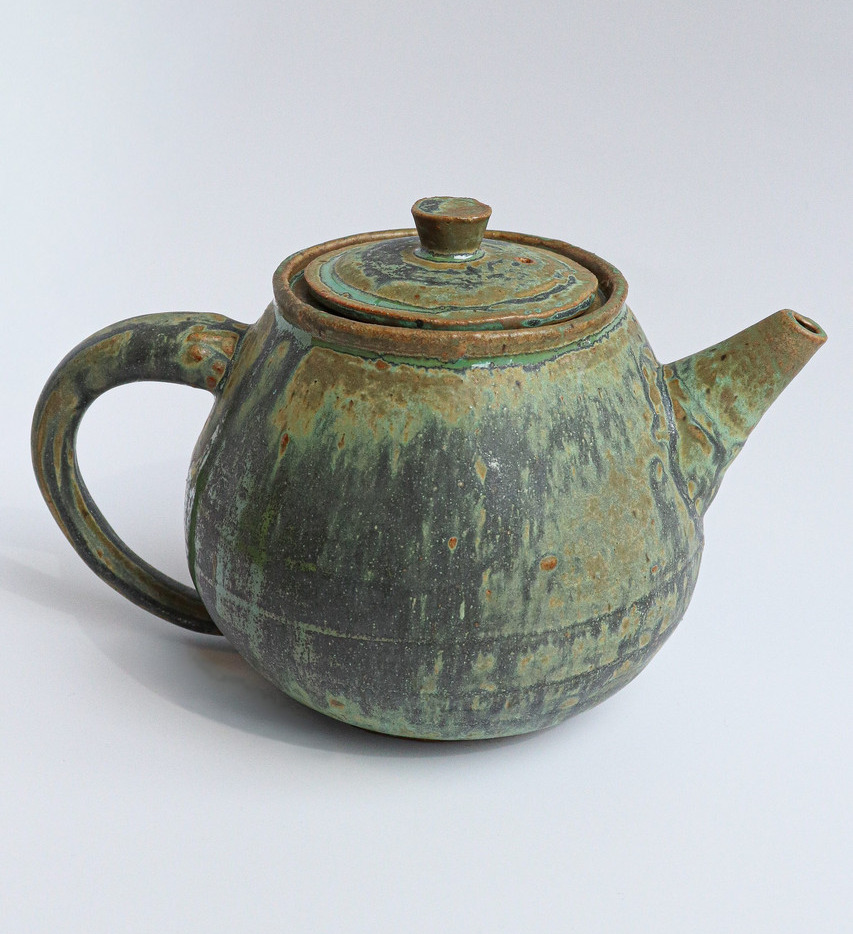
Vedant Kotahwala, Rustic Green Teapot, 2025. Wheel thrown, Brown stoneware, Glaze. 4.5″ x 8.5″ x 5.25.” The Dalton School, NY.
Honorable Mention: Yanji Zhu
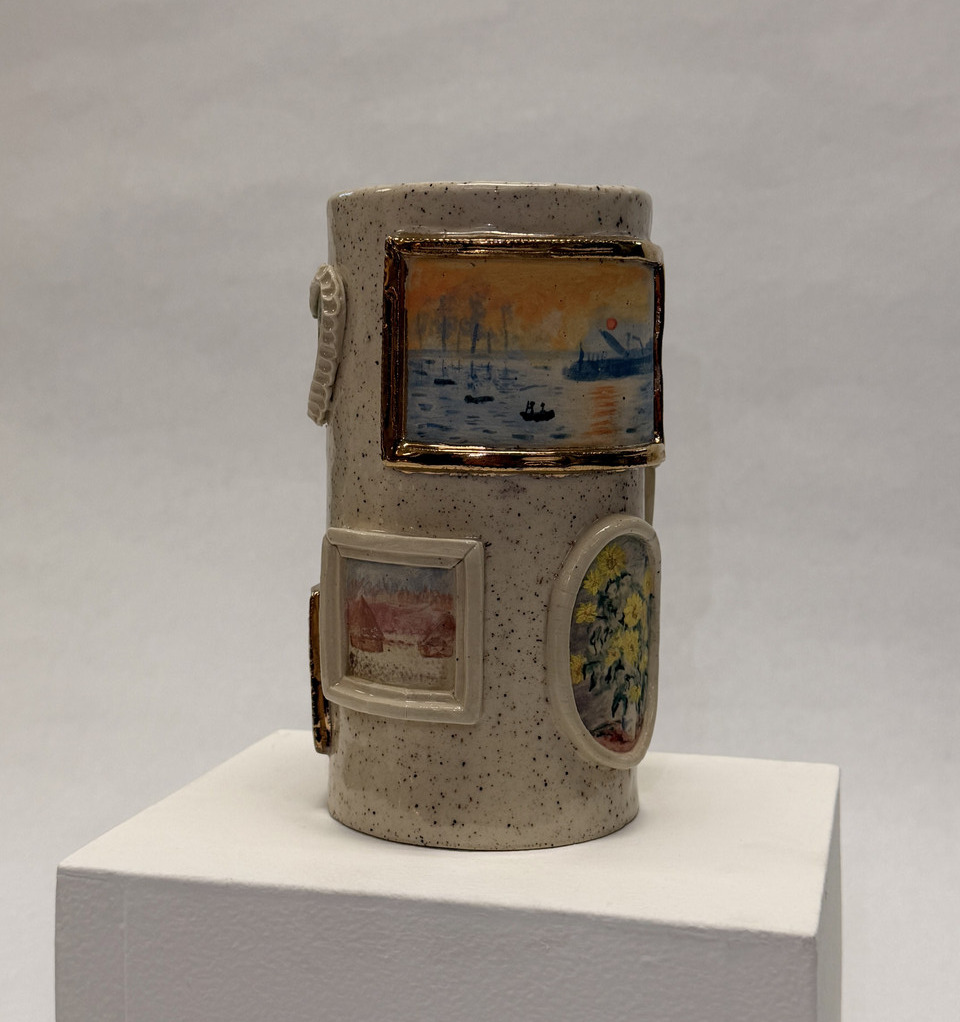
Yanji Zhu, Untitled, 2026. Bmix & speckled clay, underglaze, glaze, luster. 7″ x 3.5″ x 3.5.” Western Christian High School, CA.
11th Grade
Best of Show: Miriam Trevino
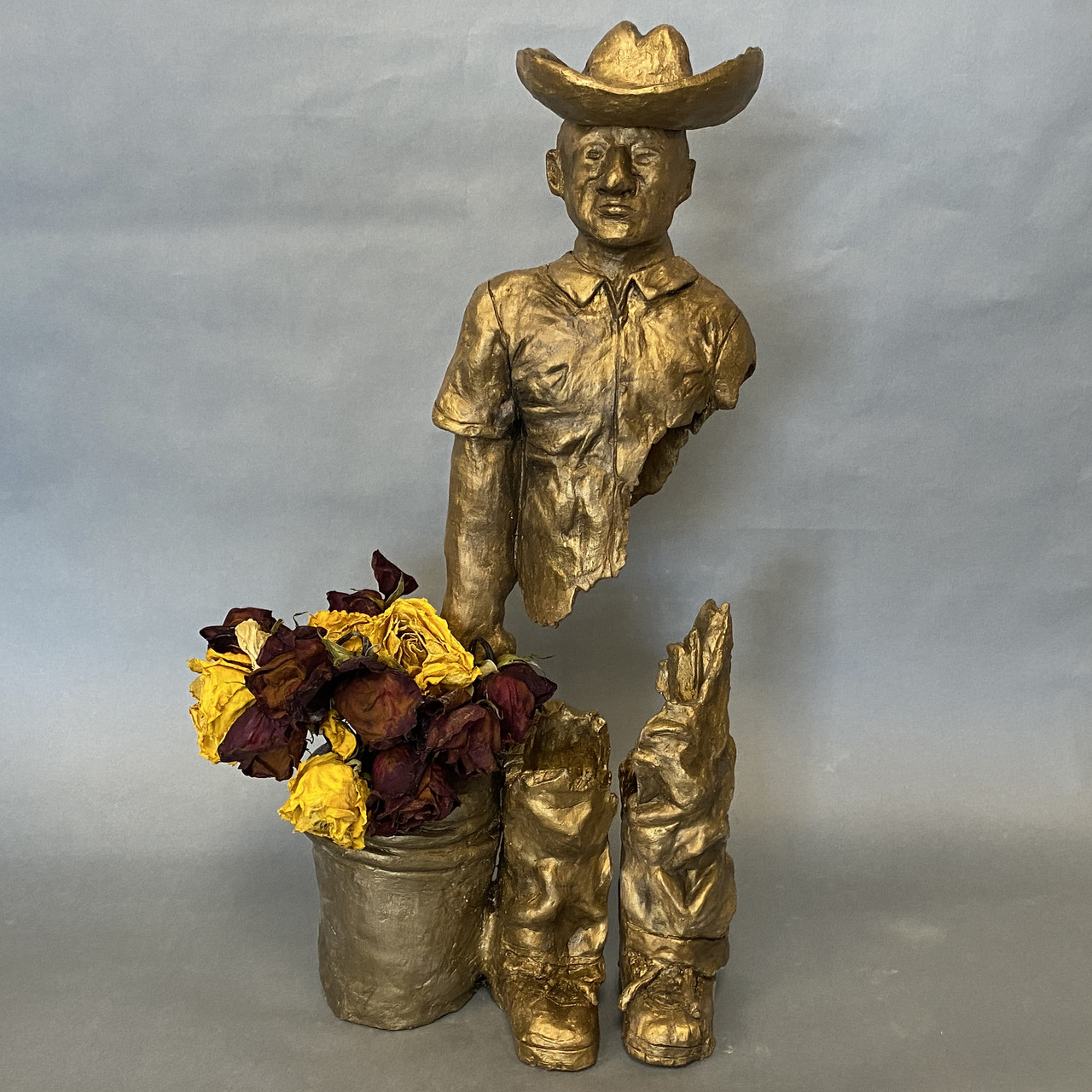
Miriam Trevino, Fractured, 2026. Clay, Metal Rod, Roses, Acrylic Paint. 22” x 10” x 5.” Liberty High School, OR.
Honorable Mention: Sailee Charlu
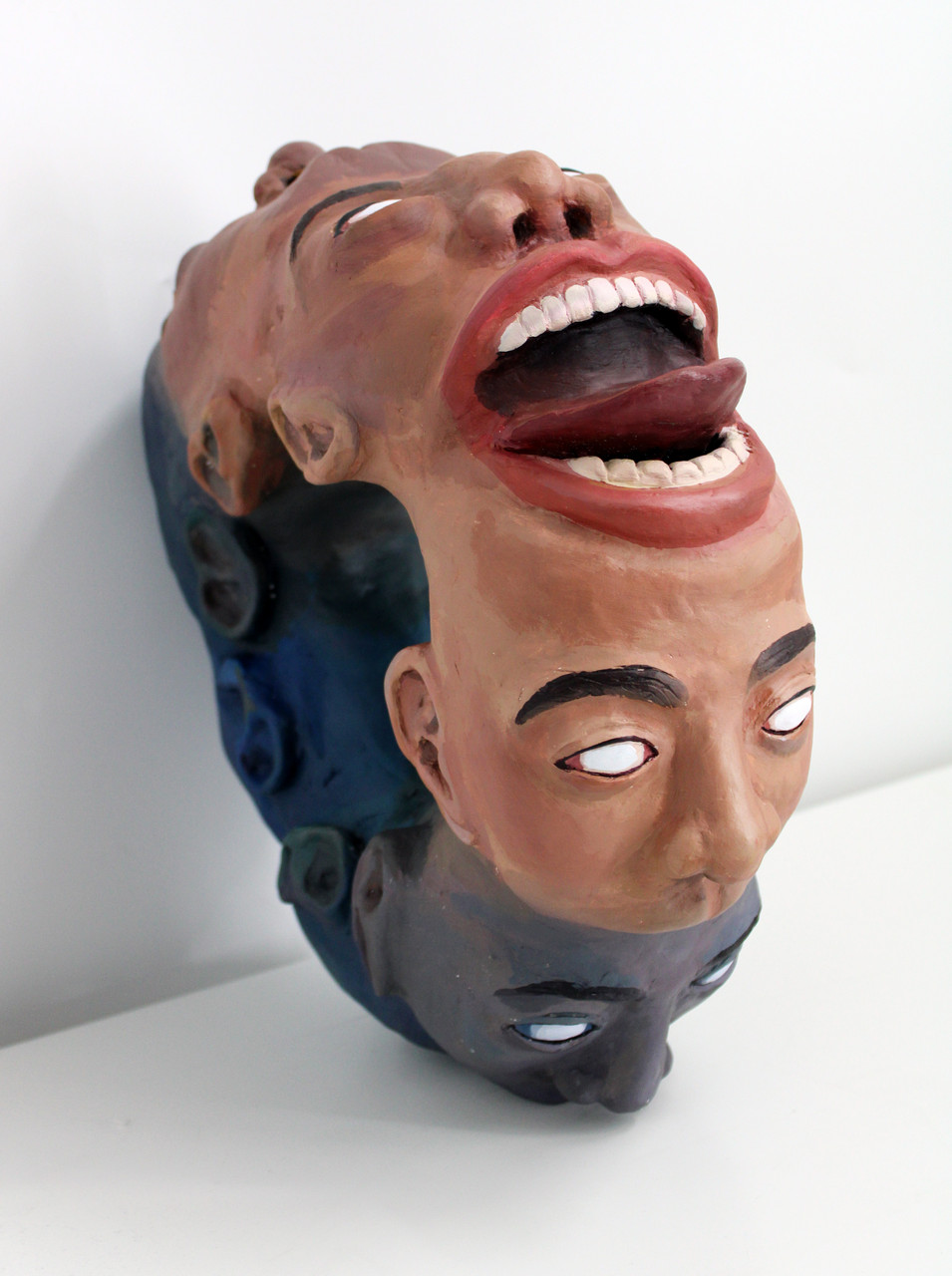
Sailee Charlu, When Silence Turns Blue, 2025. Air dry clay, acrylic paint. 12” x 11” x 6.” Orange County School of the Arts, CA.
Honorable Mention: Conrad Chern
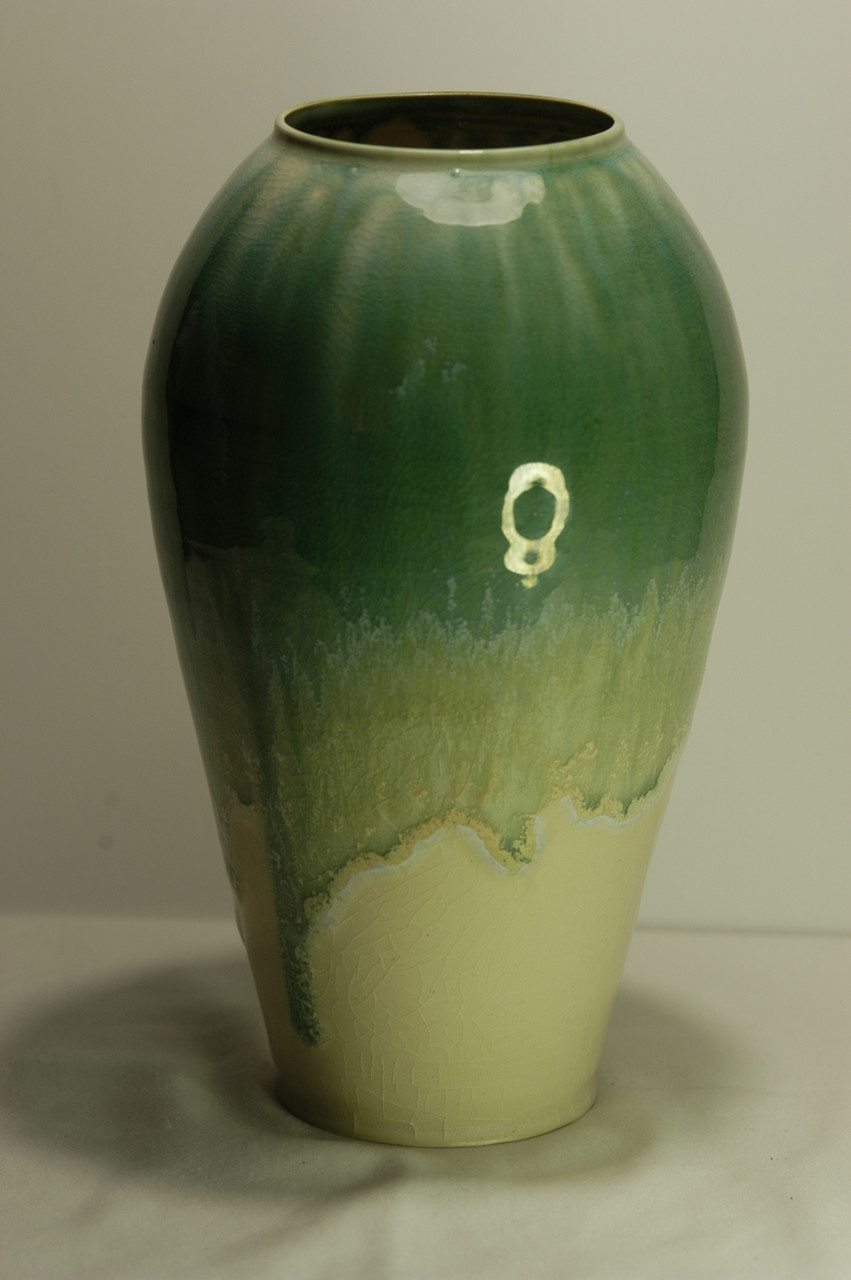
Conrad Chern, When the Tide Leaves, 2025. Ceramic b-mix. 11” x 7” x 7.” Crystal Springs Uplands School, CA.
Honorable Mention: Jake Weiss
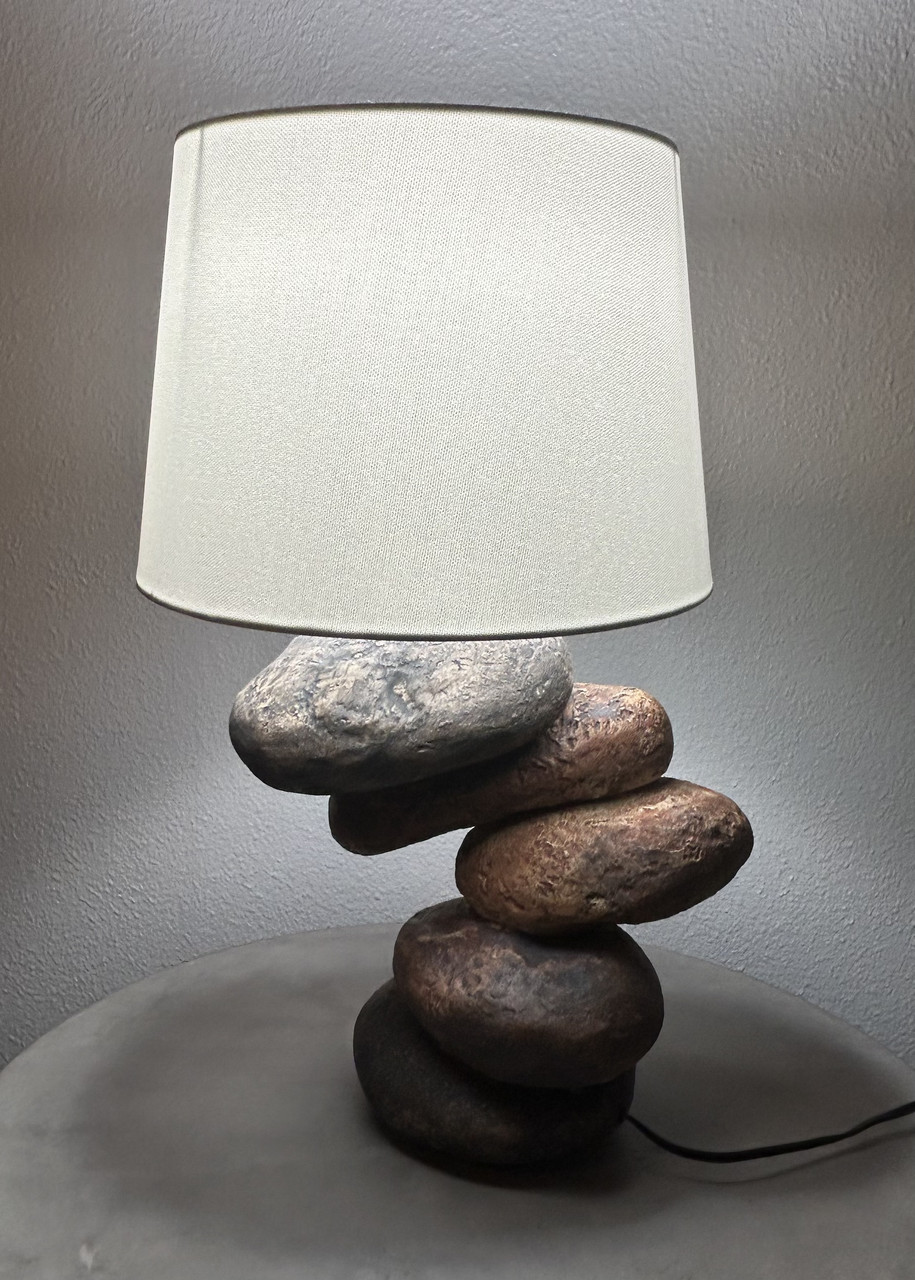
Jake Weiss, River Stack, 2026. Clay, Light bulb, Electrical, Lamp shade. 19” x 10” x 10.” Dana Hills High School, CA.
12th Grade
Best of Show: Luke Hinton
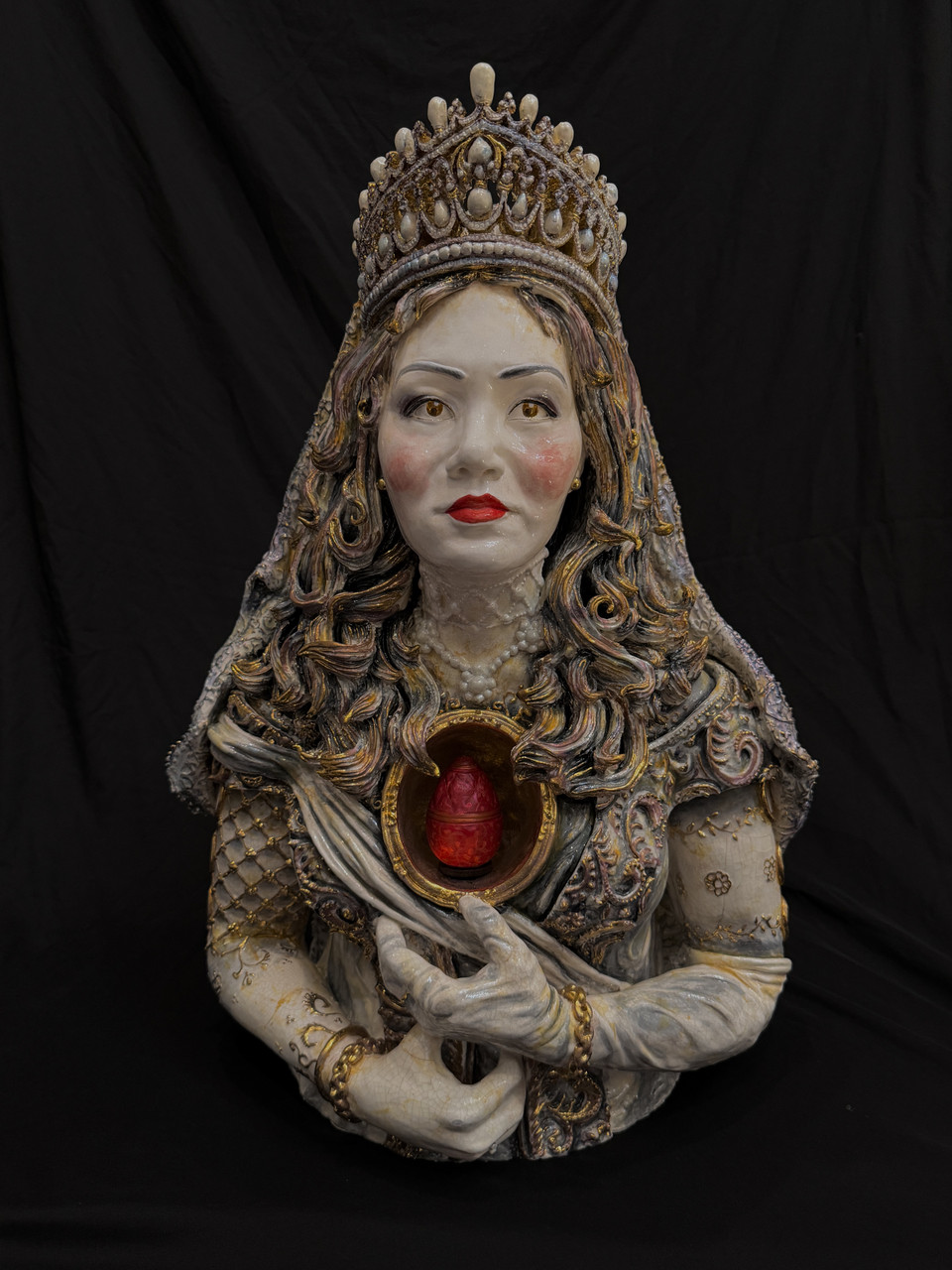
Luke Hinton, Mothers Egg, 2026. Ceramic clay, Glaze. 27” x 19” x 16.” Lafayette High School, MO.
Honorable Mention: Wilder Bundra
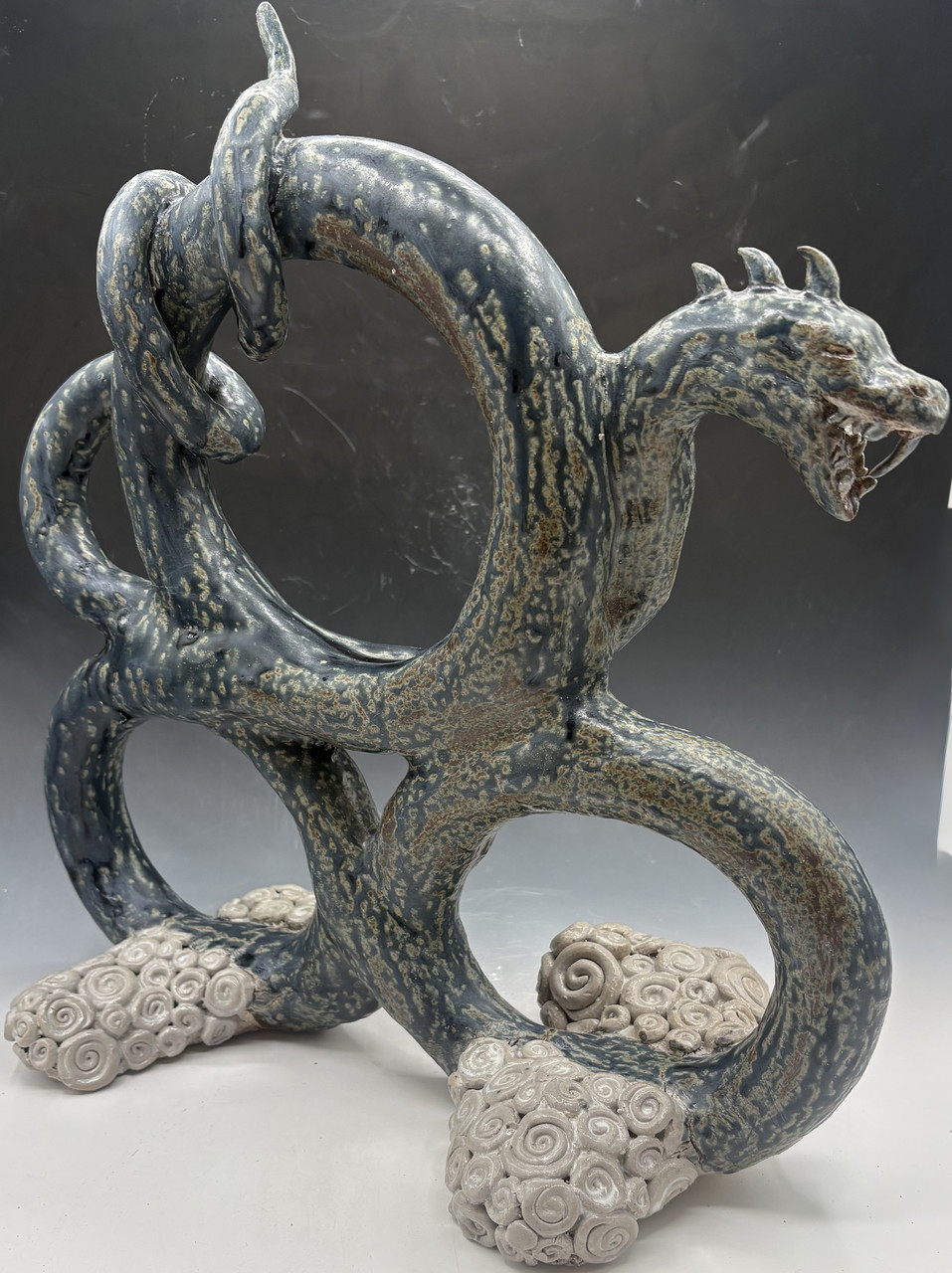
Wilder Bundra, Tempest, 2025. Ceramic, Glaze. 15″ x 16.5″ x 6.75.” Rim of the World High School, CA
Honorable Mention: Joel Duncan
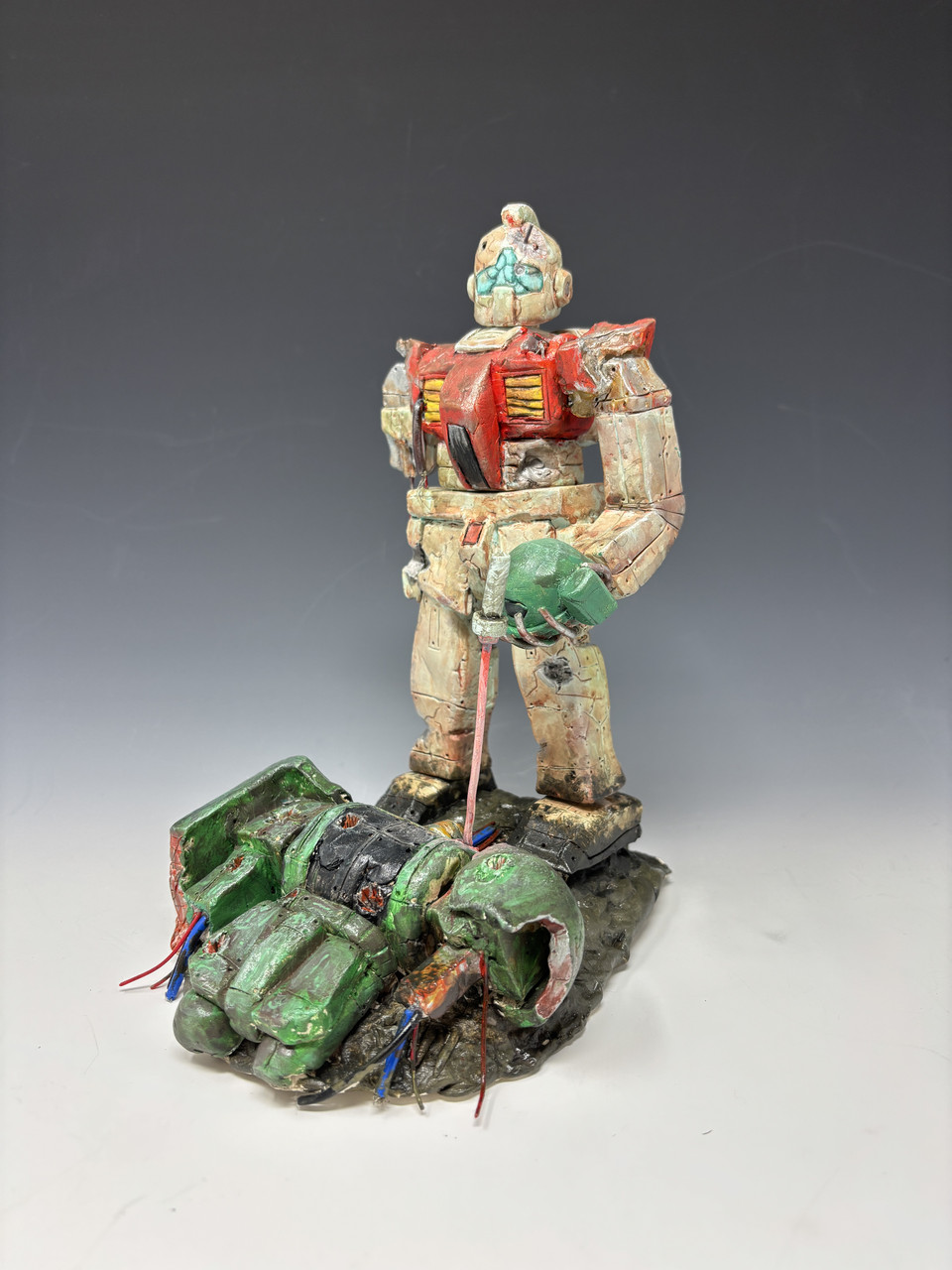
Joel Duncan, War at a Cost, 2025. Iceman Clay, Acrylic, Electrical Wire. 6” x 8” x 12.” Belleville East High School, IL.
Honorable Mention: Nadeen Jaridly
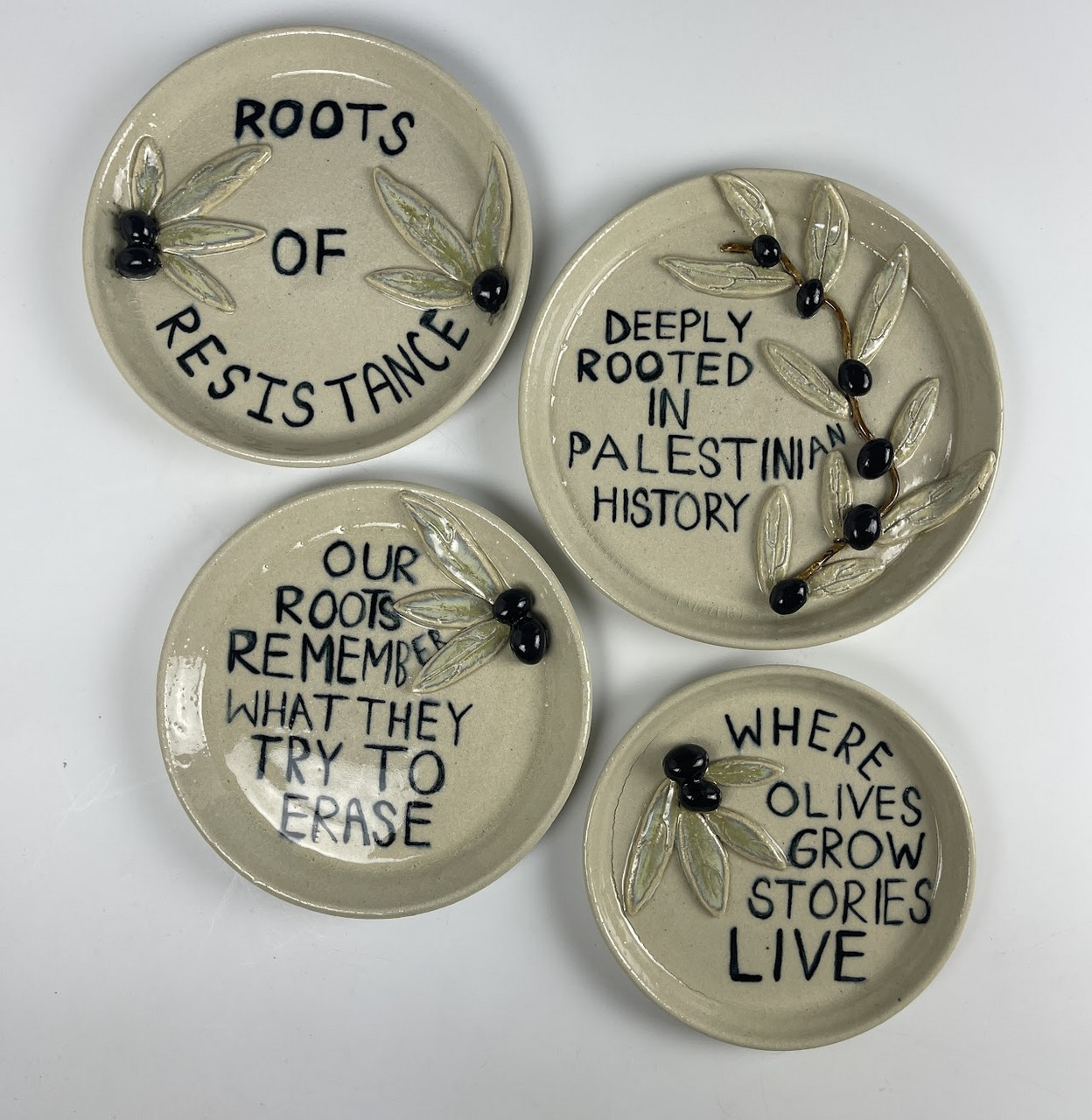
Nadeen Jaridly, Plated History, 2025. Ceramic, Glaze, 14” x 15″ x 1.5.” El Dorado High School, CA
Exhibition Works
Works are listed in alphabetical order by last name of the artist. Photos of works are submitted by participants. Click or tap on a photo to see a larger image.
9th & 10th Grade
Iris Belfer
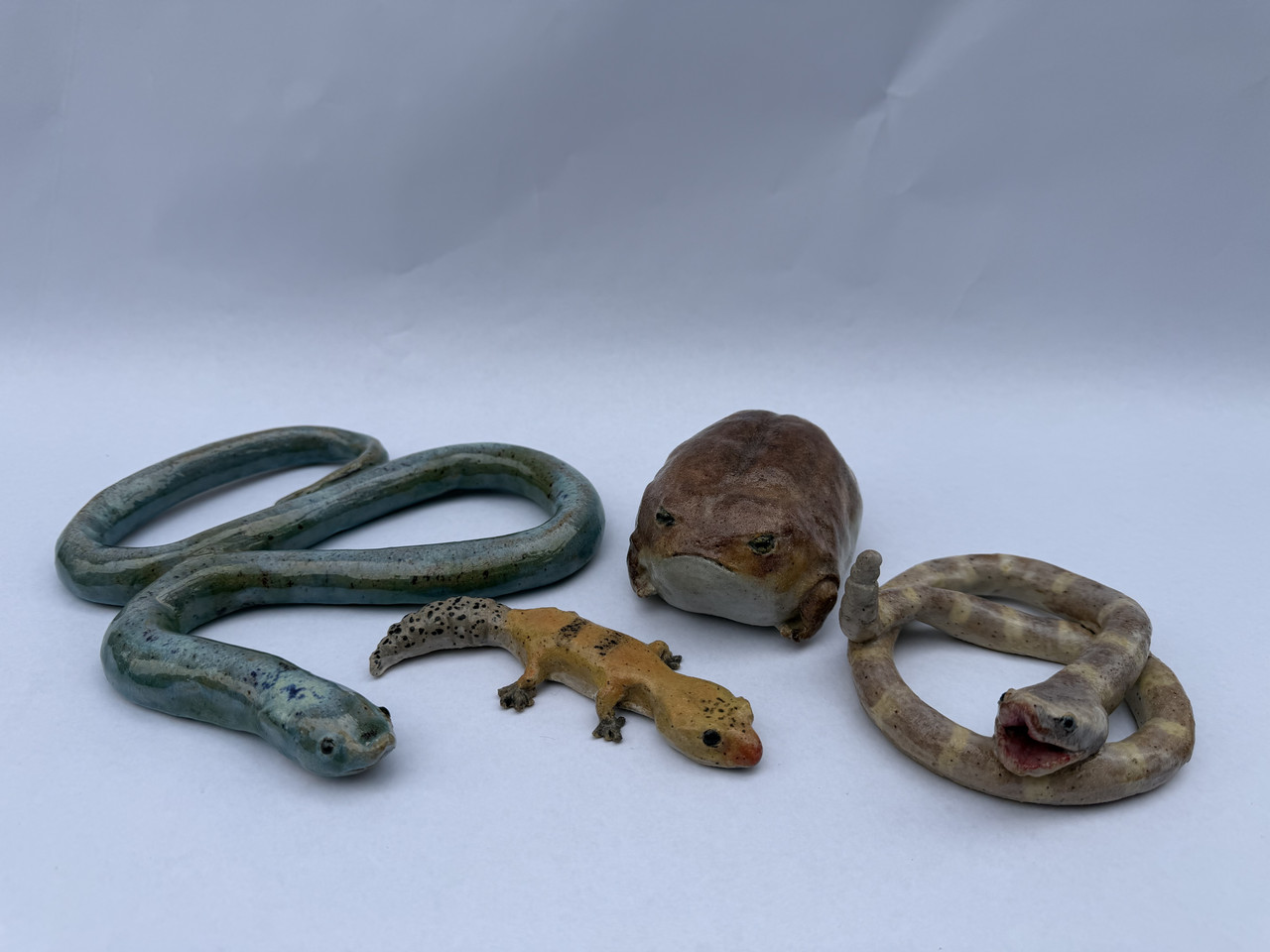
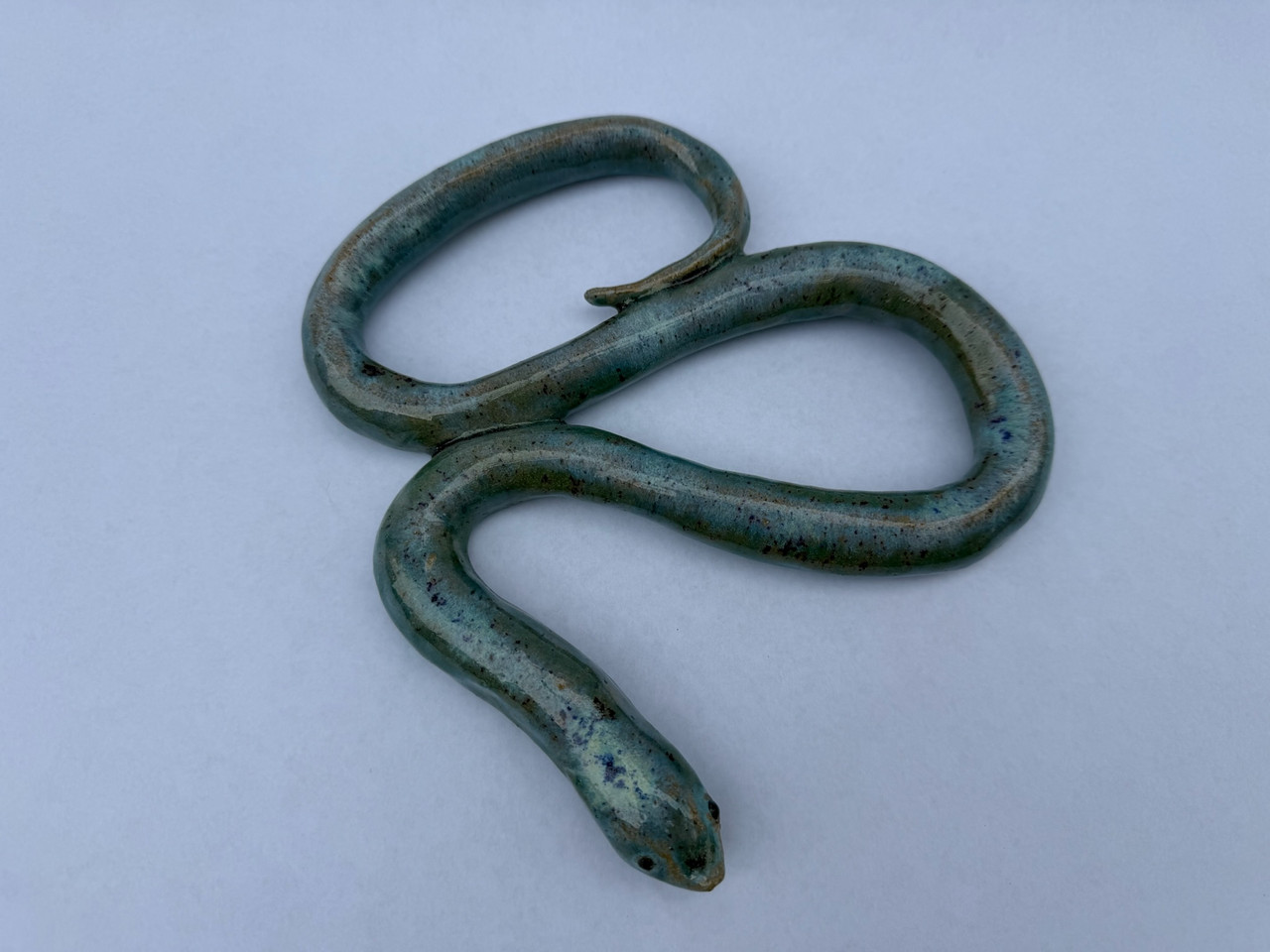
Iris Belfer, Cold-Blooded Friends, 2025. Clay, Underglaze, Glaze, sizes vary. The Nueva School, CA
Hognose snake: Hand-built; bisque fired, layered two glazes, glazed fired. 8.5″ x 8.5″ x 1″
Leopard Gecko: Hand-built; under-glazed, bisque fired, clear glazed, glazed fired. 5.5″ x 2″ x .5″
Brown rain frog: Hand-built; under-glazed, bisque fired, clear glazed. 4.5″ x 3.5″ x 2.5″
Brown and yellow rattlesnake: Hand-built; under-glazed, bisque fired, clear glazed, glazed fired. 4.5″ x 4.5″ x 2″
Artist statement: “I have always been fascinated with nature and animals. I created the set of five cold-blooded creatures over the past year to learn how to create realistic sculptures: a rattlesnake, a hognose snake, a leopard gecko, and a desert rain frog. Each sculpture tries to capture the textures, proportions, and character of the animal. Working in clay allowed me to study their anatomy closely, from the snake’s scaled coils to the rain frog’s plump, inflated body and the gecko’s spotted patterns. Not only did I spend a lot of time sculpting each animal, but the glaze choices was a big focus of my work. I wanted to capture the speckled coloring of the frogs and snakes, and I was really happy with how they turned out. The earthy glazes mimic their natural colors while the different poses suggest movement and life. Through careful observation, I aimed to reveal the quiet beauty and complexity of these animals.”
Henry Coe
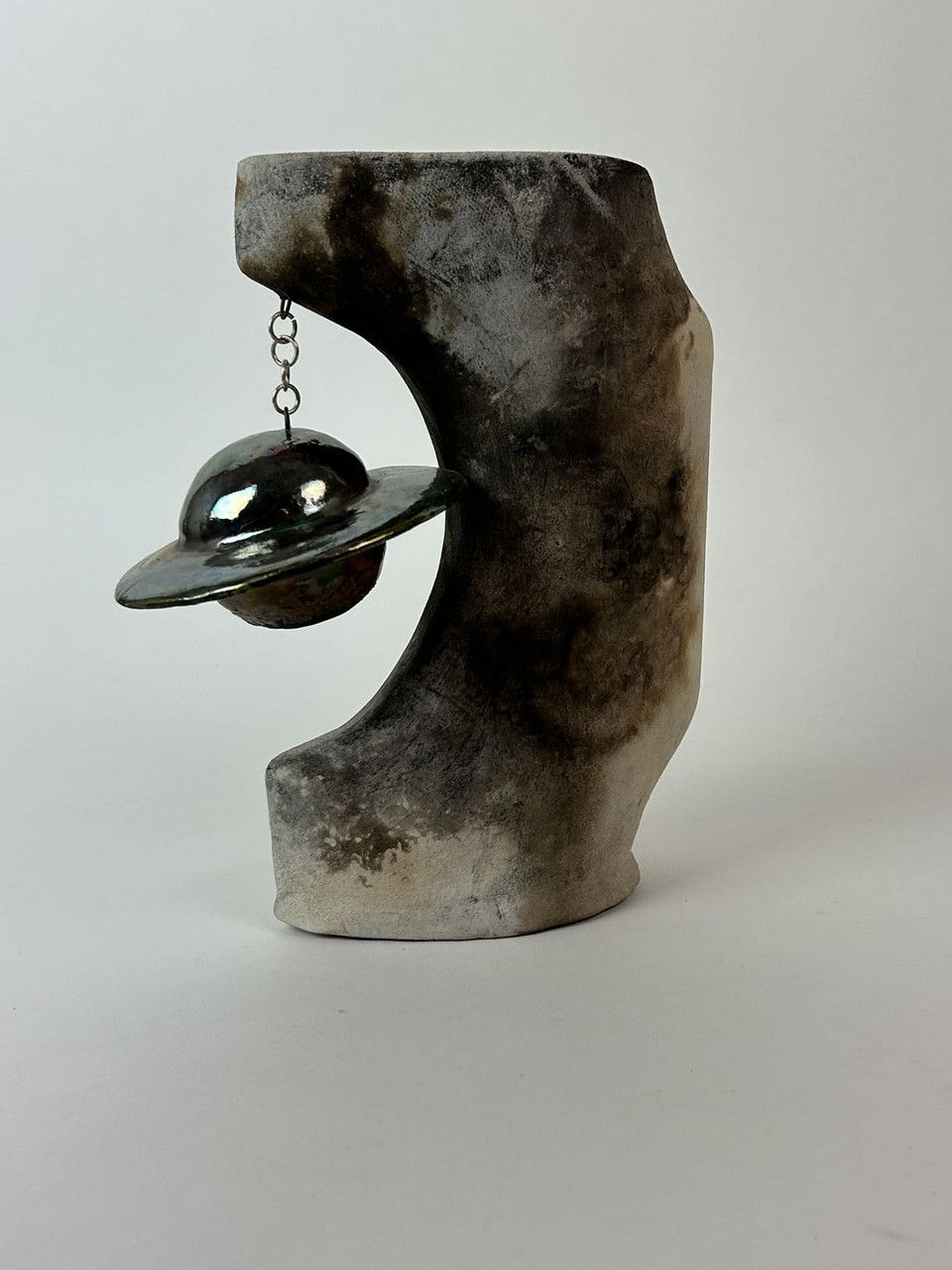
Henry Coe, Orbit, 2025. Ceramic clay, smoke fired and raku fired. 9.75″ x 8″ x 8.” Dobson High School, AZ.
Artist Statement: I wanted to create a piece that had a unique feel to it. For the technique, I had made a normal circular pillar and darted it to make a large piece taken out of it, and hung a clay made planet hanging in the middle to create an interesting form of balance.
Gia Dominguez
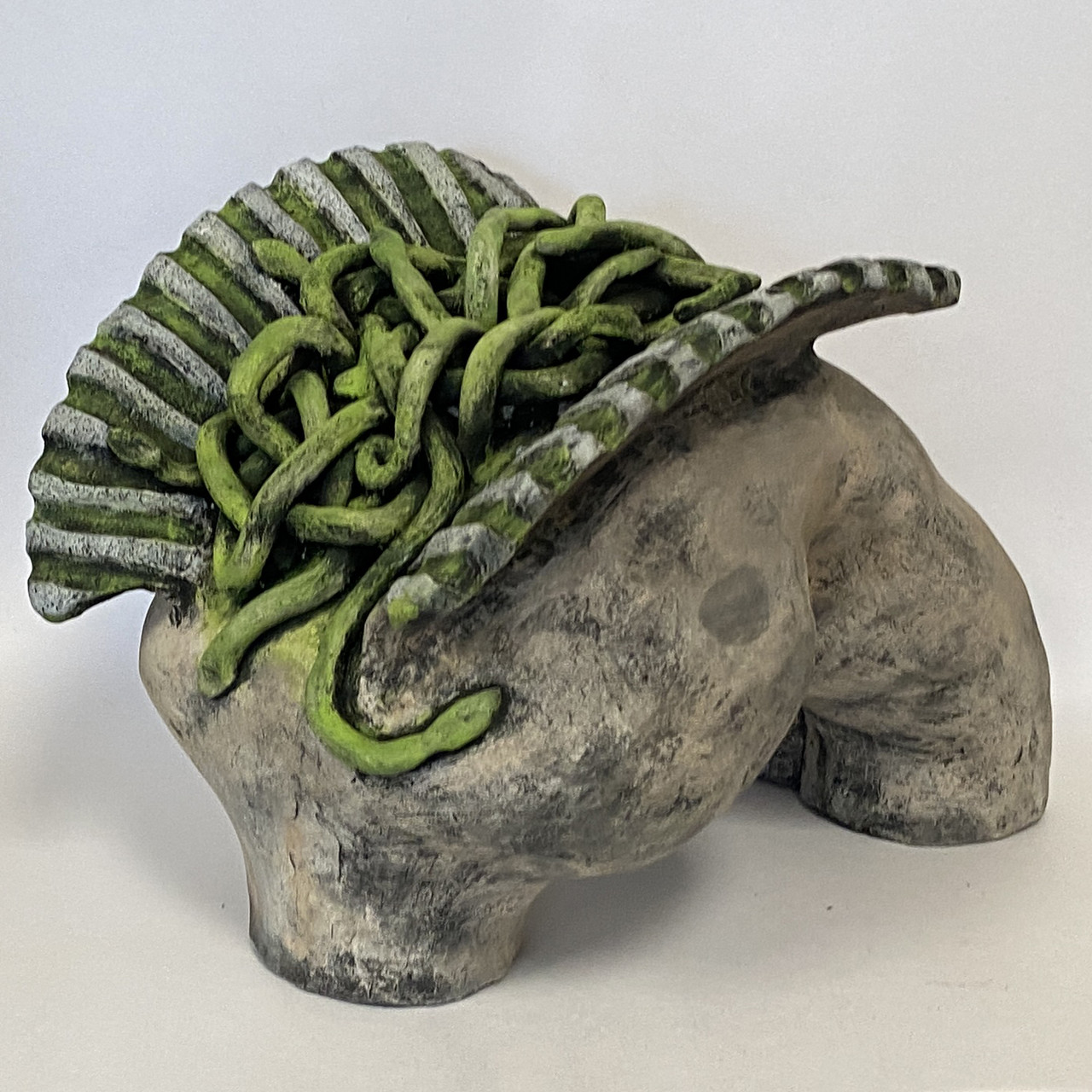
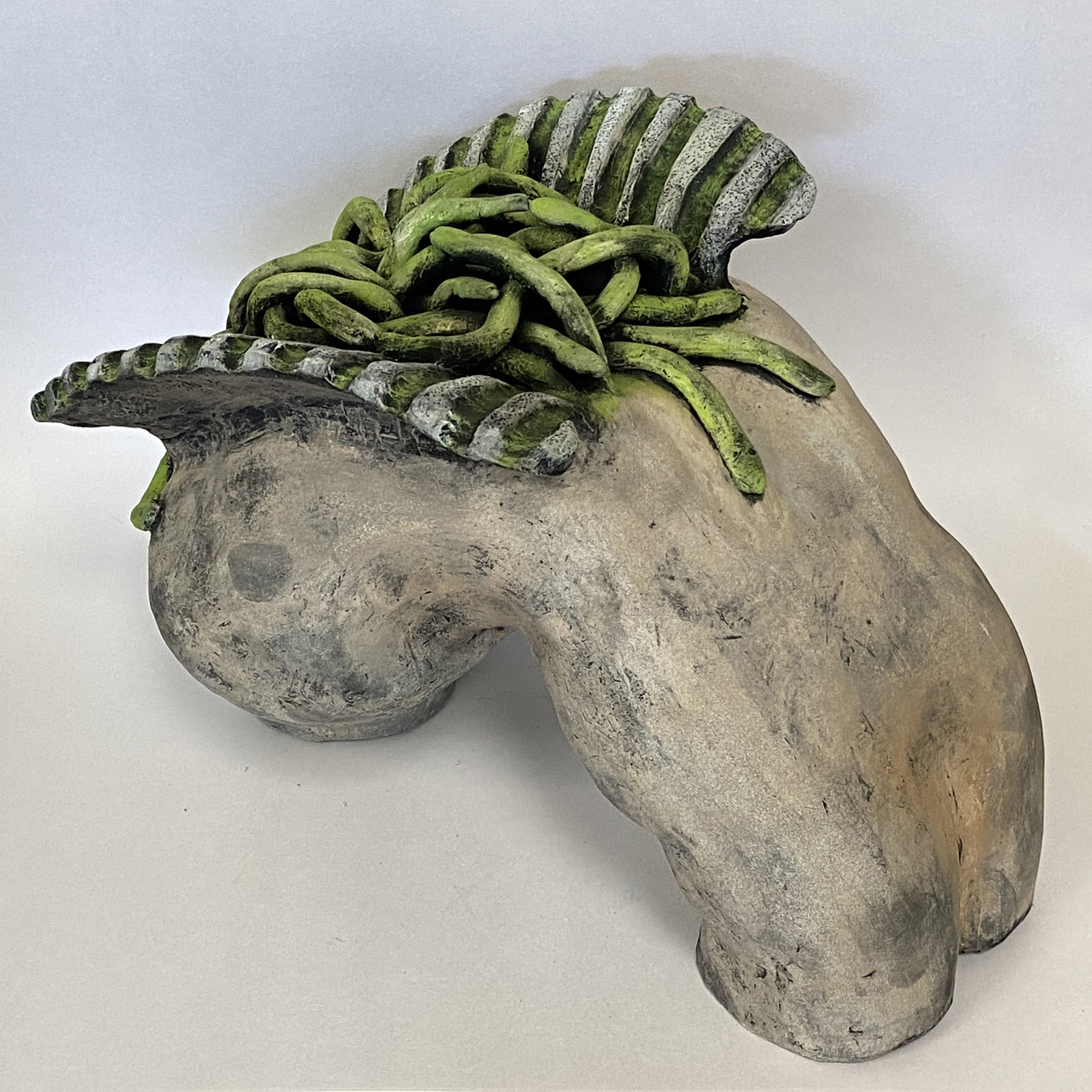
Gia Dominguez, Writhe, 2026. Ceramic. 12″ x 8.5″ x 8.5.” Liberty High School, OR.
Artist Statement: “Writhe is a representation of the desire to rip off chunks of flesh when under pressure. The pressure of anxiety– especially anxiety over your appearance– often presents itself as not being able to breathe, surroundings and clothing being too tight, and the sensation of your skin remaining normal but the muscles beneath knotting and convulsing. The image of swinging open the ribs like a set of double doors, releasing the pressure and revealing the twisting viscera. The serpents replace any intestines and organs that would realistically be in the chest cavity to create a sense of paranormality, something so vastly different from what should be there; akin to the wrenching, shaking feeling that nobody but you can feel. Creating this piece with coils allowed me to push myself to use more dynamic shapes, whereas the stain and wash allowed me to give the slither of snakes a sense of realism, as well as distinguish between the human and unearthly parts.”
Olivia Drain
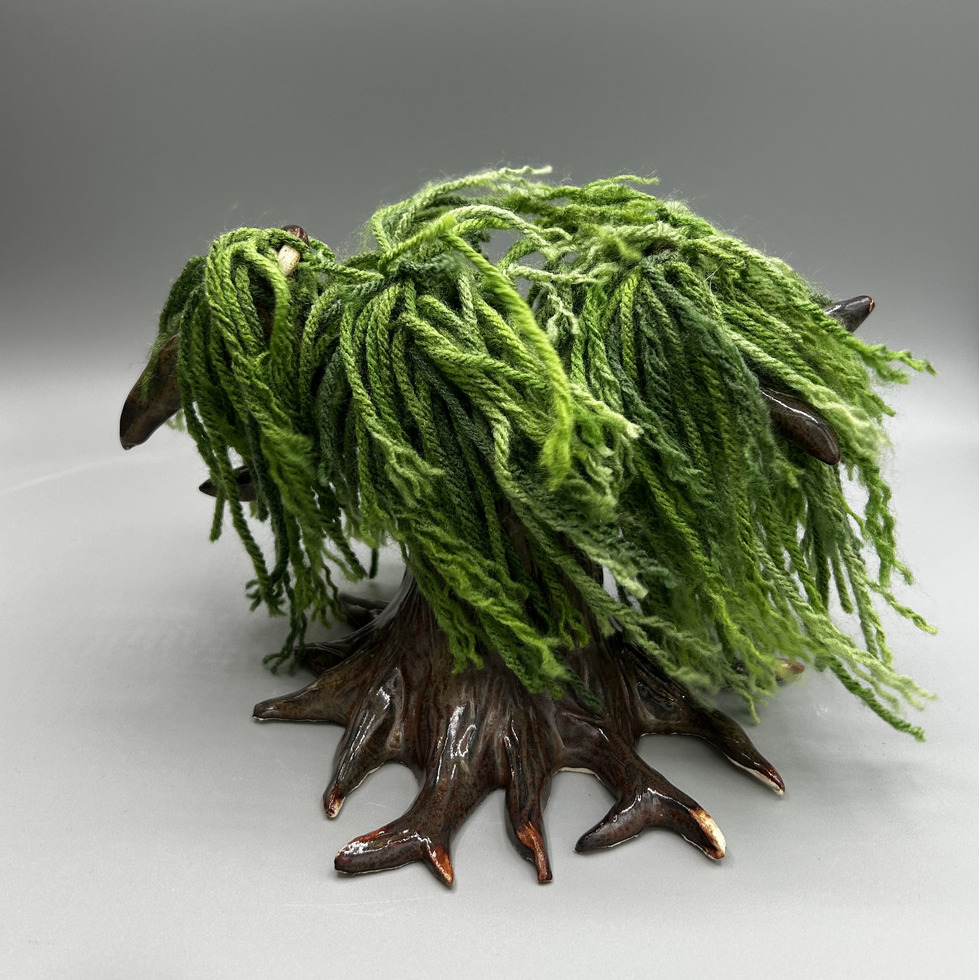
Olivia Drain, Untitled, 2026. Clay, dip glazes, green yarn. 6” x 10″ x 9.” Steilacoom High School, WA.
Artist Statement: “I was interested in showcasing calm movement, like the soft and almost angelic flowing of tree leaves in the wind. I brushed the yarn on the tree with a hairbrush to make a more natural and sort of wild look while still achieving the calm and serene feeling I was aiming for. I was also interested with mixing medias and building a structure with the idea of tying and adding other elements in mind. I had many different test branches before I decided on creating loops to tie yarn around. I also experimented with layering dip glazes and I tried various combinations before landing on the one I chose.”
Henry Fellows
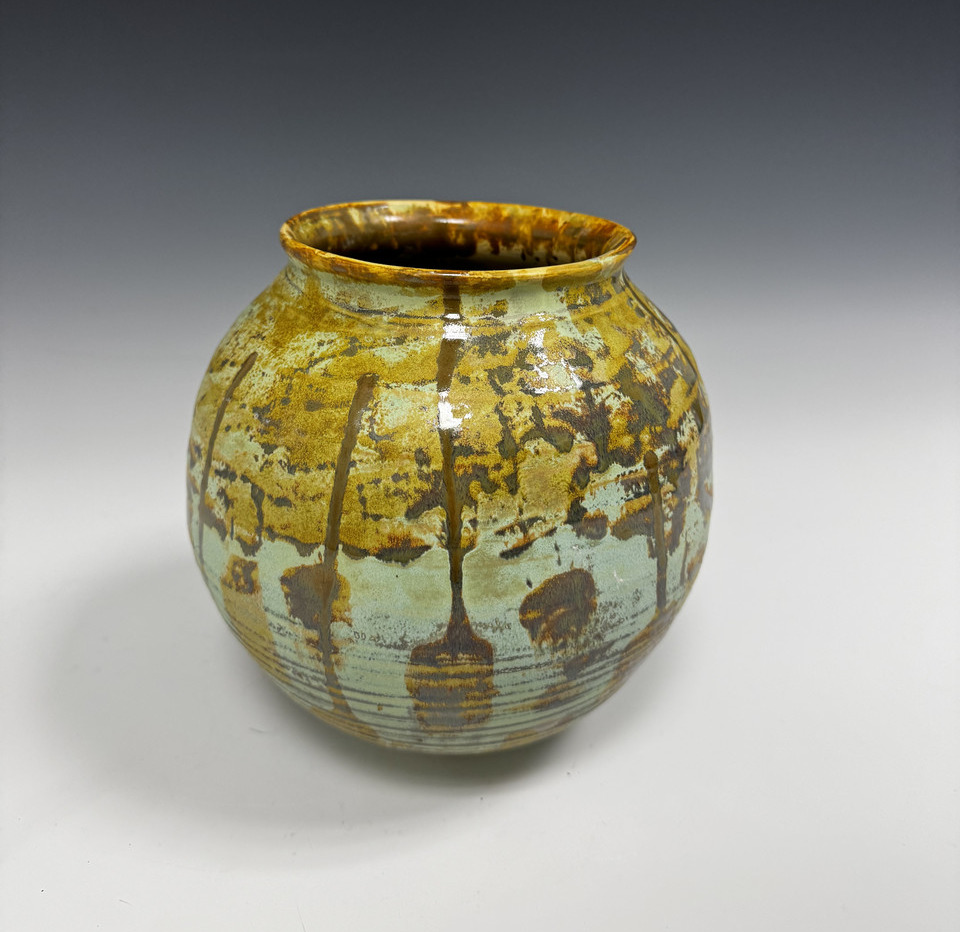
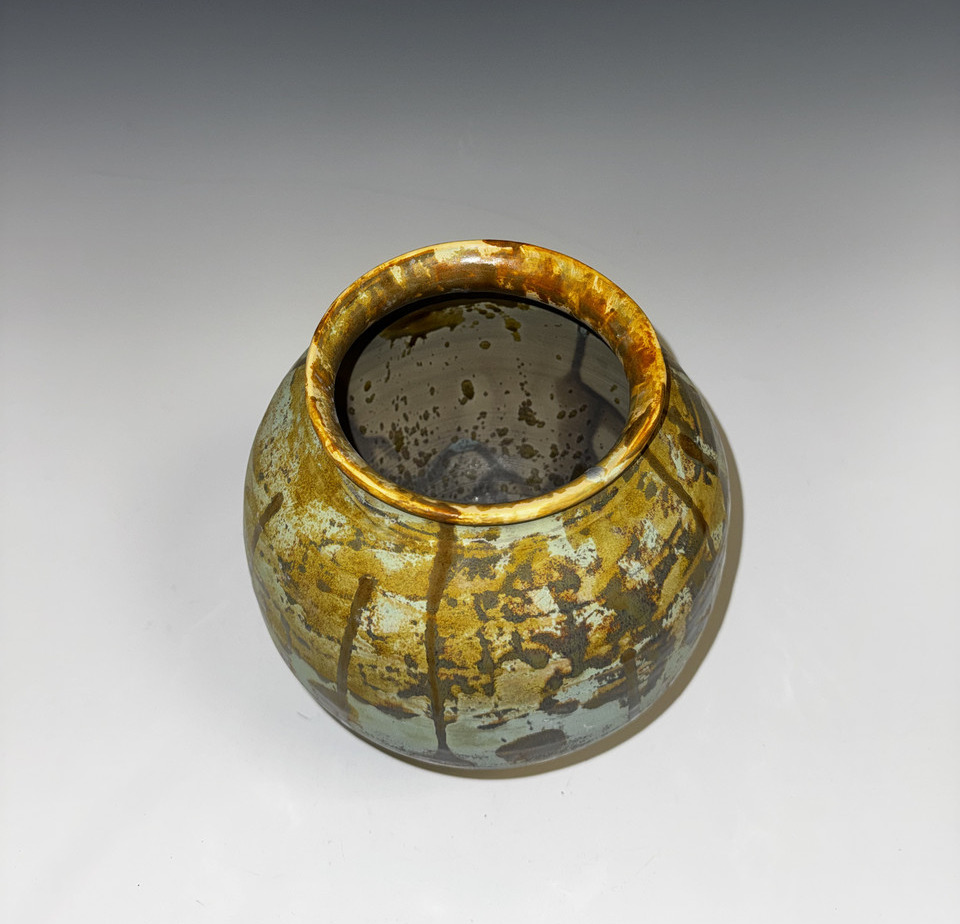
Henry Fellows, Apopsis Moon, 2026. Ceramic, Glaze. 8″ x 7″ x 7.” Pingree School, MA.
Artist Statement: “The moon jar shape was inspiring to me, I have been working on throwing them, and this is one of my best ones. The glaze is especially prominent, it is a mixture of one base layer, and then a sponged on second layer.”
Amelia Foulger
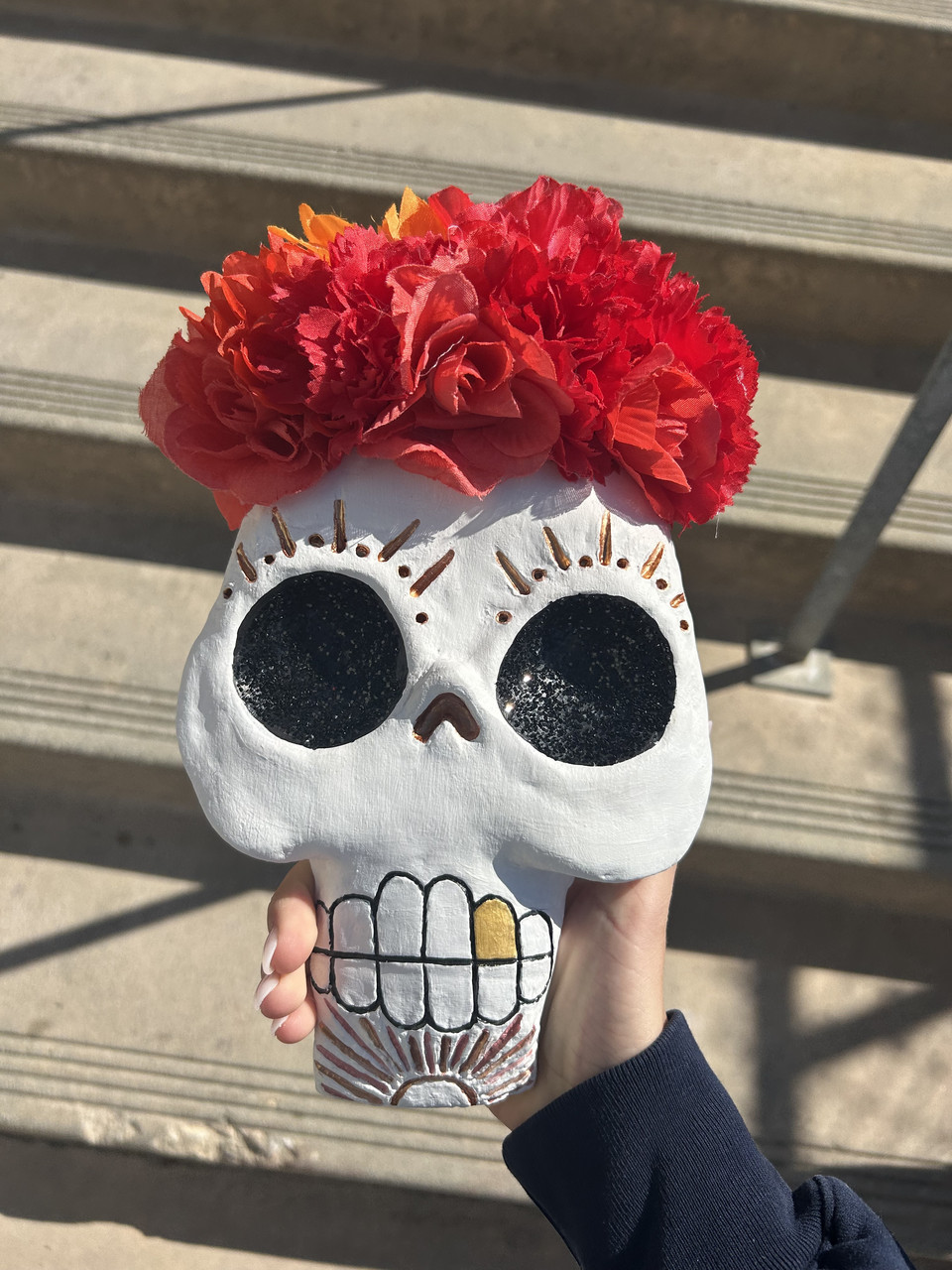
Amelia Foulger, Skull Mask, 2025. Clay, acrylic paint, glitter, faux flowers, 16” x 12″ x 4.” Laguna Beach High School, CA.
Artist Statement: “For this project, my goal was to create a decorative skull inspired by Día de los Muertos traditions. I used clay as my base material and added painted details along with artificial flowers to create a bold, colorful design. I focused on contrast, using a white base with bright red flowers and dark eyes to make the features stand out. My design was influenced by traditional sugar skulls, which celebrate life and remembrance, and I wanted my piece to reflect that meaningful and vibrant style.”
Isabella Fugere
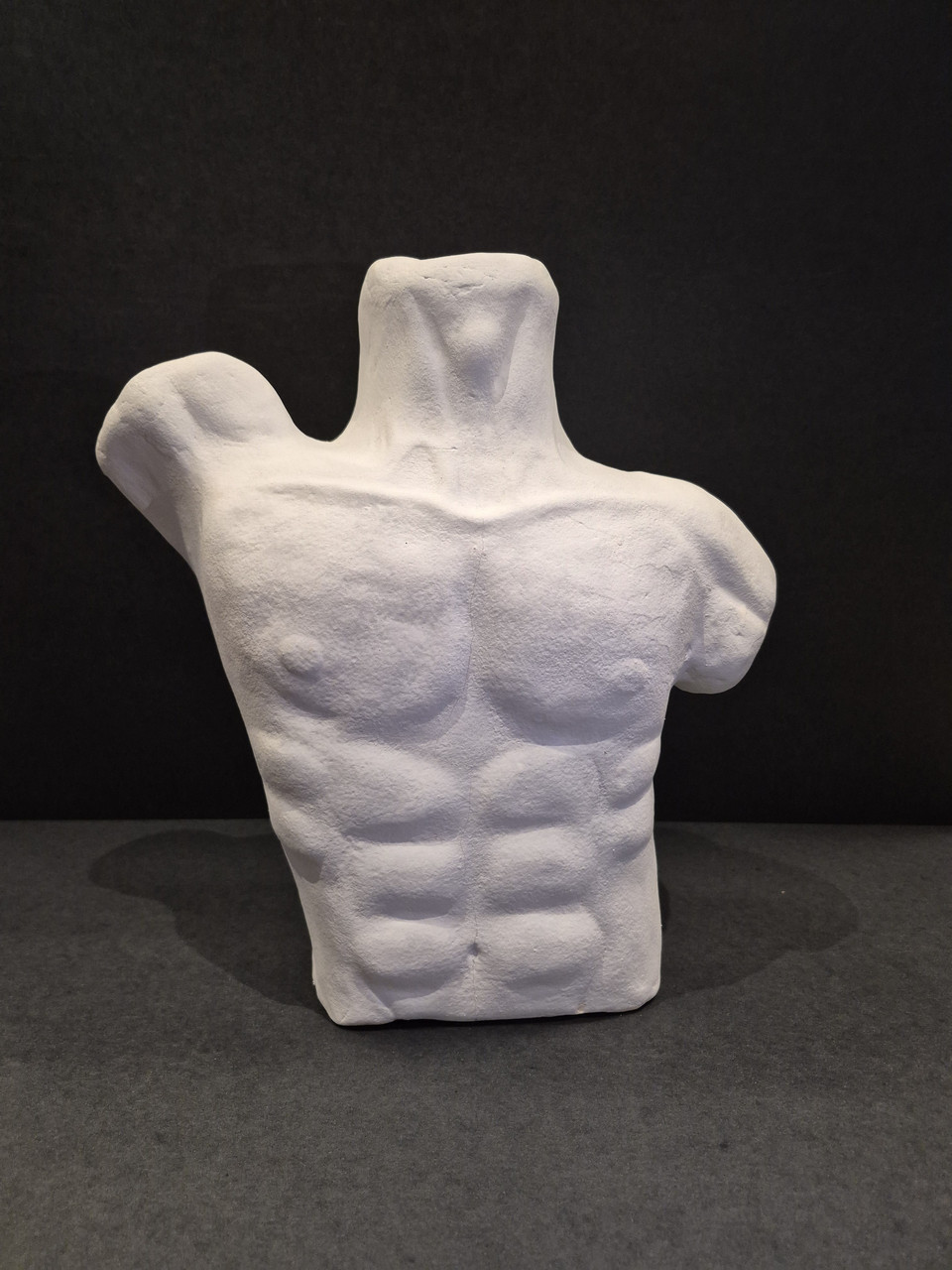
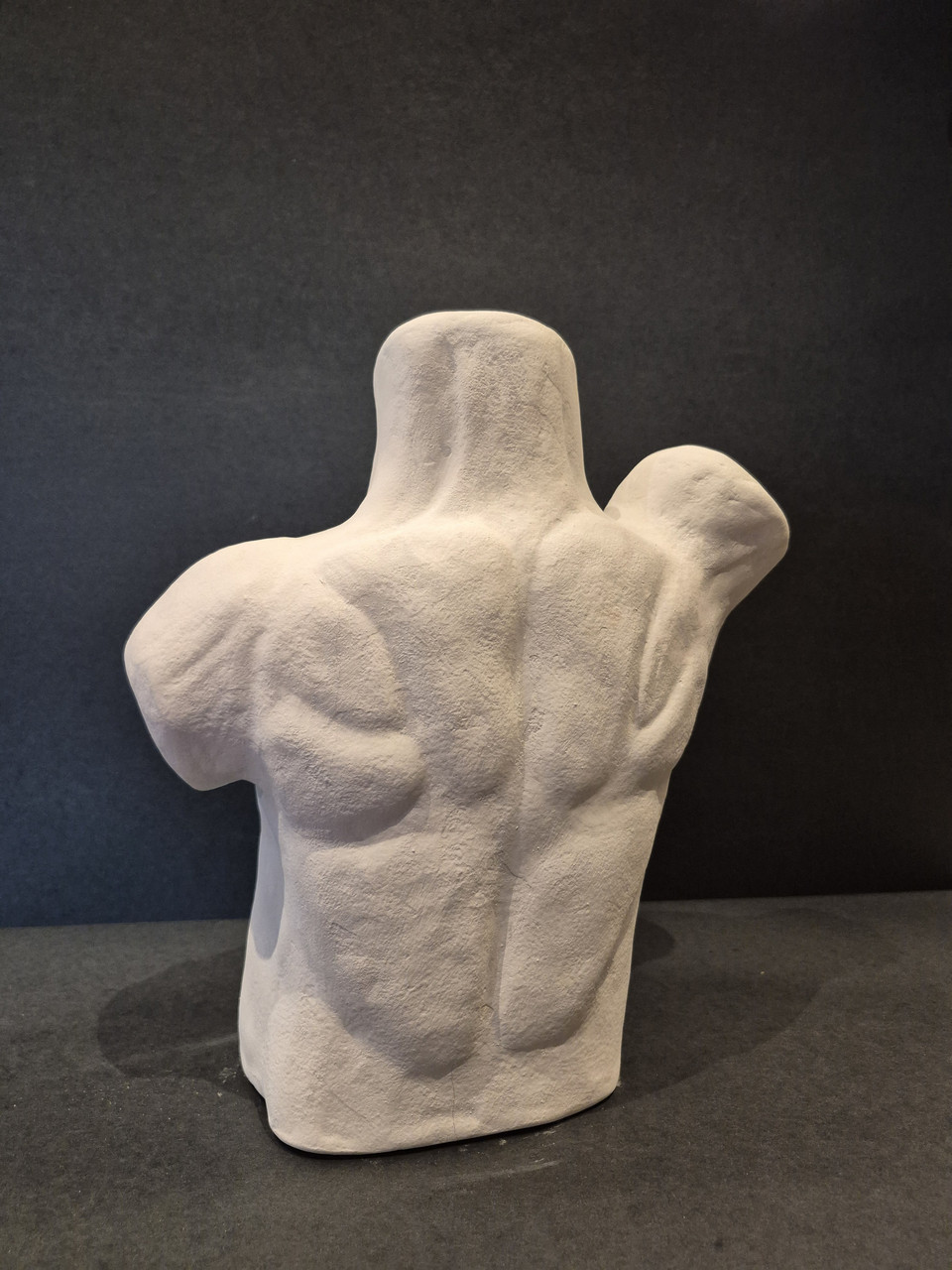
Isabella Fugere, Untitled, 2026. Ceramic, 12” x 11” x 5.” Olympic High School, WA.
Artist Statement: “My vision was creating a roman statue taking inspiration from Michelangelo’s David. My process included starting with a block of clay, and cutting off excess to form the shape of the body. I used a real life model, and anatomical positioning from medical intervention sources and research from the class sports medicine I take at the highschool. My goal was to make this statue as anatomically correct as possible and paint him to look carved from marble.”
Juliet Garcia
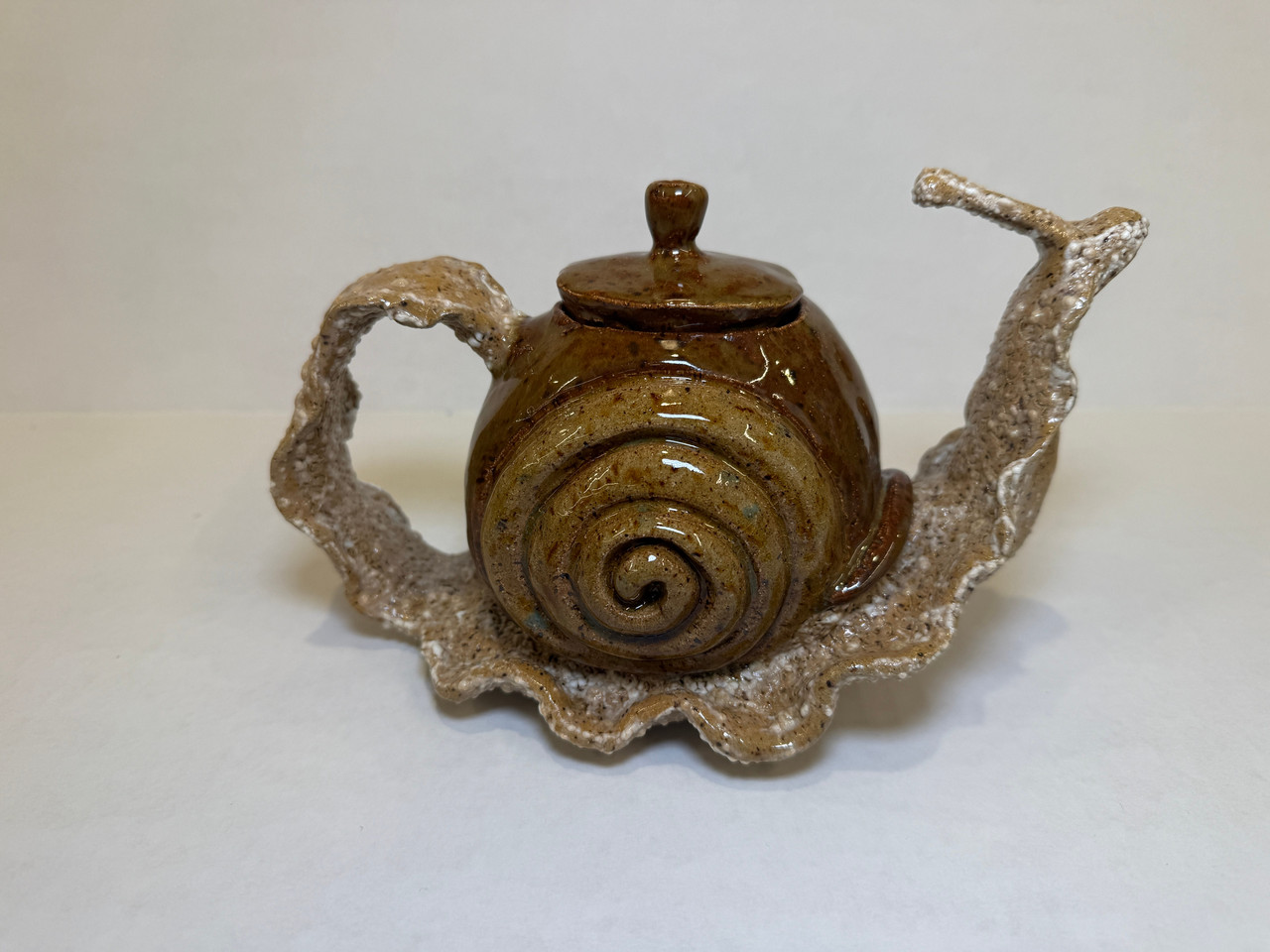
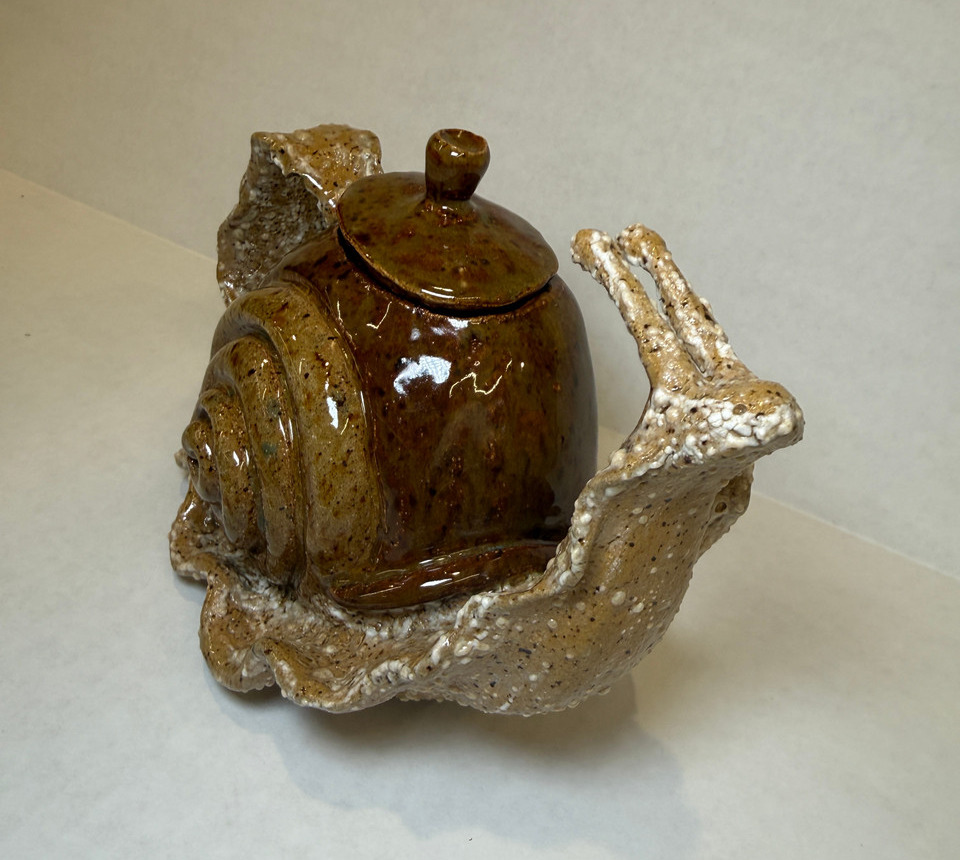
Juliet Garcia, Sluggish Brew, 2025. Stoneware clay, neutral brown glazes, DL F white. 6” x 8” x 4.” Wall Township High School, NJ.
Artist Statement: “I was creating a non functional teapot in the form of a snail. I used stoneware clay and used Dry Lake Cone 5 Glaze, Fossil White glaze to give it a textured feel. The bumps were made with Dry Lake Fossil White high temp glaze. I chose natural browns to look as realistic as possible.”
Alison Gutierrez-Palacios
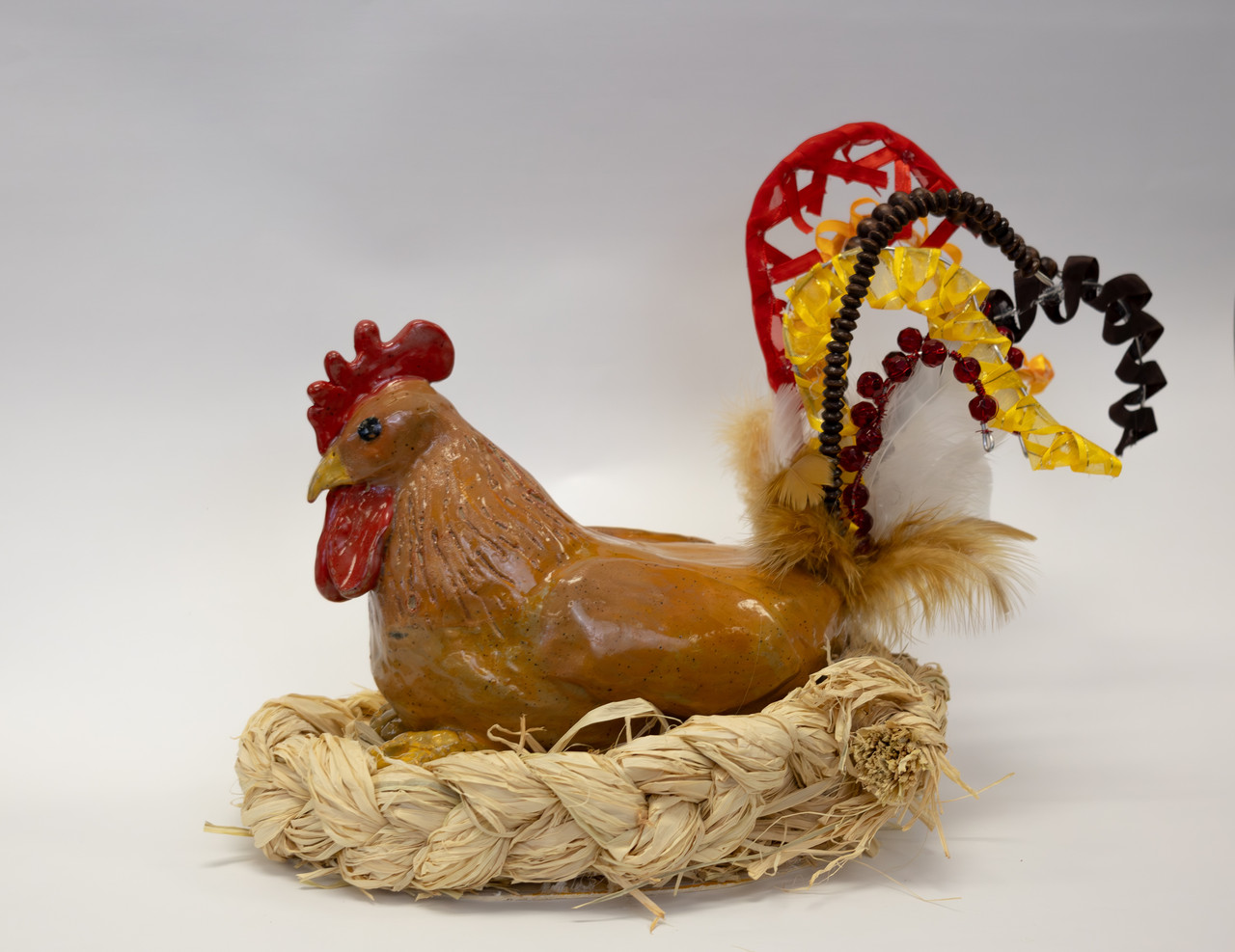
Alison Gutierrez-Palacios, Bo, 2026. Wire, ribbon, straw like material, feathers, beads. 17” x 7” x 7.” Riverhead High School, NY.
Artist Statement: “It all started from my love of animals, especially chickens. For me chickens represent home, food, love, and teamwork. This may all seem silly but from where my parents come from chickens are everywhere, they are important food wise, and in some aspects, resource wise. Chickens are not so independent, they stay together as a pack, teach young ones the habits of chicken life as well as safety. My love of chickens comes from these reasons and they way I view them. The process of making this art piece was mainly inspired by my pet chicken, Bobo. Bobo is a red pyle old english game bantam. He is sweet and very protective, as the only people he gets along with are me and my twin sister. This project first started with a huge lump of clay which was eventually carved, formed, and hollowed to be the chicken. As it dried, the end part, tail, was made up of wire, ribbon, and beads of different types. Each wire has a different and unique ribbon pattern that has been put together with the use of hot glue. After the project had been fired and ready to glaze, glazes of brown were used mixed with whites and yellows, CLEARLY it all looks the same though! These colors of materials and glaze where used to attempt to recreate a color of neutral colors with a touch of red that blend and combine nicely. After being glazed and put together the finished art piece comes out to be a rooster with a tail of diverse materials and a nest, this project brings much symbolism for the creator in this case being me!”
Tessa Henderson
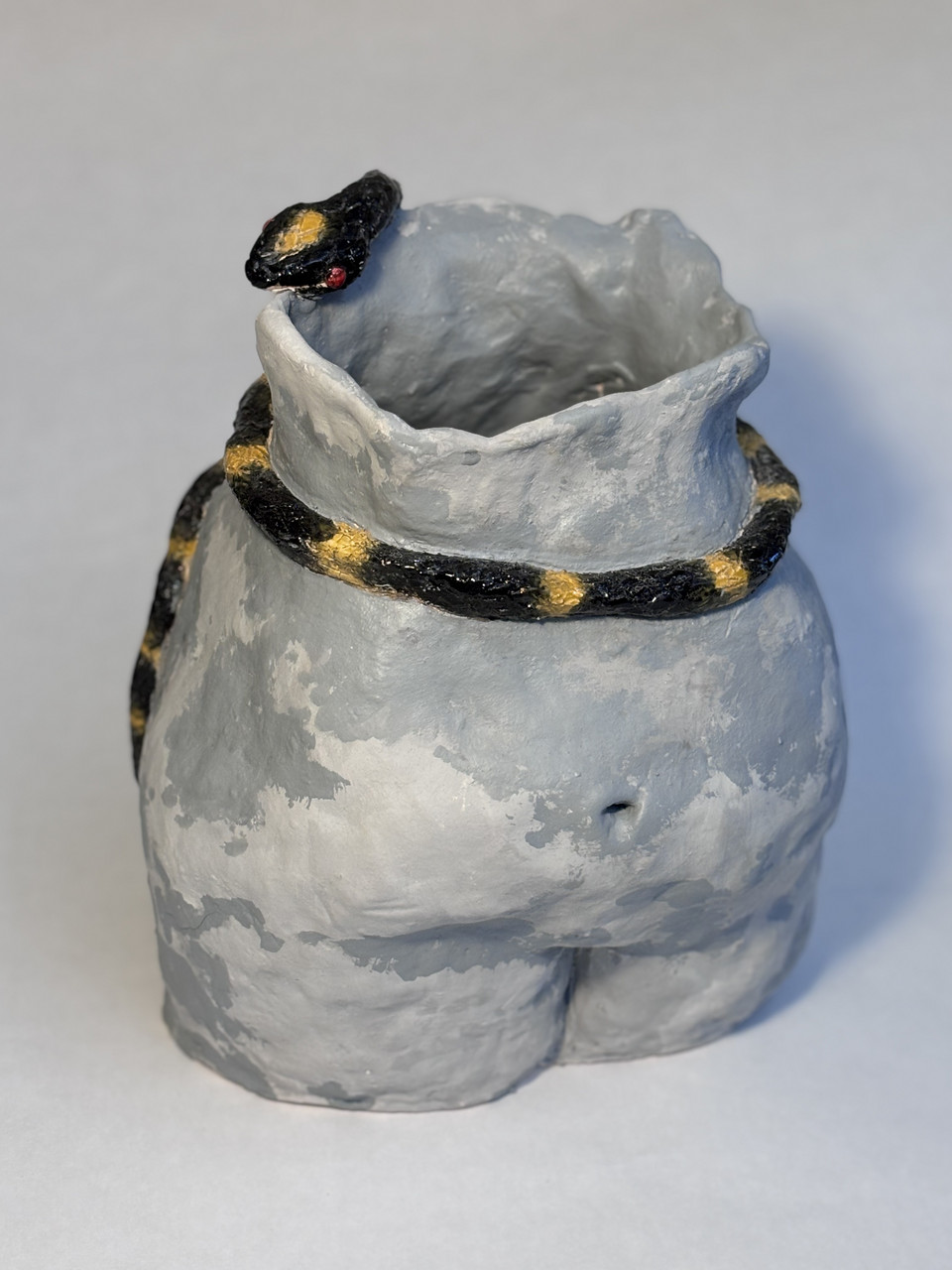
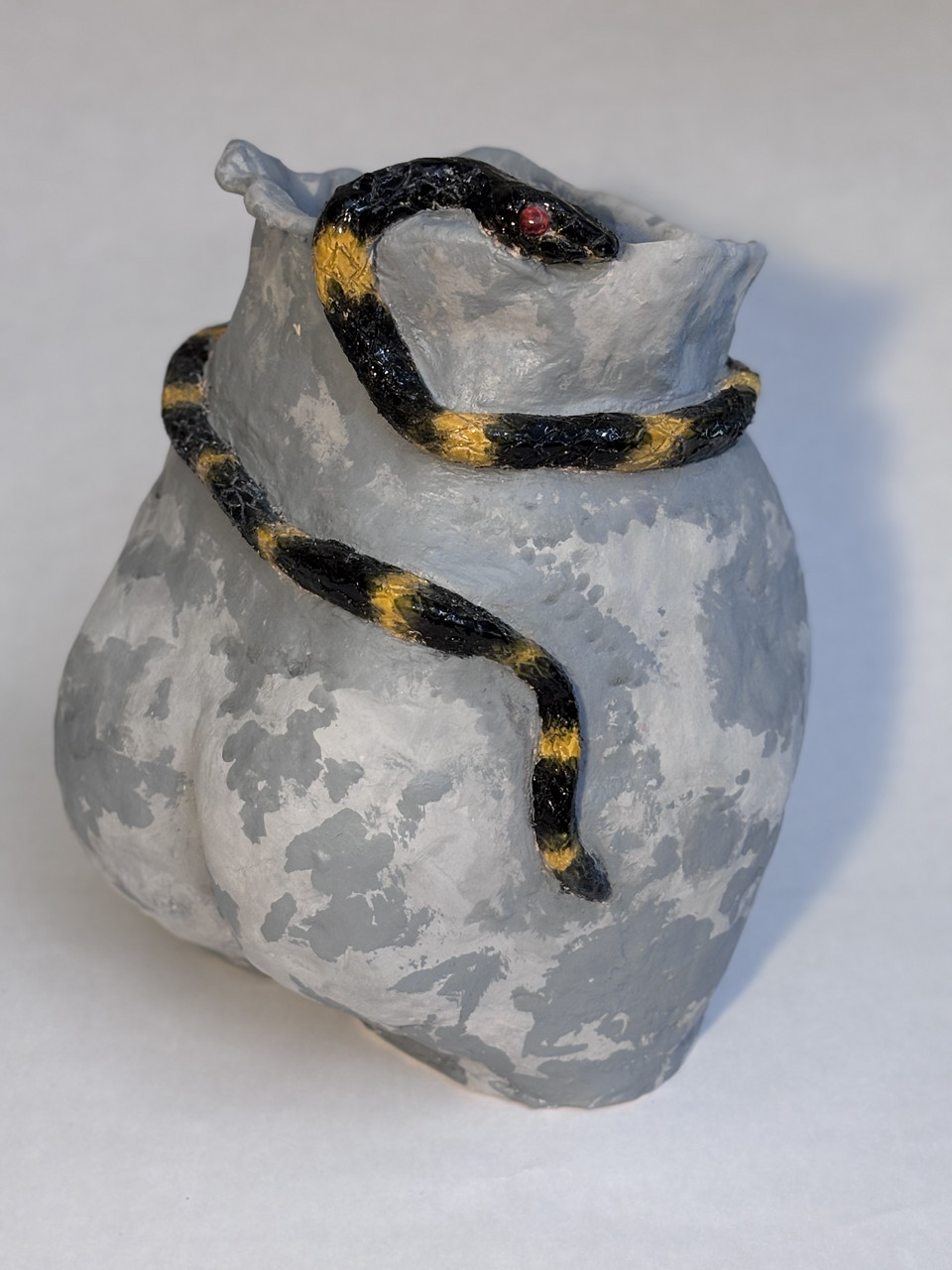
Tessa Henderson, Untitled, 2026. Ceramic, Acrylic, 15” x 18” x 15.” Huntington Beach High School, CA.
Artist Statement: “I made this piece in ceramics my intention is to also add flowers and an apple in the hollow part of it. I wanted to tell the story of Genesis and how temptation has always been a part of the world. I made the body of the woman (Eve) more statue-like, with imperfect parts like a human made it. But the snake (the devil) is glassy and has more effort put into making it look beautiful. When I add the flowers and the apple it will represent the Garden of Eden as well as the forbidden fruit. I wanted to tell this story because all humans struggle with temptation the gorgeous apple compared to the reality we have to live in, but deep down what we are given is far better than any false promise of becoming god-like.”
Isis Hernandez
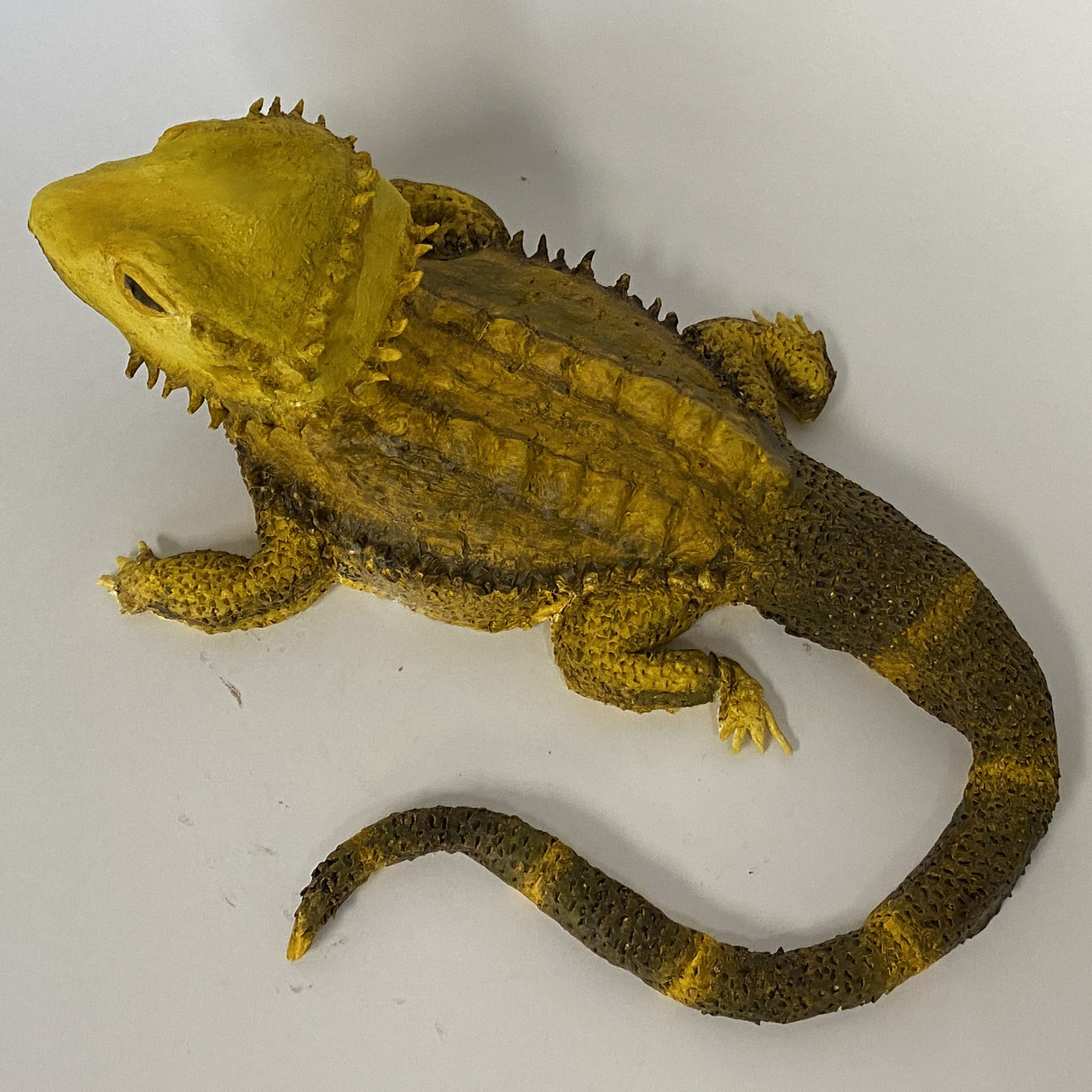
Isis Hernandez, Samson, 2026. Clay, Acrylic paint, 9″ x 4″ x 3.” Liberty High School, OR.
Statement: “This sculpture is basically a recreation of my old pet Samson, he is a bearded dragon, my first ever pet, and since this was a choice project I was able to make the best of it and try and make him, I used old pictures of him as reference but since the pictures weren’t great quality I did end up using Google for better detail reference, later on I did use his old pictures for color reference, I used clay, I started off with the head which was probably one of the most complicated parts of him, the rest was pretty simple, after making the head, I hollowed his head out with a hard edge tool, his body was pretty simple to structure out, his arms and legs were a small challenge, trying to get an accurate shape of his tiny claws, his tail was the last part, then I scored and used slip to stick all pieces together, then I moved on with details, the scales were made with some scale work tools, needle tool was also used for fore defined pieces, such as his eyes, some of the bigger scales, for example like the ones used a long his head were all handmade and attached on the head, from there, after it was fired, I used acrylic paint, but I used the paint wet to give it more of a natural effect color, and it also made it easier to add a detail of other colors such as greens or yellows.”
Disha Jain
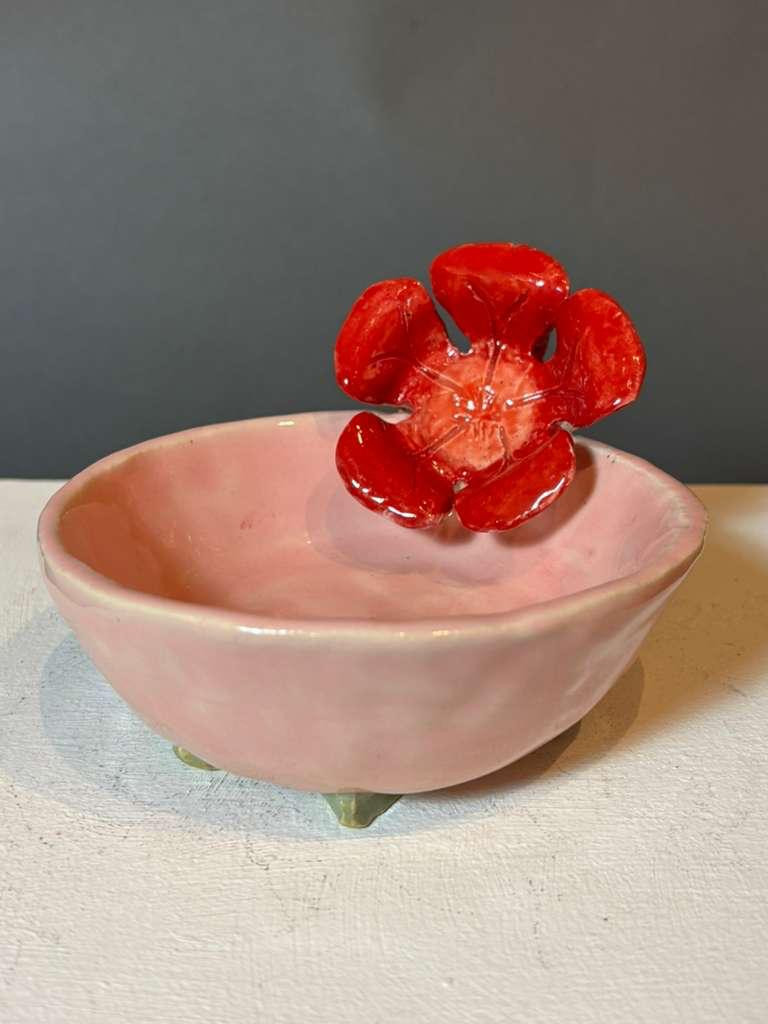
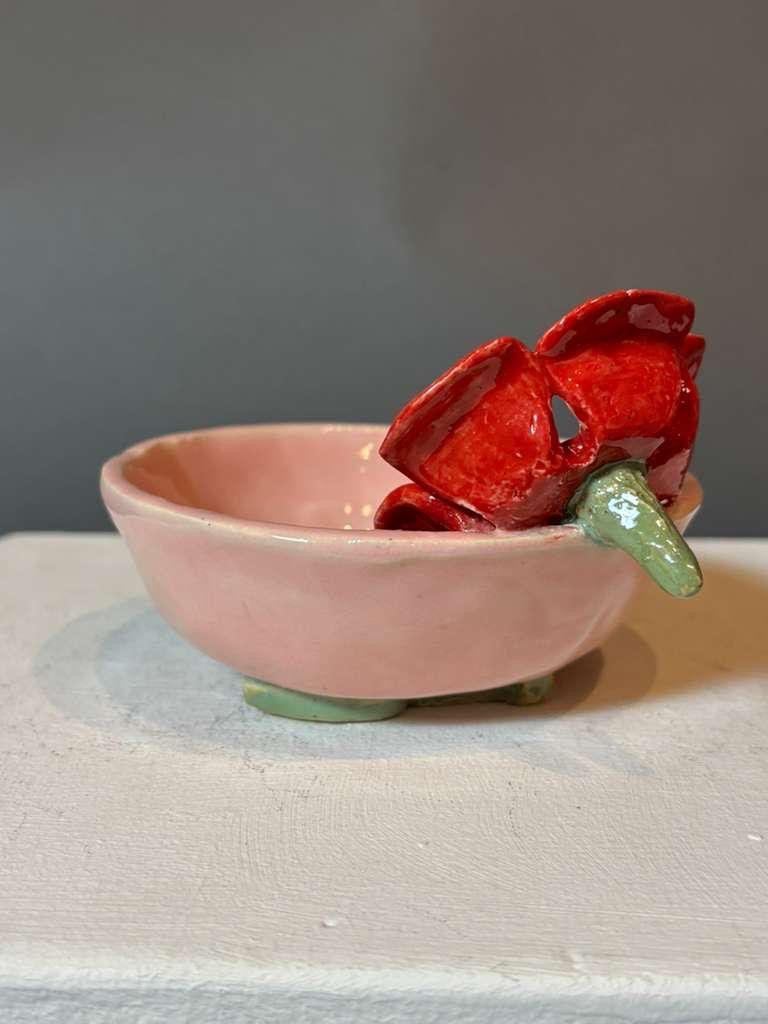
Disha Jain, Unfold, 2025. Ceramic, Glaze, 3.25″ x 4.75″ x 4.75.” Dublin High School, CA.
Statement: “My vision for this piece was something small and functional that I could put small trinkets in, like bracelets or stickers. It is fully made out of clay and glazed with neutral colors, the red bringing emphasis to the flower. The bowl itself was pinched, and the flower was sculpted by hand in a way that shows one of the last stages of blooming a flower goes through.”
Vedant Kotahwala
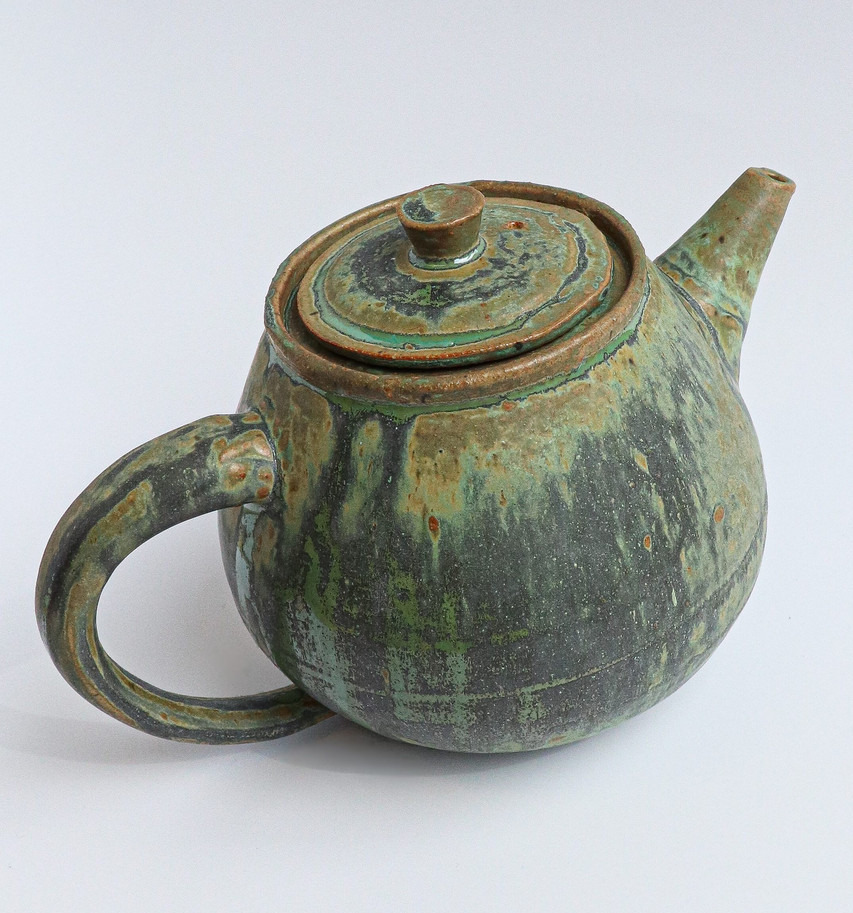
Vedant Kotahwala, Rustic Green Teapot, 2025.Brown stoneware, Glaze, 4.5″ x 8.5″ x 5.25.” The Dalton School, NY.
Statement: “This wheel-thrown brown clay teapot draws inspiration from traditional Japanese forms, particularly in its short spout and rounded body. The asymmetrical glaze reflects the Japanese concept of wabi-sabi, which embraces beauty in imperfection. Its moss green and deep charcoal color, created through the reduction of copper oxide, are inspired by natural environments like moss-covered rocks near water. When visiting the forest rich regions of upstate New York, I witnessed how in these settings, color develops unevenly, echoing the variation seen in the glaze.”
Paulina Limon
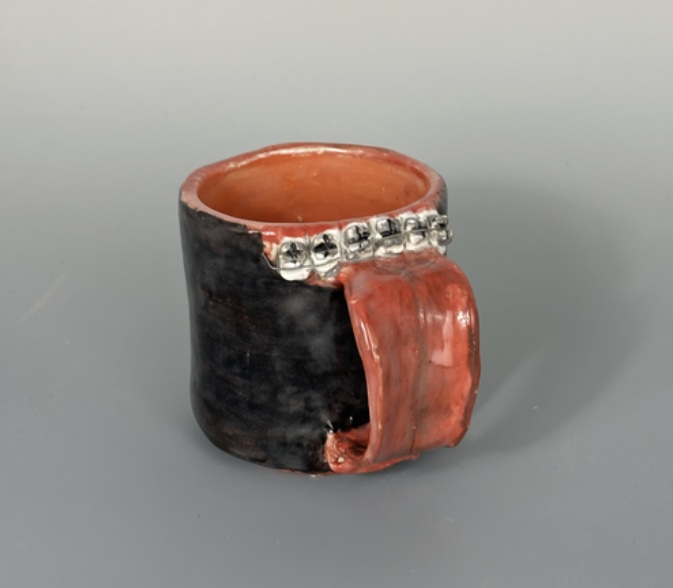
Paulina Limon, Clay play, 2026. Ceramic. School of Arts and Enterprise, CA.
Tristen Mays
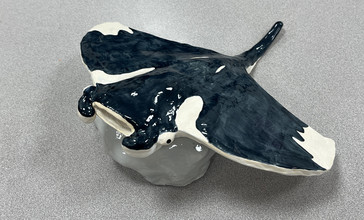
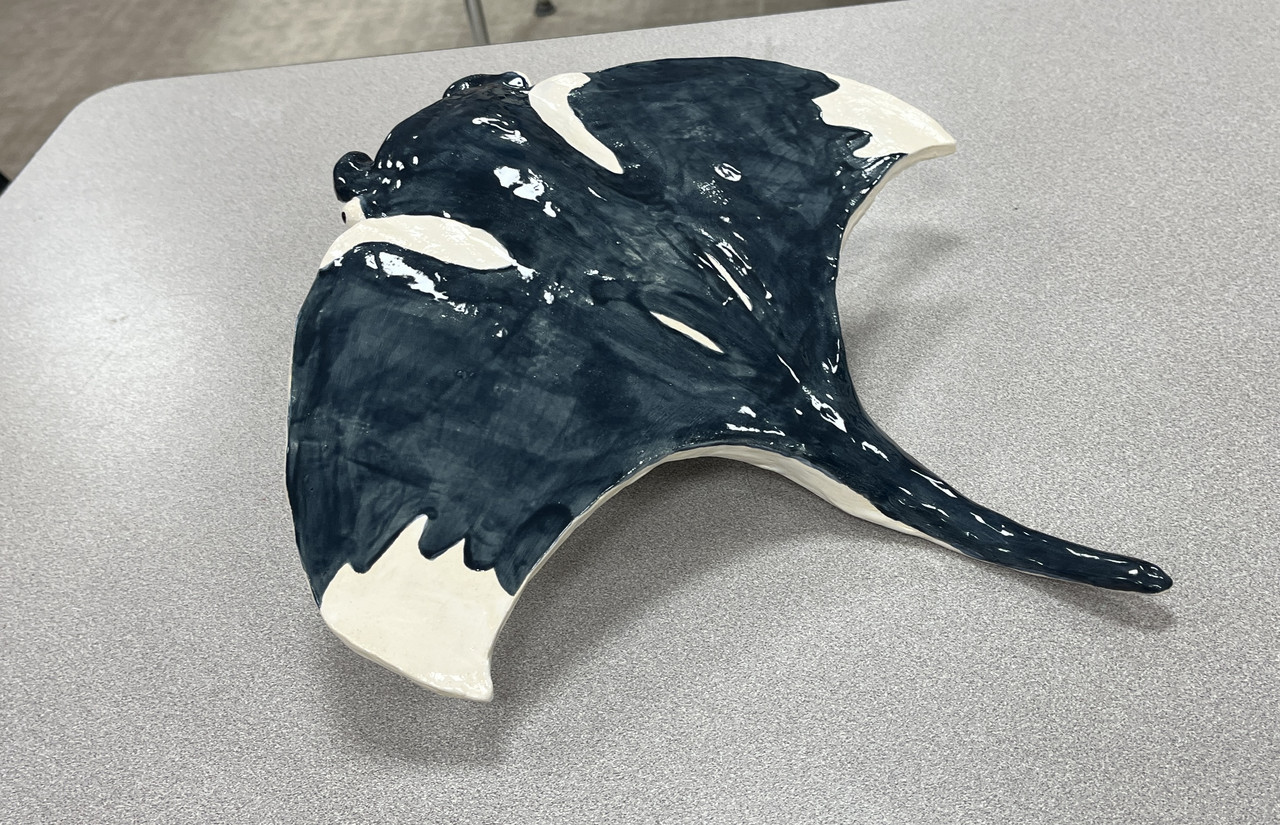
Tristen Mays, Manta Ray, 2025. Ceramic Clay and Glaze Paints, 15″ x 15″ x 4.5.” Bulloch Academy, GA.
Statement: “My process in creating this manta ray was a mixture of slab and coil techniques to form the body. The center of the manta ray is hollow, and the rock is hollowed out as well. My vision was to show this magnificent endangered creature perched on a rock in a peaceful oceanic moment, capturing its elegance and beauty.
The manta ray’s graceful movement through the ocean inspired this piece, and I wanted to reflect its wide wingspan and flowing motion. The endangerment of the species was the main inspiration for this project and a way to express the importance of protecting marine life. Through this work, I hope to bring awareness to the beauty of manta rays and the need for their conservation.”
Win Phasuk
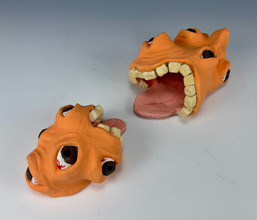
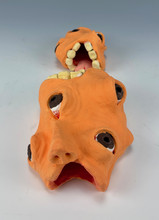
Win Phasuk, Flesh Misunderstood, 2025. Clay, Sculpting tools, Underglaze, Brushes, 3″ x 5″ x 13.5.” The John Cooper School, TX.
Statement: “My goal for this project was to make expressive clay heads that focused on personality and emotion instead of realism. I started by shaping the basic forms by hand, then added the eyes, teeth, and tongue using small tools to carve and smooth the details. After the clay dried, I painted everything with acrylics to bring out the features and make the expressions stand out. I looked at surreal sculptures to get ideas for the proportions and overall look.
My sculpture Flesh Misunderstood shows what it feels like to be seen constantly but not truly known. The extra eyes and open mouths represent being watched, judged, or misread. Creating this piece helped me turn that uncomfortable feeling into something creative.”
Dulce Reyes Lopez
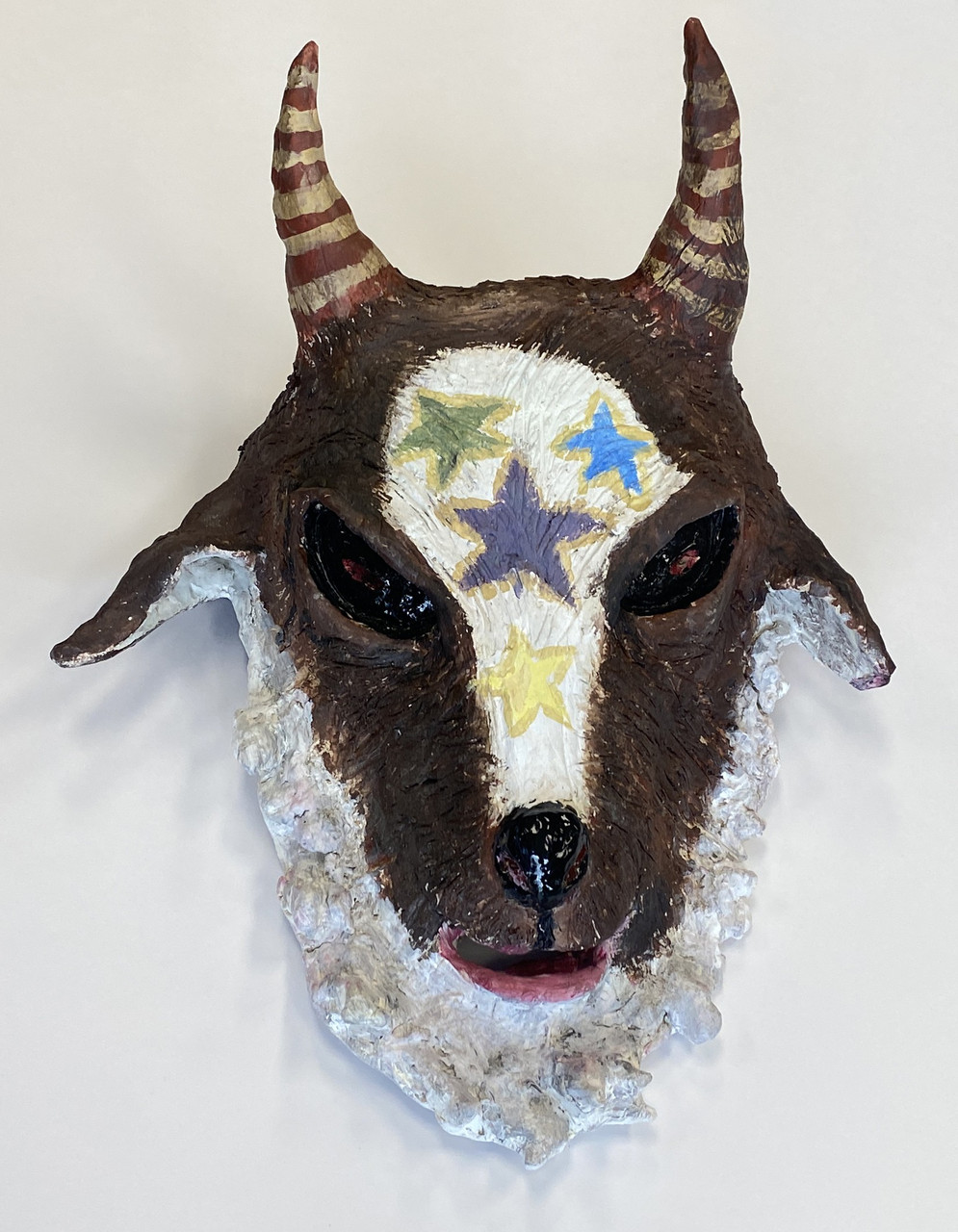
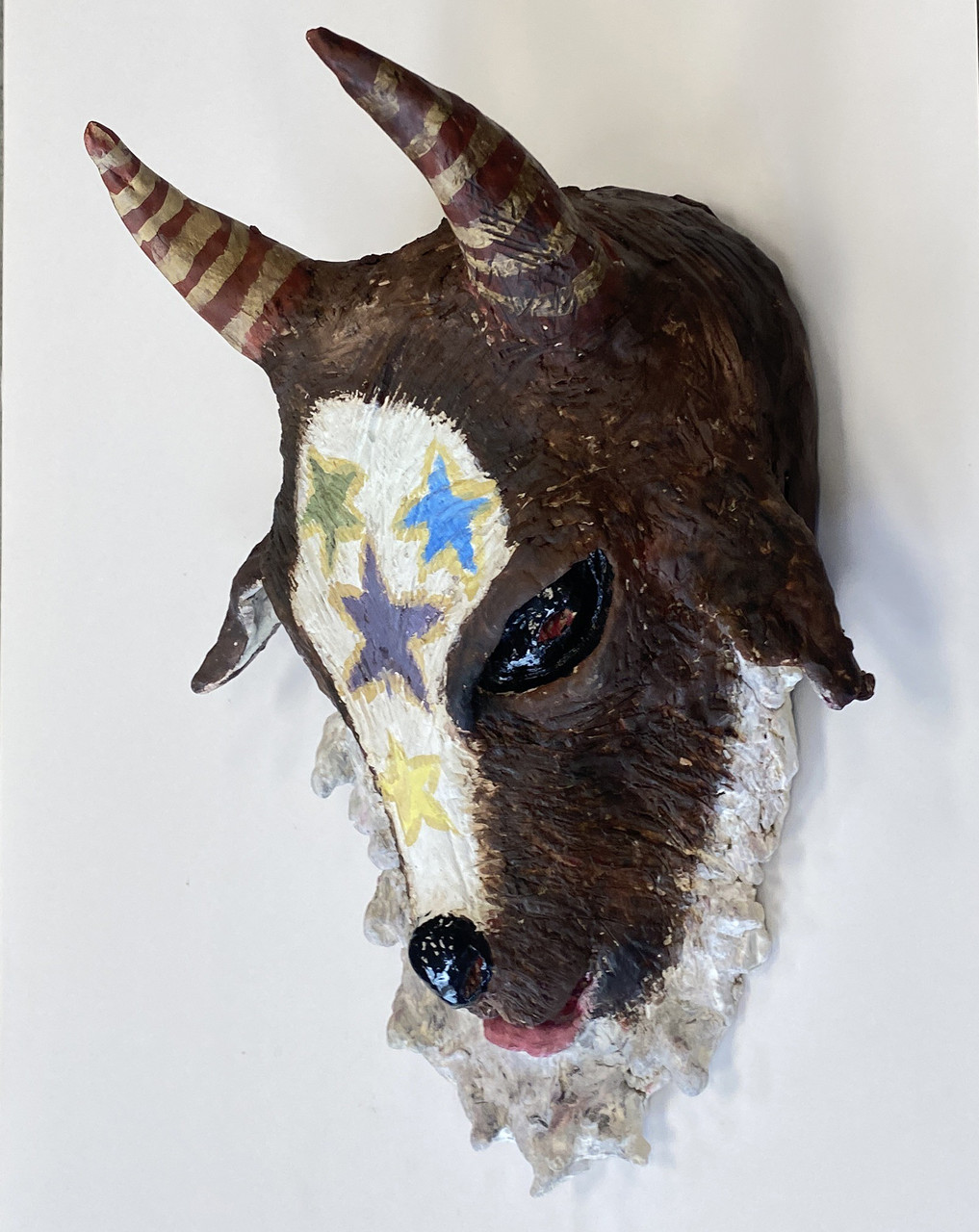
Dulce Reyes Lopez, Goat mask with stars, 2026. Clay, Acrylic, Glaze, dimensions n/a. Liberty High School, OR.
Statement: “I used Baphomet statues as a more clear 3D module for the face, since real life animals tend to sometimes hide certain features of their faces with a lot of fur or colors that mess up the prescriptive. At the time to add the horns I seemed to have some complications to have them pointing back, so I decided to make them point foreword, similar to the cameroon dwarf goat! At the time of painting the mask, I used the fur pattern of the Majorera goat, the colorful stars in the white area represent my favorite colors!”
Katie Salee
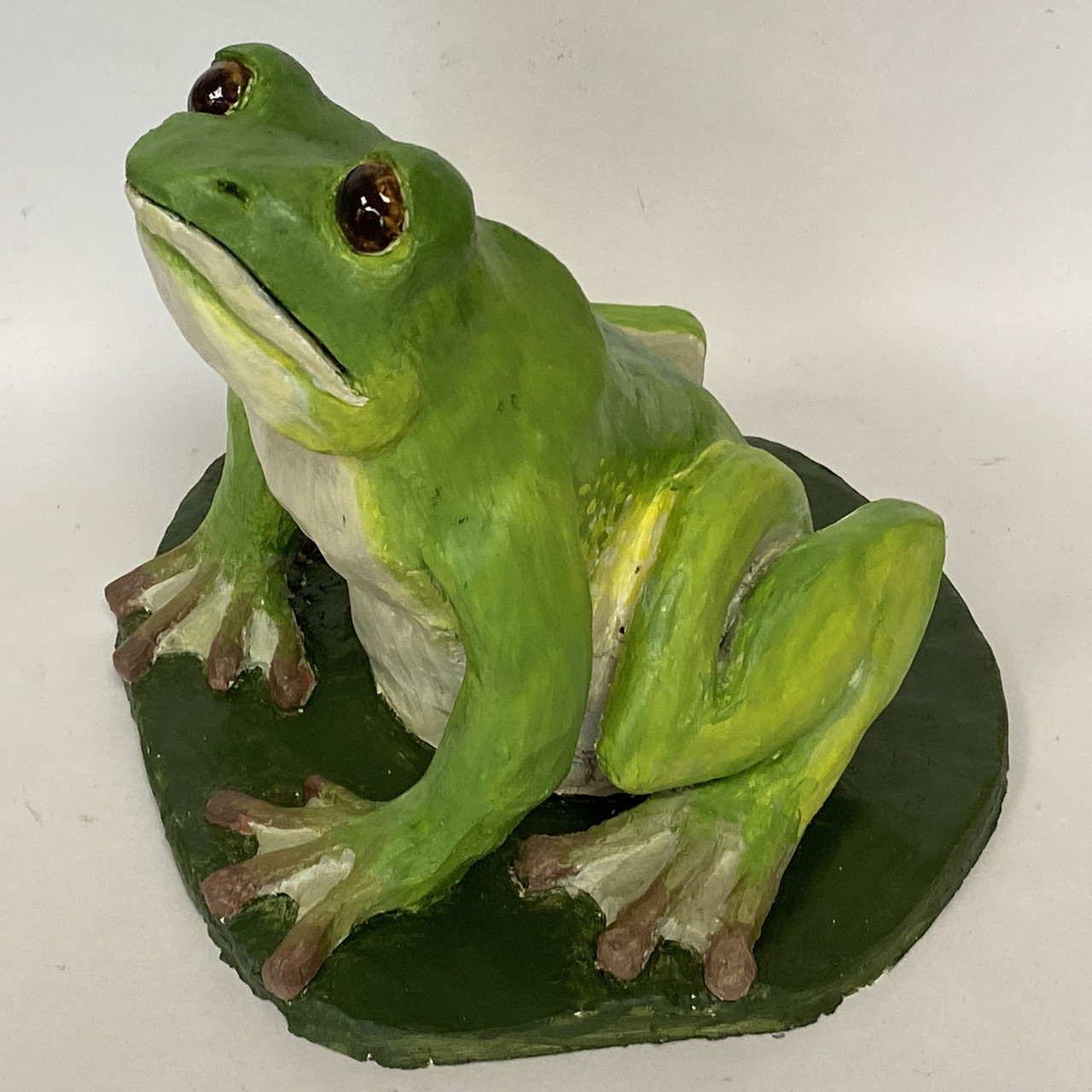
Katie Salee, Mr. Jellybean, 2026. Clay, Glaze, Acrylic paint, 11″ x n/a x n/a. Liberty High School, OR.
Statement: “I love frogs, I think they are adorable and very interesting. I used clay, glaze and paint for this sculpture. I made him green, my favorite color and a classic look for a frog. His coloring is based on a White-lipped tree frog. I used glaze for his eyes to make him seem more alive.”
Easton Shalala
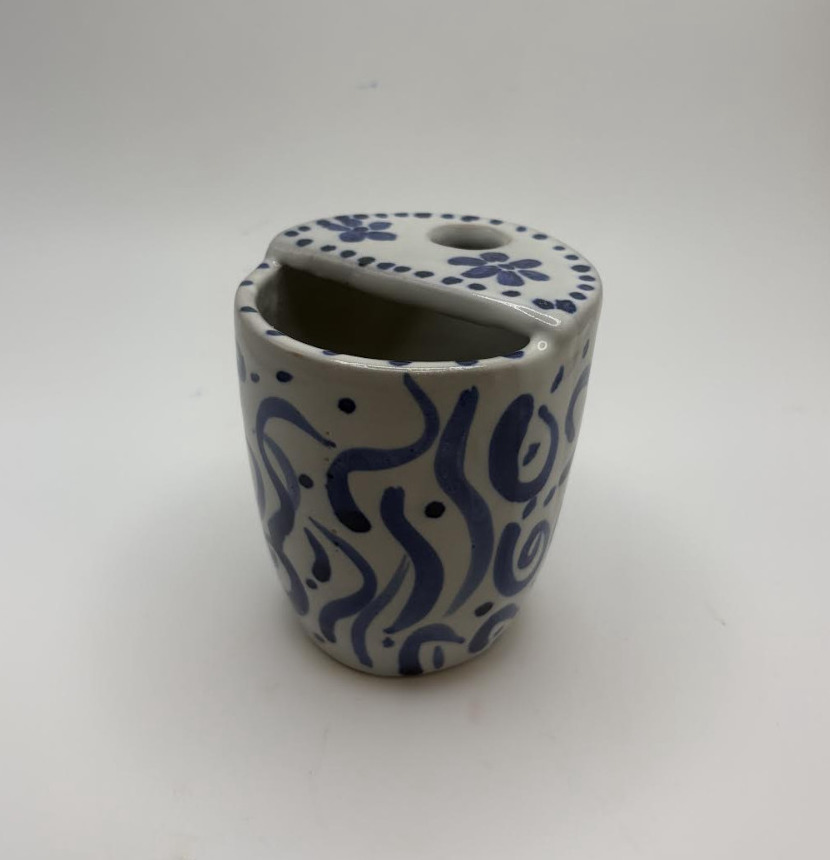
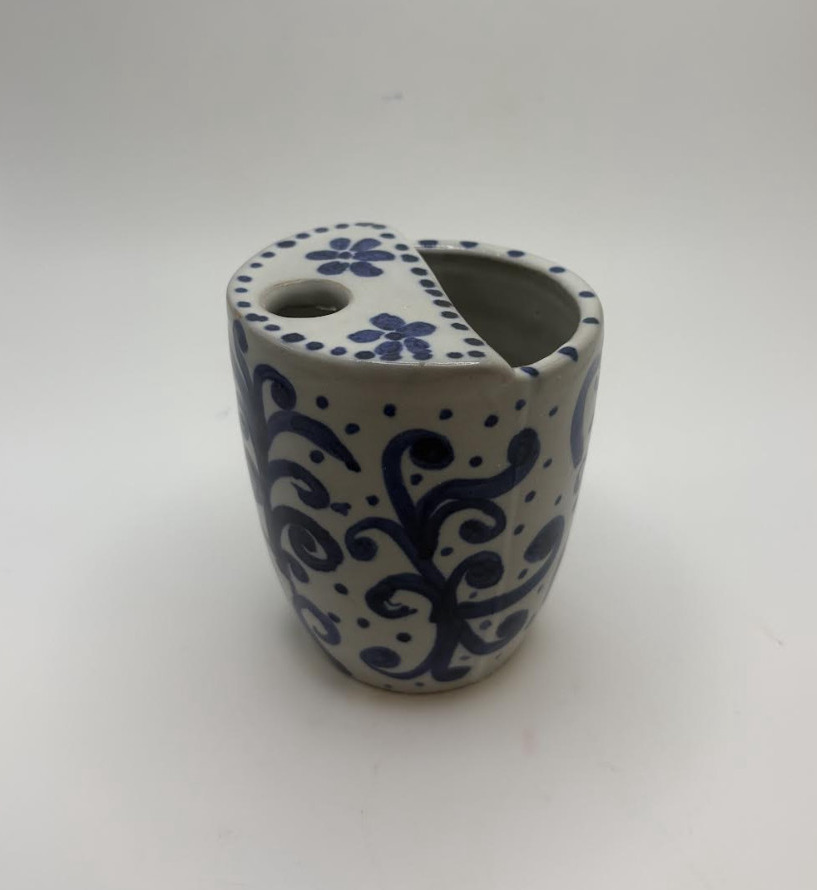
Easton Shalala, Blooming Rim Cup, 2026. Clay, Clear Glaze, 3″ x 2.5″ x 2.5.” Laguna Beach High School, CA.
Statement: “Throughout the process, I experimented with different approaches and made adjustments as I went, which helped me refine my original idea into a stronger final piece. I also looked at examples of similar works and researched techniques to better understand how to achieve the effects I wanted.
Overall, this project was about balancing creativity with intention. I wanted the final piece to not only show technical skill, but also communicate a clear idea and reflect my growth as an artist..”
Savannah Surgent
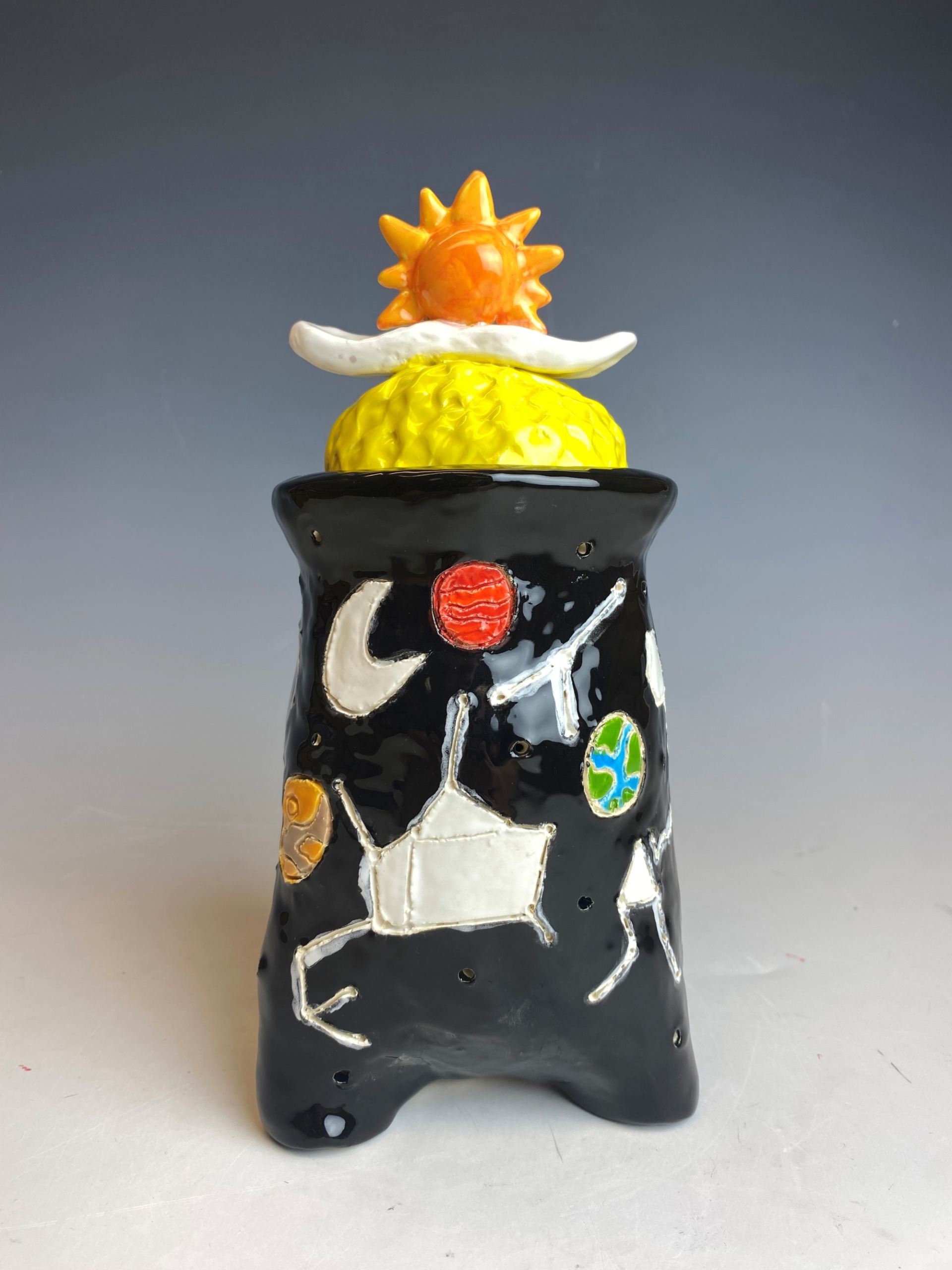
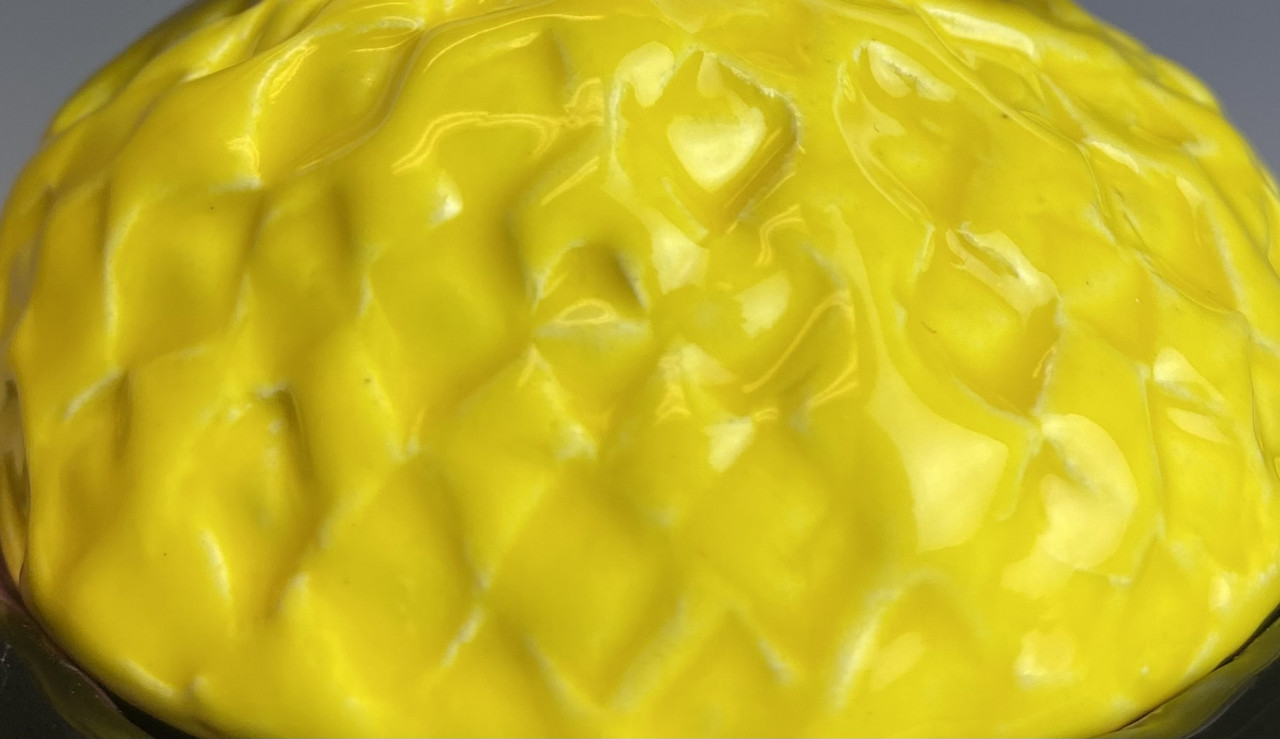
Savannah Surgent, The Rayning Sun, 2026. Ceramic, 5″ x 5″ x 5.” Seabreeze High School, FL.
Statement: “I would describe the theme of my vessel as a galaxy and the night sky. The body and feet have a variety of planets such as the earth, mars, and the sun. There are also constellations made present in my piece. Furthermore, the lid has diamonds below the sun that represent the bright light the sun gives our world and how without the sun, our world would have no life or civilization. I used slabs to make the body and lid of the tripod vessel while using a bevel cutter and the techniques of scoring and slipping.”
Moses Tao
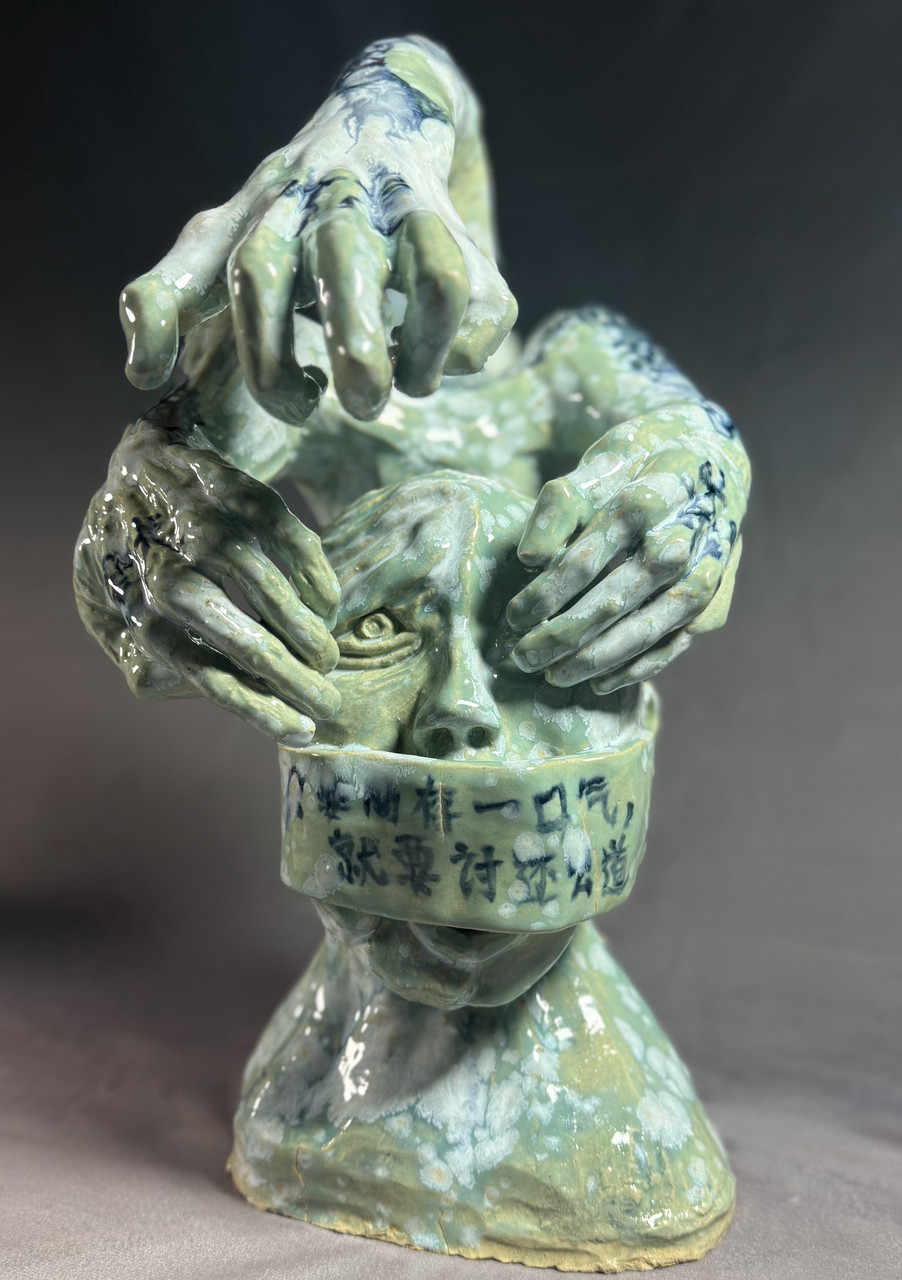
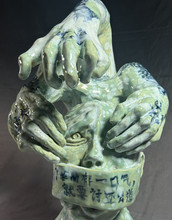
Moses Tao, Comfort Women, 2025. Clay, High Fire Glazes, 17″ x 7″ x 6.” Prestonwood Christian Academy, TX.
Statement: “My sculpture memorializes the experiences of “comfort women” and their fight for justice that continues today. I wanted to show not just what they went through, but what it means to live with that history, even decades later.
During the 1930s and 1940s, many women—often very young—were forced into military sexual slavery in “comfort stations” under Imperial Japan. Many did not survive, and those who did were left with lasting physical and emotional trauma. After the war, instead of being supported, many were treated as outcasts, blamed for what had been done to them, and forced into silence.
It wasn’t until decades later, in the 1980s, that survivors began to speak out and share their stories. Even now, there is still no full agreement or closure, and many survivors continue to ask for acknowledgement and justice.
I used my own hands as models for the three arms. Each hand represents a force acting on the women, with the calligraphic characters 默 (silence), 憶 (memory), and 制 (control/oppression). These characters were intentionally chosen because they hold the same meanings across Korean hanja, traditional Chinese hanzi, and Japanese kanji. Because the language itself aligns in meaning, it becomes harder to deny the reality they represent—the truth remains consistent, regardless of how history is interpreted. The hands cover, pull, and press into the face, showing both what was done to them and how those experiences remain, even when unseen.
The face is split into a younger and older side. The younger side reflects how early the crimes committed against them began, but how they continue to follow them for the rest of their lives. The faces I sculpted were based on photos of survivors.
Across the mouth, I wrote “只要尚存一只气,就要讨还公道” (“As long as a single breath remains, justice must be pursued”), a quote from a letter written by a group of Chinese survivors demanding accountability from the Japanese government. Although the mouth is covered, symbolizing enforced silence, the message pushes against that silence. These women were silenced for decades, and now they continue to demand justice.
I chose a more amorphous form to express the fluidity of their experiences—being pressed, distorted, and suppressed. I chose a jade-like green color to symbolize value and dignity, directly opposing the way many survivors were treated as if they had “lost their purity.” I also used crystal celadon glaze to form unpredictable, fractured crystals during firing, illustrating the chaos and trauma of war. The jade with cracked crystals becomes a quiet but firm statement that their worth was never taken away, for no one should be shamed for being a victim of war.
I wanted this piece to feel human, for the comfort women did not just suffer these atrocities, but they continued to experience the lasting effects of trauma, survival, and resistance. Even after being silenced, these women continue to endure, remember, and demand justice.”
Anouk Vannier
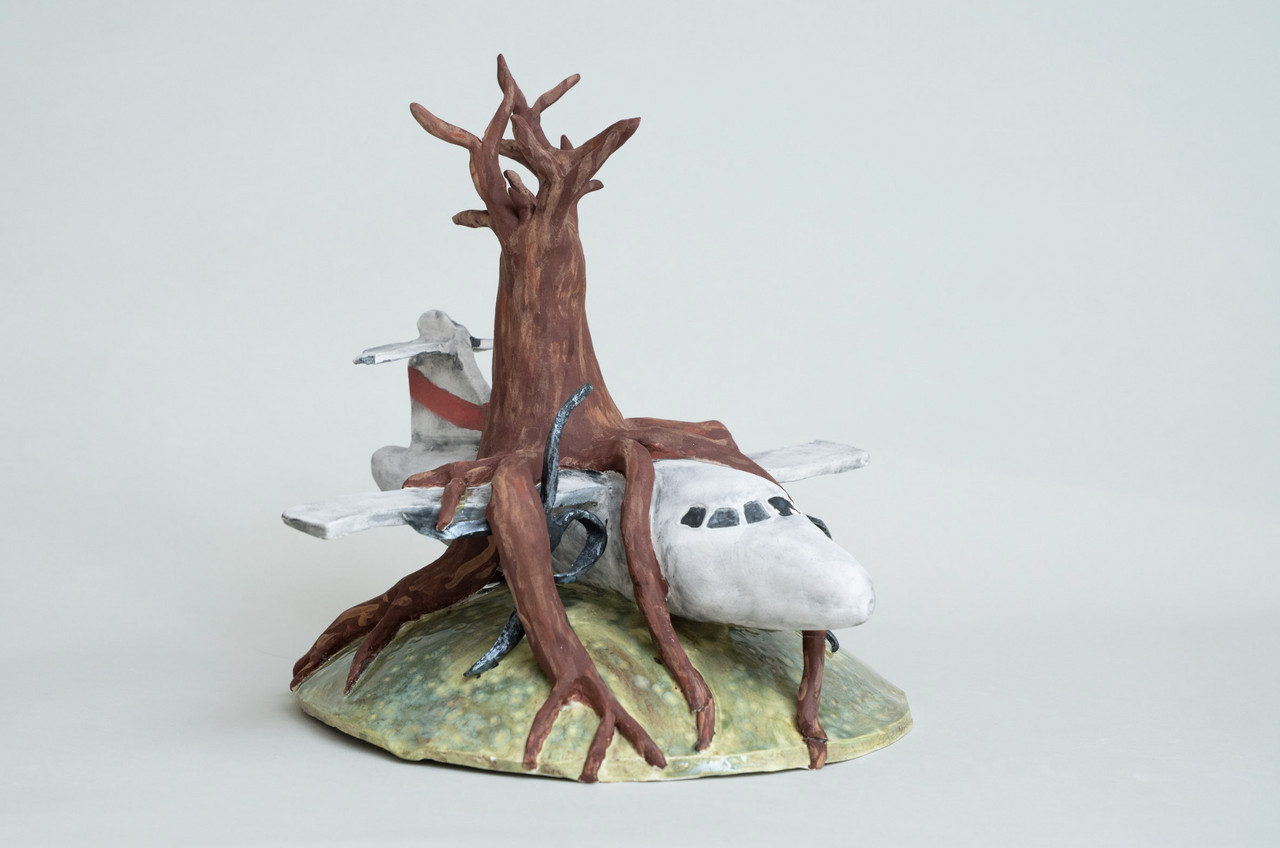
Anouk Vannier, The Last Word, 2026. Earthenware clay, glaze, 11.5” x 12″ x 13.” Holton-Arms School, MD.
Artist Statement: “Ancient cities and temples, which were once considered the pinnacle of human technology, can now often be found overrun by nature and trees. This idea became the foundation of my project: the fragility of human inventions when it is confronted with the enduring power of nature. I was particularly inspired by the temples in Cambodia, which I visited with my family. Massive trees engulf the structures, reclaiming the seemingly untouchable monuments.
Additionally, I was inspired by the Latin phrase “memento mori.” The concept of inevitable death. Just as past civilisations rose and fell, despite how grand they seemed, to the hands of nature and time, becoming engulfed by the earth once more. To me, the modern world is not so different from these ancient places. Planes, which I consider to be one of the greatest inventions, will one day also be reclaimed by nature, as it fights for the final word. Upon realising this, I built my project around a plane wreck, and how nature would one day bring the plane into the earth to rest. The tree envelopes the plane with its roots and extends far, showing its continuity.
I sculpted both the plane and the tree using white earthenware clay. I glazed them both with a mix of underglaze and glaze. Because the glaze (moss green) is harder to control when firing, I used to paint the more natural elements, like the hill and speckles on the tree. It shows how nature cannot be controlled and reflects the organic and slightly unpredictable course of nature.
This piece captures both the future and the past for me. Showing what will one day become of our great inventions and society, while also reflecting on what has come of them before.”
Mackenzie Westerberg
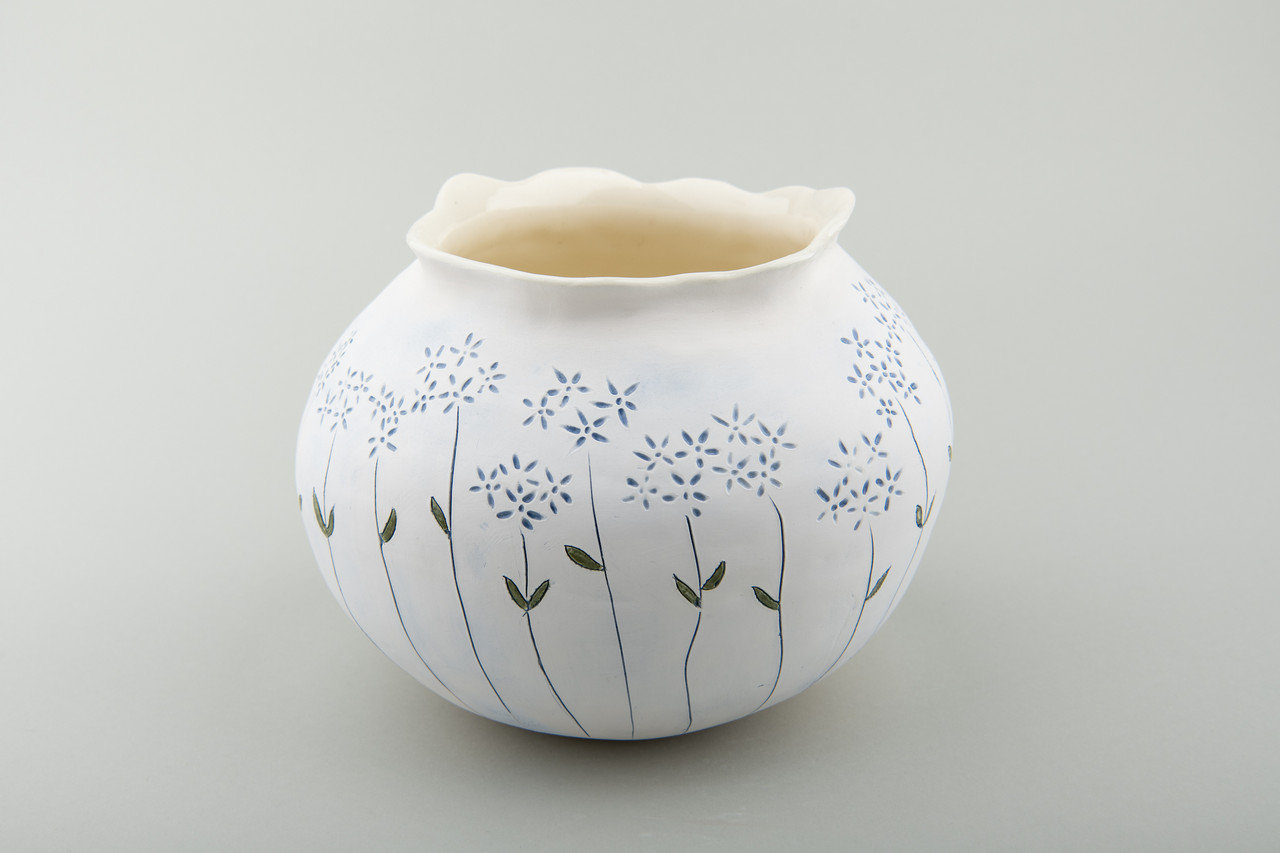
Mackenzie Westerberg, Hydrangea Dreams, 2026. White earthenware, underglaze, 6.3” x 8.7″ x 8.7.” Holton-Arms School, MD.
Artist Statement: “In the process of making my coil pot, I used many techniques, including the paddling technique, which helped me make sure my pot was smooth. This was my first time using this technique. I spent a long time smoothing my pot until I liked the way it looked. During the process, I was also not sure how I wanted the top of my pot to look, but while I was making it, the pot naturally formed a flowerlike look as I was paddling. Although I had the vision of my coil pot being ‘perfect,’ I realized how to adapt to the organic nature of it. I then had to focus on how I wanted to glaze it. I love hydrangeas and had the vision of painting them all over my coil pot. I stuck with that vision. I carved out the flowers and then painted the glaze on and washed away the excess glaze with a sponge. I wanted to make sure the glaze went into the carvings. At first, I was going to paint the flowers blue, but I decided to add contrast and paint the stems green. Through this process, I learned that your ‘vision’ will not always turn out how you want.”
Abby Wildman
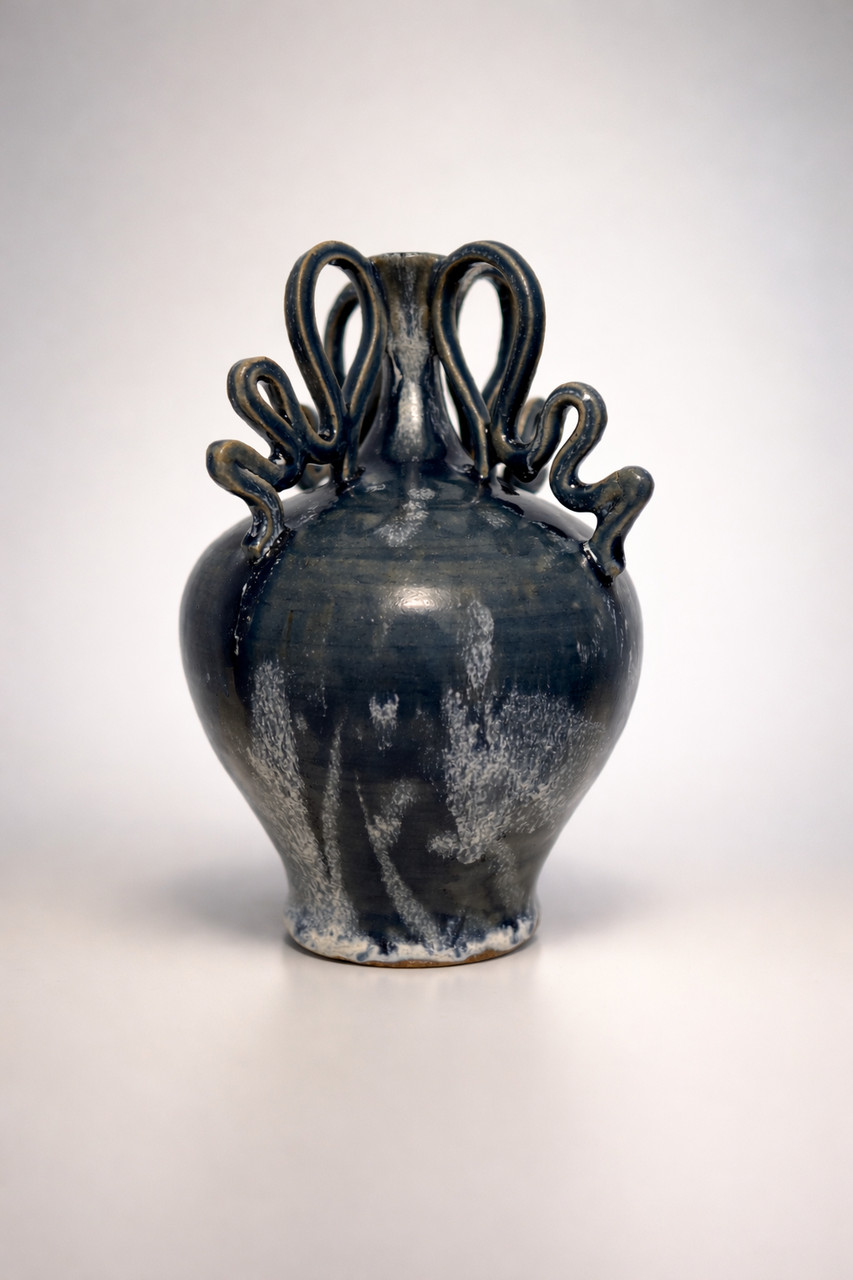
Abby Wildman, Uncontained, 2026. Brown clay, blue and white glaze, 11” x 8″ x 8.” Mount Tabor High School, NC.
Artist Statement: “This piece demonstrates how time changes surfaces and sculpture. Its form appears worn down by elements such as water, air, and time. As the glaze flows over the shape and eroded handles, the piece transforms and becomes more organic. I chose this blue and white glaze combination because of its unpredictability, often uncontrollably following the vase’s structure. The colors and texture reflect the ocean and waves, showing the transition carried by erosion and time. I wanted to create a piece where I could experiment with handles as active sculptural forms, as well as creating motion and structure in the clay and final product. I hope viewers recognize the movement within this vase, and that the flowing glaze and imperfect forms help characterize it.”
Mackenzie Yang
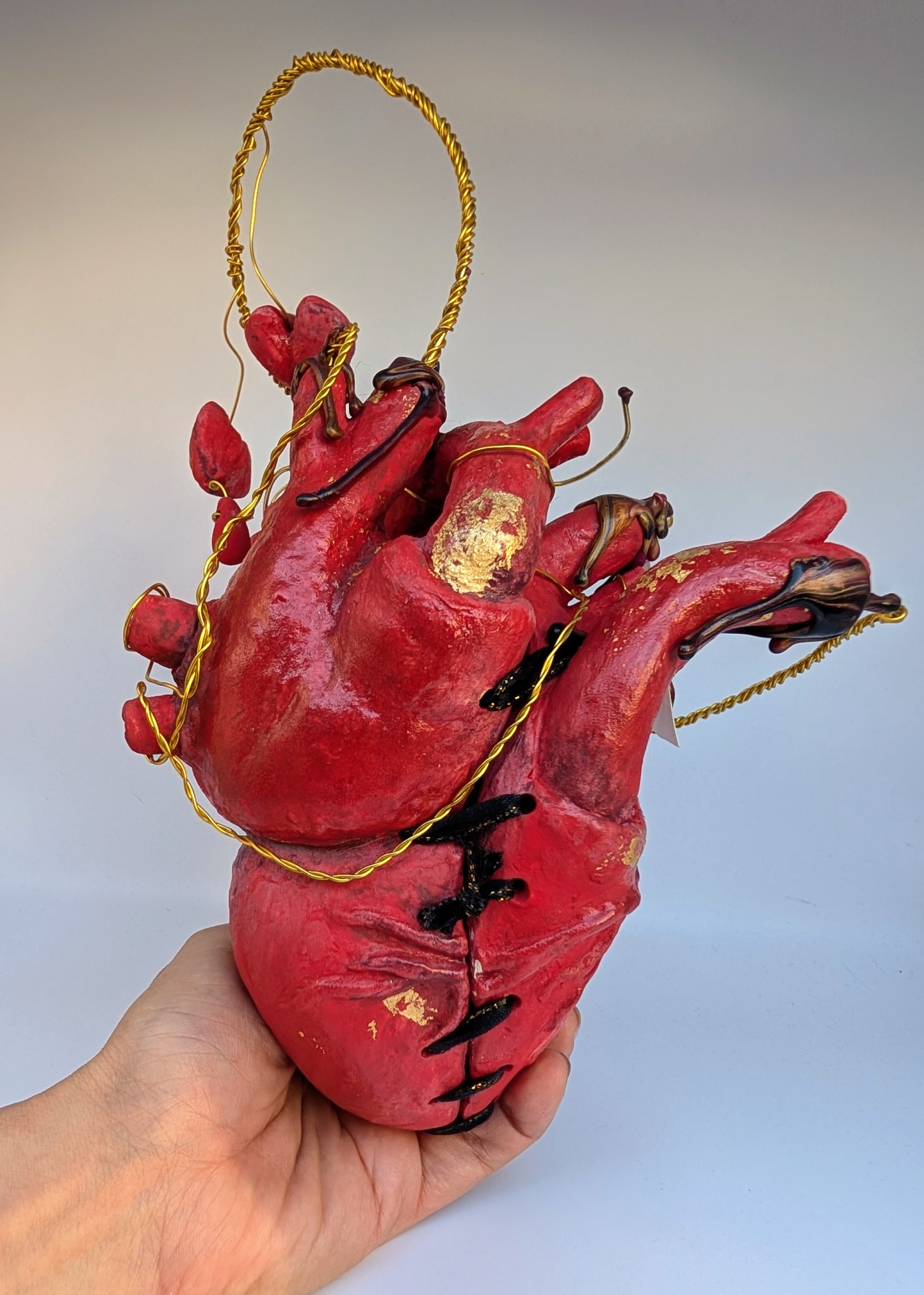
Mackenzie Yang, Lamprocapnos spectabilis, 2025. Ceramic clay, wire, wax, black ribbon, gold leaf, 6” x 4″ x 3.” Sonora High School, CA.
Artist Statement: “Lamprocapnos spectabilis is the scientific name for the bleeding heart flower. I wanted to make a piece inspired by said flower, combined with my love for anatomy and biology. I thought the idea of flowers coming out of a heart would be interesting, similar to the concept of Hanahaki disease. I looked at several images and models of a human heart to try to get the details as realistic as possible. The heart itself was initially made solid, then cut open and hollowed out. I added sutures to sew up the two hollowed out halves and inserted wire through the valves. I used wax to keep the position of the wires fixed.”
Yanji Zhu
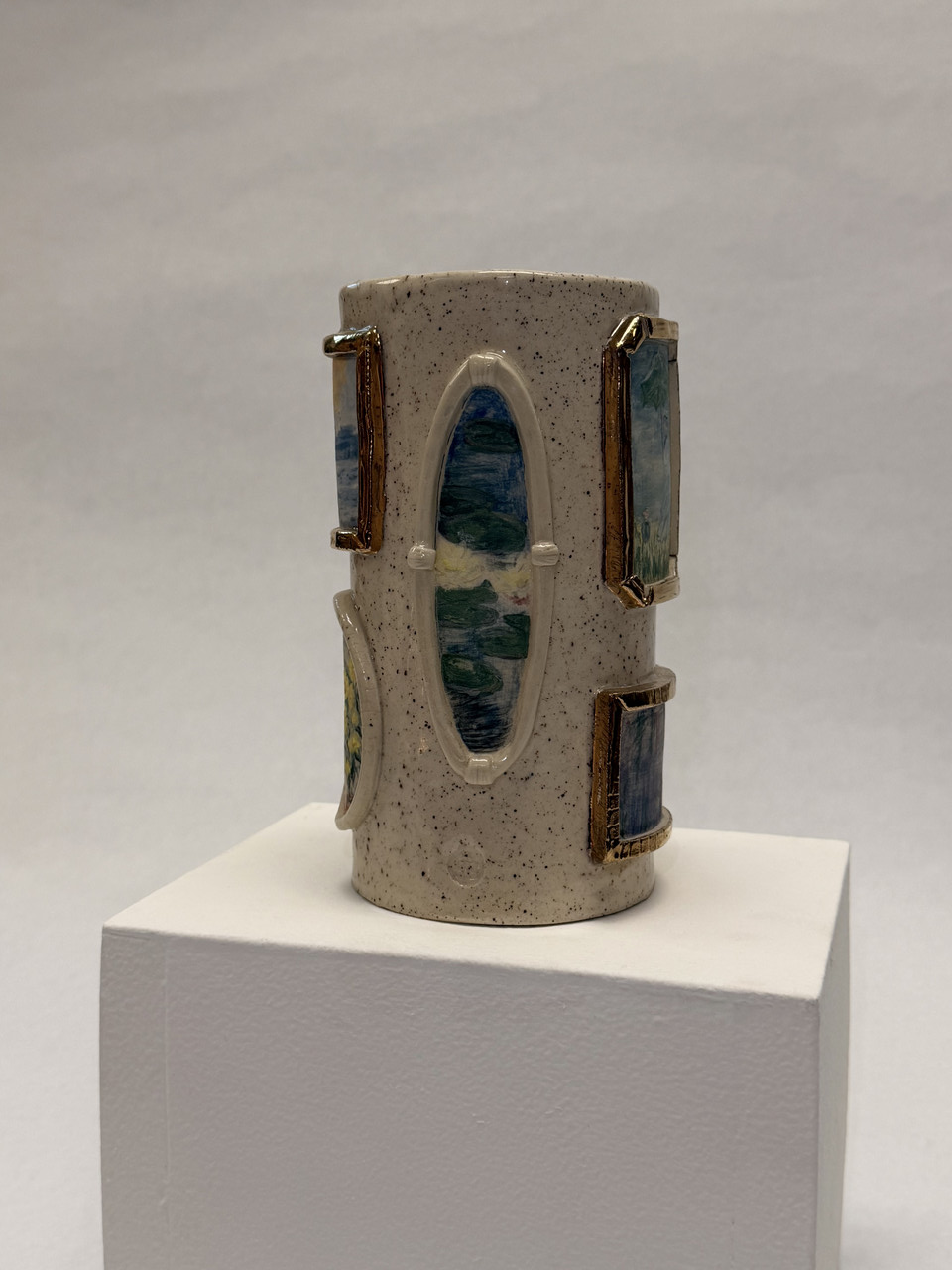
Yanji Zhu, Untitled, 2026. Bmix & speckled clay, underglaze, glaze, luster, 7” x 3.5″ x 3.5.” Western Christian High School, CA.
Artist Statement: “My vision was to make a vase inspired by Claude Monet. I made a regular cylinder vase first then made picture frames and drew Monet’s famous paintings in them with underglaze. After it was clear glazed I applied a gold luster.”
Margo Zimmerman
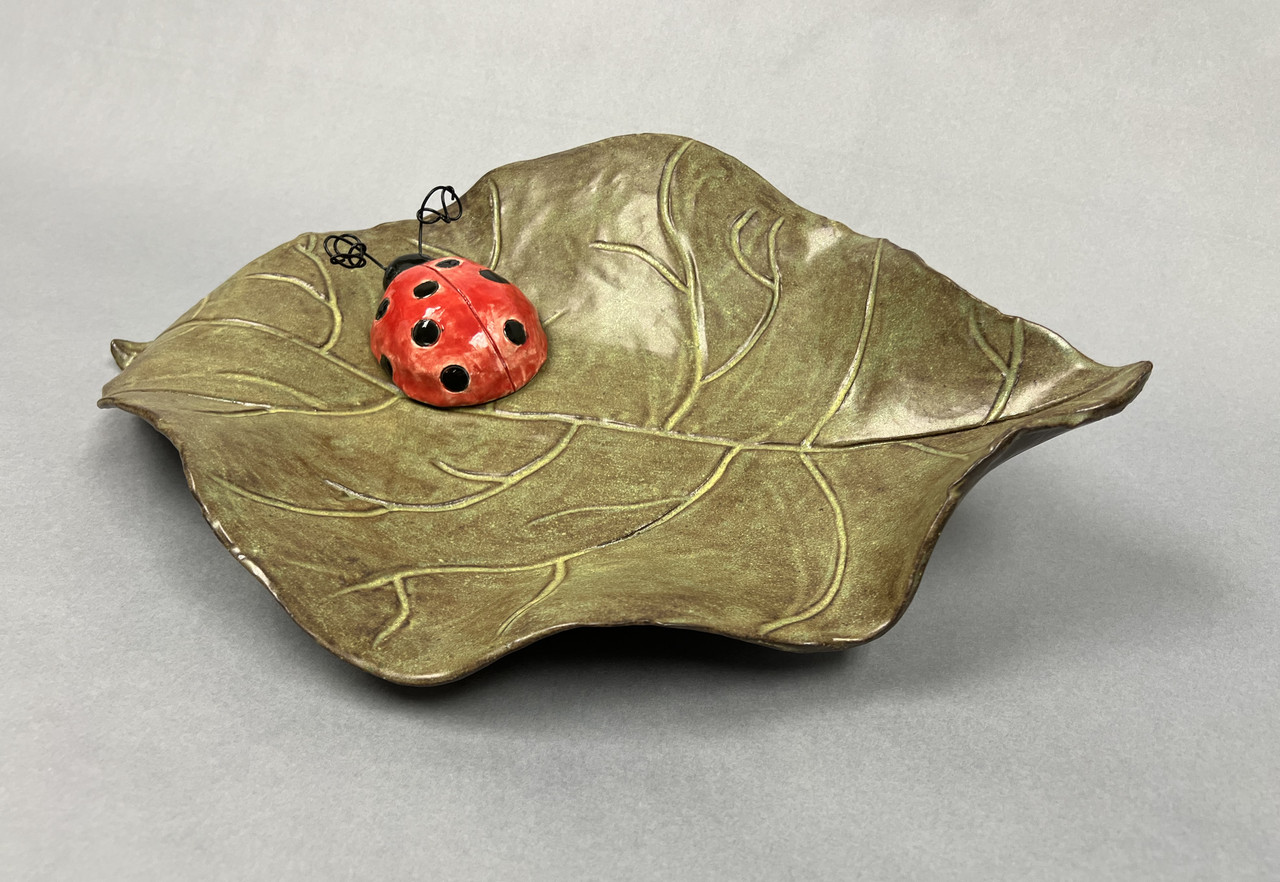
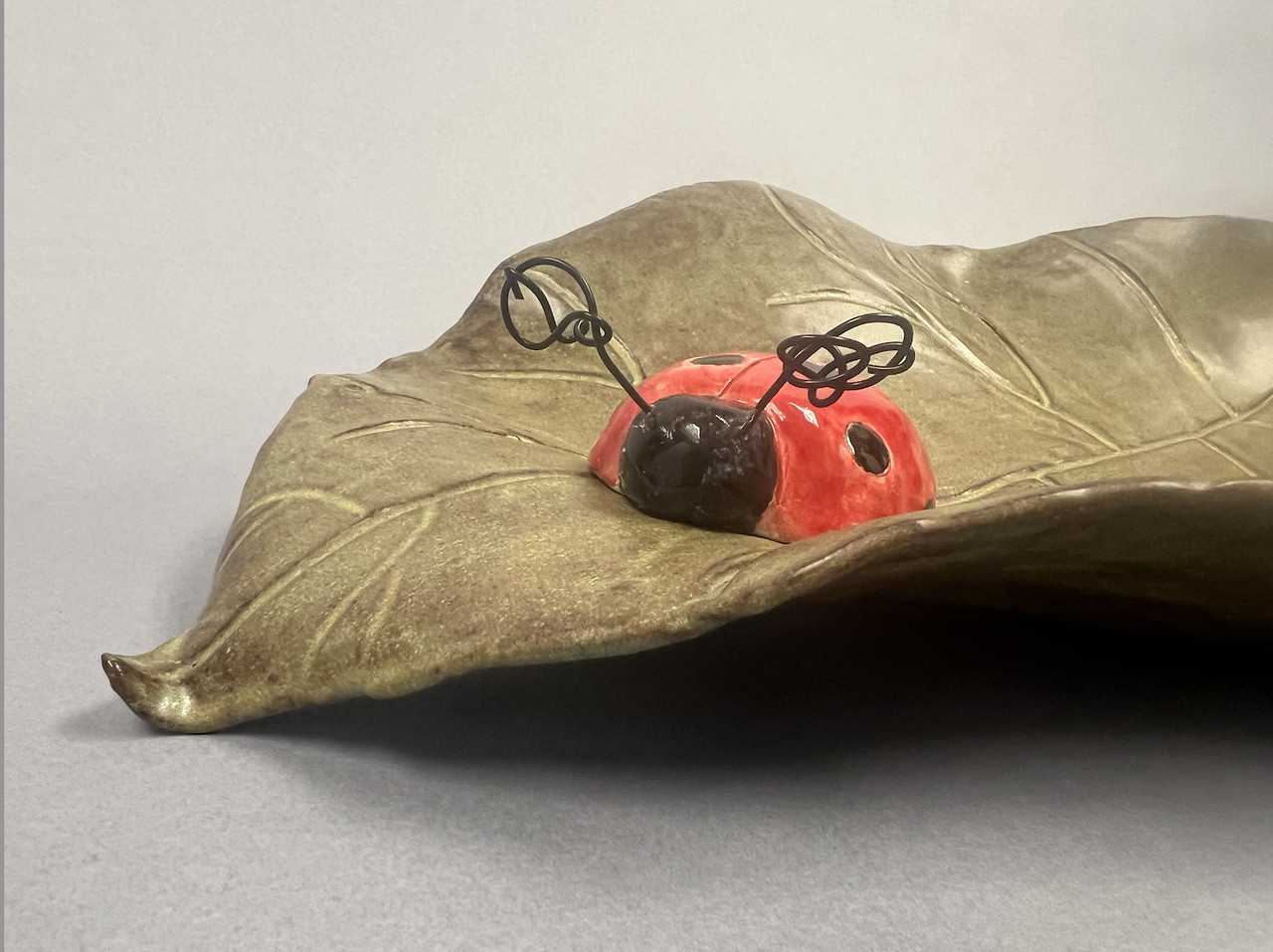
Margo Zimmerman, Invisible Helpers, 2026. Earthenware, Stoneware, Glaze, 17” x 11.5″ x 3.” Holton Arms School, MD.
Artist Statement: “My intention with this creation is to highlight the importance of insects and the little creatures in nature that are often overlooked. I enlarged the size of the insects and the leaf to bring attention to them and to accentuate their impact on our daily lives. Insects are essential to healthy biodiversity in ecosystems through many ways such as through as pollination and fertilization of plants, including the foods that people eat. I focused on a Ladybug which is a beneficial garden insect and some believe is a sign of good luck. While insects are often ignored, squished, or viewed with disgust, I believe in recognizing the significance and impact of these small creatures.
I created the leaf from a stoneware slab with high-fire glaze. The ladybug is sculpted from earthenware.”
Julia Zou
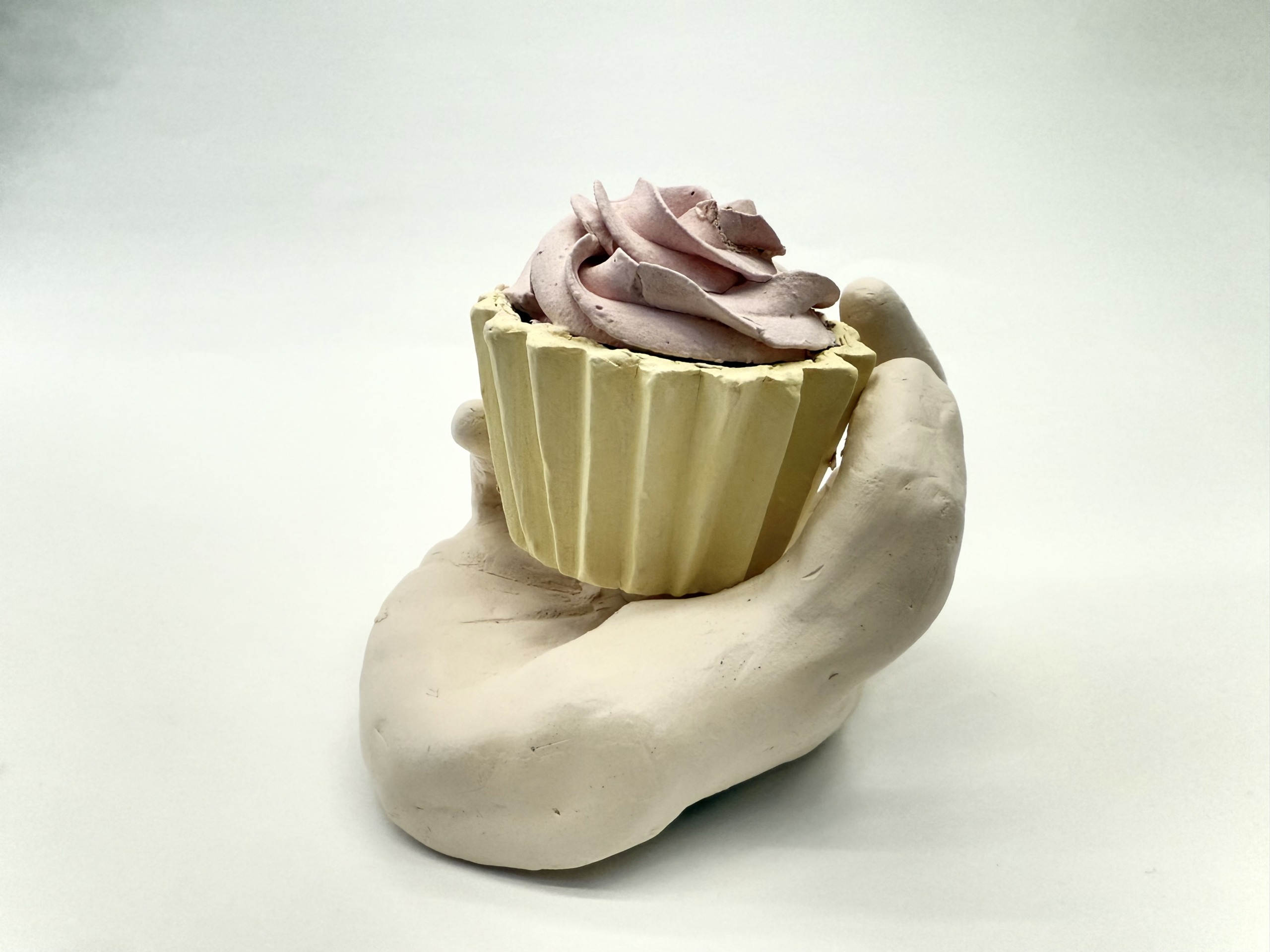
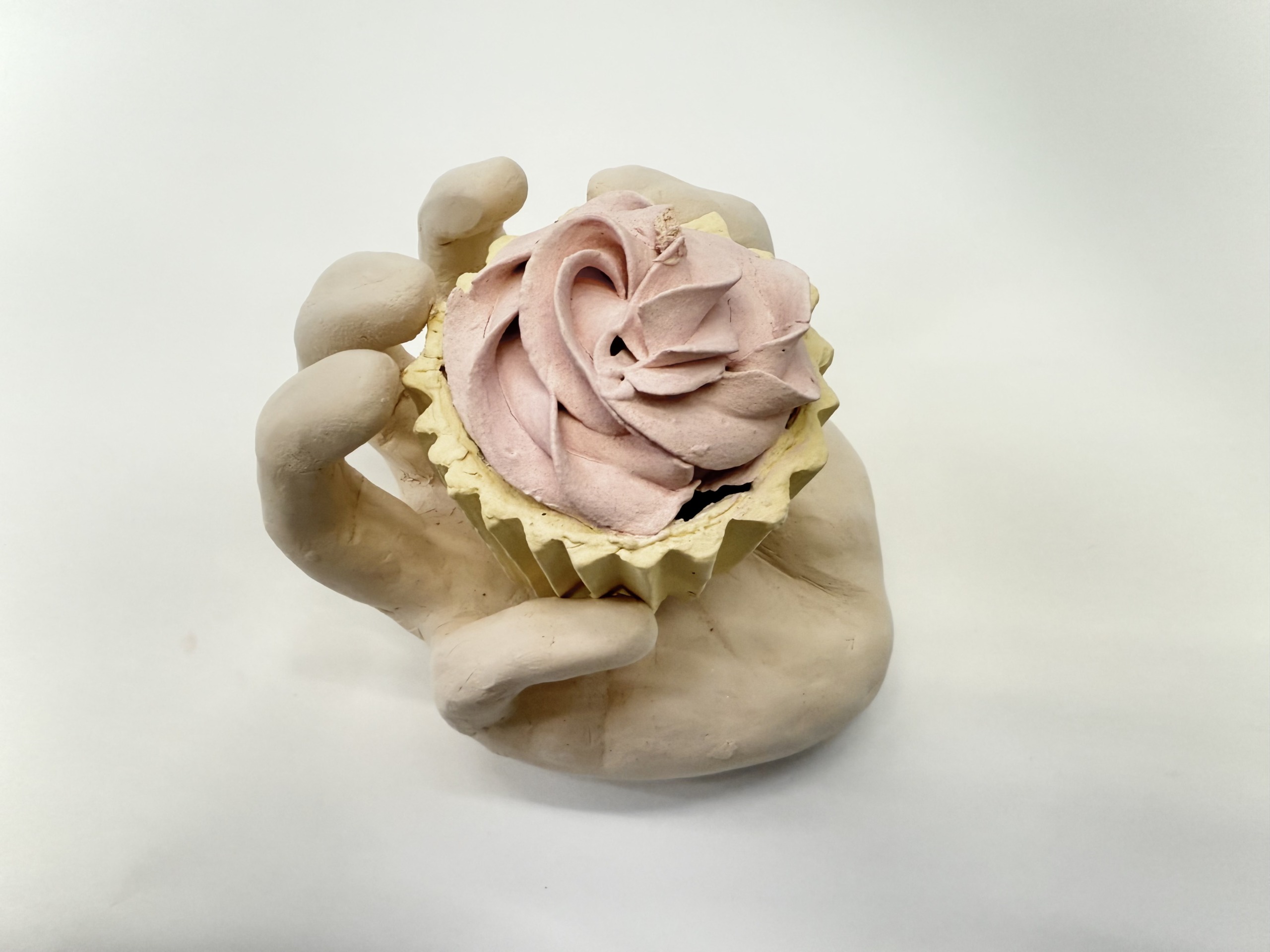
Julia Zou, Simple Pleasures , 2026. 101 Hugo Buff Clay, Amaco velvet underglaze, paper, 5” x 5″ x 4.5.” The Stony Brook School, NY.
Artist Statement: “A cupcake is a sweet treat that can brighten up one’s day. It is common and seems insignificant, but helps so much with increasing joy in the small things. For my artwork, the cupcake is the only painted part, with the hand still the natural clay color. It is the spark of delight that flashes across one’s mind. The hand is sculpted after my own hand positioned to hold a cup of similar size to the pastry. The cupcake, on the other hand, is carved to keep its sharper edges. This project is made of stoneware clay.”
11th Grade
Fatima Abid
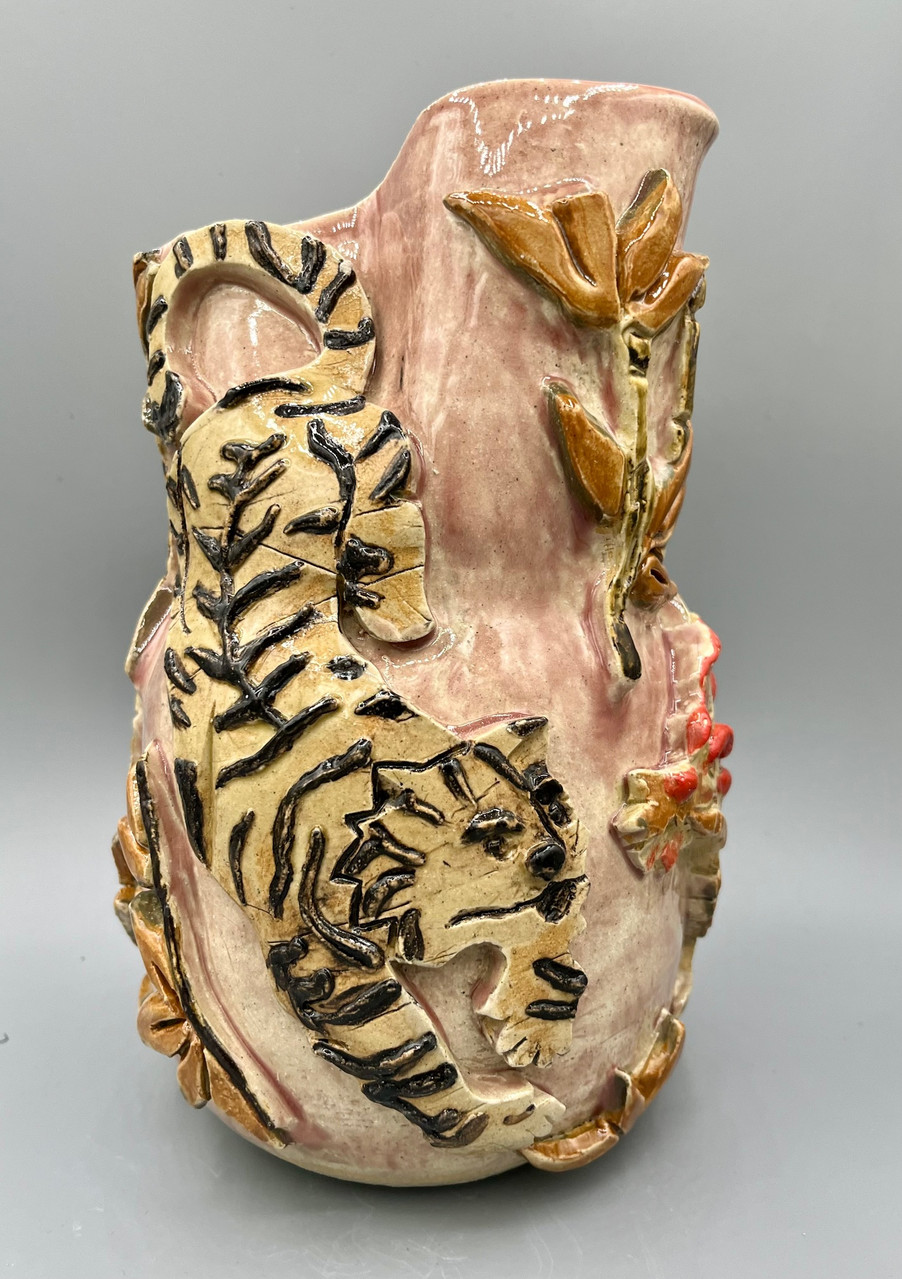
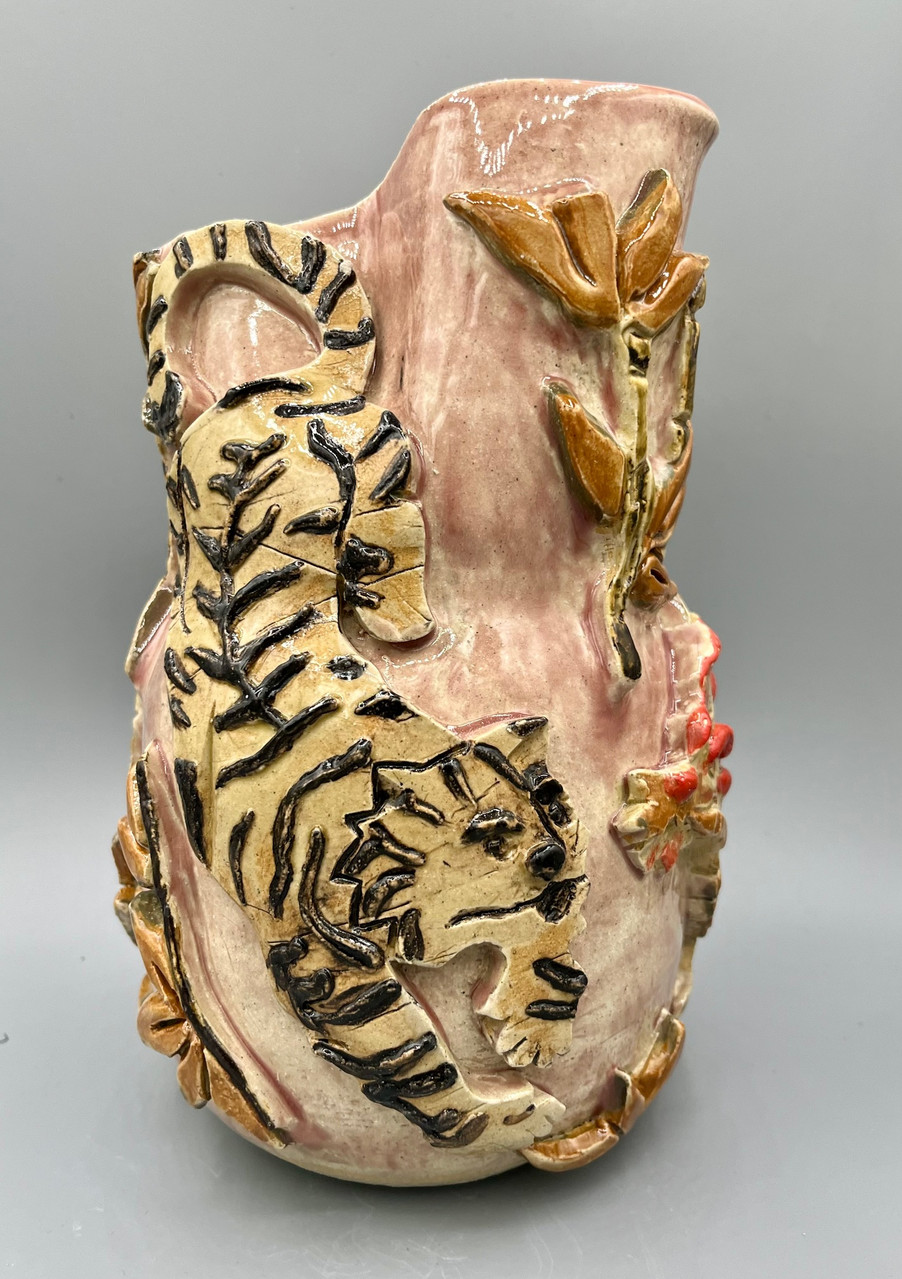
Fatima Abid, Beauty through fury, 2026. Mid-fire white stoneware, Slip, Sgraffito tools, 9″ x 5″ x 5.” Lane Tech College Prep High School, IL.
Artist Statement: “I wanted to go out of my comfort zone and create a sculptural vessel that explores movement, tension, and balance through the interaction of animal forms and their fluidity. I was inspired by the intricacy and visual storytelling of antique Chinese porcelain designs and their big drawing features that attract the viewer to take a closer look at the piece. The piece I made incorporates a tiger and a dragon that wrap around the surface of the vase, meeting in a moment of confrontation. This intentional placement emphasizes both motion and contrast between the two animals, reflecting a dynamic relationship between the strength and the fluidity.
The vessel is constructed from a mid-fire white stoneware and assembled from three wheel-thrown forms that were joined together. Hand-built elements, including carved and applied slabs for the animals and their textual bodies were used to create their organic details. Along with this bamboo like trees were attached in the back to add more to the naturalistic elements of the piece. Additional coils and surface textures tools were added to enhance depth and highlight key features such as the tigers stripes and the dragons scales. Layered glazes, including weeping plum celadon and ochre celadon, were applied to create a sense of age and history within the visuality of the piece.
By combining structure with detailed surface work, the piece invites viewers to move around it and experience the narrative from multiple perspectives.”
Aryanna Almos
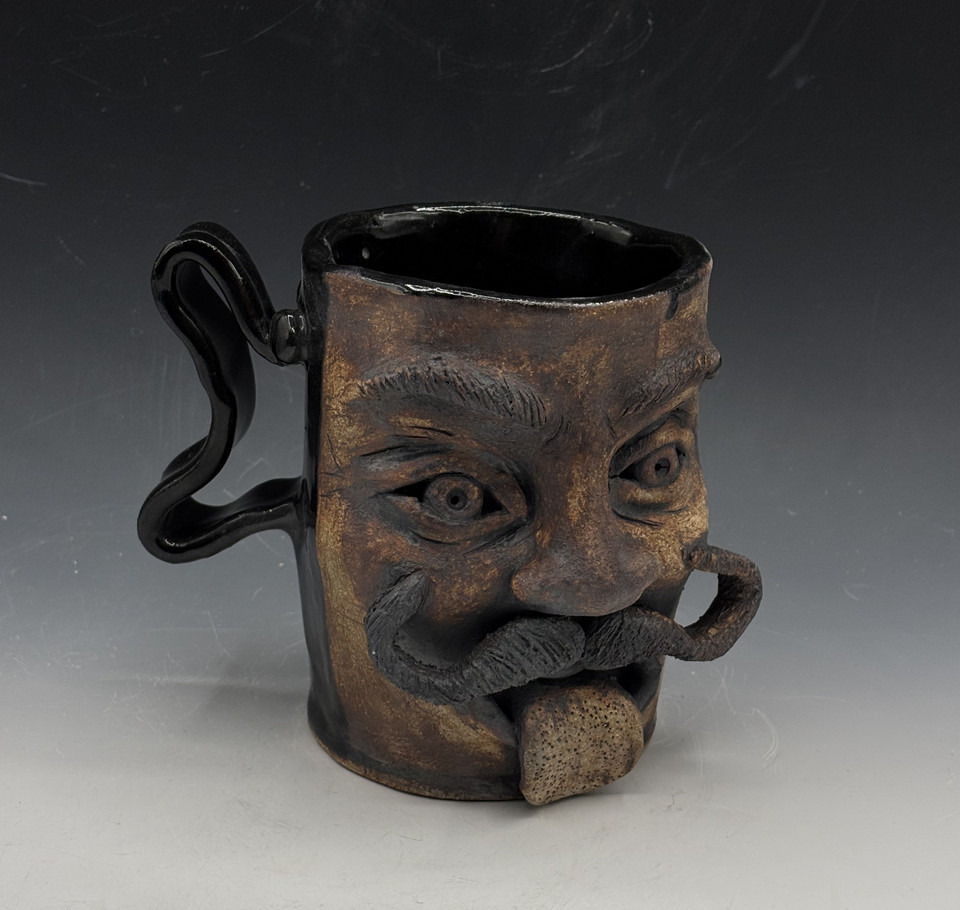
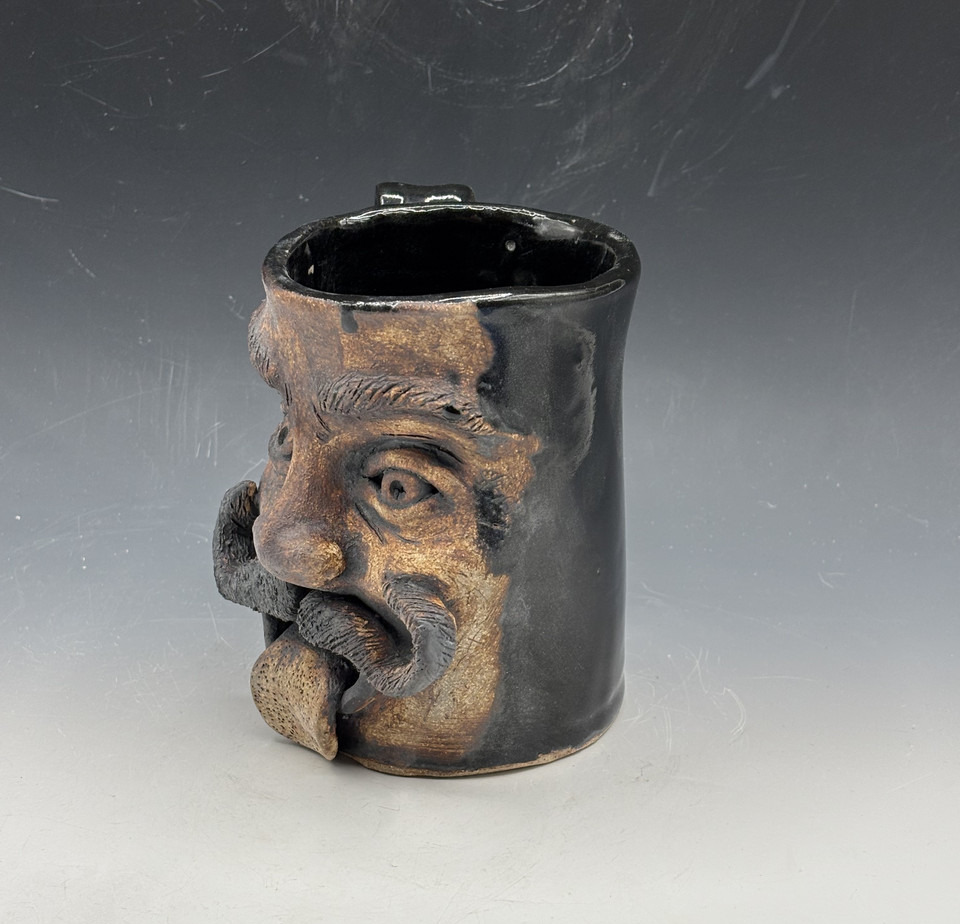
Aryanna Almos, Face mug, 2025. Clay, Glaze, 5.5″ x 4″ x 4.” Rim Of The World Senior High School, CA.
Artist Statement: “For this project I wanted to explore sculptural ceramics that combine function with storytelling and personality. The sculptural mug features a detailed human face. I slabbed the mug form and then hand-sculpted the facial features, including the nose, mustache, and facial expression. I focused on exaggerating the expression to give the piece personality and character. The dark glaze and exposed clay areas create contrast and help highlight the textures and details of the face.
While developing this piece, I looked at examples of functional ceramics that incorporate sculpture and character. My goal was to push beyond simple pottery forms and experiment with storytelling, texture, and creative design while still keeping the object recognizable and functional.”
Leo Ansari
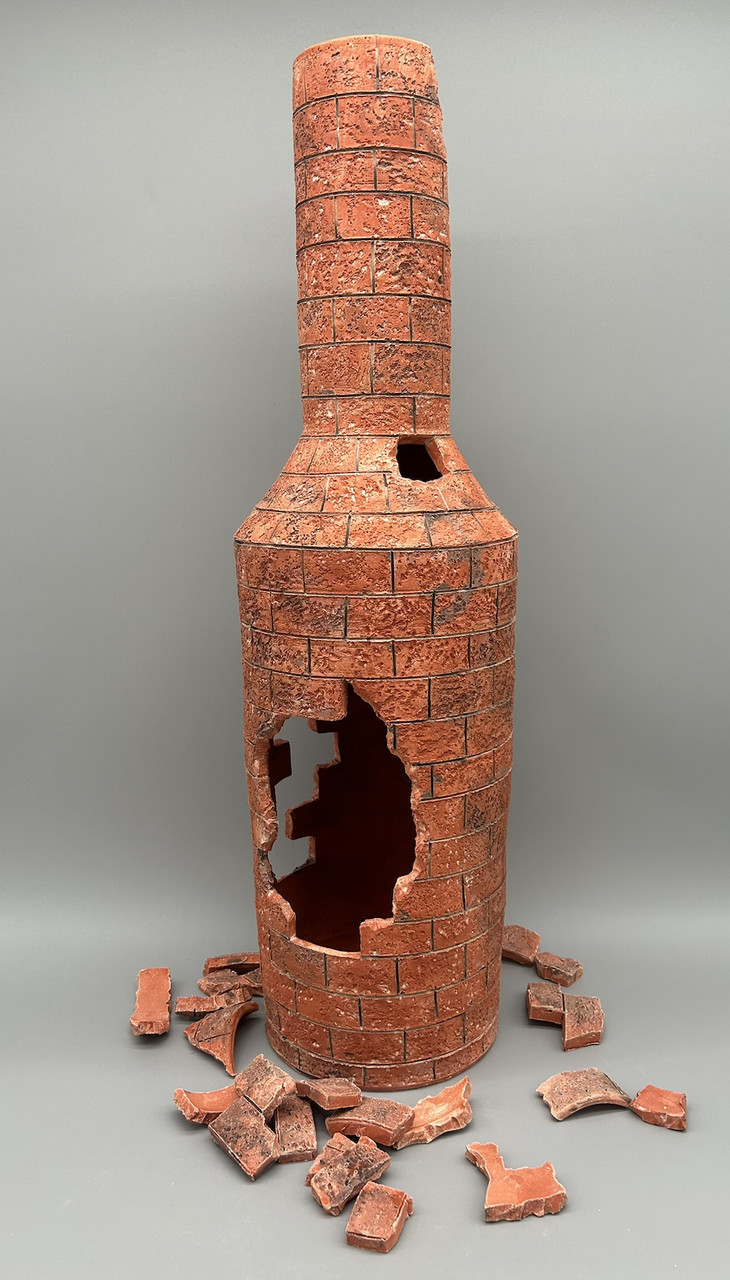
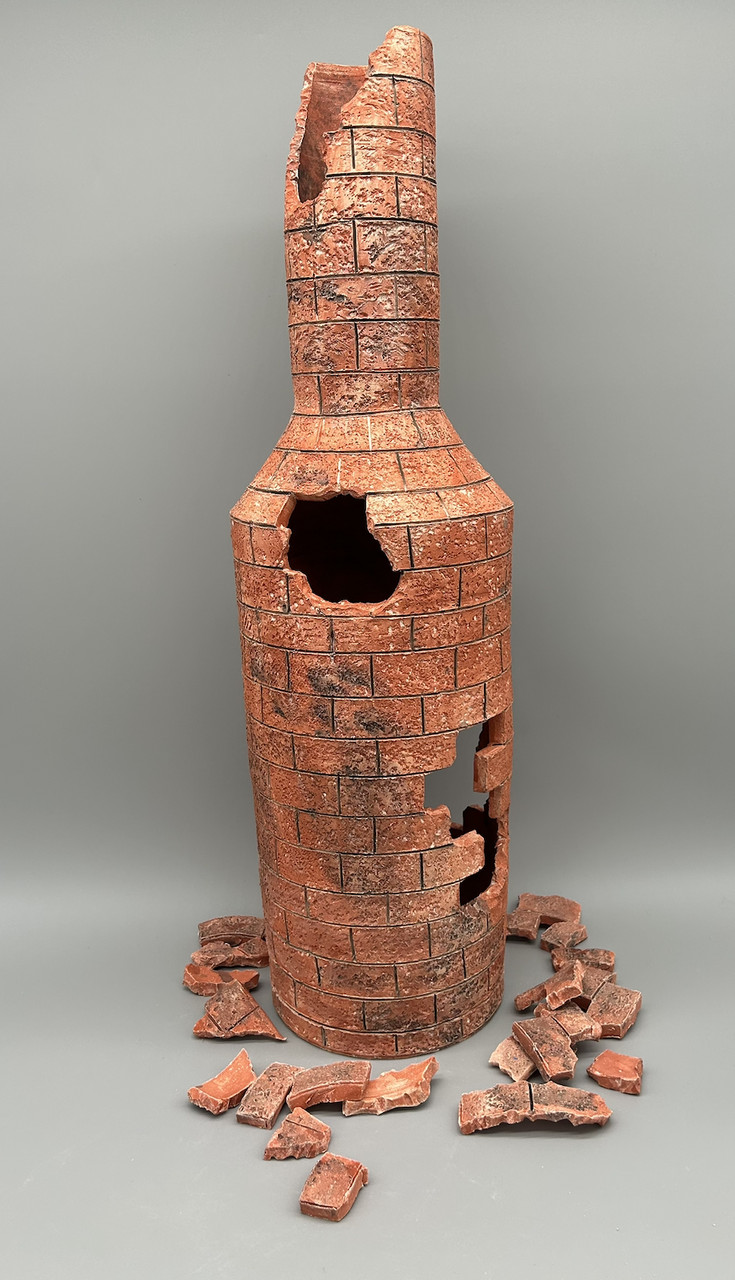
Leo Ansari, Untitled, 2025. Raku clay, 23″ x 9″ x 9.” Breck School, MN.
Artist Statement: “The idea and inspiration for this piece came from destroyed and decaying buildings. I found it fascinating how the most secure and stable structures will one day crumble. I’d also been playing around with large coil+thrown vessels for a while and wanted to see if I could incorporate them into my next project. These two ideas fit perfectly together. For the broken bricks, I threw the base which was about 5″ with one lump of clay, and for the rest of the height, I used a mixture of coils and throwing for the rest of the height. To do this, I extruded the coils and placed them on the clay coming off the wheel, and with a rib, smoothed them into one piece. To make the seam disappear, I spun the wheel and pulled up the thicker coils, making the connection point seamless. I repeat this process using four coils each time for the rest of the height. For the brick texture itself, I smashed an actual brick on the road and used that brick as a mold and tapped it against the leather-hard form to give a distinct texture. For the cut-out bricks, I use an X-Acto knife to cut out the general shape, then carve rougher edges with a trimming tool. After the bisque firing, I glazed it with an underglaze red and black wash to finish the piece.”
Hudson Barber
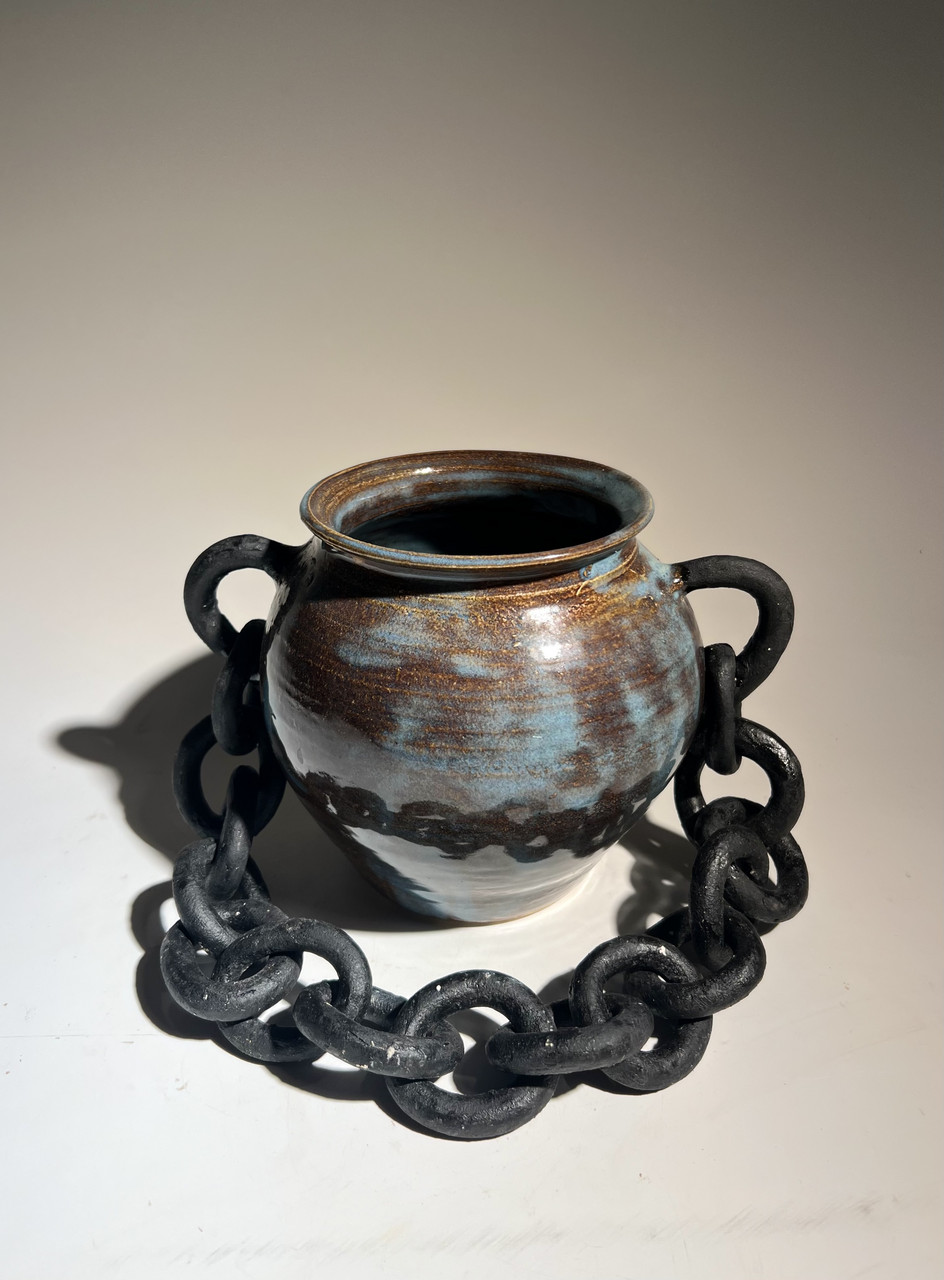
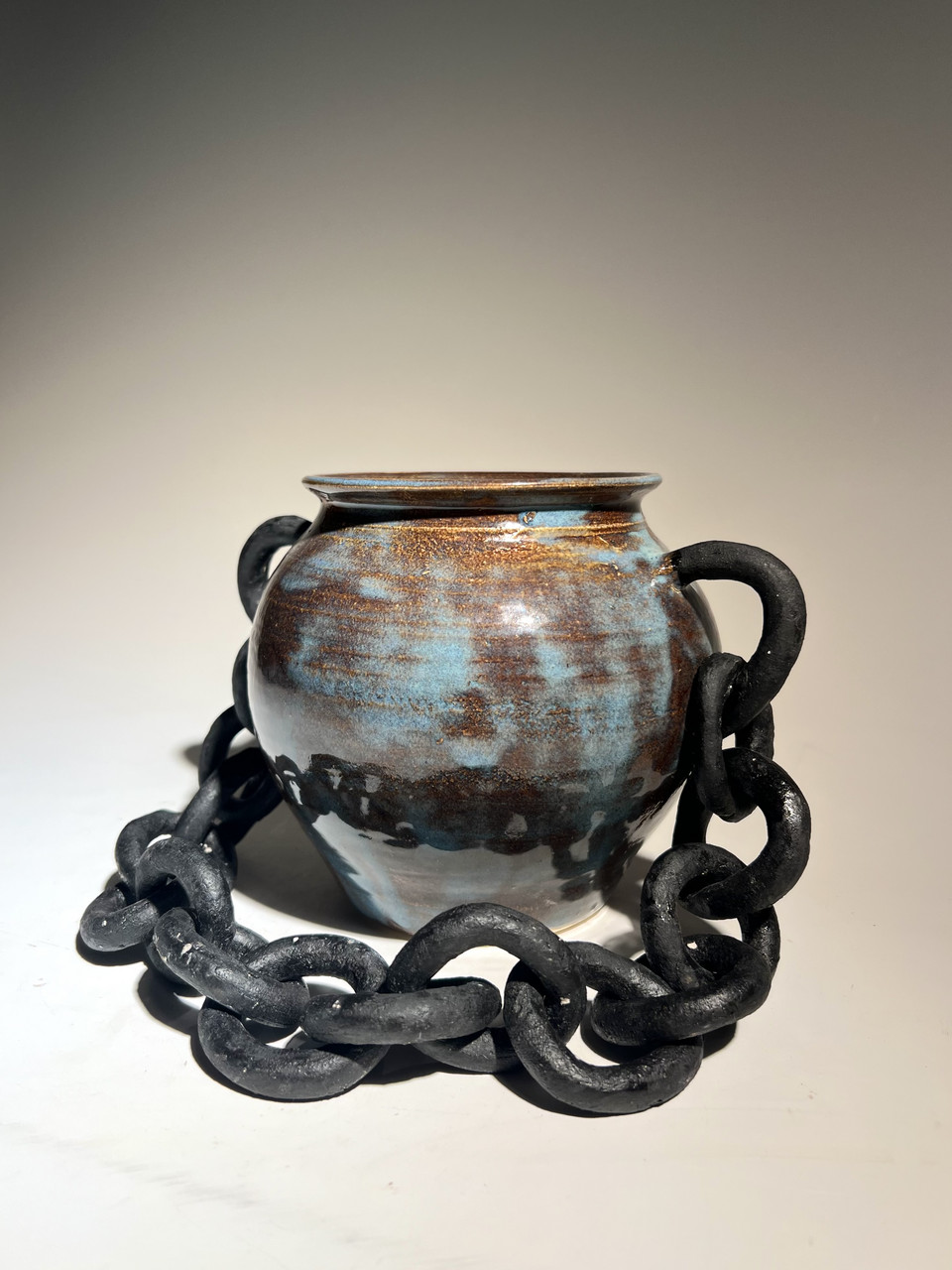
Hudson Barber, Chain Reaction, 2026. Clay, Glaze, 6″ x 8″ x 8.” Harvard Westlake High School, CA.
Artist Statement: “I wanted to create something unique and interesting. I really wanted to test my pottery abilities by going beyond what I’m normally comfortable with making. I experimented with throwing a vessel with added hand built coils, creating chain links as well as another vessel where I hand carved into it. This pot was thrown with clay, with many different pottery tools and glaze and took many days and long hours to complete.”
Valentina Bautista
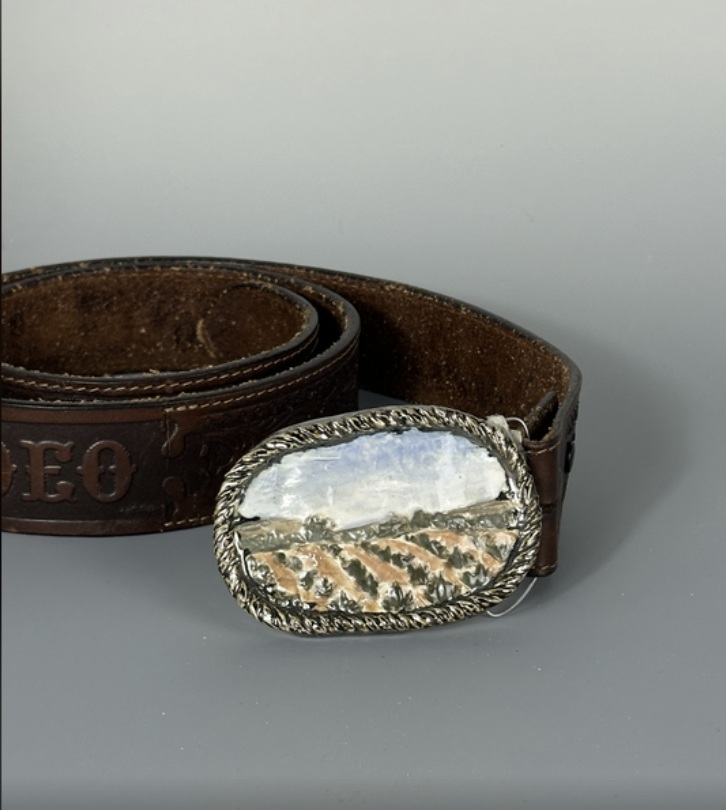
Valentina Bautista, Landscapes in Stamps, 2026. Ceramic, leather belt cord. Claremont High School, CA.
Sophia Carr
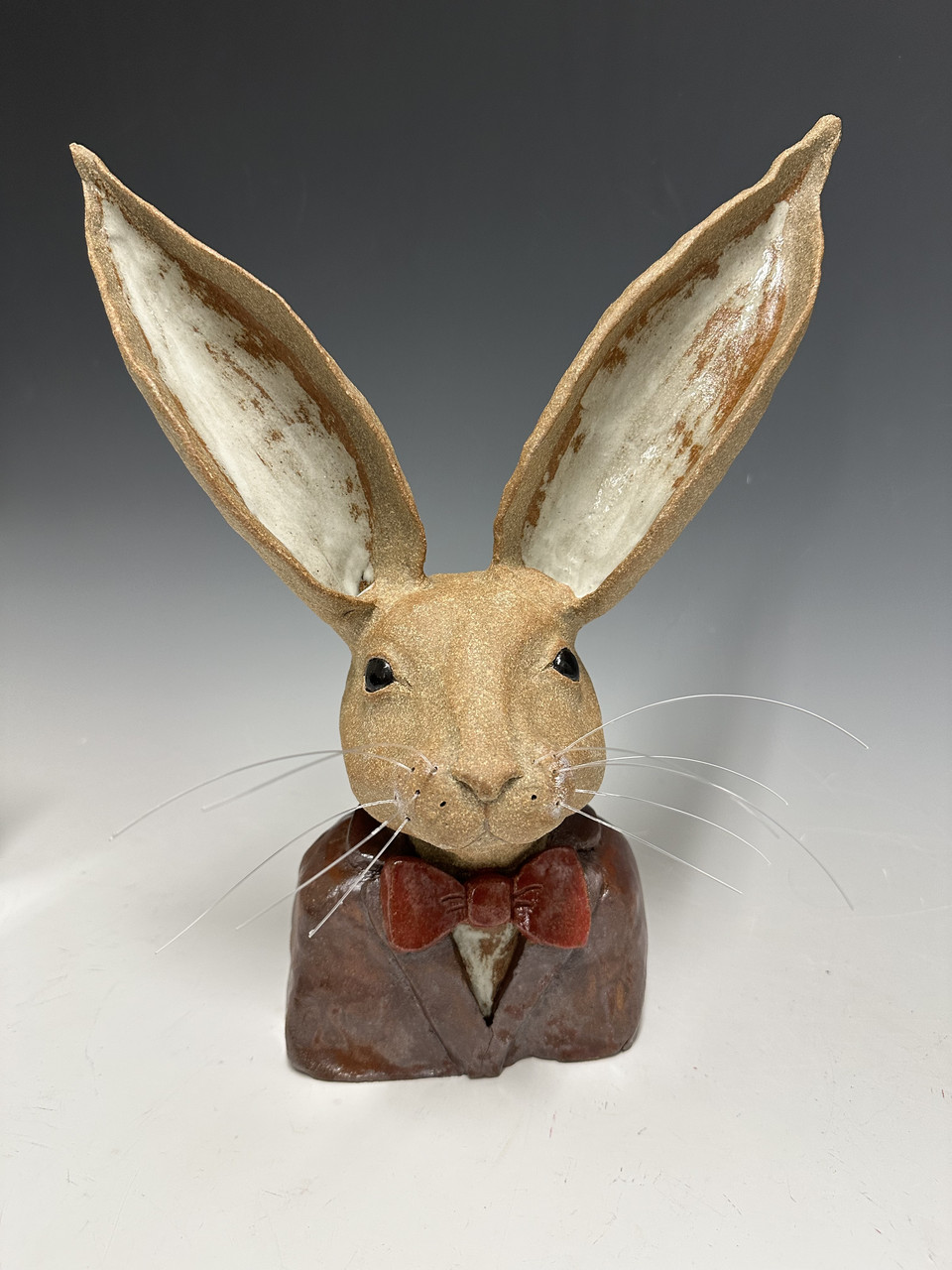
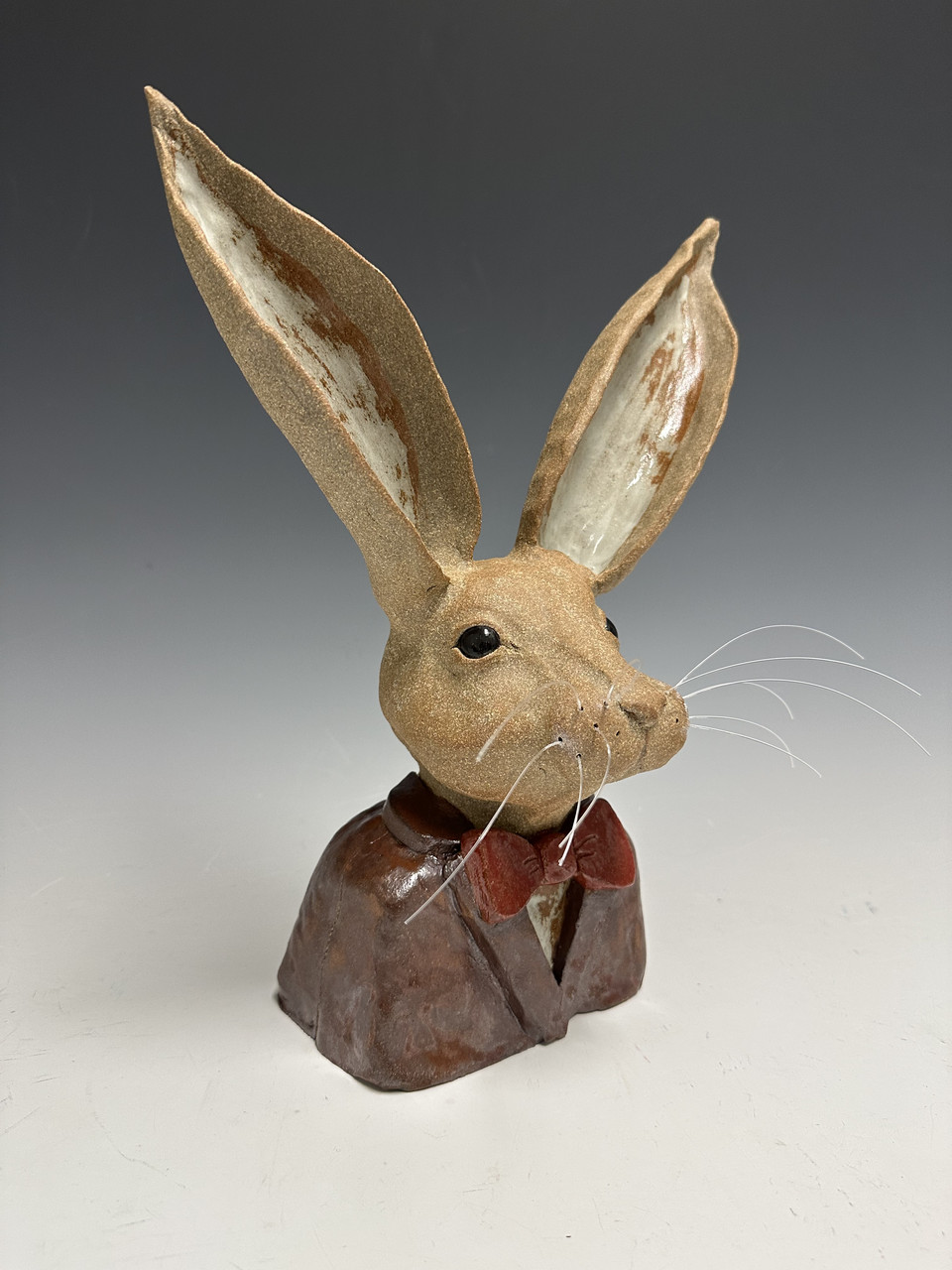
Sophia Carr, Sophisticated Rabbit, 2025. Ceramic, Glaze, Fishing Line, 6” x 4” x 13.” Laguna Beach High School, CA.
Artist Statement: “It is a subtractive sculpture and was high fired. Rabbits have been a staple in my childhood. I thought it would be really cool to create a personified animal.”
Ashley Chan-Mott
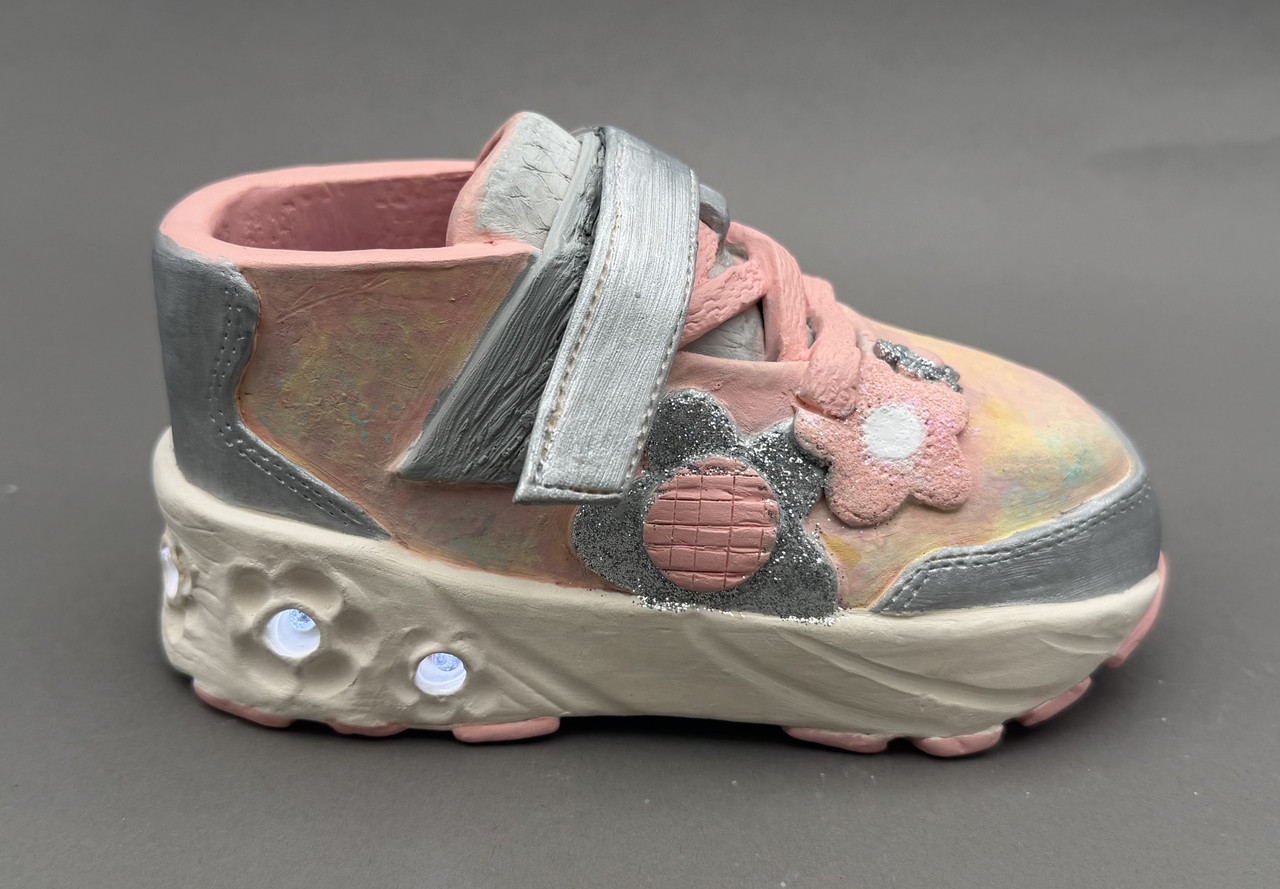
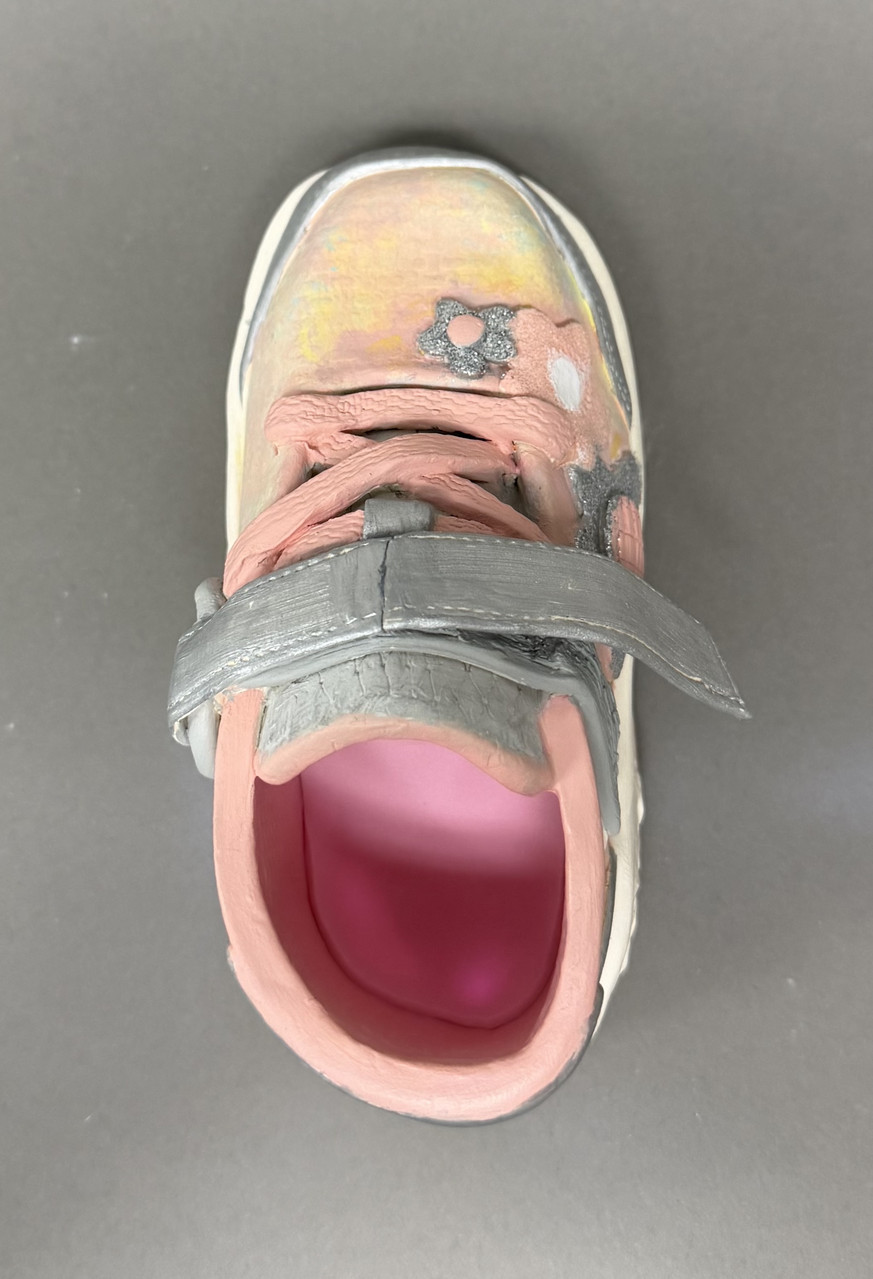
Ashely Chan-Mott, Our First Steps Sparkled, 2025. Earthenware clay, 5mm LED lights, electrical wire, 6” x 6.625” x 2.625.” Chadwick School, CA.
Artist Statement: “Our First Steps Sparkled is a trompe l’oeil kid’s light-up shoe meant to capture the simple joys of young children. To achieve a ‘“’fool the eye’”’ look, my piece is made to scale, with every detail, down to the sole, carefully considered. A self-made circuit lights up the piece. As we grow up, much of life becomes more centered around perfection; yet, the signature colors, chunky shape, sparkles, and misplaced shoe strap carry their own sort of perfection. Through the bold innocence of this piece, I aim to show how, rather than trying to reach perfection, each step of childhood is guided by wonder and curiosity that is perfect in and of itself.”
Sailee Charlu
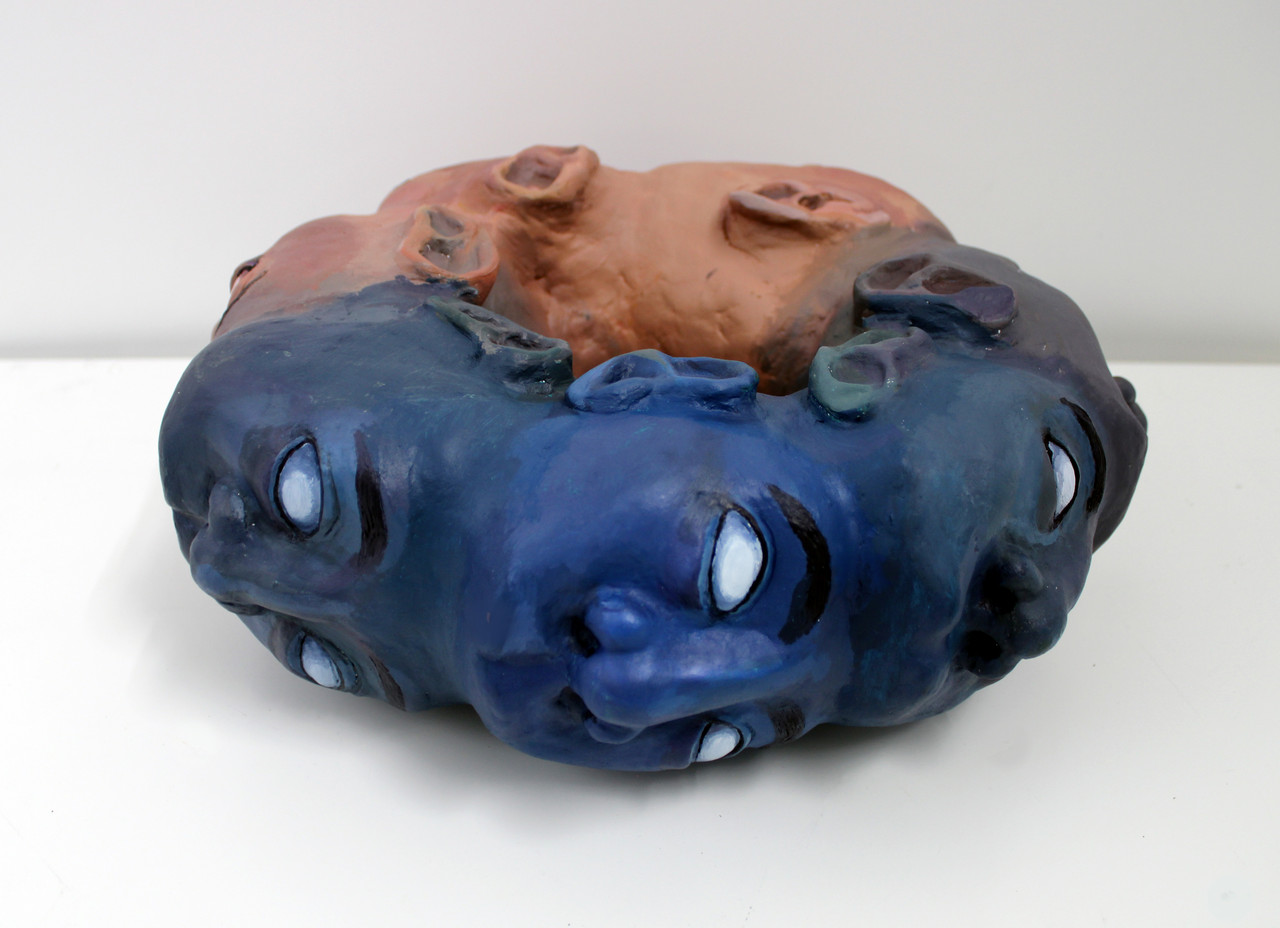
Sailee Charlu, When Silence Turns Blue, 2026. Air dry clay, acrylic, 12” x 11” x 6.” Orange County School of the Arts, CA.
Artist Statement: “As a second generation Indian American with broken Tamil spoken at home, yet fluent in Spanish and immersed in Hispanic culture, I exist in a daily duality. I am Indian by heritage, American by assimilation, and Latin by immersion. This linguistic and cultural multiplicity intensifies the urgency of my art and fuels my constant struggle to define and express myself. I have always felt like an outsider in most social settings, as I am caught between worlds, withholding parts of myself, and carrying unspoken tension between what I internalize and what I reveal. Exploring the complexity of human emotion and communication in my portfolio, I grieve, love, and struggle silently, yet long to be seen authentically in all environments. Over time, I have begun to confront my apprehension of being this foreigner, using communication, written or spoken, gesture and visual to break down the impenetrable barriers I had created towards my communities, learning to fuse my inner truth with outward expression. For me, art is a bridge that reconnects me with myself, with others, and with the multiplicity of cultures I inhabit. It has allowed me to heal and connect, overcoming the inauthenticity I feel when shifting between identities, and accepting that I can meaningfully contribute across cultural spheres. Art is a humbling reminder of our shared humanity: the desire we each have to know ourselves wholly and truly, motivating me to express what erodes at many multiracial and culturally diverse individuals.
This piece embodies my own spiritual journey as I grappled with grief over my grandmother’s death. The endlessness of existence shared by both Mesoamerican and Hindu belief in the cycle of life and death, and rebirth, provides solace in understanding of the continued human experience. I utilized air-dry clay, shaping the staged faces over a base structure composed of newspaper and tape. After the sculpture dried, I used acrylic paint to depict the figures’ white eyes and shifting skin tones from deep blue to natural, tracing how sorrow is diluted when grief is given a voice.”
Conrad Chern
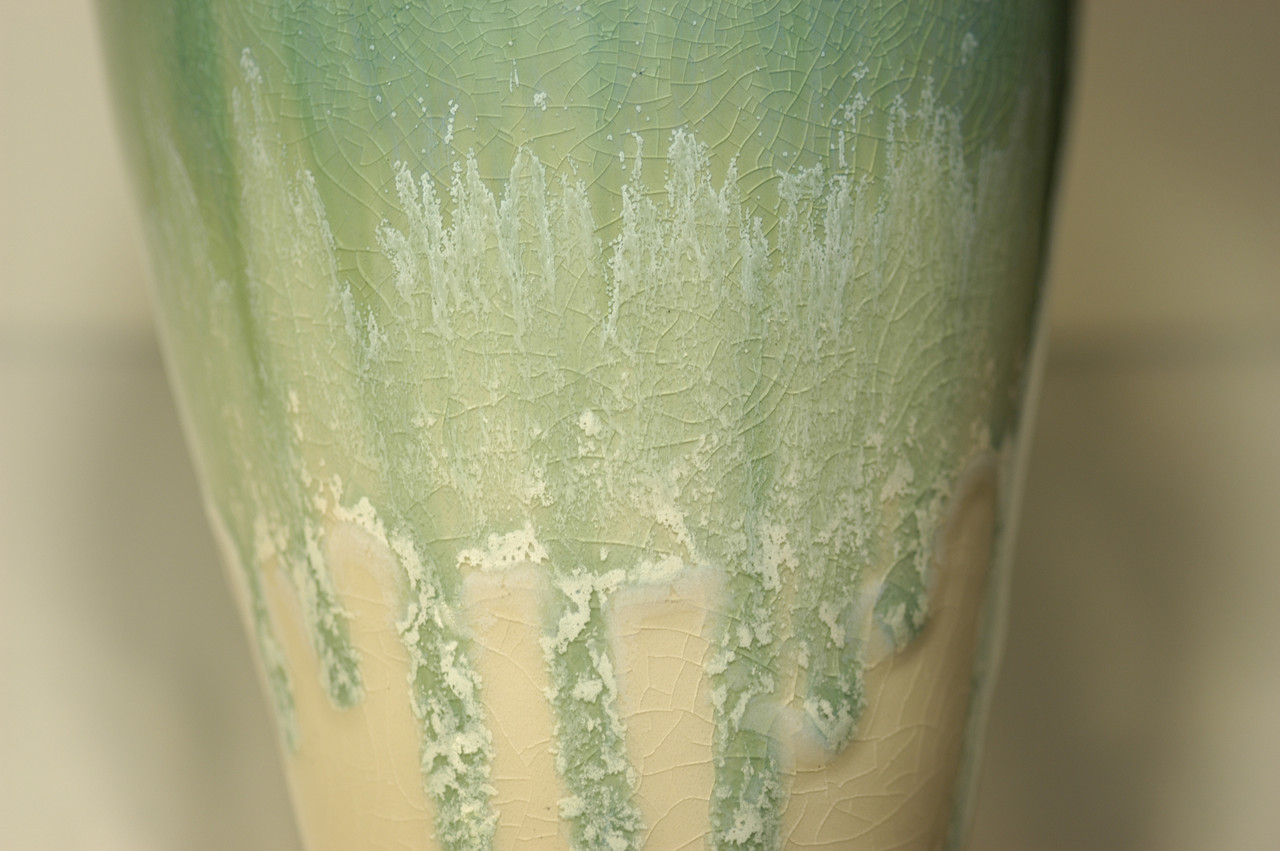
Conrad Chern, When the Tide Leaves, 2025. B mix, wheel thrown, 11” x 7” x 7.” Crystal Springs Uplands School, CA.
Artist Statement: “For this piece, I aimed to create a sense of lift and lightness, so I made the widest part in the top third, which draws the eye upwards. Additionally, this shape would allow for the glaze to flow down the form. I dipped the piece in a beige base glaze, then half-dipped it in a fluid green glaze with a lot of variation. To promote even more fluidity, I painted an extra layer where the green glaze met the beige glaze. The glaze came out beautifully, and my first thought looking at the finished vase was the ocean. The beige glaze worked as a backdrop, like sand on a beach. Where the glazes mixed most, a soft white layer formed on top, similar to shallow water near the shore, where the sand shows through, and seafoam gathers. Additionally, the intense crazing at the top created a mesmerizing surface texture that, from a distance, looks like the ocean from far above, like looking out an airplane window. The crazing breaks the deep green glaze into thousands of tiny lines, each catching the light differently, creating a sense of unity from afar while remaining unique up close. Finally, the drips on the vase resemble water pooling as the tide recedes, and the raised edges you feel add to the sense of waves’ definite presence. This piece showcases some of the best elements of glazing: the unpredictability and the variation. No two firings will ever produce the same result, and it is precisely that surrender of control that makes the process so alive.”
Nell Choi
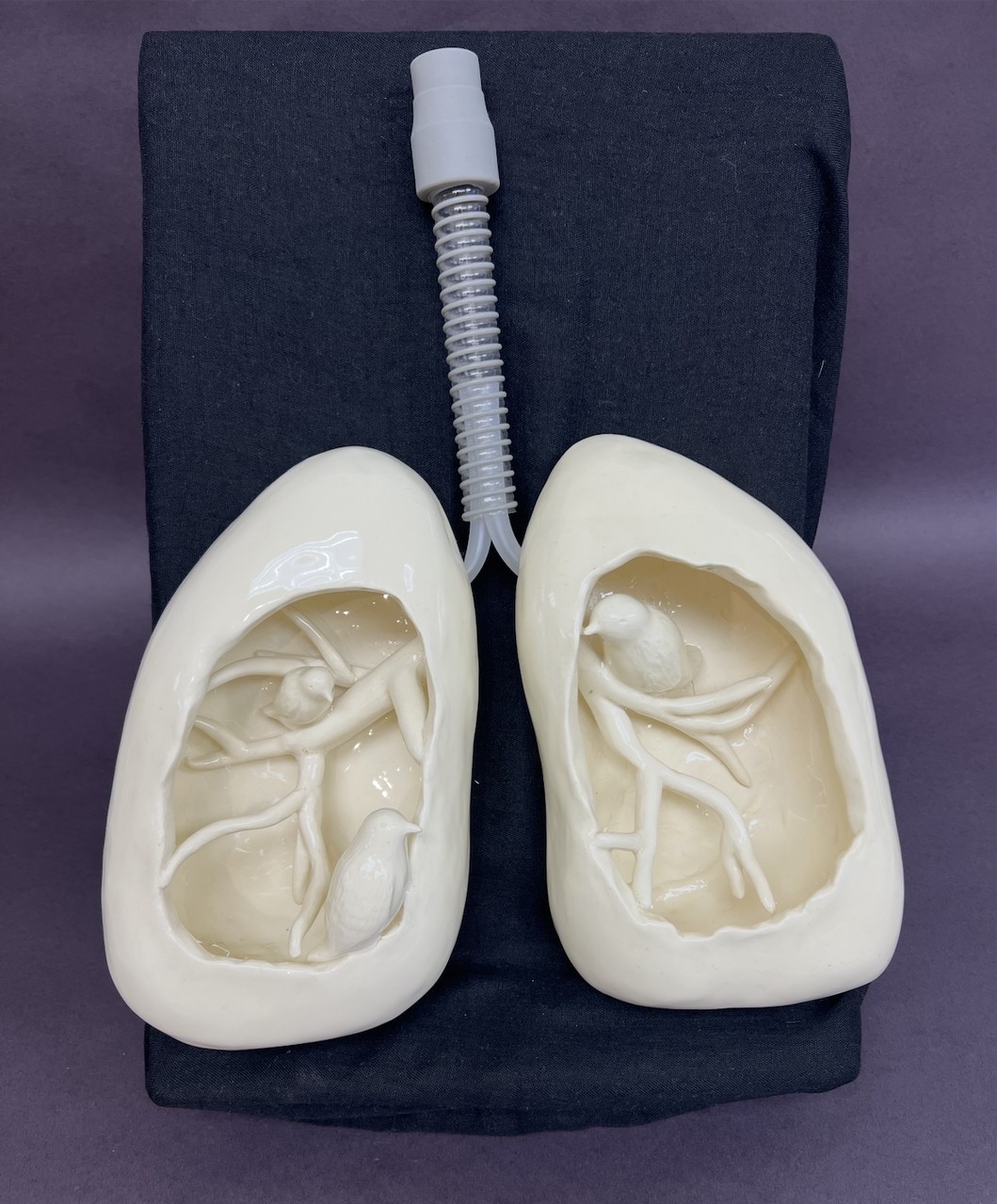
Nell Choi, Exhalation, 2025. White earthenware clay, ventilator tubing, 14.5” x 11.5” x 2.25.” Holton-Arms School, MD.
Artist Statement: The idea for this piece came to me after watching a video of nine-year-old me doing a breathing treatment in the hospital. Life is so busy that I often forget to appreciate how far I have come.
The birds peeking out from the lungs represent the beautiful life that has bloomed after years of battling a rare autoimmune disease. Yet the ventilator tubing provides a contrast to the glossy white—a nod to the daily challenges of living with chronic illness and the traumatic memories of spending weeks in an ICU bed. Thus, the juxtaposition of medical equipment against the birds illustrates the intersection and coexistence of pain and joy.
This is a short poem I wrote to share story behind the first piece, “Exhalation”:
we always held our breath
awaiting MRIs
in yellow-walled waiting rooms
squeezing my mom’s hand, sweaty
she spoke with doctors in hushed voices
I held my breath
the jagged rattle of mucus in my chest
a ruckus in my ears, too loud
to hear my friends chirping
some cute boys at the school dance
inhaling
diagnoses
choking
un-pronouncable prescriptions
the car ride to school
a cacophony of coughing
just call me, she said.
throat clogged,
I squeezed her hand.
Josh Copi
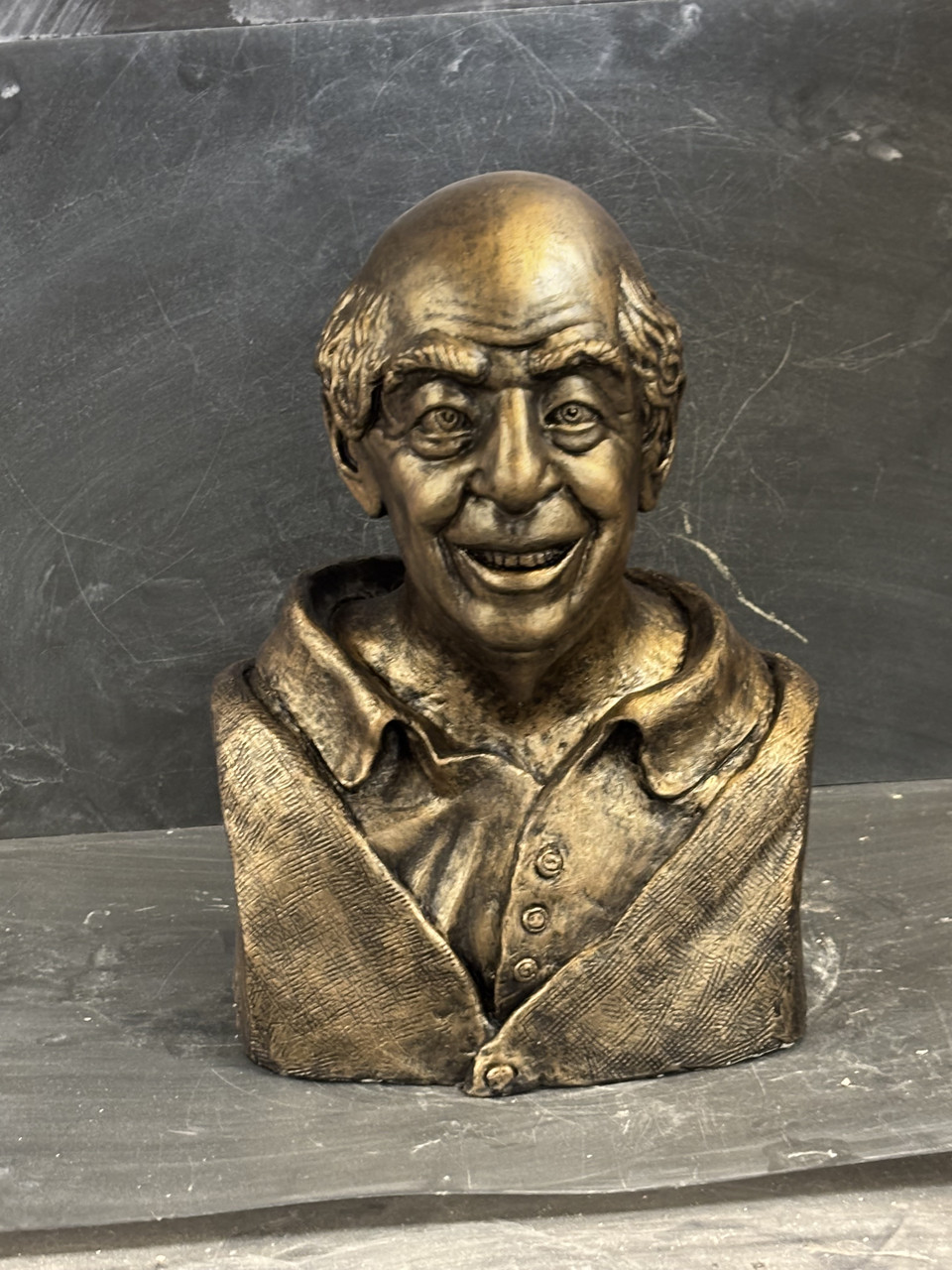
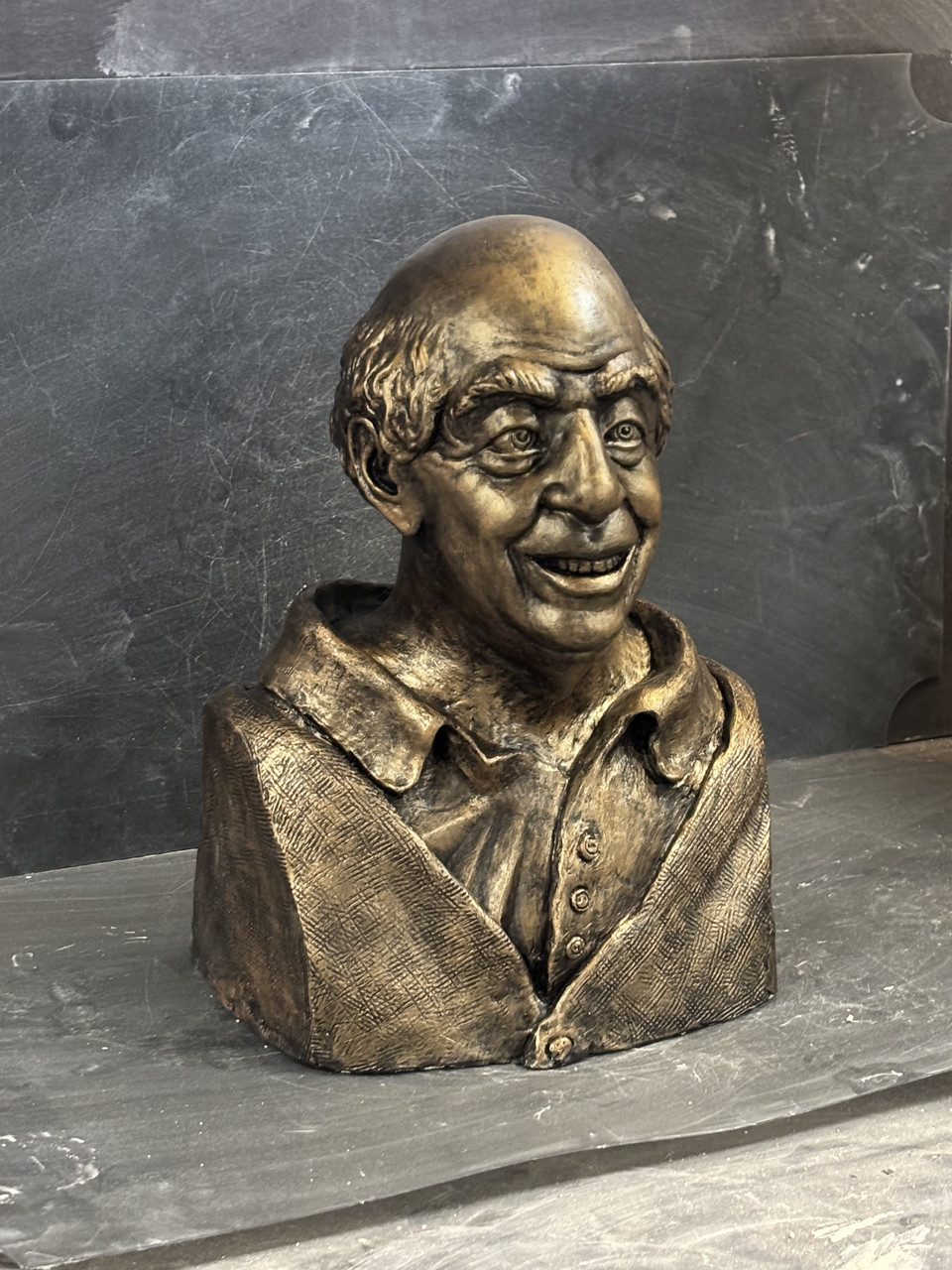
Josh Copi, The Davey I remember, 2025. Fired clay, acrylic paint, 12” x 9,” half scale. California School of the Arts, CA
Artist Statement: “I titled my piece, “the Davey I remember.” My grandpa, Davey was diagnosed with Alzheimer’s a few years ago and from my eyes it seems the Davey I’ve always loved and known to be my grandpa is slowly fading. Although I’ll always love him the same, I’d like to remember him the way I want to remember him after he’s gone. I want to remember him the way he would’ve wanted me to. I made this sculpture to capture the memory of him that may one day fade just like his memories of me and all the time we’ve spent together over the years. Growing up without a father, my grandpa Davey ended up taking that place in my childhood memories. One of my favorite parts of traveling to Michigan over the years is to see my grandpa and hear his stories. Although these days, it seems his stories are growing shorter and shorter. I created this bust by sculpting a likeness of my grandfather from photos over an armature. Then I sliced it down the middle and hallowed it out before scoring and slipping everything back together. Once I had finished cleaning up and refining the surface I did one last sponge coat over the surface of the skin to add a subtle semi muted hint of realism. I used different textures to emulate different materials, Wool coats, button down shirts, skin, hair, etc. Once the sculpture had been bisque fired I decided to paint it with acrylics rather than glaze in order to give it a more convincing look of bronze. I cleaned up the bisque piece then painted it black before doing a final dry-brush with bronze paint in order to hit the highlights and give it a slight aged look.”
Evelyn Daniels
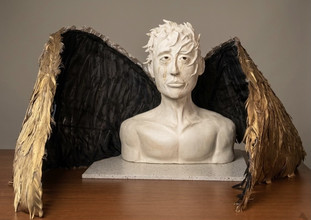
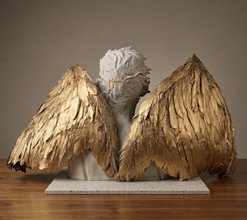
Evelyn Daniels, Icarus, 2026. Ceramic, feathers, wire, fabric, glaze, paint, 24” x 40” x 27.” Carlisle High School, PA.
Artist Statement: “For my piece, I constructed the entire bust out of slabs, forming them from the inside out once stood up. I used a mix of additive and subtractive techniques when creating the features for the face and hair. The wings were created out of spray painted feathers and a wire frame. The bust was then decorated with clear glaze serving as a base for tears, and then finished off with gold and brown paint for the drippings on the back of the head, outlines for the tears, and pigment for the eyes. I left four holes in the middle of the back to allow for the attachment of the wings and then placed a thin layer of sheer, black fabric on the interior to make the texture of the feathers more subtle, allowing a viewer’s eye to be more drawn towards the bust from a front facing angle.”
James DeArton
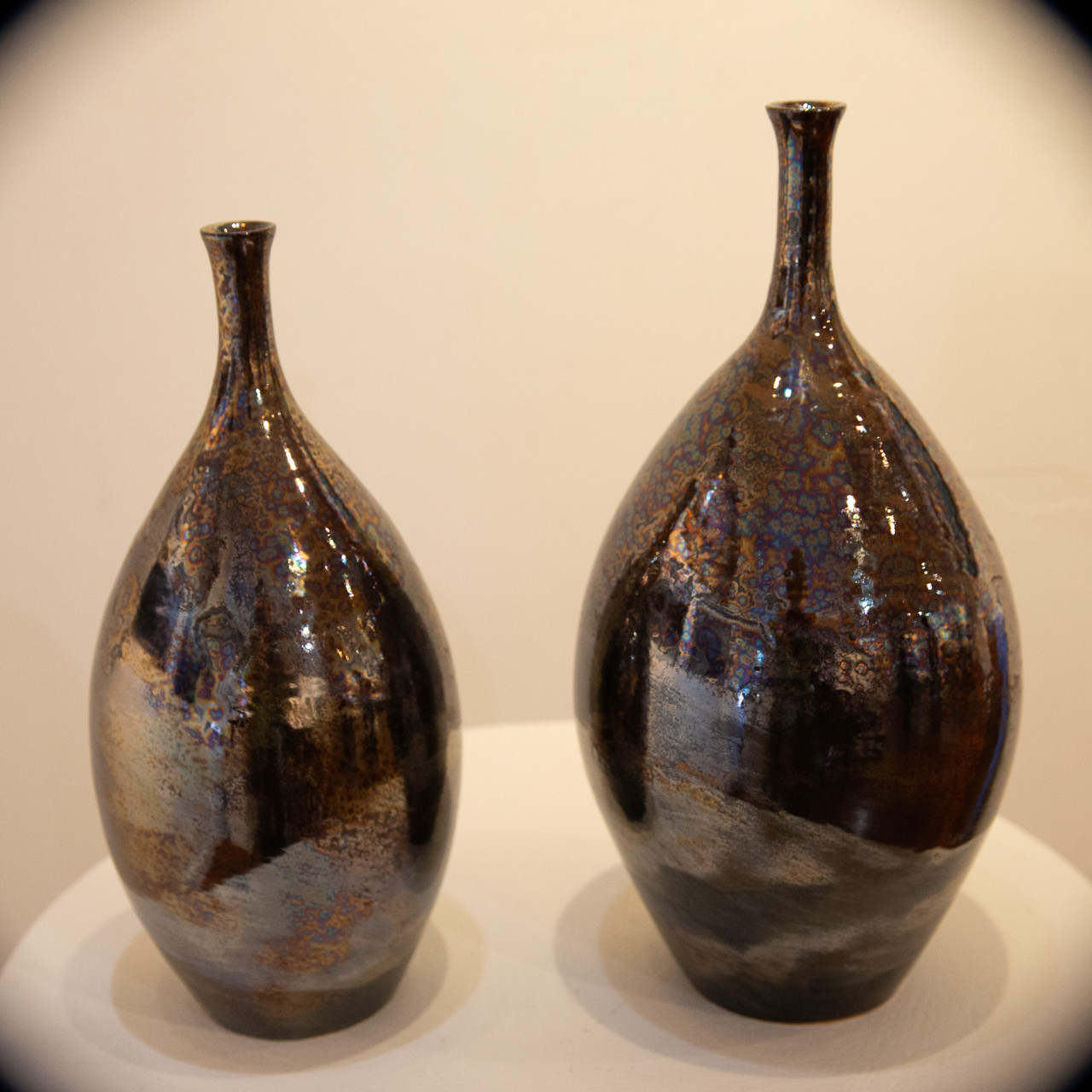
James DeArton, Oil Slick Vases, 2026. B-Mix white clay, midfire glaze, 11” x 5” x 5″ & 13” x 6” x 6.” Mount Shasta High School, CA.
Artist Statement: “Both vases in this set were made to be roughly the same shape and color, with the only notable difference being their relative sizes. The smaller of the two was thrown with roughly 5 pounds of stoneware clay, while the larger one was thrown with 8. After being trimmed and bisque-fired, both pieces were glazed in the same way using layered mid-fire glazes.”
Eliot Diaz
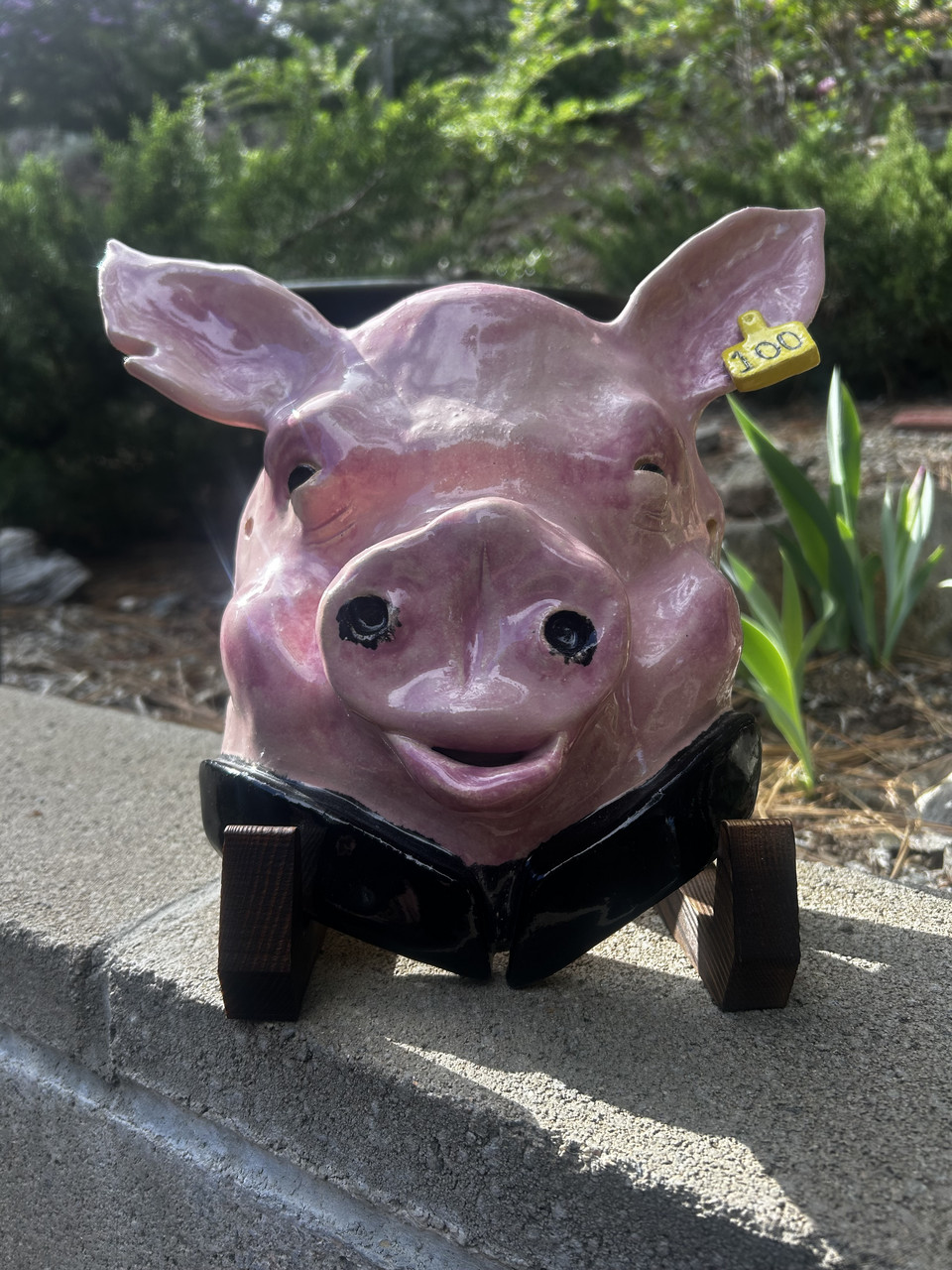
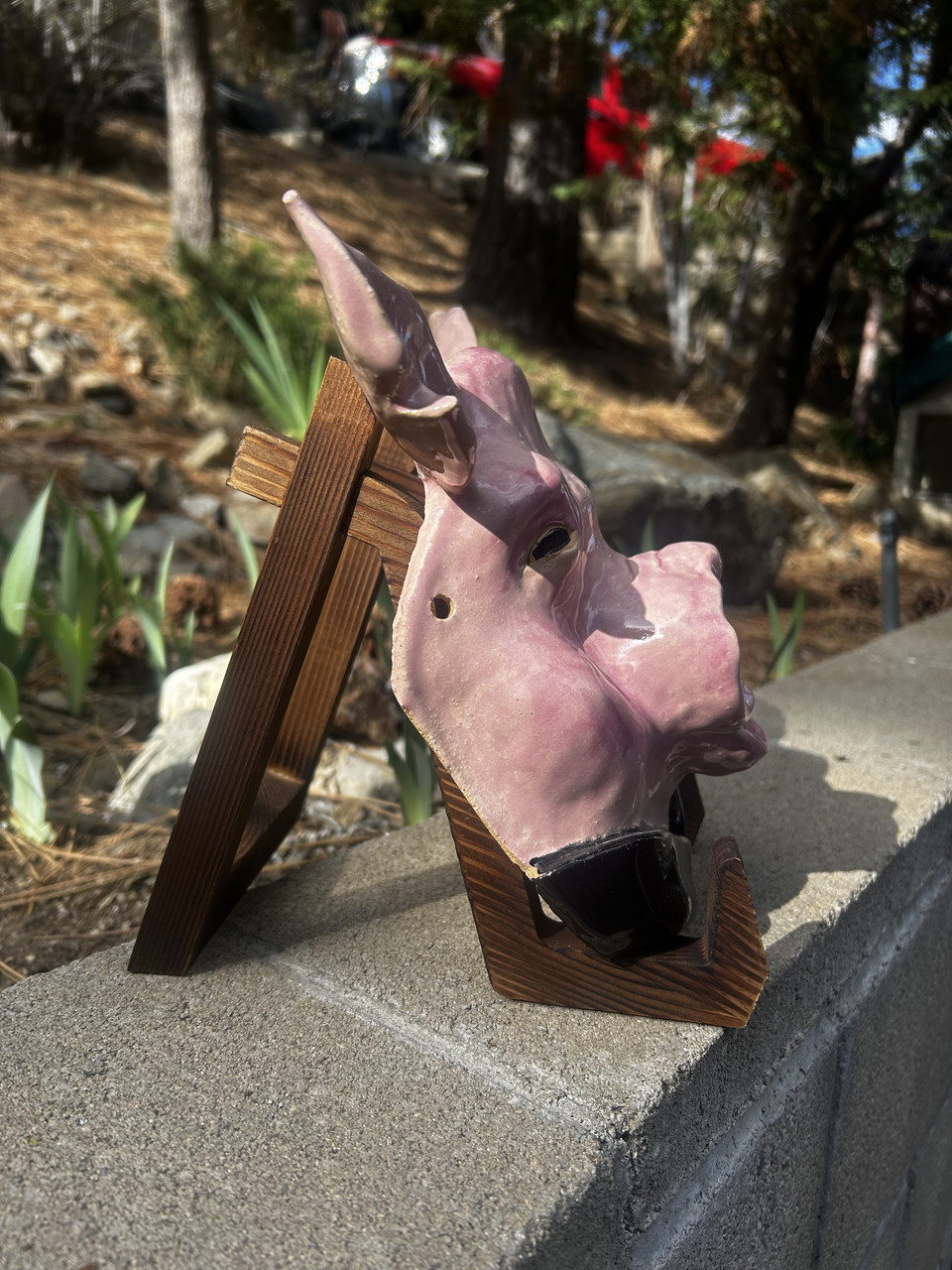
Eliot Diaz, Pig Head Mask, 2024. Ceramic and paint-on glaze, 7.25” x 10.25.” Santiago High School, CA.
Artist Statement: “For this project, I used ceramic clay and paint on glazes. I used hand sculpting techniques to create this project, and used reference pictures of a pig for the pig head. For the pig head, I wanted to represent a contemporary issue in the form of a mask, with the pig representing greed and its suit collar representing how that greed can manifest in figures like wealthy business executives or corrupt politicians, both of whom often wear suits.”
Angel Fajardo Nicolas
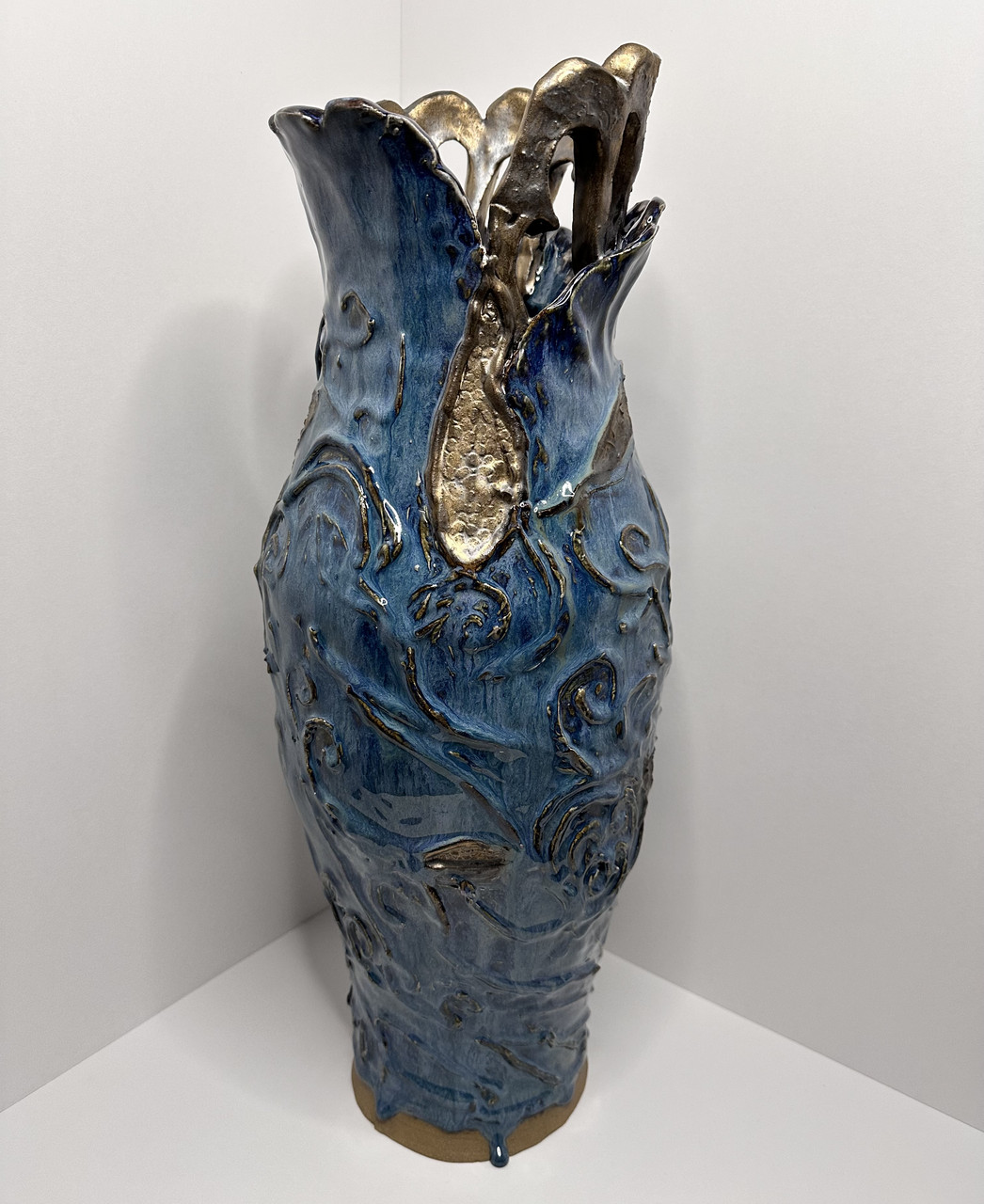
Angel Fajardo Nicolas, The Treasure the Tides Kept, 2026. Mid-Fire Clay, Ceramic Glaze, 21” x 8.5” x 8.5.” Liberty Hill High School, TX.
Artist Statement: “The ocean inspires this piece. The sea is constantly moving, reshaping, and erasing everything it touches, but it also protects what is meant to last. The vessel represents a treasure that has been weathered, shaped, and altered by years of motion. The currents and waves are carved onto the surface, along with the variety of blue hues of the ocean. Nothing on the surface is still, just as the ocean is never truly calm. The gold-toned pieces symbolize the partially revealed treasure that the ocean does not give up easily, only giving us a glimpse of what has been lost. I produced this piece with clay. I began by sketching a plan for the structure. I threw three separate pieces on the wheel and, once they reached leather hard, scored and joined them using slip. After assembling the form, I drew my swirl and line designs and piped them on with thick slip. Once the piece was slowly dried and fired, I tested glazes on sample pieces. After finding the combination I loved, I carefully layered the glazes onto this vessel. This ceramic piece emphasizes organic form, texture, and contrast. The tall, flowing shape and uneven opening create a natural movement throughout the piece. The hues and colors of blue glazes on the surface represent the variety of the ocean, while metallic gold accents provide strong contrast and act as focal points. The swirling textures add visual interest and guide the viewer’s eye around the piece. Despite its asymmetry, the vase is balanced and unified through repeated colors and blended lines.”
Angela Fang
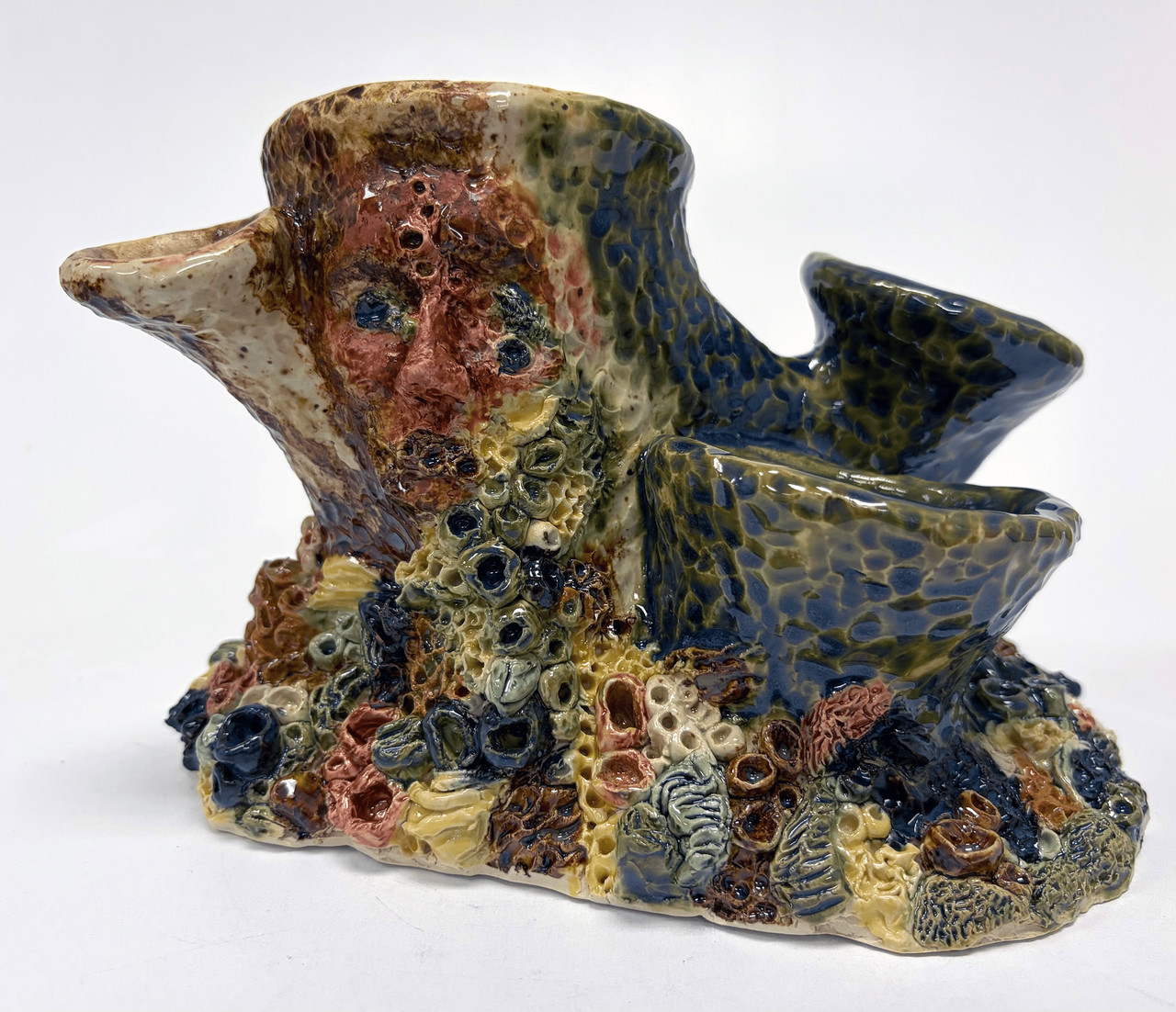
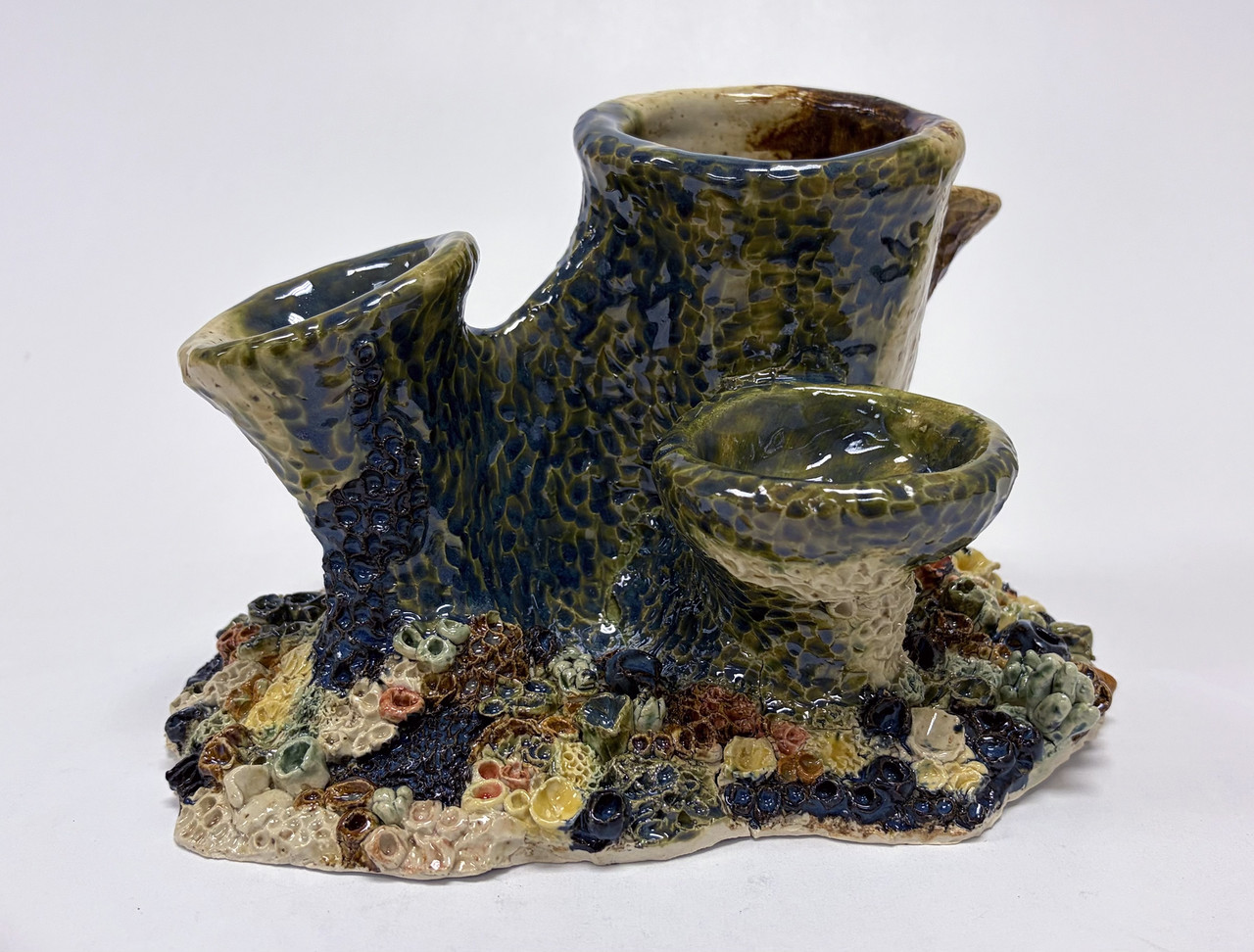
Angela Fang, Environmental Shaping, 2026. Ceramic, Glaze, Acrylic, 6” x 9” x 6.”Palo Alto High School, CA.
Artist Statement: “Environmental Shaping is a ceramic sculpture of a face embedded in a barnacle-covered coral reef that sits in the ‘between’, where a person becomes inseparable from what surrounds them. Reflecting on how human nature is infinitely interconnected, I found an equivalent in the marine world: the dynamic ecosystems coral fixtures foster. Through the eyes of a faint creature blending into the coral, I saw not conformity but an individual enriching the cultural space and making it his own. The process of sculpting in clay mirrors how reefs accumulate over time, piece by piece. I attached each barnacle with detail and glazed it using vivid sea tones.”
Alessandra Ferguson
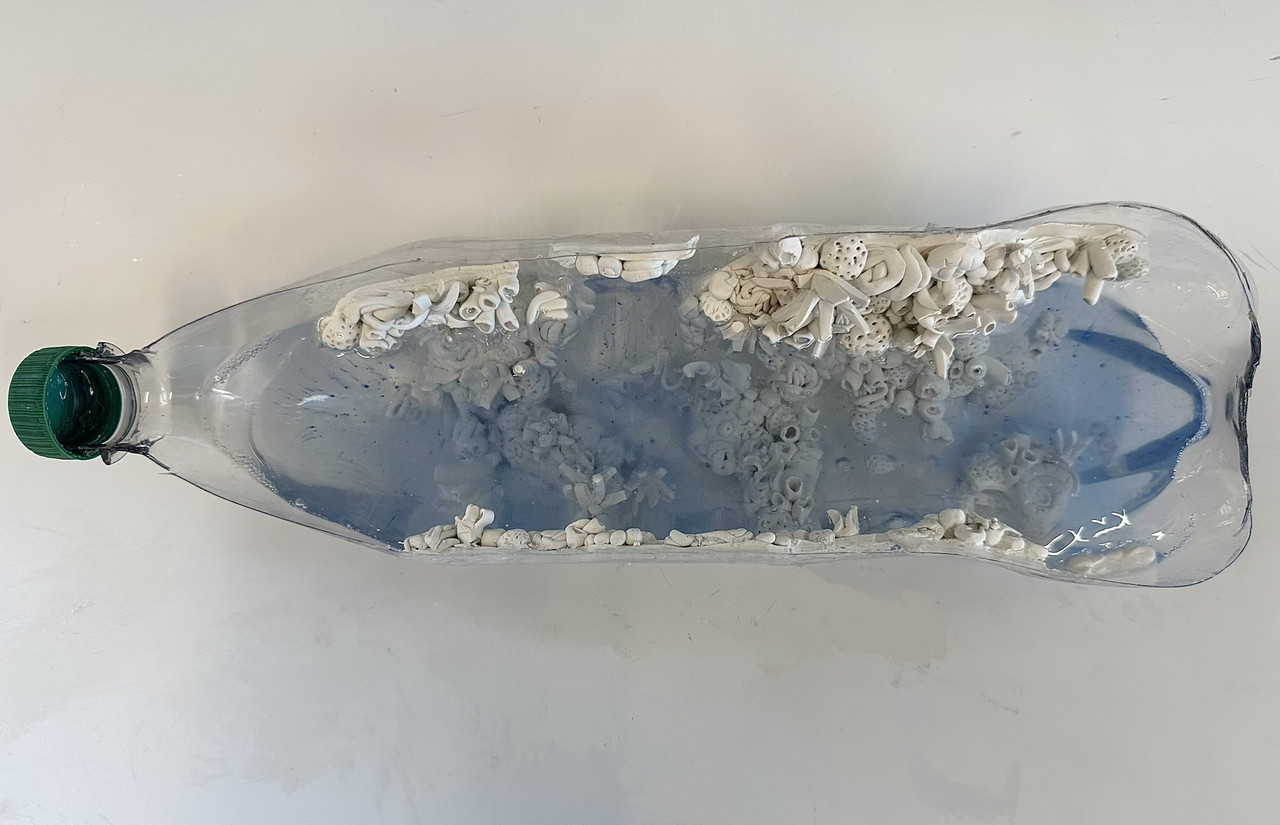
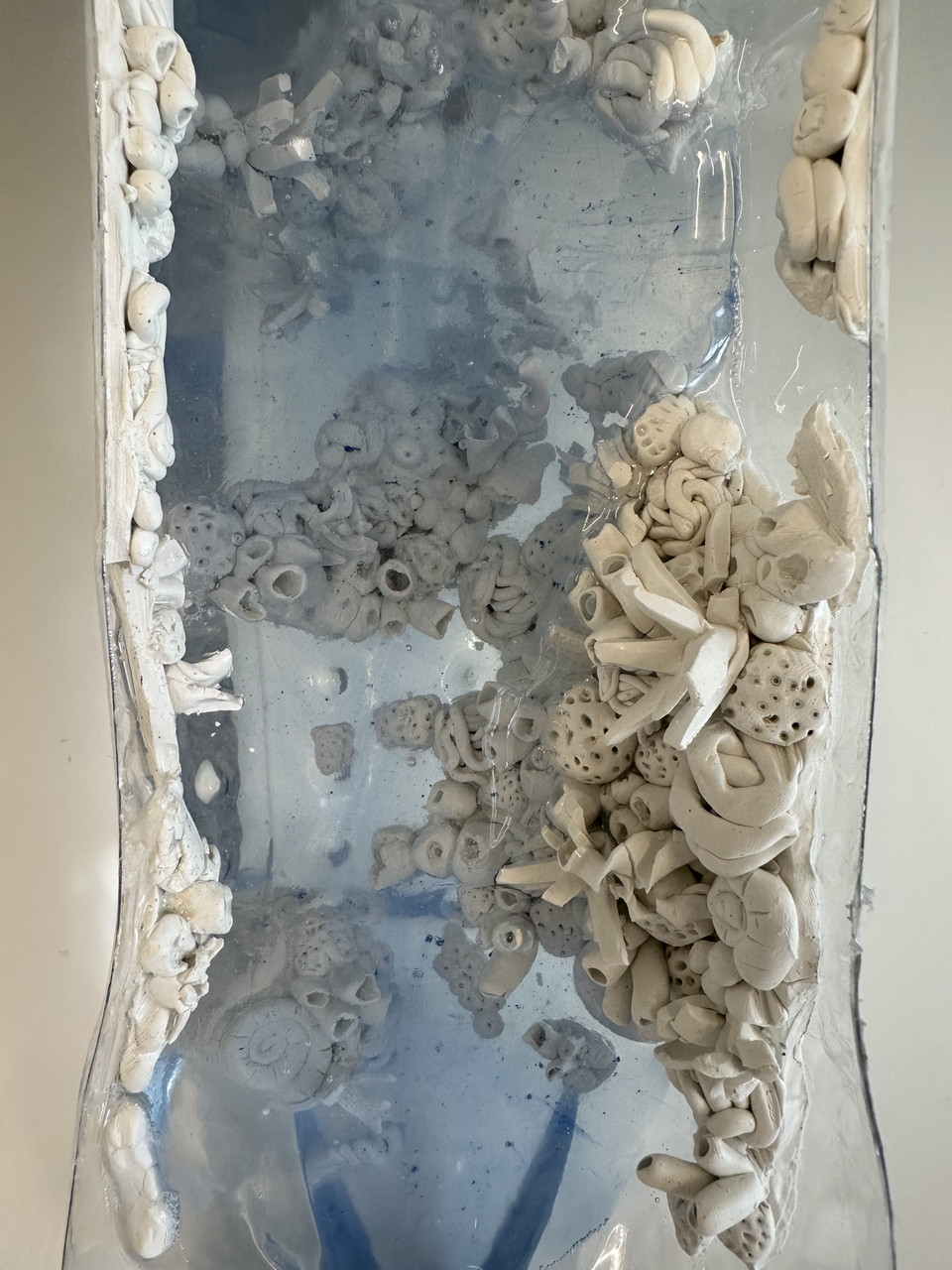
Alessandra Ferguson, The Bottle of Our Future, 2026. Modeling clay, resin, plastic bottle, 13” x 3” x 5.3.” Stone Ridge School of the Sacred Heart, MD.
Artist Statement: “My vision for this artwork was to spread awareness of plastic use and how it affects our everyday lives, especially by harming the ocean. I showed this by making the continents look like they are made of coral. The coral is white which signifies it is dying just like our planet because everything is connected. It was made in a plastic bottle to show that the root of the problem is plastic use and big companies relying on it.”
Charlie Fleischer
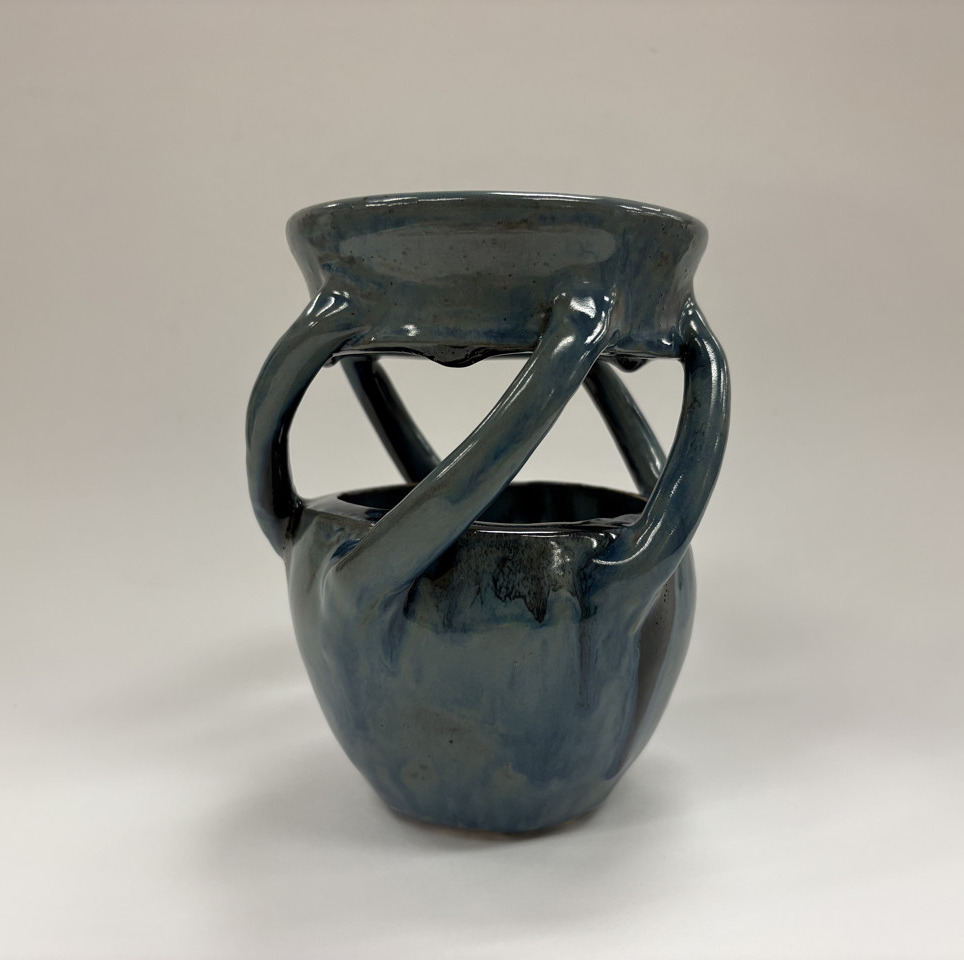
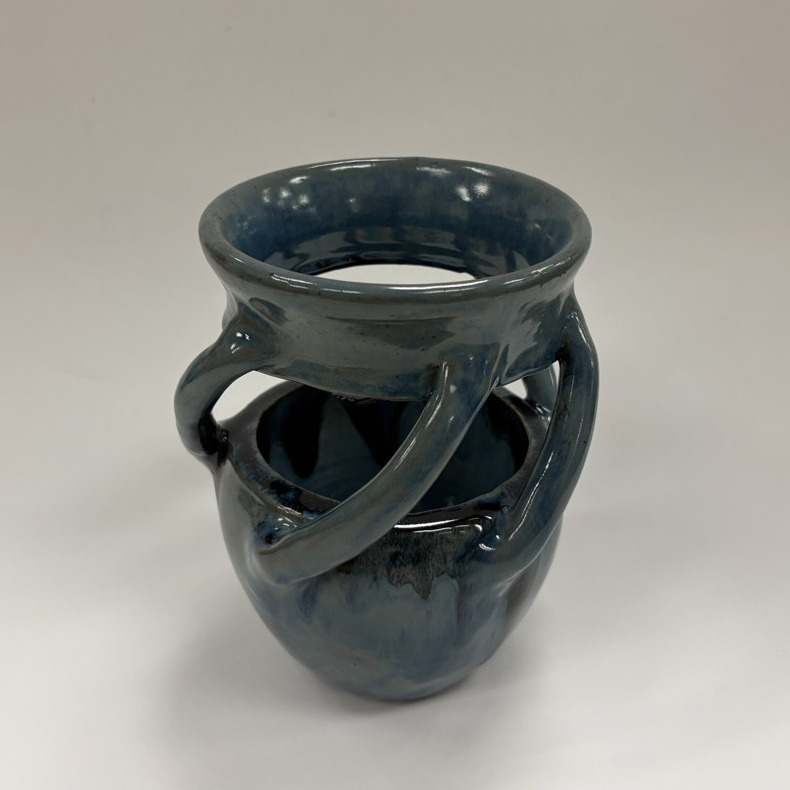
Charlie Fleischer, Redefining Touch, 2026. Ceramic, glaze, 6.25” x 4.5” x 4.5.” Columbia High School, NJ.
Artist Statement: “As a ceramics enthusiast, I am constantly appreciating artwork I see around me. This piece is inspired by many pieces and artists I admire, the world around me, along with my desire to challenge myself. The process for making this piece involved first throwing one vessel using cone 04 clay. Then, once leather hard, I trimmed and then split the vessel into two. Using a few small lugs of clay to temporarily hold the top portion above the bottom, I attached five coils between the two sections, creating a separated vase form. After bisque fired, I glazed the piece using Blue Grotto Mayco glaze with drips/highlights of Metallic Brown Amaco glaze.”
Capri Forest
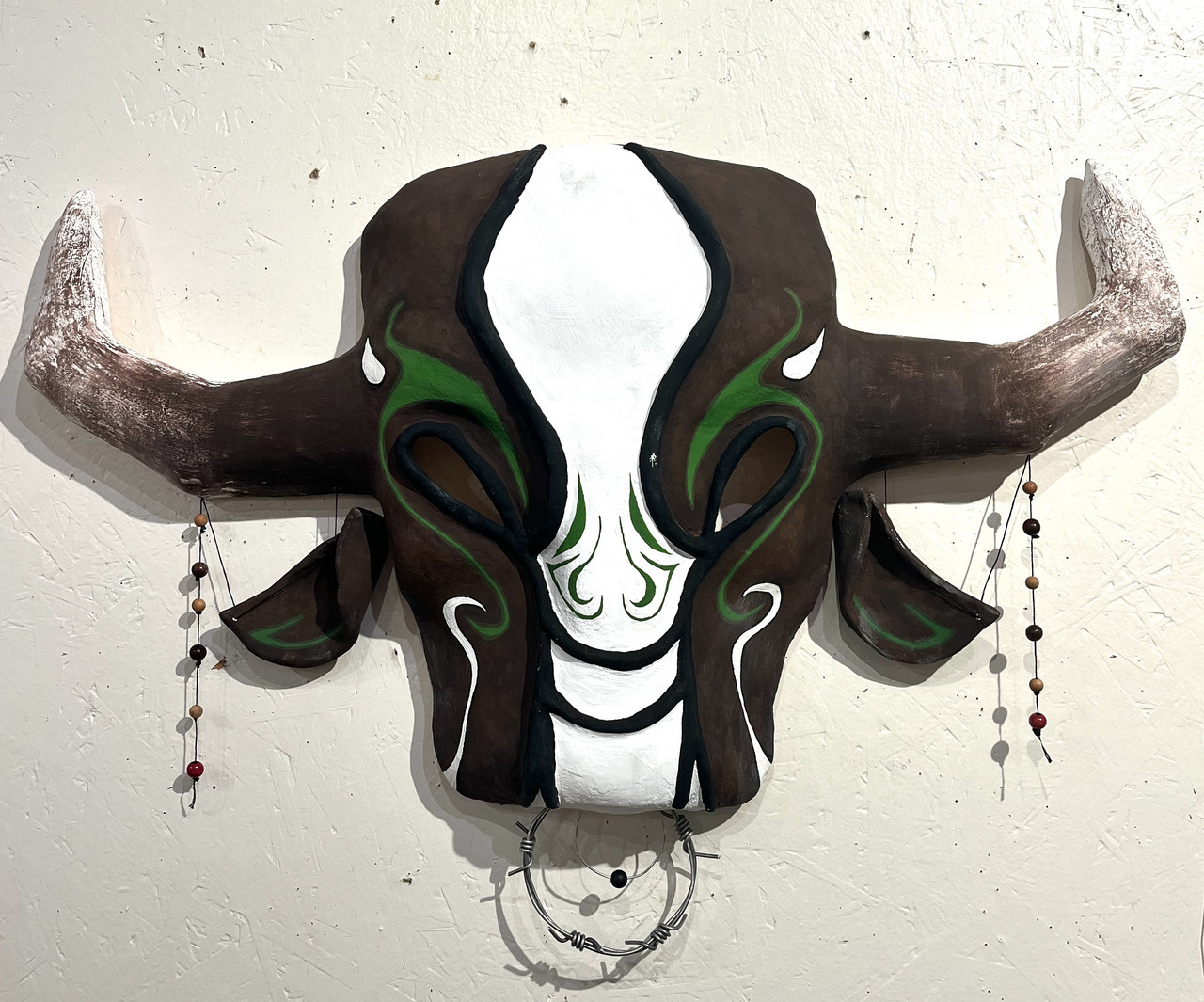
Capri Forest, Face of 2009, 2026. Earthenware ceramic clay, acrylic paint, beads, wire, 16” x 25” x 3.” Capistrano Valley High School, CA.
Artist Statement: “With the beginning of the new year and the celebration of the lunar new year, I wanted to make an artwork that represents my lunar new year sign. 2026 may be the year of the fire horse, but I went with my birth year 2009, the year of the earth ox. The ox embodies strength and stability, and I chose to challenge myself with this project to show my endurance and hardworking abilities. I decided to show the ox as a mask because it conveys how different zodiac signs can represent personality traits in people and their natural strengths. To me, it shows a part of who I am and something given to me from birth that I can appreciate.”
Sarah Fortman
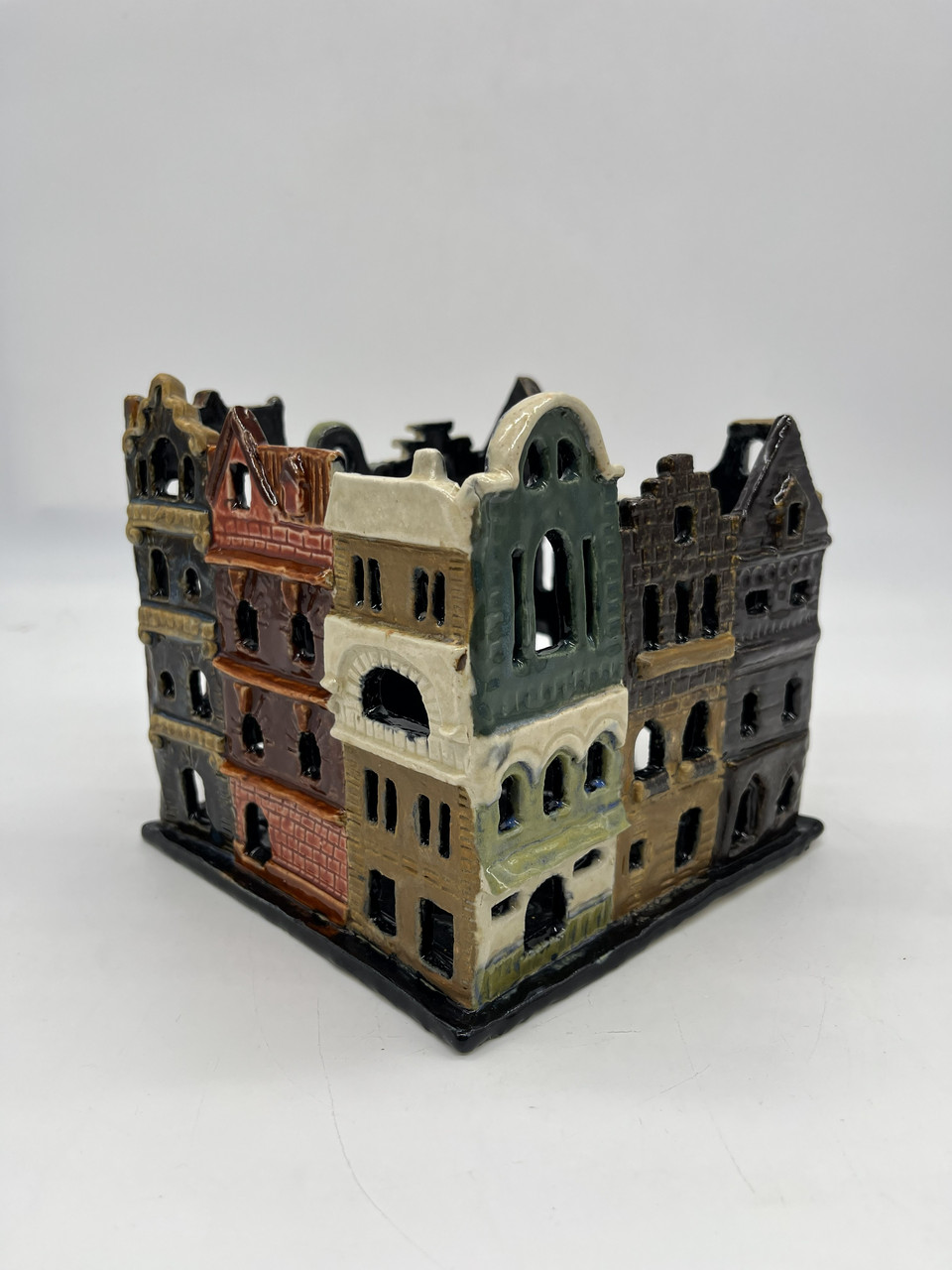
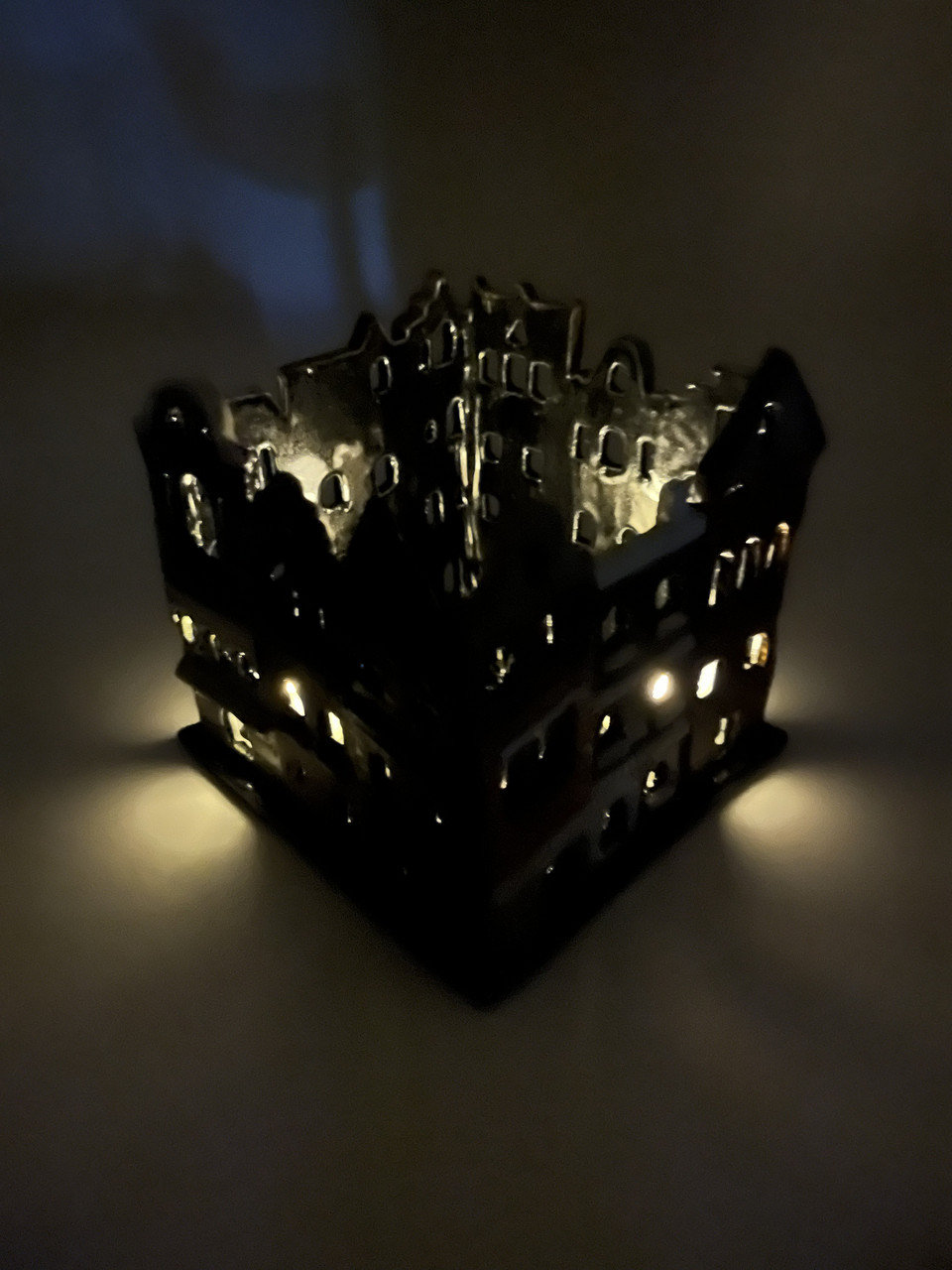
Sarah Fortman, Amsterdam Lantern, 2026. Ceramic clay, Glaze, 6” x 6” x 6.” Lake Washington High School, WA.
Artist Statement: “For my Lantern, I was working to create an architectural inspired lantern. When deciding what type of architecture to focus on, I thought back to a time where the buildings I was surrounded by made me feel full of joy. Immediately, I remembered my summer trip to Amsterdam. The collection of detailed houses down each street made just walking around as beautiful as any other excursion. In order to capture the essence of Amsterdam in my art, I used stab- based construction. Starting from a plain slab of clay, I hand crafted each detail with a variety of sculpting tools, cut out the windows, assembled the pieces, and finally added a layer of glaze to complete the piece.”
Murphy Galloway
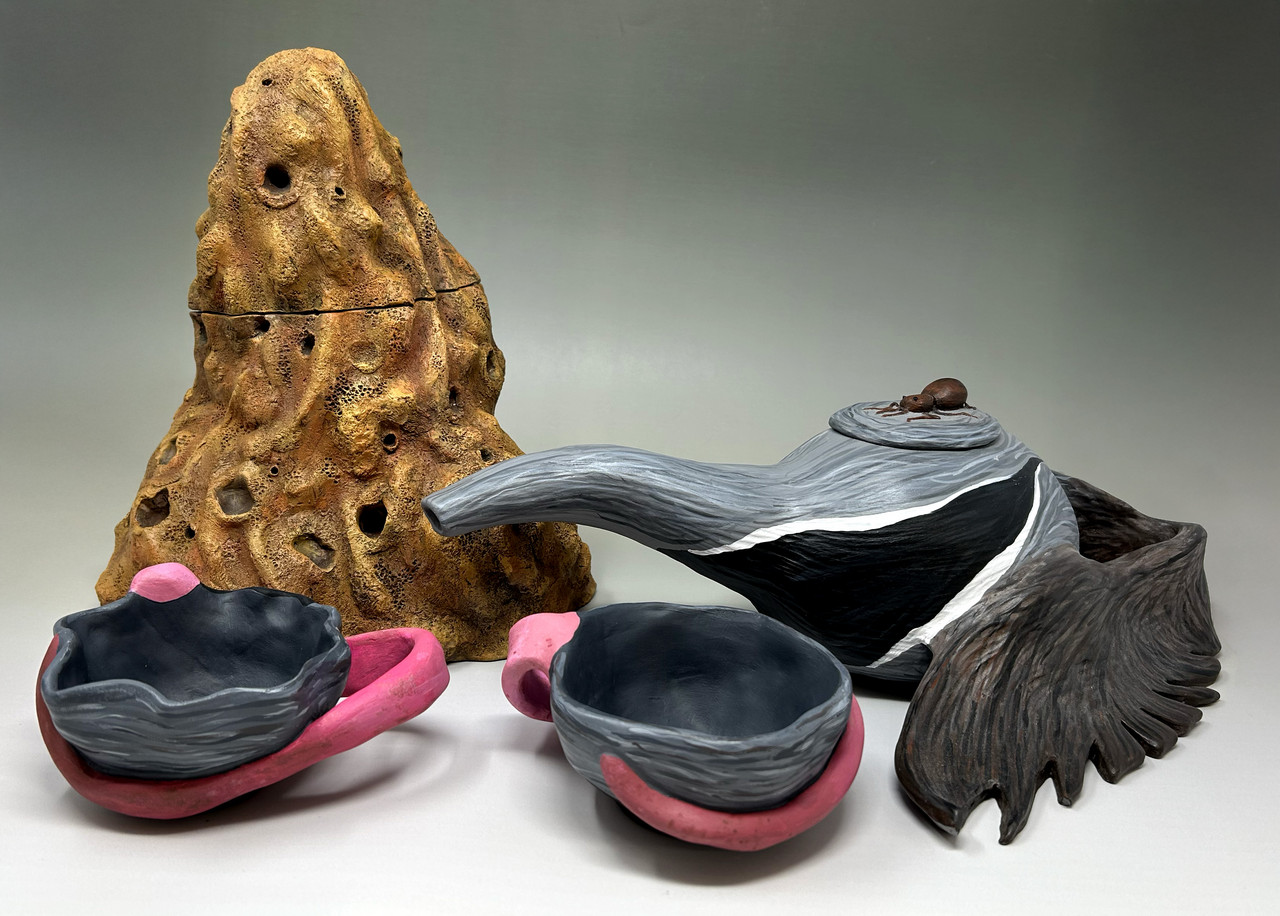
Murphy Galloway, Andrews Teaset, 2026. Ceramic, Acrylic Paint, 3.4x4x2.5 in (cups), 12×6.5×10.5 in (cookie jar), 5.6×9.3×4.5 (teapot). Shawnee Mission Northwest High School, KS.
Artist Statement: “For this artwork I wanted to take the natural forms of the West African Anteater and translate it into a tea set that could be used in an Anteater’s day to day life and fit naturally into their environment. My vision was to take key features of the Anteater such as its nose or tail and its environment and highlight each one in its own individual piece of pottery. I used a variety of clay types, including stoneware and earthenware clay, to maximize experimentation throughout the creation process, finishing each piece with acrylic washes and detailing. All pieces were coil built for maximum organic form to prioritize making each part accurate to the original image, such as replicating a termite mound as close to the reference photo as possible. Research involved studying anteaters’ biology and their environment through books, documentaries, and animal based websites that prioritized education on animalistic forms and behaviors.”
Hazel Garrison
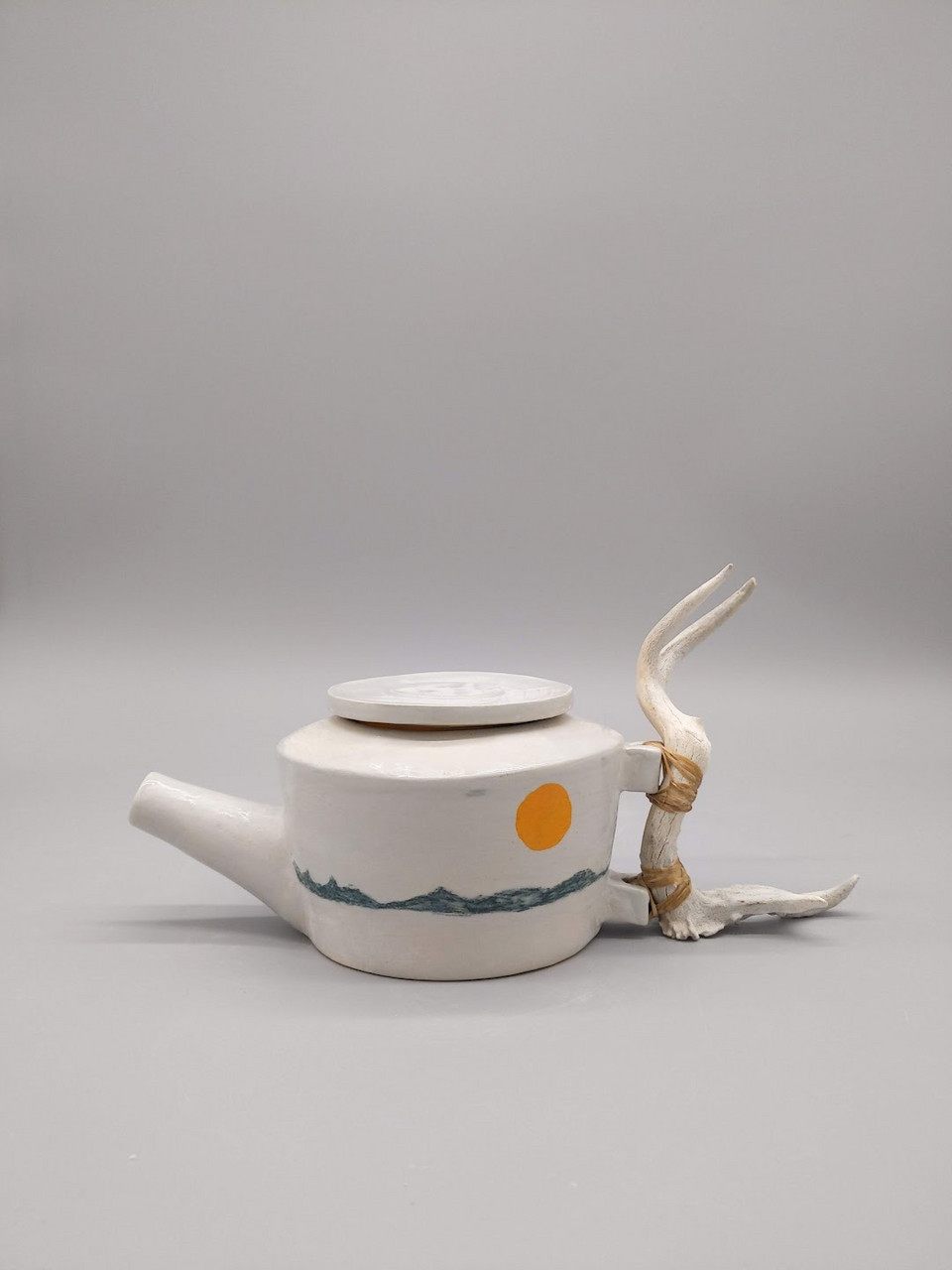
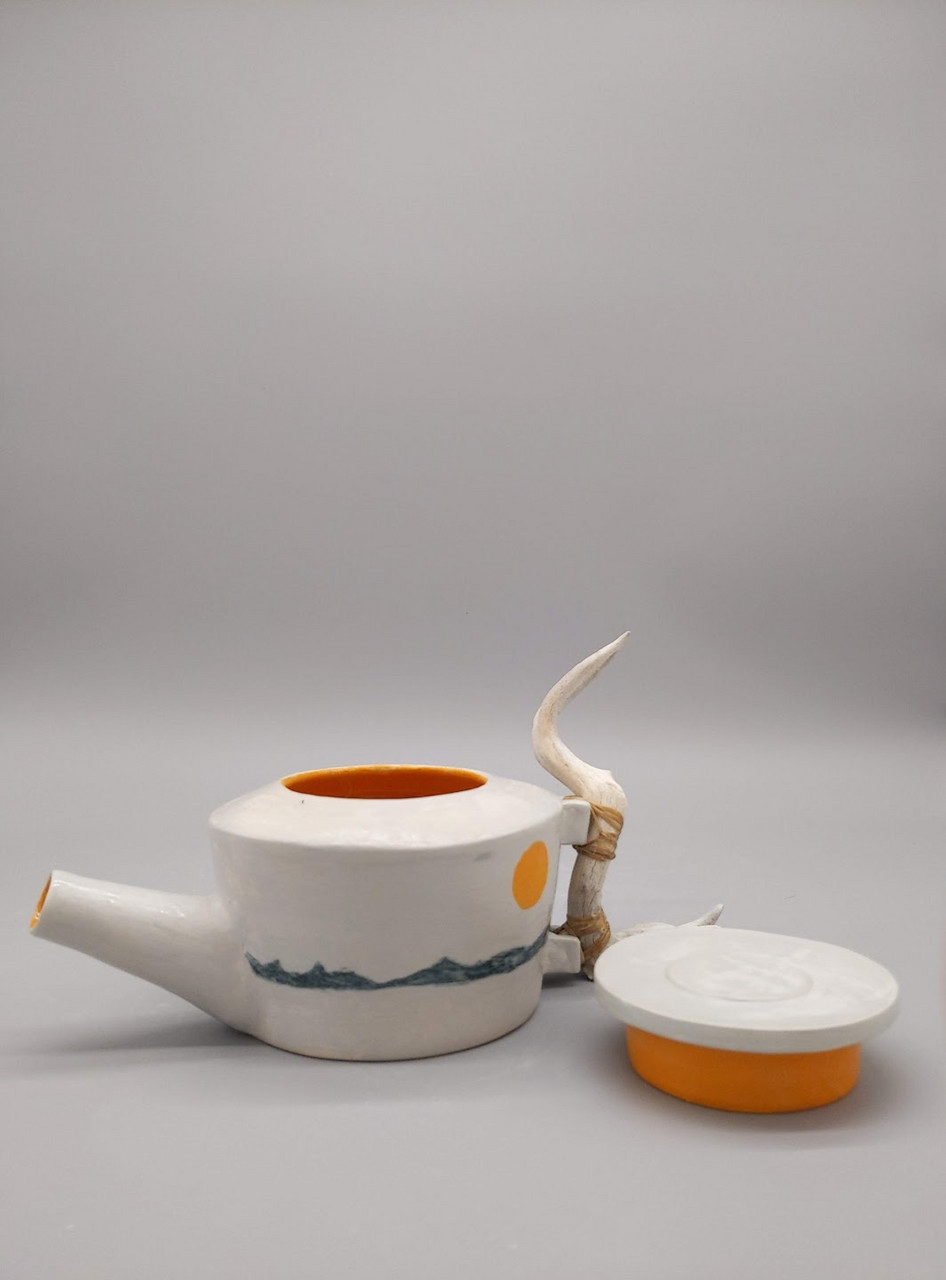
Hazel Garrison, Northern Sun, 2026. Clay, underglaze, deer antler, sinew, 5.5” x 11” x 5.25.” Breck School, MN.
Artist Statement: “For my piece Northern Sun, I originally wanted to create a teapot with a hazy-day horizon. I got this idea from my canoeing trips in northern Minnesota. I also wanted a pretty simple form. To do this, I threw the body, lid, and spout together, then attached them. I also attached the pieces for the handle. After it was bisque-fired, I put a layer of gray underglaze on the outside, orange underglaze on the inside, and used an underglaze pencil to draw the treeline. Then I added a shiny glaze on top and fired it again. After this, I used synthetic sinew to attach the deer antler as the handle. When I finished it, I decided it looked more like a snowy tundra and therefore gave it the name Northern Sun.”
Willa Haberl
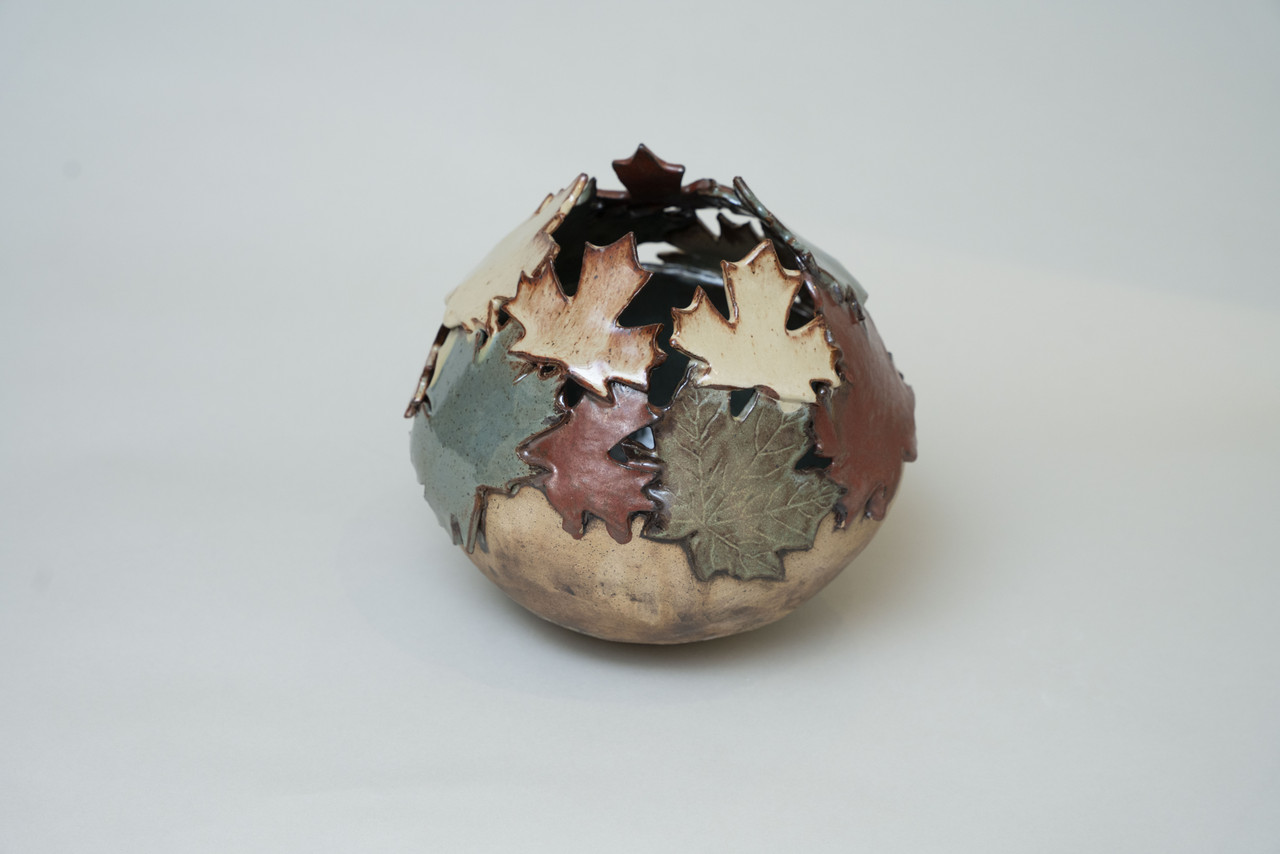
Willa Haberl, Untitled, 2026. Stoneware clay, high fire glaze, 9.5” x 9.5” x 10.” Holton-Arms School, MD.
Artist Statement: “I have always felt the most peaceful in the forest. Surrounded by trees and birdsong, hearing the rustling of the leaves and smelling the fresh earth brings a sense of joy. To me, the woods are a sanctuary. In my piece, I want to evoke that same feeling. The enclosed space provides a space of refuge. Structured so the focus is on the color and shape of leaves, my piece emphasizes the beauty of nature in a time when nature is not prioritized. My intention was for the colors to feel natural and non-artificial to replicate the look and feel of the forest completely, so I chose brown stoneware, which allows a range of exquisite natural glazes.”
To construct my piece, I created a coiled and paddled base. I researched the templates for leaves around my area to create realistic leaves, cutting them from thin slabs of stoneware. I inflated a large balloon to use as an armature and attached the leaves. I carefully organized and selected the high-fire glaze colors to create a natural feel for the leaves.
Reshan Harris
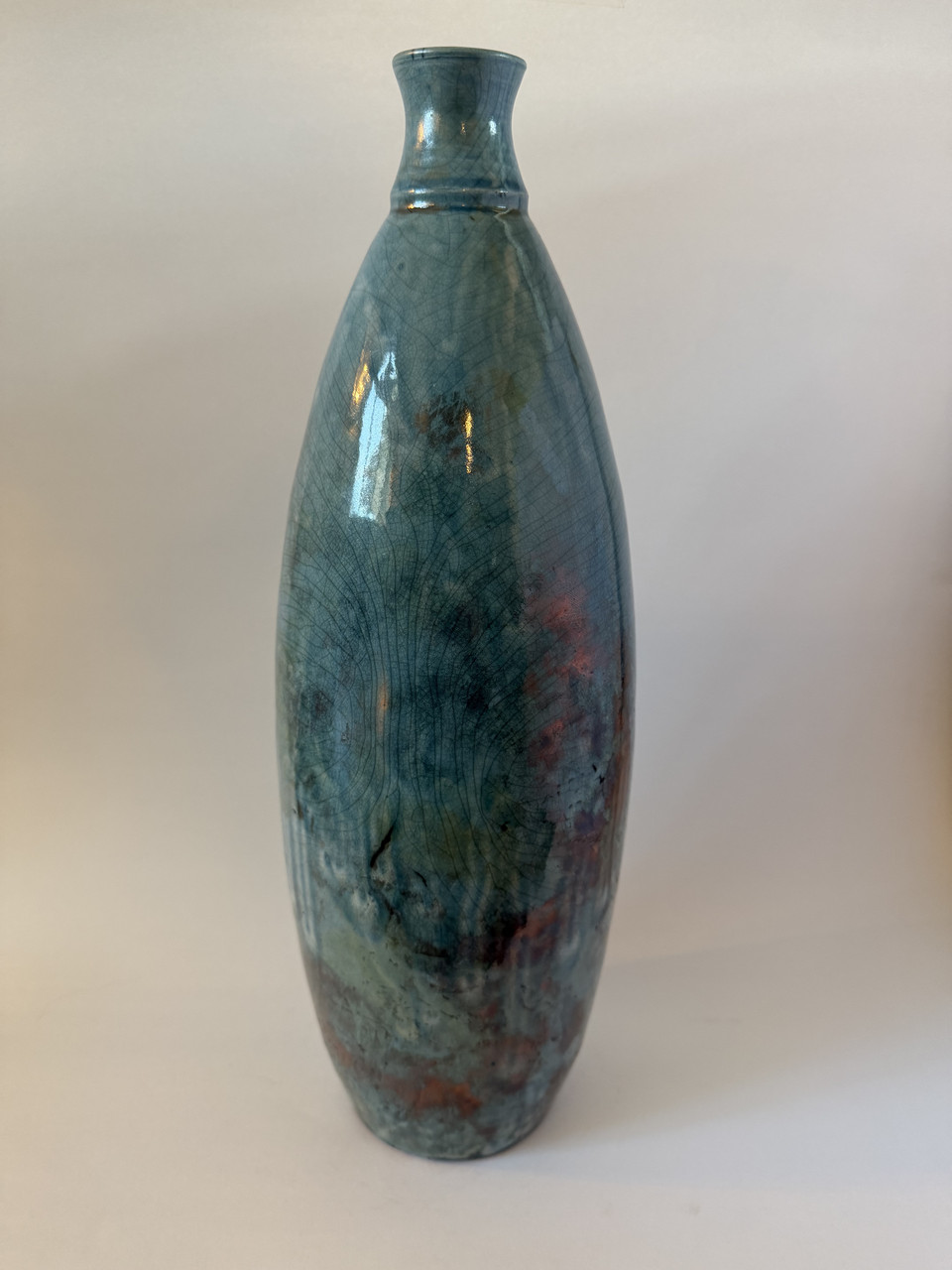
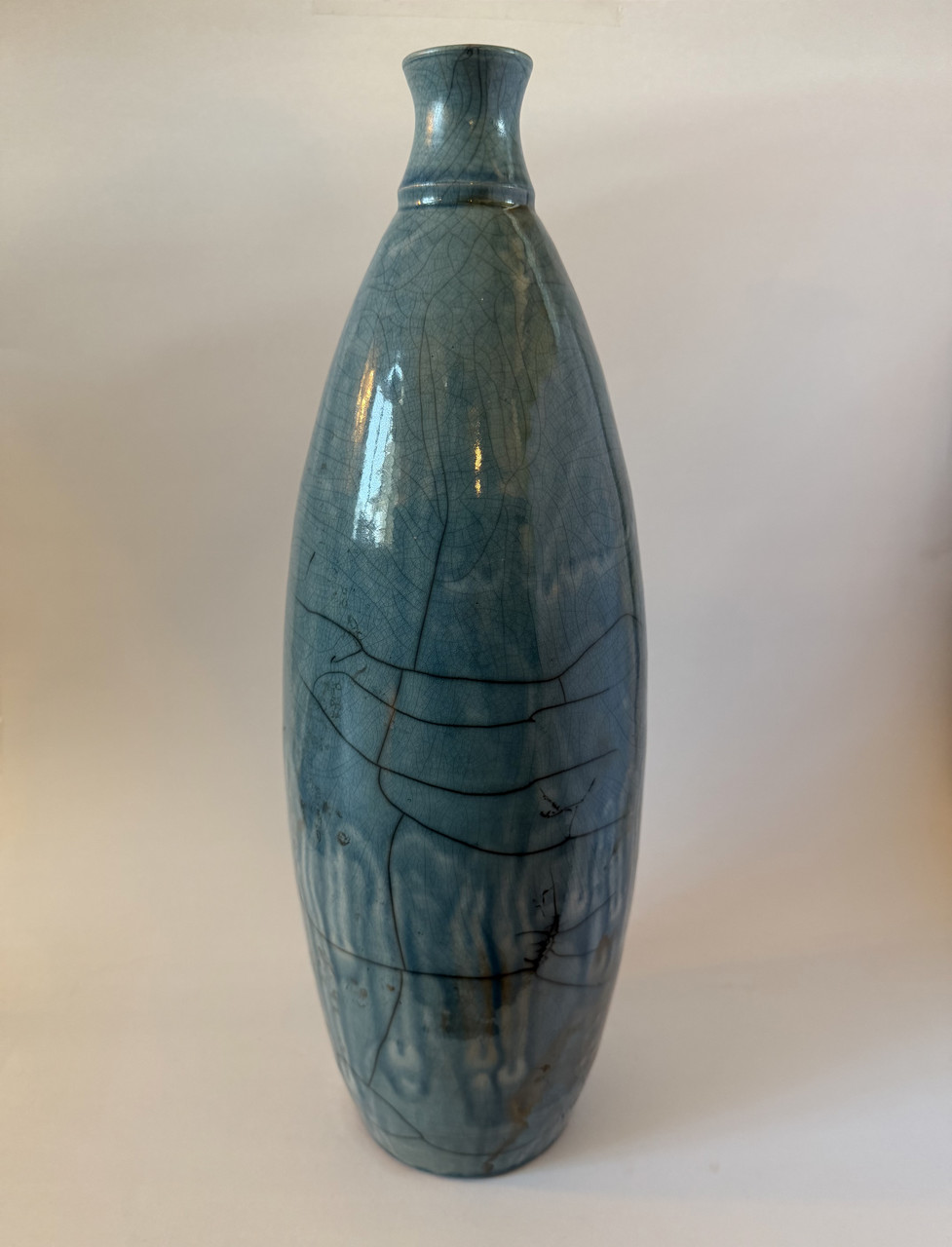
Reshan Harris, Imperial Raku Bottle, 2026. Ceramic, Raku Glaze, 16” x 5” x 5.” Capistrano Valley High School, CA.
Artist Statement: “For this piece, I was attempting to throw the tallest form I could on the wheel using 11 pounds of clay. I had tried previously to gain height with more refined pulls however I could never seem to gain the height I was going for. However, in the creation of this piece I chose to use B-Mix which was slightly firmer than what I usually throw with. This allowed me to pull the walls higher while keeping the structural integrity of the form. Once It had been bisque fired I knew I wanted to try something new with the glaze application as I wanted to fill the smooth form with something interesting. I chose to spray on raku glaze, something I had only tried a few times before. I was also able to pull this piece out of the kiln myself, which was an amazing experience; I can still remember the feeling of lifting it from the kiln and feeling its heat radiating towards me. Finally getting to wash off the surface of the pot and to reveal the beautiful cracks and metallic patterns was immensely gratifying. I am very proud of this piece as I was able to accomplish a big goal of mine while simultaneously experimenting with glazing and firing techniques.”
Penelope Inouye
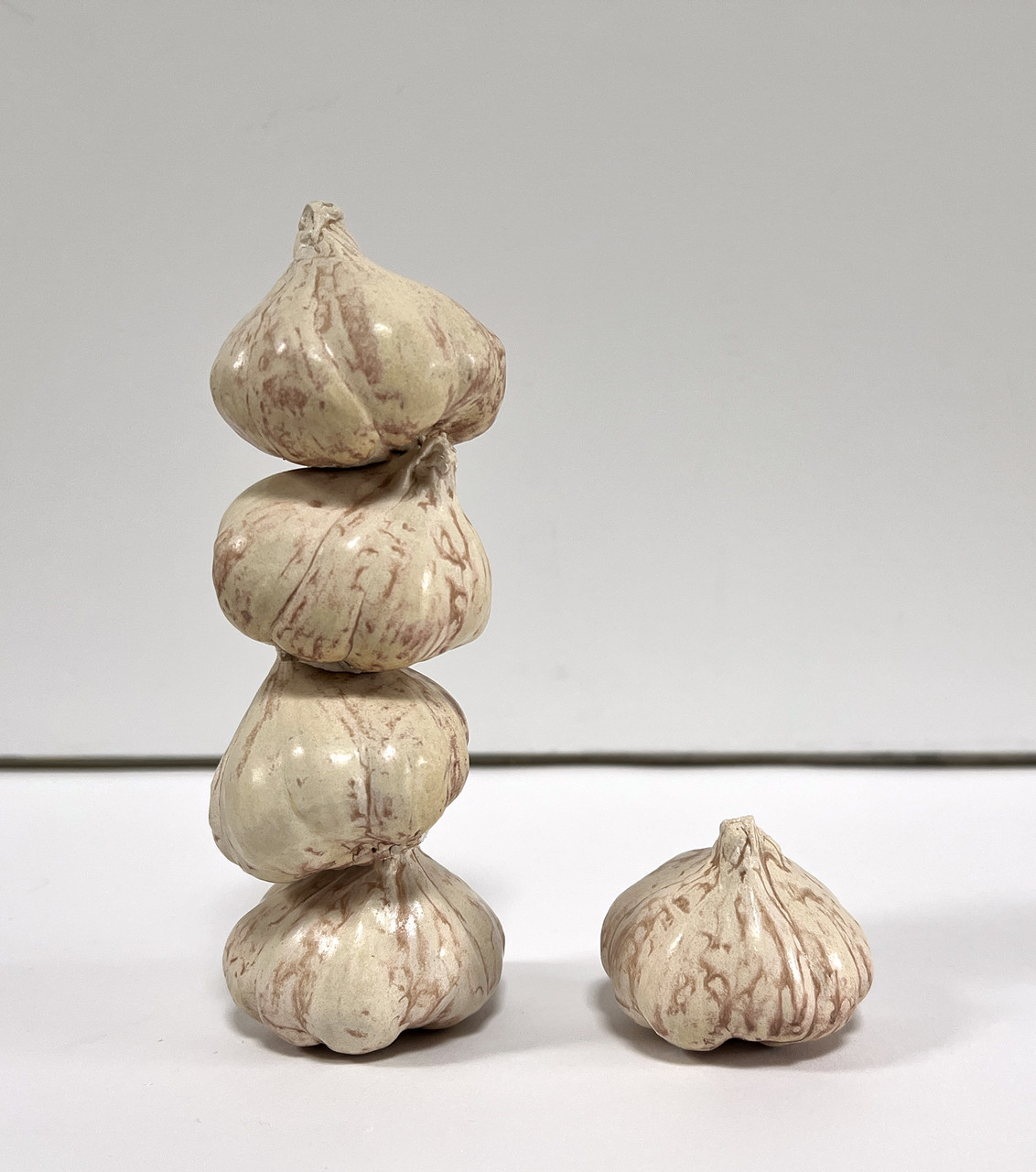
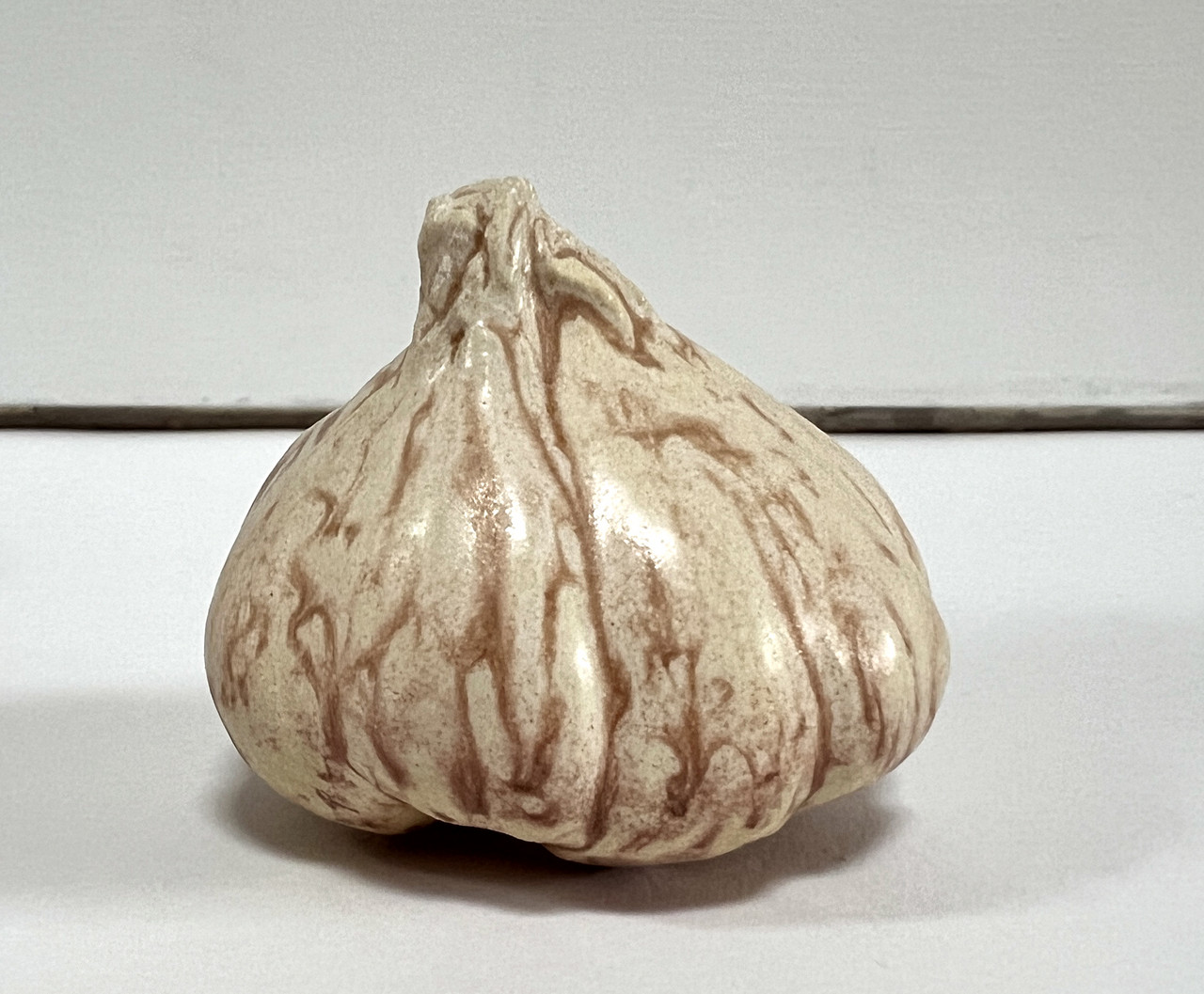
Penelope Inouye, Garlic Tower, 2026. Ceramic, Glaze, and Paper Clay, 6.5” x 5.5” x 2.25.” San Francisco University High School, CA.
Artist Statement: “For my piece Garlic Tower, I created a slipcast of a garlic bulb. I used a breaking glaze to emphasize the texture, using colors reminiscent of an actual bulb. Since each bulb was slightly off-kilter and seemed difficult to stack, I decided to do exactly that. I enjoyed their lopsided nature, which made the stack feel precarious. I left a fifth garlic bulb to the side to raise the question of whether it fell or is simply waiting to be stacked.”
Sidh Jaddu
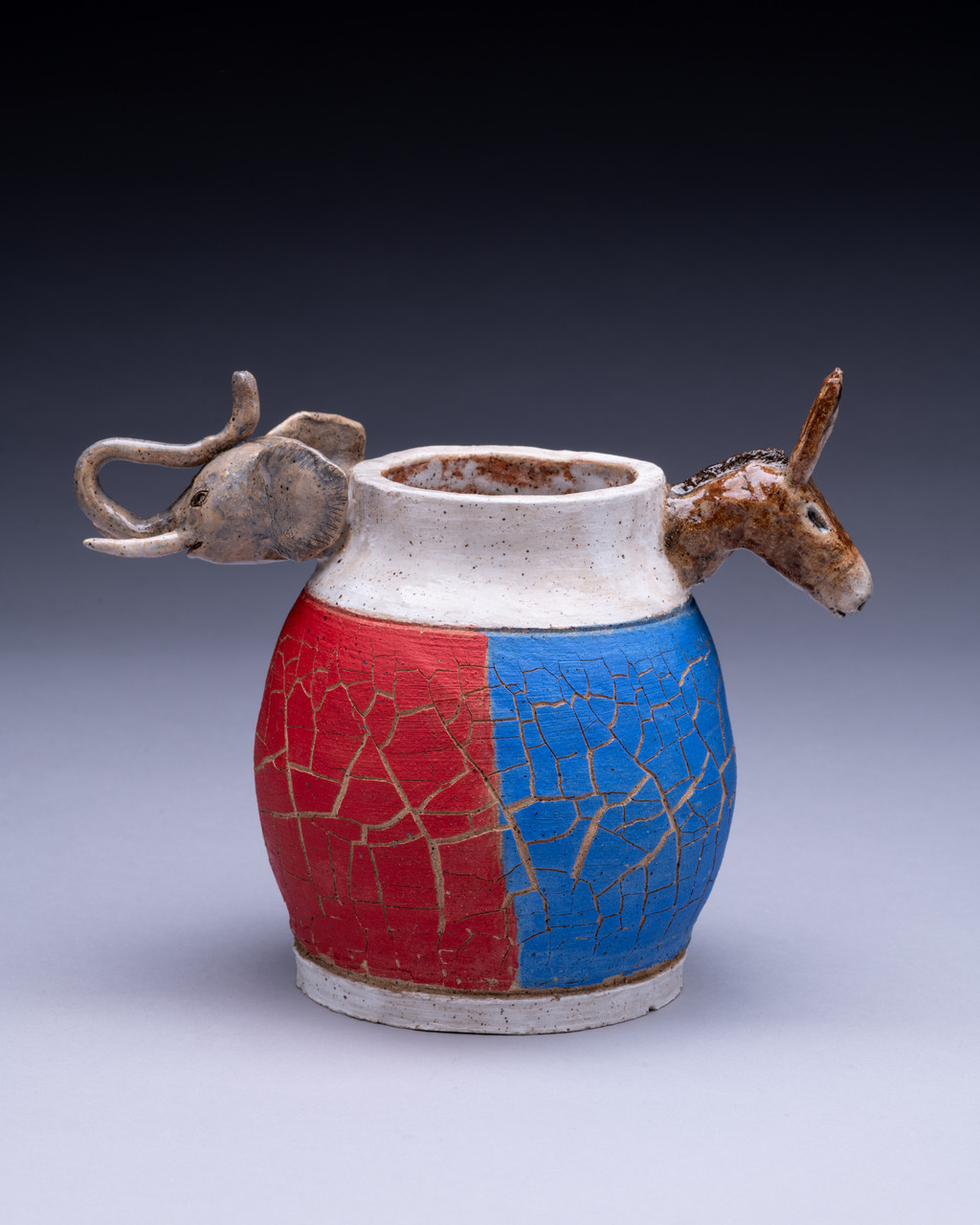
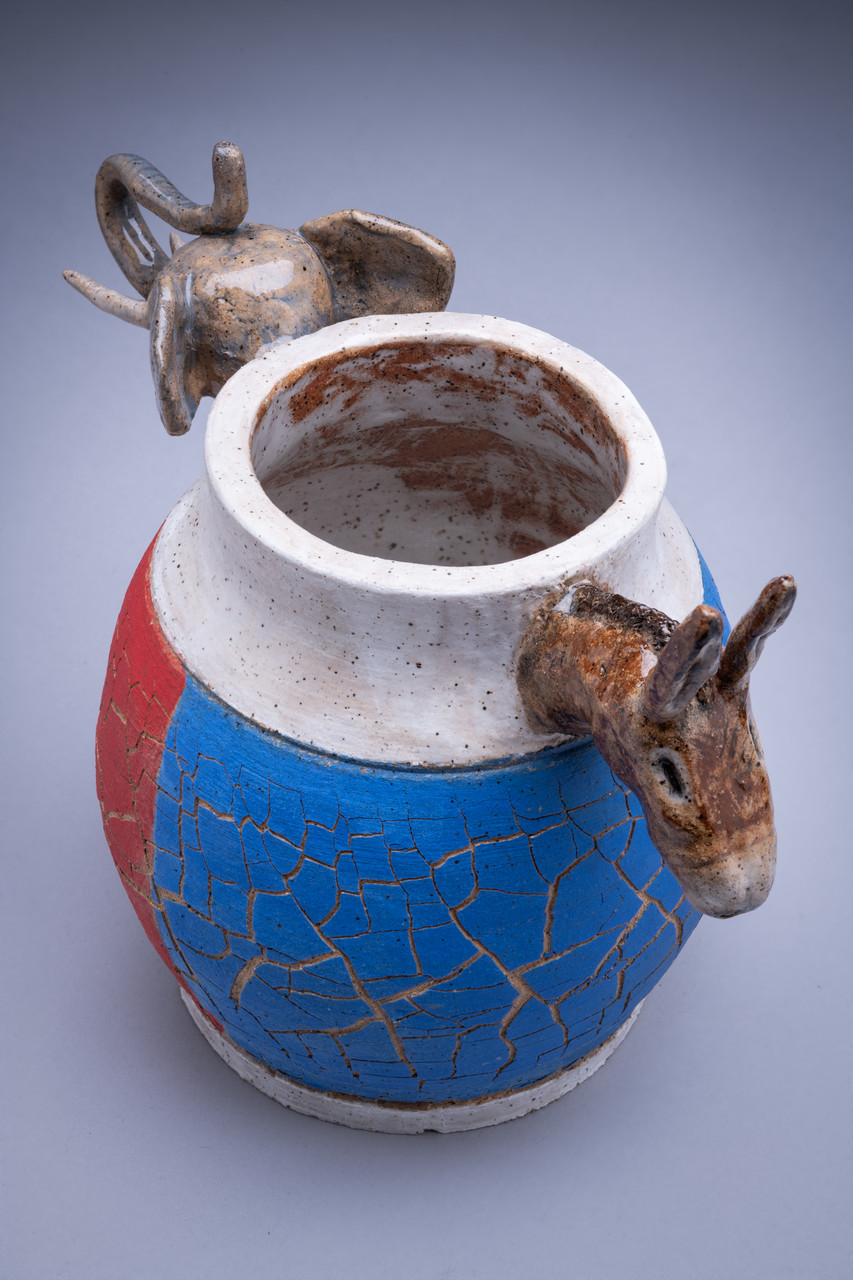
Sidh Jaddu, Fatigued, Fractured, Yet One, 2025. Standard 112 Clay, Amaco underglazes, Sodium Silic, 6.25” x 8.25” x 5.” Thomas Jefferson High School for Science and Technology, VA.
Artist Statement: My work uses the wheel-thrown vessel as a stand-in for the body. To me, it is a form that can contain, protect, present, and bear the marks of lived experience. The work appears playful, unsettling, fractured, or emotionally direct, but it also has a meaning that’s less certain and more layered. Through this, I explore how bodies, like vessels, can hold different things at once: grief and love, fragility and resilience, vulnerability and strength.
Fatigued, Fractured, Yet One, at first glance, suggests political division and conflict. But the vessel is much more than a simple political symbol. While the cracks speak to age, history, and differing beliefs, the pot endures, held together by white bands that echo the American flag. For me, this piece is about setting aside our differences and remembering that we are all shaped from the same clay.
The pot was wheel-thrown, underglazed in red and blue, then treated with sodium silicate and stretched to create cracks. The donkey and elephant heads were hand-built and finished with an antiquing wash and faded colors to reflect a sense of time and endurance. The piece was made with Standard 112 clay to give out speckles and painted to create a worn look.
Evelyn Lee
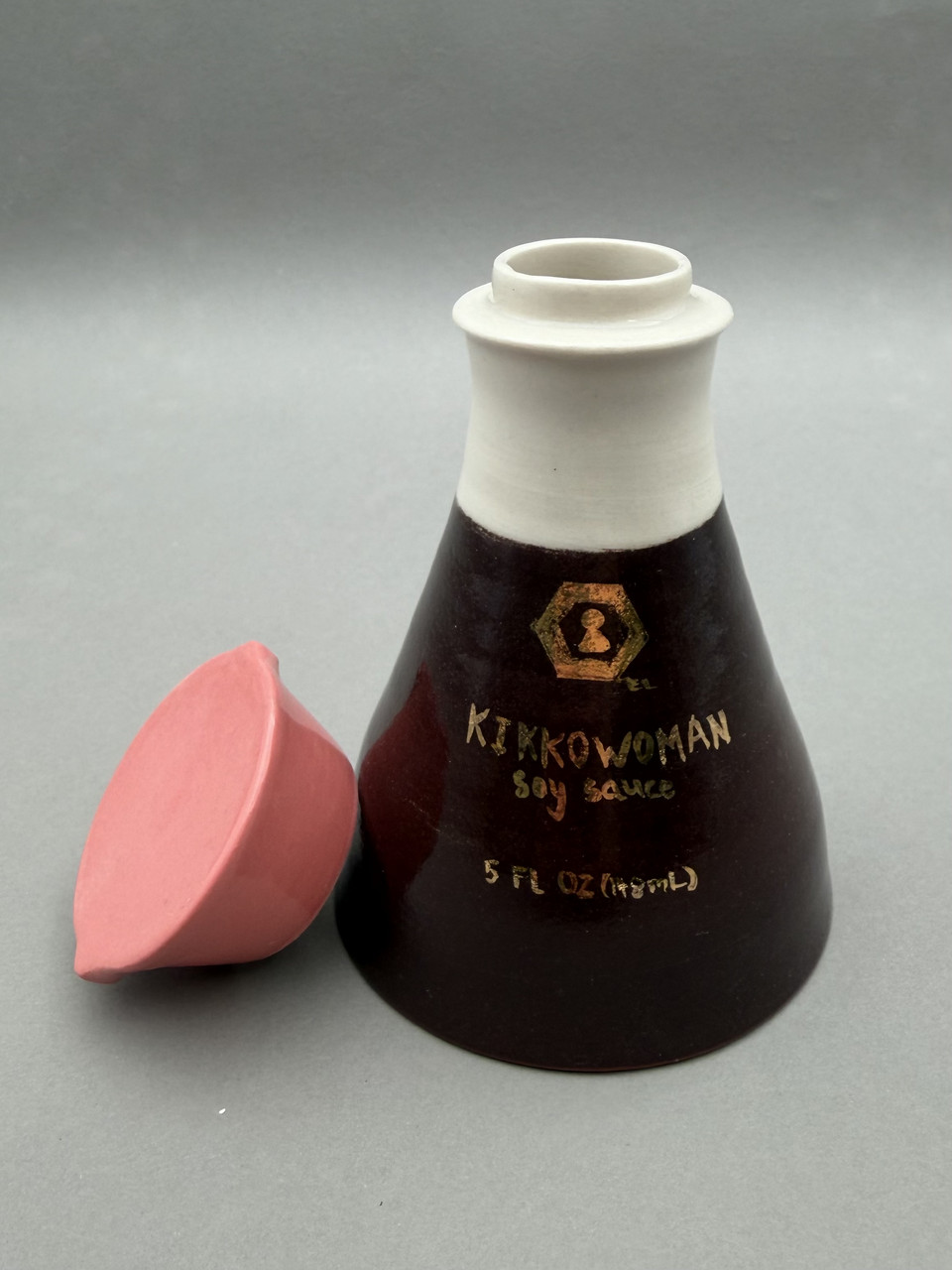
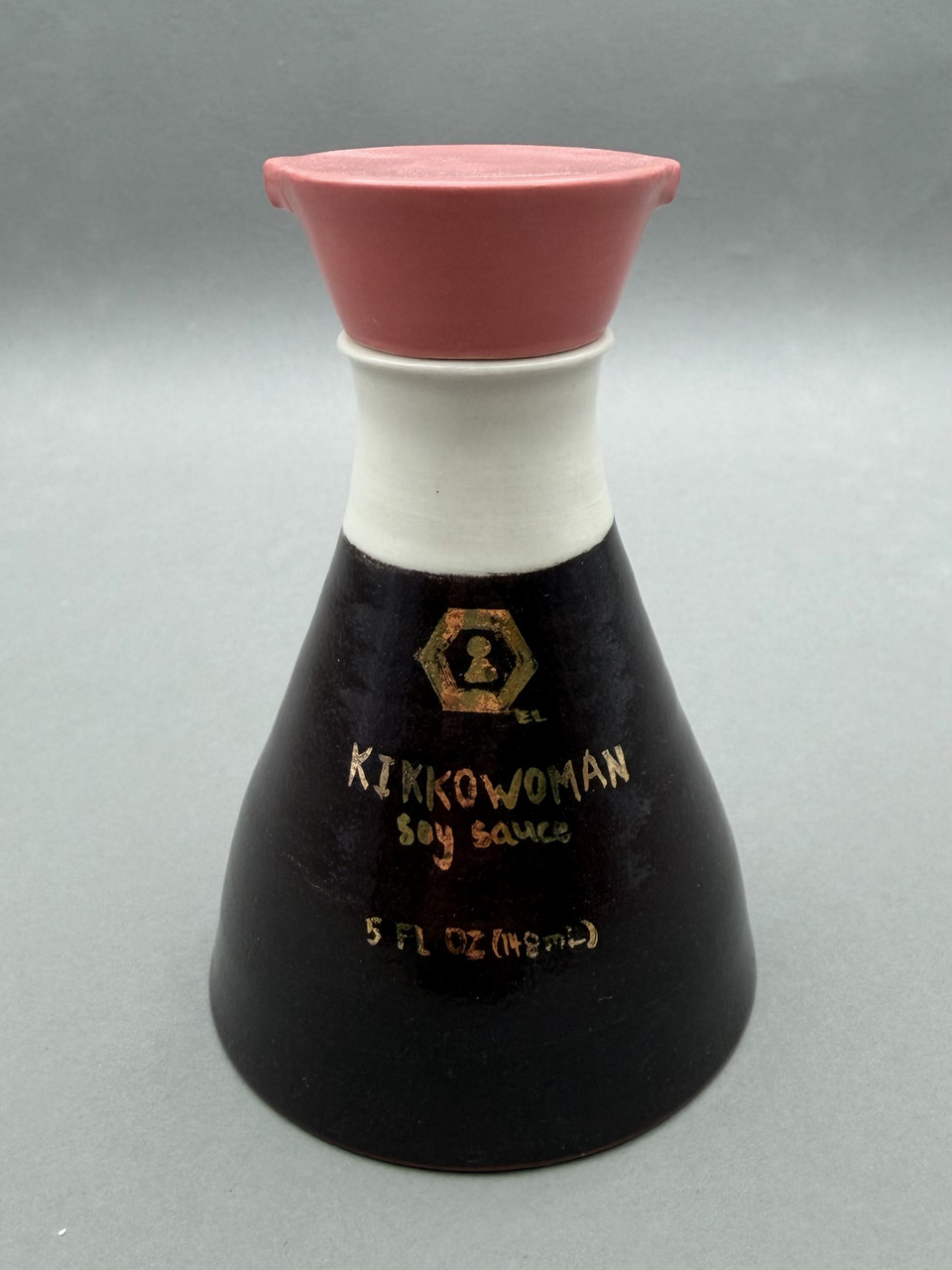
Evelyn Lee, Kikkowoman, 2025. Ceramic, Underglaze, Glaze, Luster, 4.5” x 4” x 4.” Chadwick School, CA.
Artist Statement: “I created this piece as a trompe l’oeil representation of a Kikkoman restaurant soy sauce bottle with a personalized spin on the product. I changed multiple aspects across the piece to tie into the concept of femininity, starting with its title: Kikkowoman. Beyond this, I replaced the logo with a basic figure of a woman in a dress to reflect society’s often simplistic view of womanhood and what it represents. Additionally, I replaced the cap’s typical color of red or green with pink, which is seen as very typical of women. Overall, I hope that my piece captures a slightly satirical, stereotypical view of femininity through subtle touches while still retaining its original.”
Chloe Liu
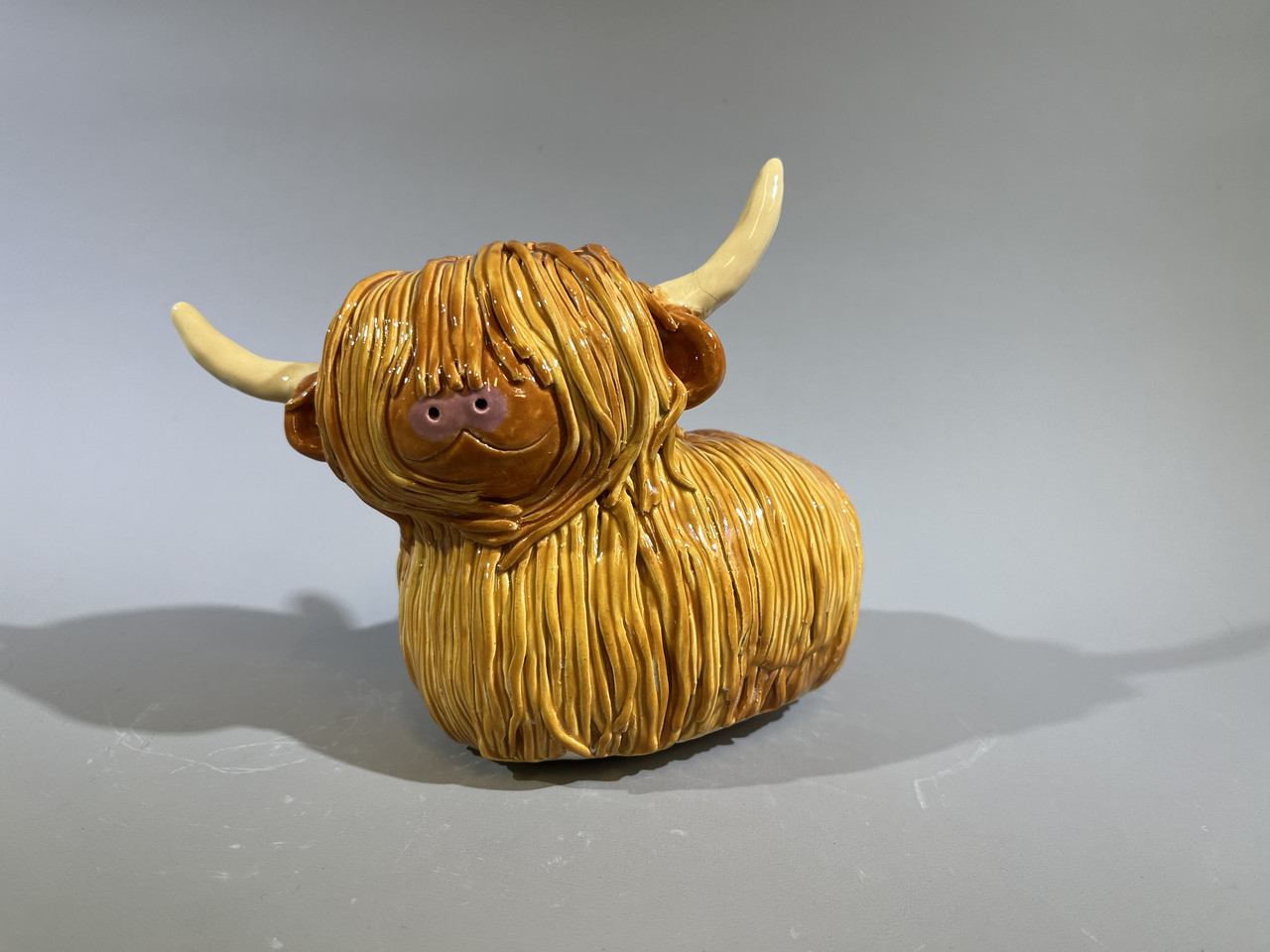
Chloe Liu, Gentle Giant, 2025. Stoneware ceramic and glaze, 5” x 7” x 3.” Lowell High School, CA.
Artist Statement: “I used stoneware to make double pinch pots in order to construct a hollow body. The fur is made of tiny coils. I wanted to incorporate the tranquil themes of nature into a rigid tangible sculpture.”
Emily McCarthy
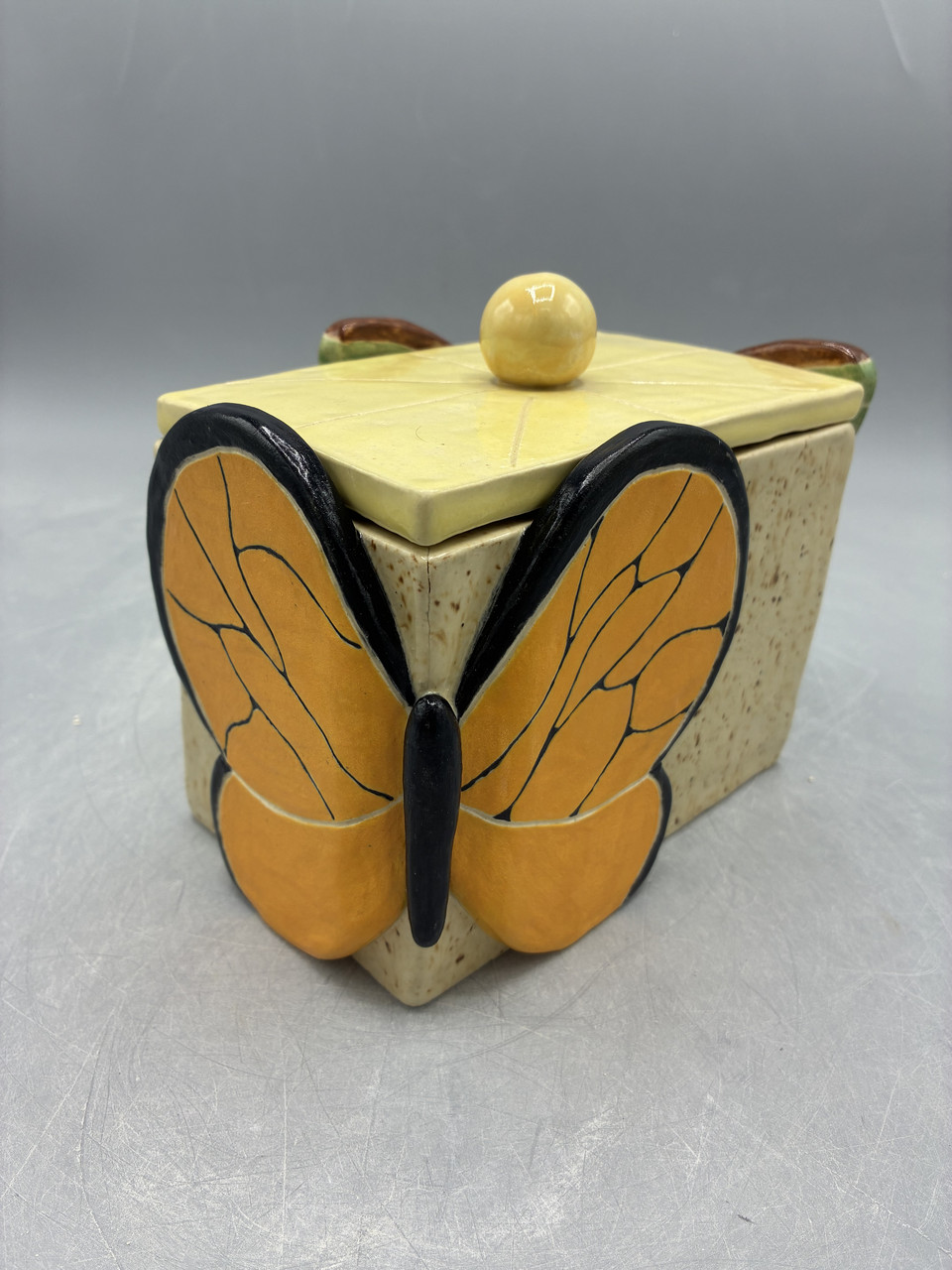
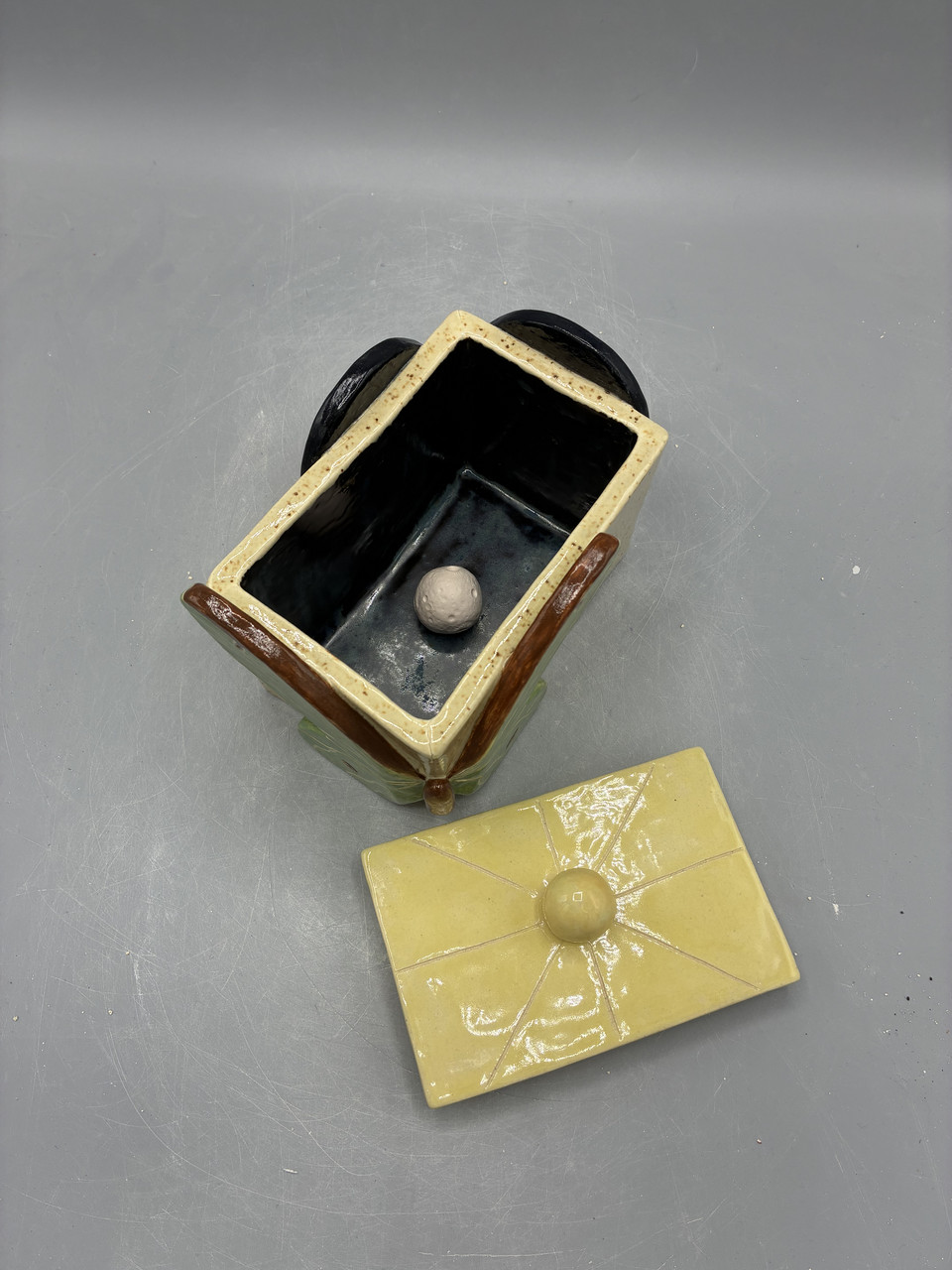
Emily McCarthy, Butterfly, 2026. Ceramic, 4” x 4” x 6.” Carlmont High School, CA.
Artist Statement: “It represents day and night, with the butterfly representing day and the moth night. The lid is the sun with its rays and the inside is the night sky with a moon roiling around. I used underglaze on the wings and spent a lot of time making the small details. I had to research what a butterfly and moth wings look like to get the correct shape and design.”
Katelyn McMorris
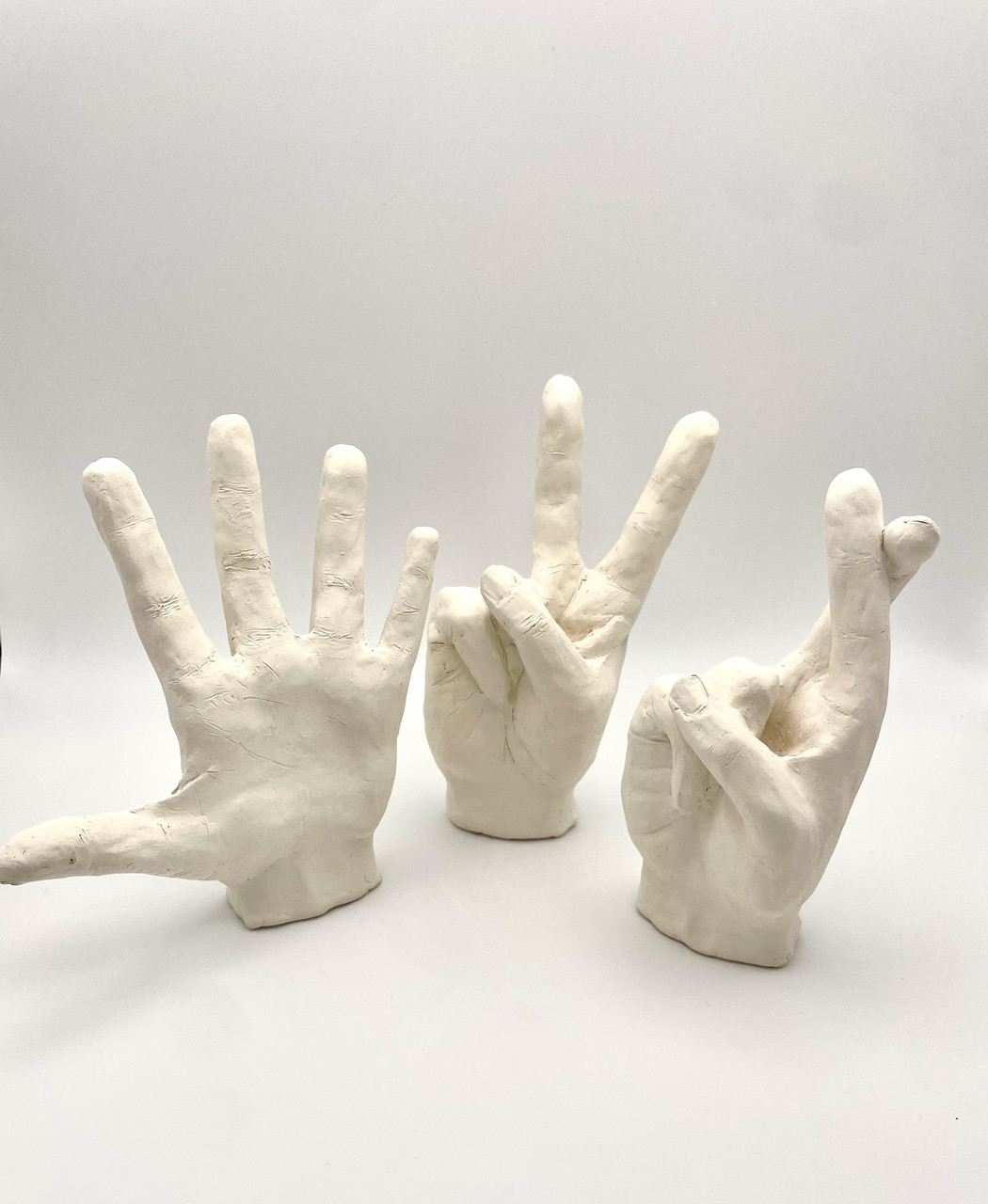
Katelyn McMorris, Expressive Poses, 2026. Bisque Stoneware, Left (7×5.5×1″) Center (7x3x1.5″) Right (7×5.5×1″). The Donoho School, AL.
Artist Statement: “I chose to sculpt my hands with expressive poses. I wanted to practice anatomical hand proportions. One day I may go into the medical field and hands have always interested me. I began sculpting a rectangle form and cut the top half into four slices. I added the thumb with extra clay and started shaping the hand into a smoother shape. I worked to accurately sculpt the size of my fingers, palm and fine details on each hand.”
Isabella Merrell
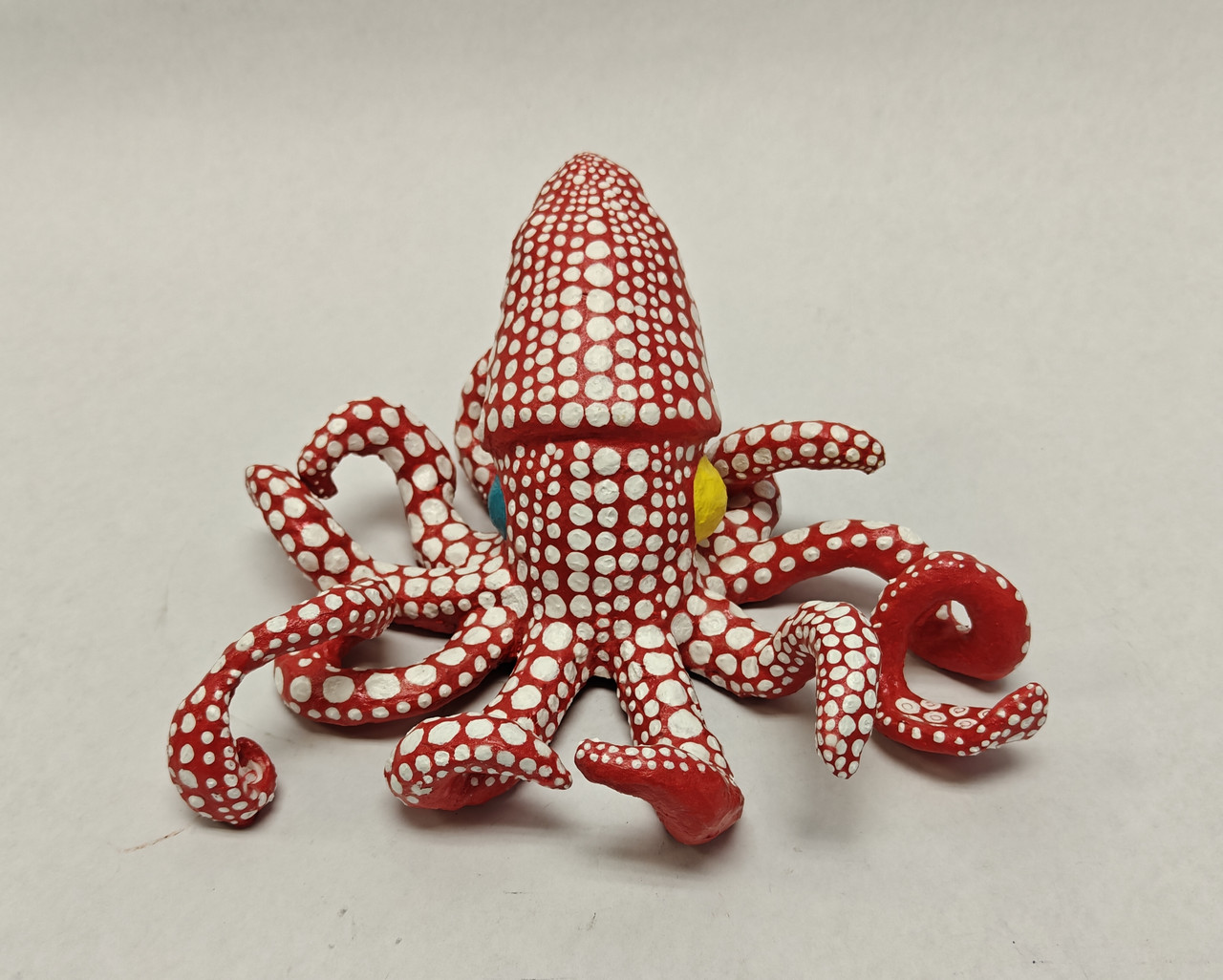
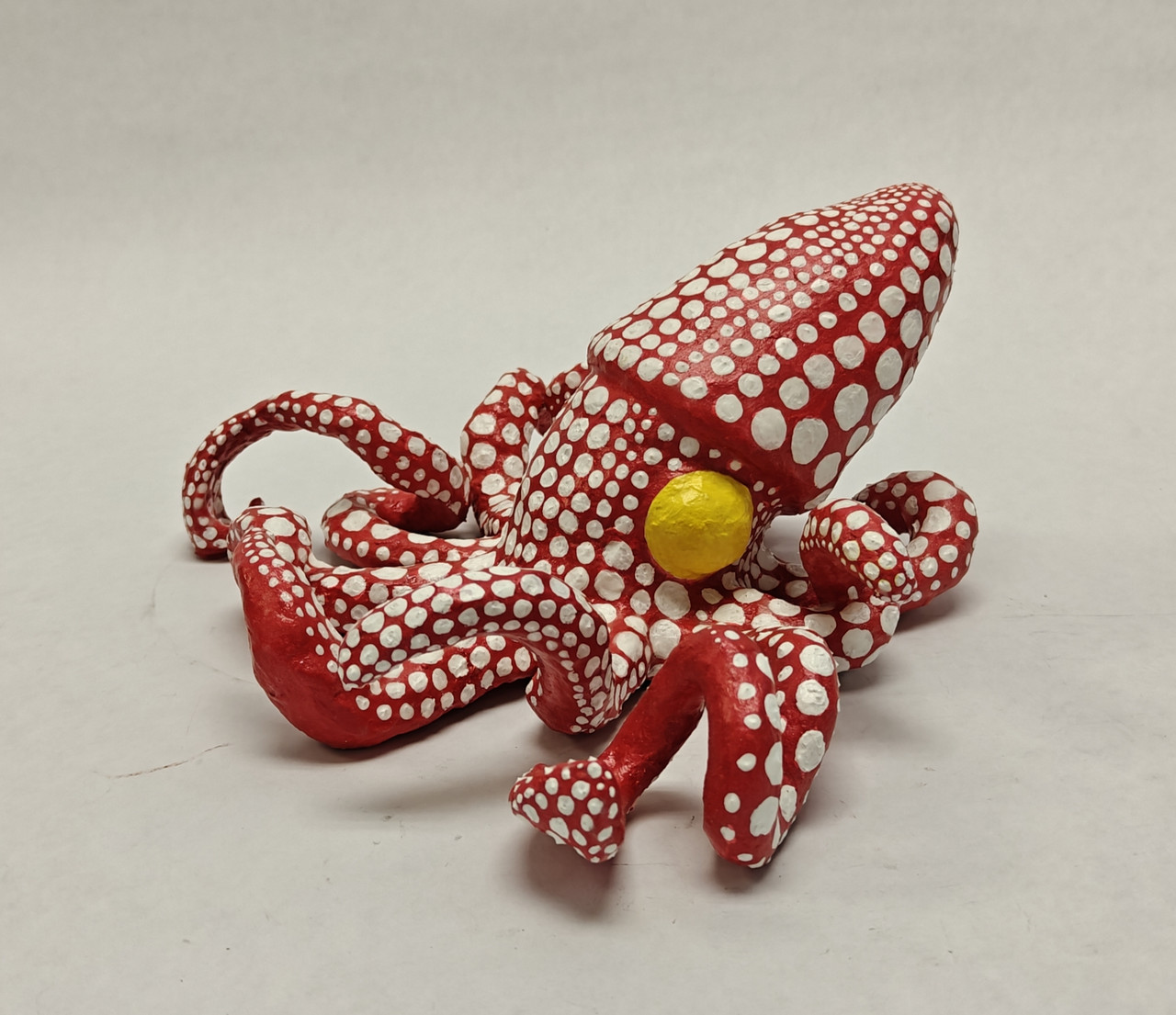
Isabella Merrell, Deep Sea Abstraction, 2025. Clay/paper mix, wire, acrylic paint, sealant, 4.25″ x 9″ x 7.5.” Western Christian High School, CA.
Artist Statement: “While creating the squid, I was inspired by the work of Yayoi Kusama, and wanted to combine the patterns of the real-life strawberry squid with her artistic motifs. I used a paper pulp and clay mixture because it dries quickly while being sturdy, allowing me to create looping tentacle shapes.”
Naidaline Meza
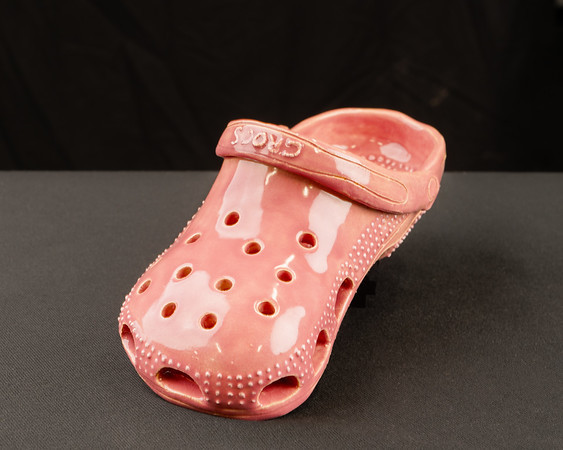
Naidaline Meza, Jazzlyn’s Croc, 2026. Ceramic, 4″ x 11″ x 3.” Copper Canyon High School, AZ.
Artist Statement: “The person that inspired me to create this ceramic piece is my best friend because she wears these crocs every day to school and it expresses the way I walk in her footsteps. The way I created this piece is by first sketching out the design of the croc and then I created my template to the size of the base of the croc. Then I proceeded to roll out a slab, I placed a ball of paper towels at the top of the base, and I draped the slab over the paper towels and cut off the excess. After I scored, slipped, and blended the seam. I also attached a thick coil to create the back border. Next, I incised all of the holes and used slip trailing for the dots to create relief.”
Rylee Nicholas
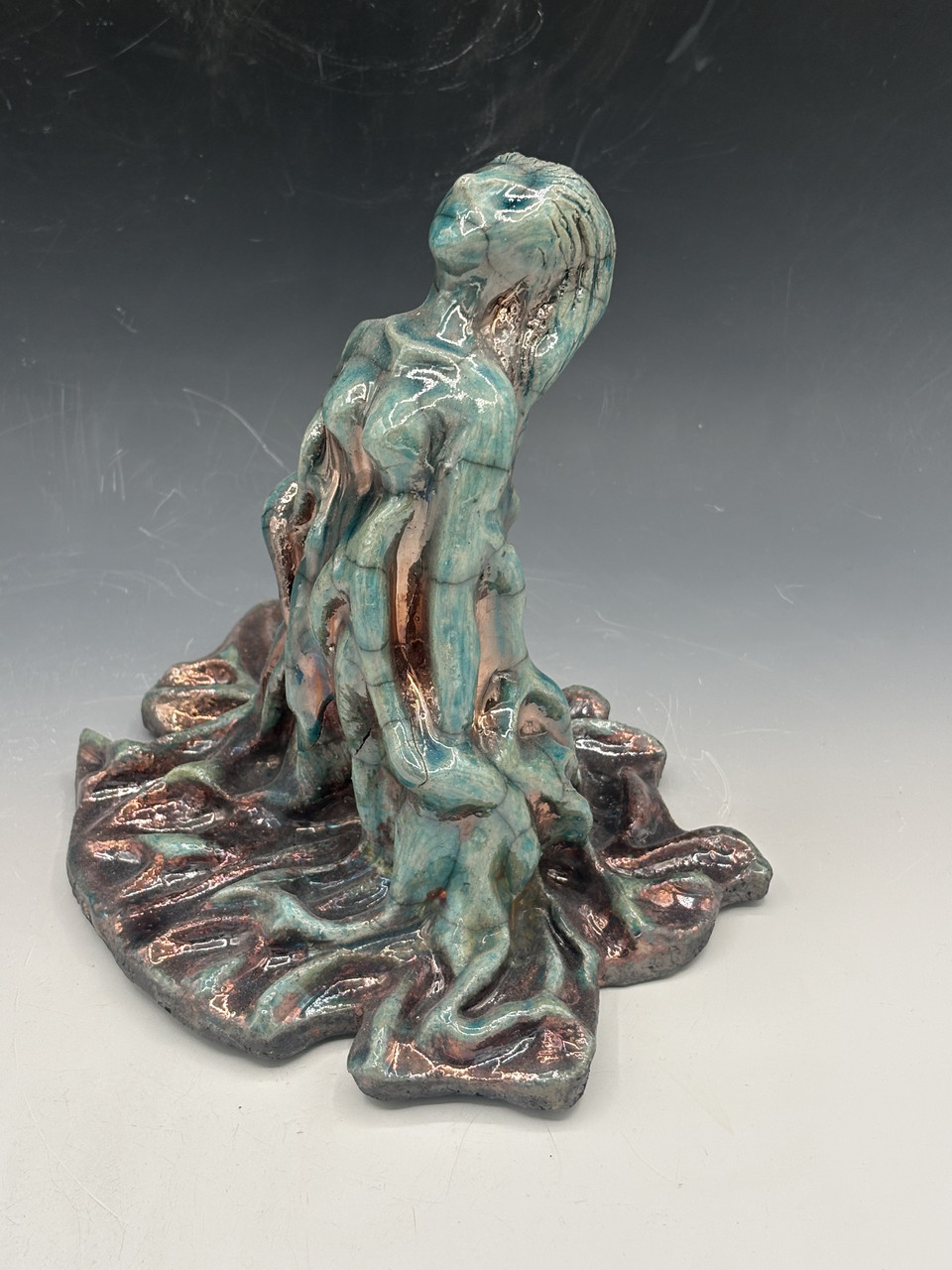
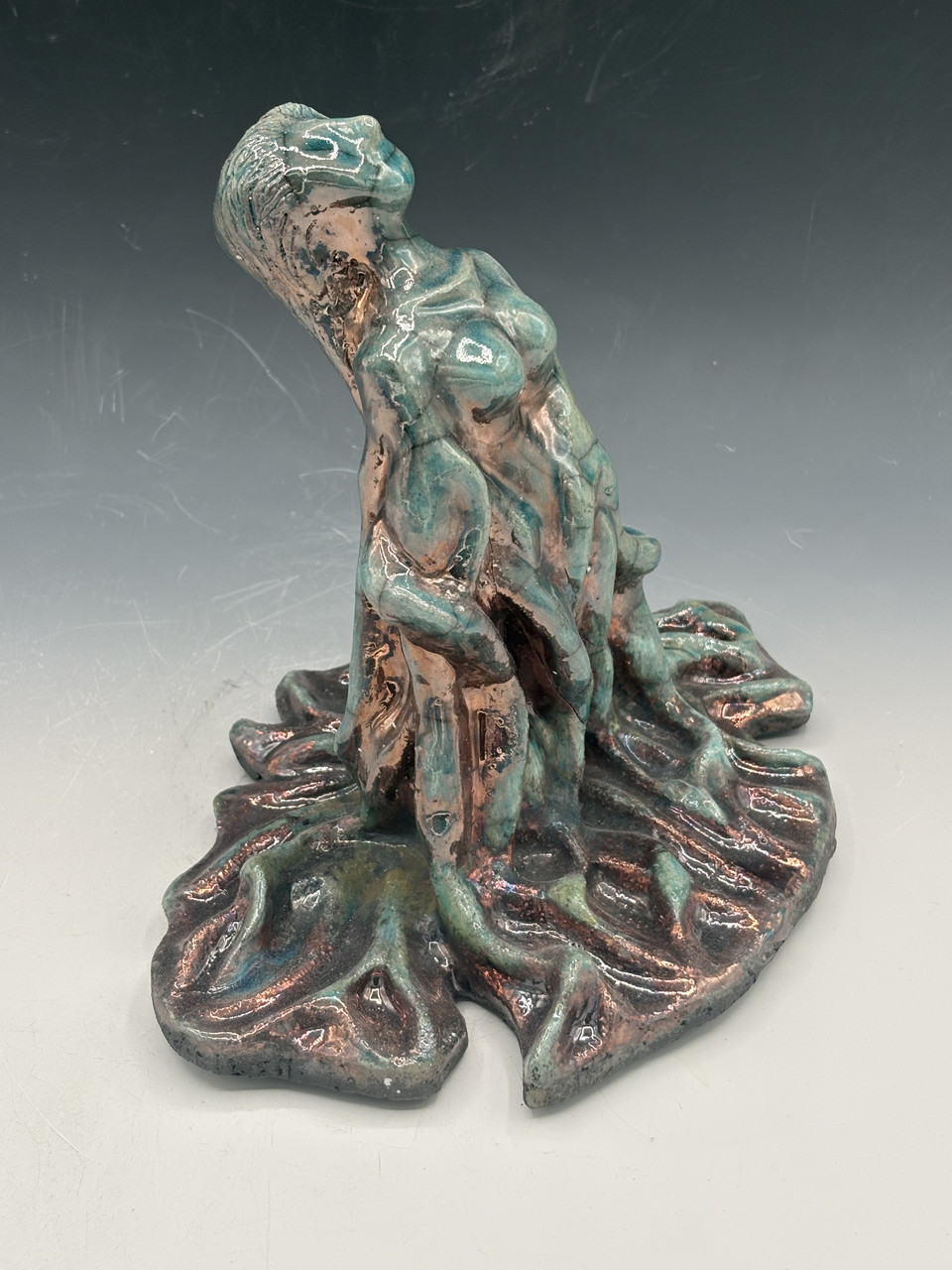
Rylee Nicholas, Lady in the vines, 2026. Clay and glaze, 8″ x 9″ x 6.” Rim of the World High School, CA.
Artist Statement: “This piece represents a women growing from the earth. I created here my rolling out the base, and the forming her body from a glob of clay while individually adding the coils. This piece is rakued with Donyo Red Bronze.”
Iniya Padmanabhan
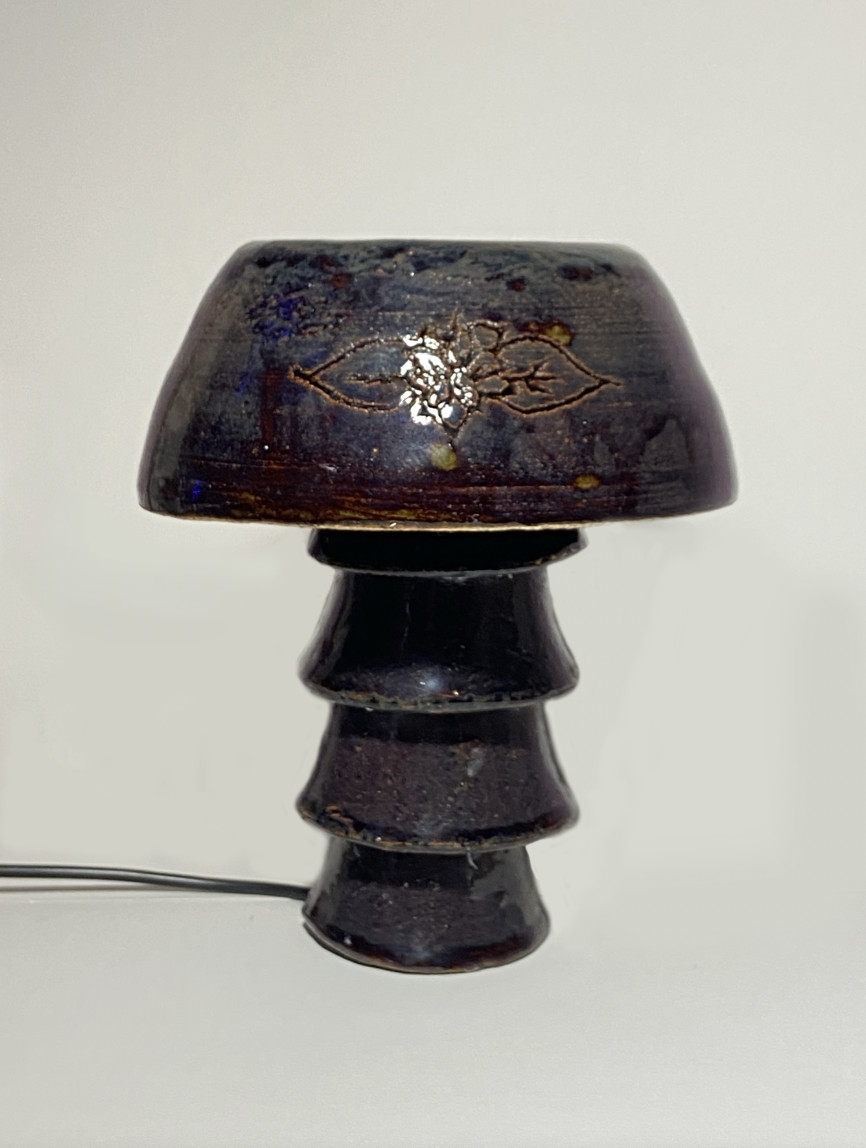
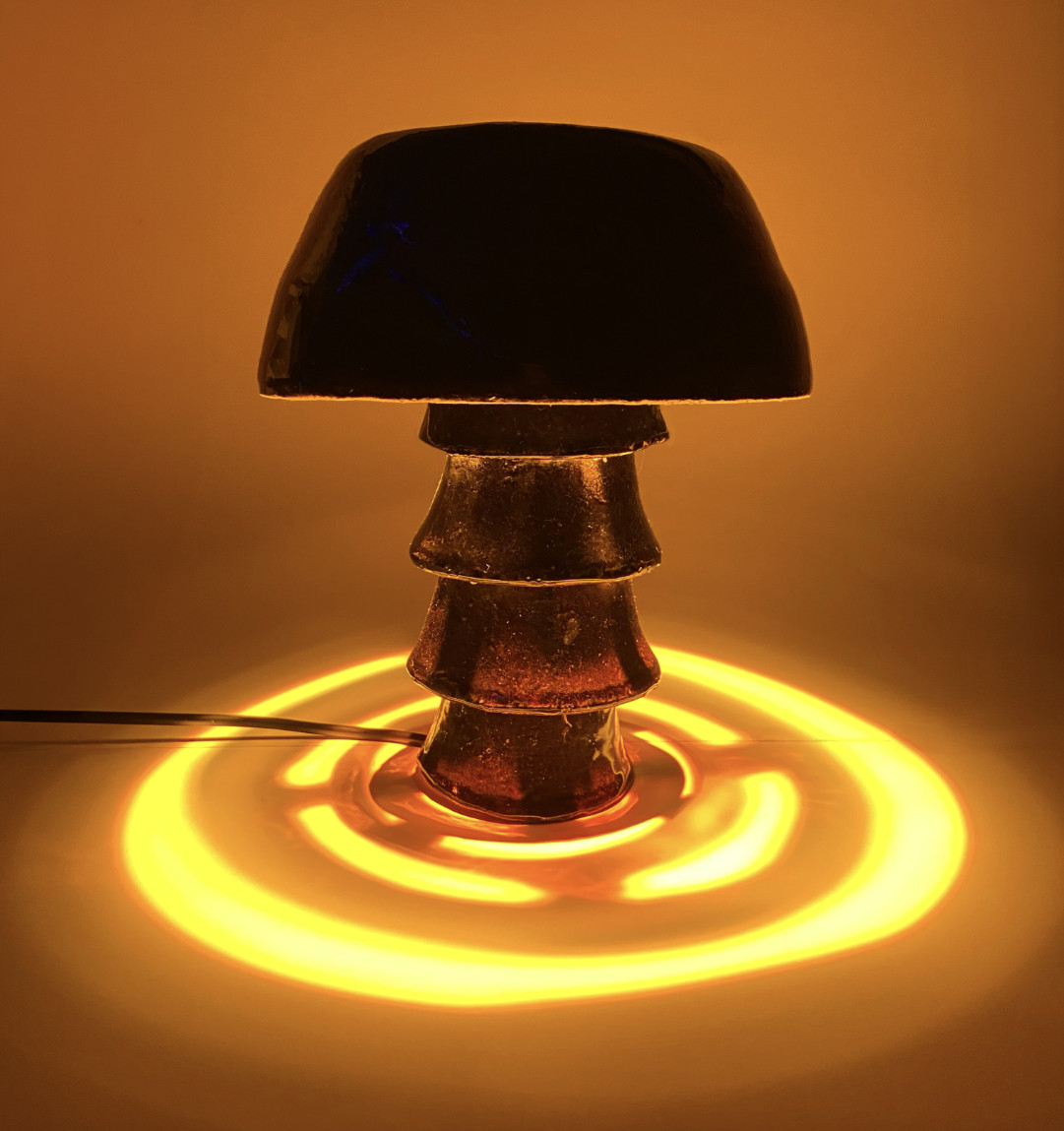
Iniya Padmanabhan, Strata, 2026. Clay, glaze, cardboard, electrical light source, 5.25″ x 5.25″ x 7.5.” Horace Greeley High School, NY.
Artist Statement: “My vision for Strata, meaning “layers” in Latin, was to rethink traditional lamp components by highlighting those that are often overlooked. In traditional lamps, the eye is drawn to the shade, but I wanted to focus on the neck, which is usually a straight, purely functional element. By designing the lamp so that light interacts with the neck in a different way, each tier becomes part of a pattern reflected on the ground, encouraging viewers to notice details that are often ignored. This process involved iterative experimentation with layering and proportion of the tiers, alongside research on traditional lamp forms. Strata invites viewers to consider how meaning and beauty can exist in parts that usually go unnoticed.”
Syenelle Pante
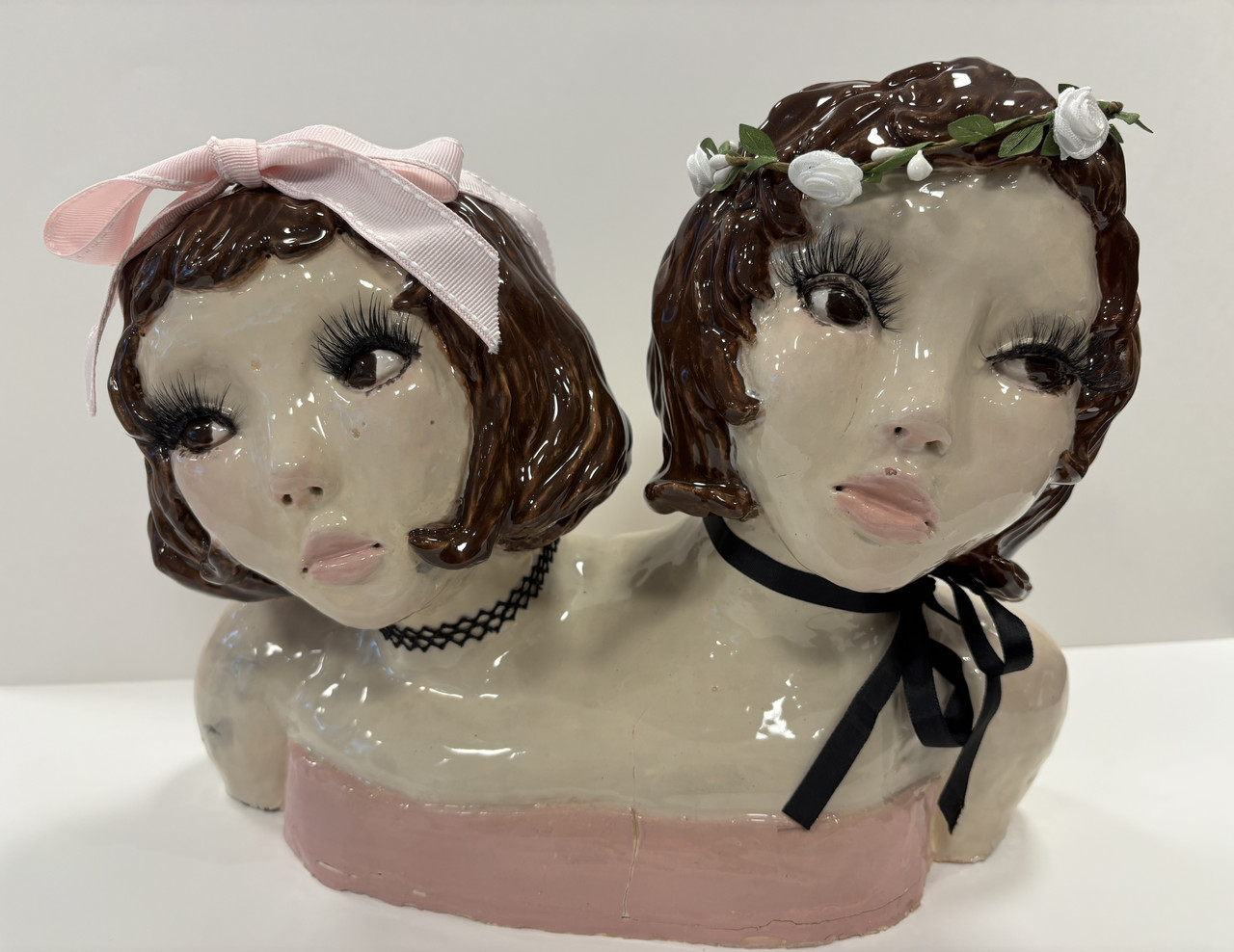
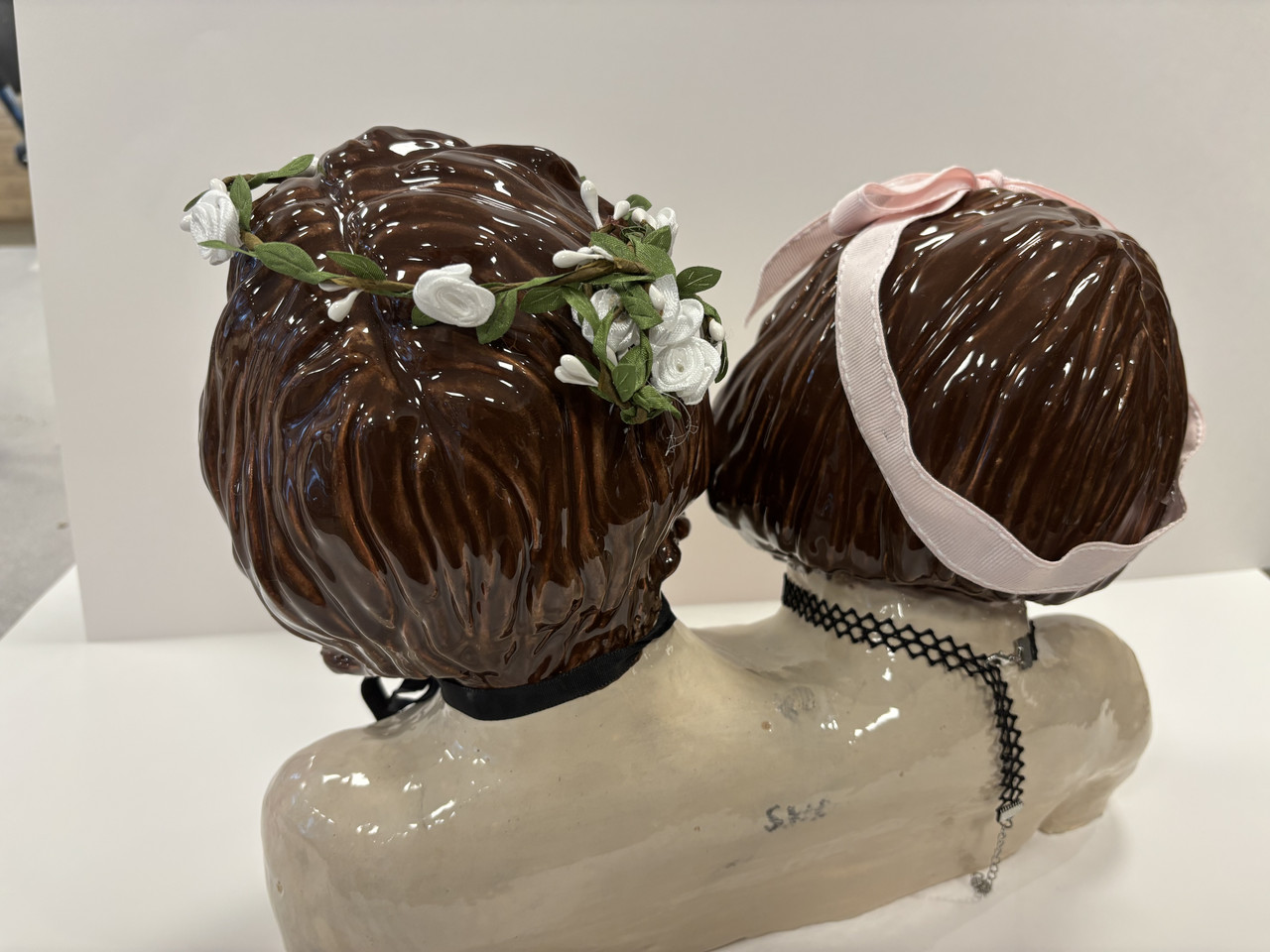
Syenelle Pante, Two Souls One Heart, 2025. Pottery Clay, Ribbon, Jewelry, Crown, 13″ x 11″ x 5.” Olympic High School, WA.
Artist Statement: “My two headed girl stems from the media I used to consume as a child. My favorite movie and show, Jack and the Cuckoo Clock Heart (2013) and AHS Freakshow had a two headed girl. I feel as though these scary but cute looking caricatures and people have always fascinated me in some way. They evoke nostalgic feelings in me. I believe I have always been a little odd in some ways, and when I create art it embodies these feelings of peculiarity I have. For my two headed girl, I used two 25 lb blocks of pottery clay and I carved out shapes from these blocks. I had a lot of trial and error in the process as it was my first ever bust, so I had to do a lot of research on the process of sculpting facial features. She also cracked, which is what I was afraid of, but I find myself liking her even more cracked because it shows the divide between the two girls— exactly what I’d like to capture. Painting her was also a hard process, I had to redo her hair many times and did many test tiles as I didn’t want to mess her up. I also did a lot of research on my main inspiration, the concept artist for Jack and the Cuckoo Clock Heart, Nicoletta Ceccoli. Her art is the essence I’d like to capture with my art, and I’d like to evoke the same feelings her art does for me into other people using my creations.”
Charley Patton
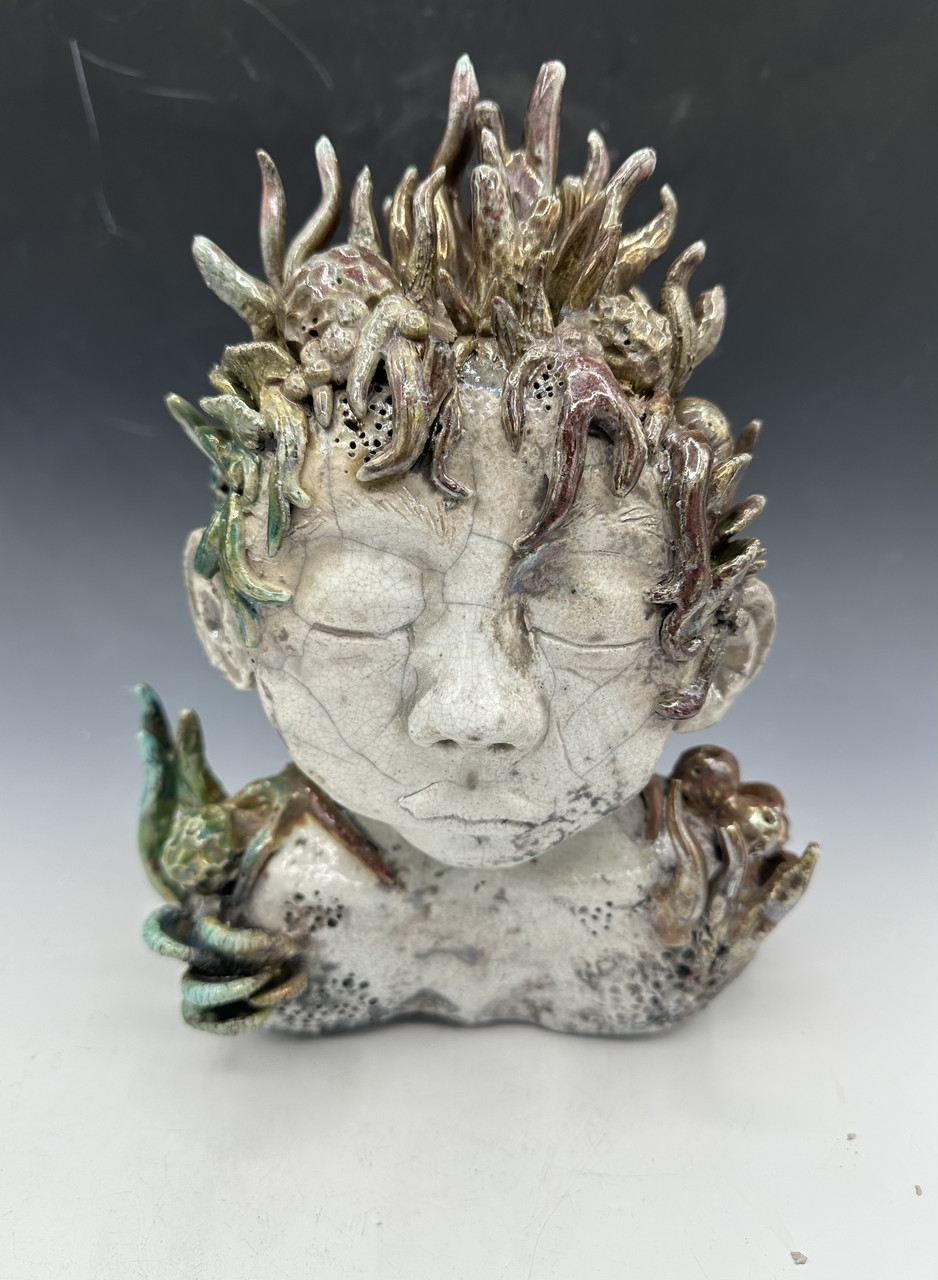
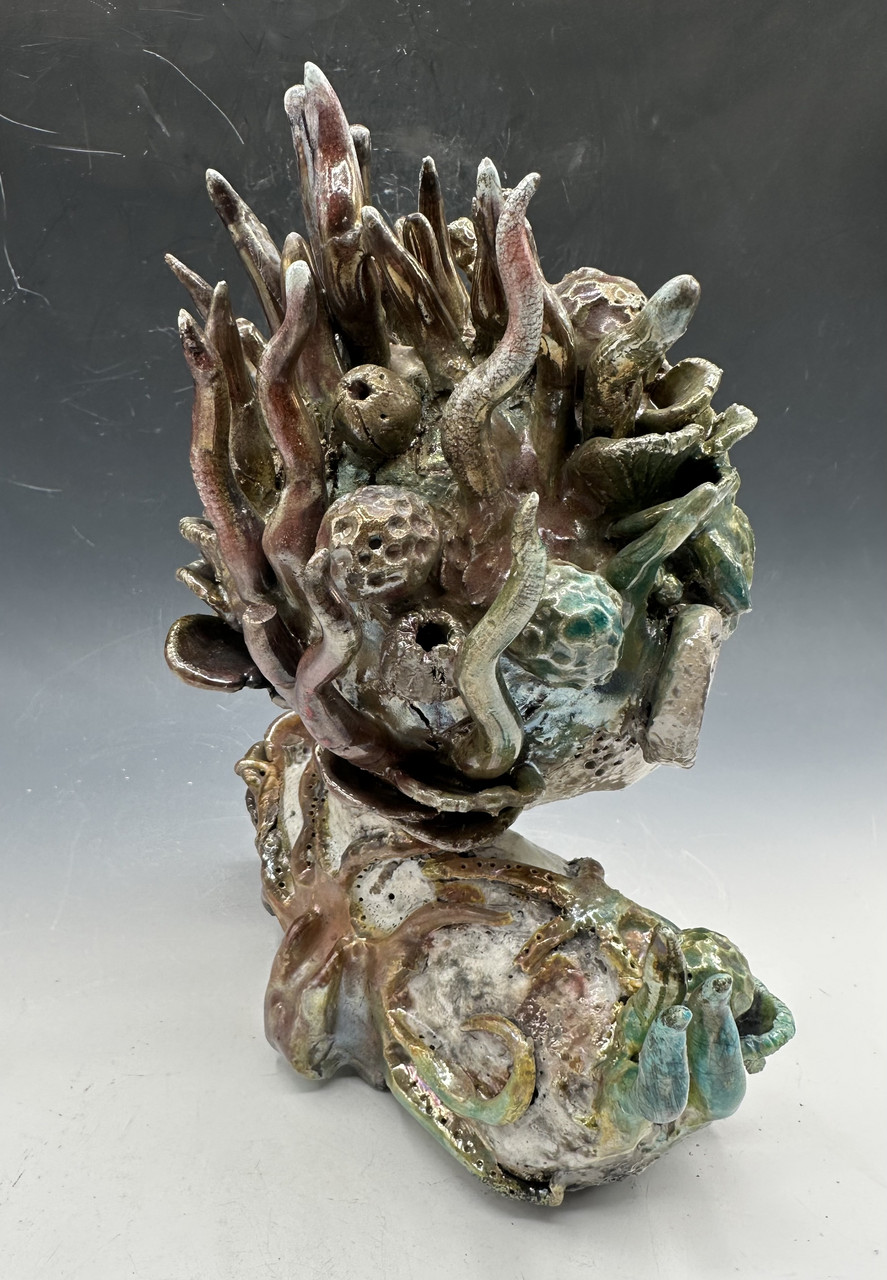
Charley Patton, Reefborn, 2025. Ceramic, Raku glaze, 10″ x 8″ x 6.” Rim of the World High School, CA.
Artist Statement: “When creating this artwork, I wanted to encapsulate the beauty of the ocean with a human element. This was shown thought the human boy. I choose to use ceramic to sculpt this piece and glazed using a raku style glaze to make it look metallic.”
Alexis Rodriguez
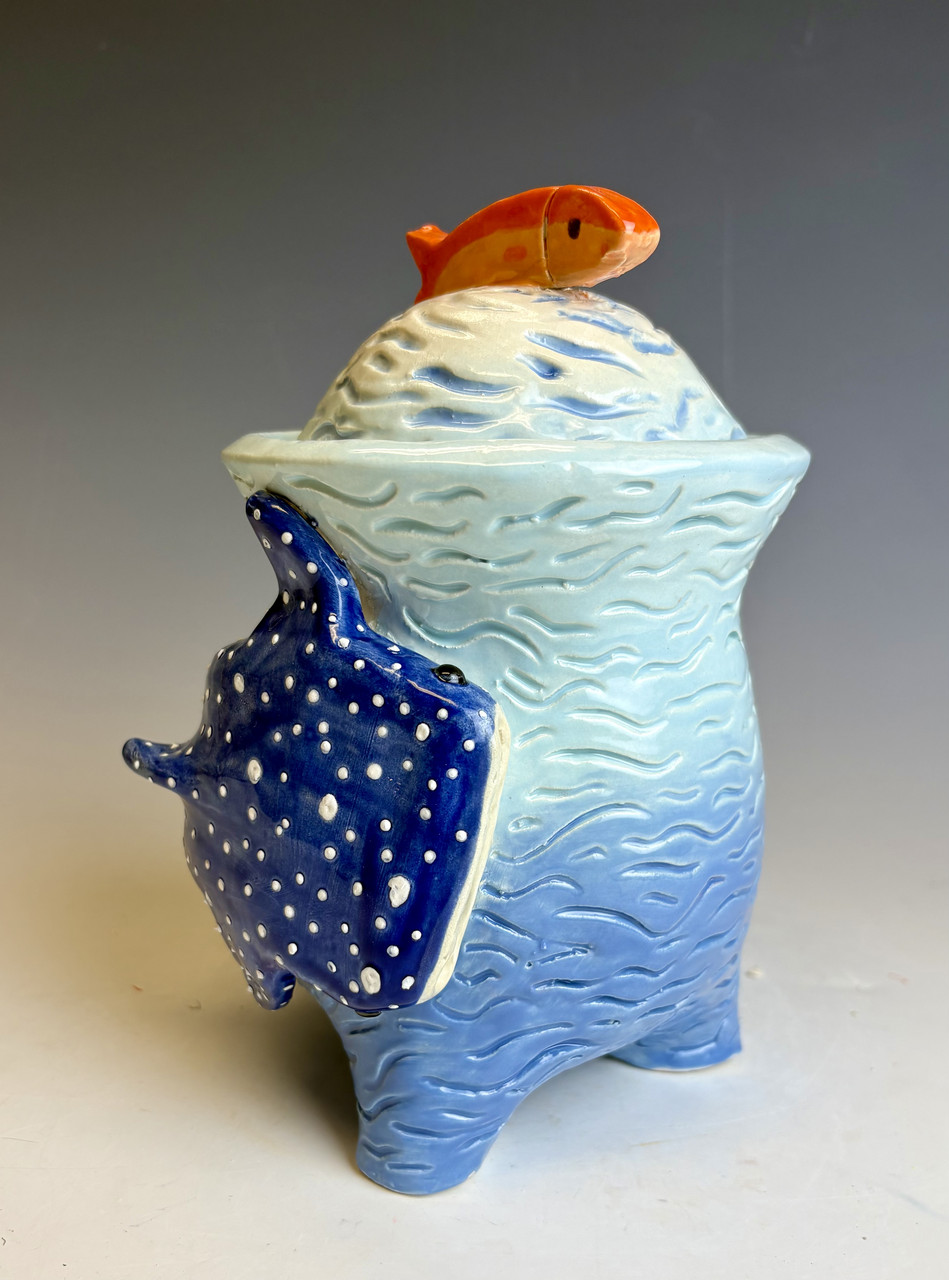
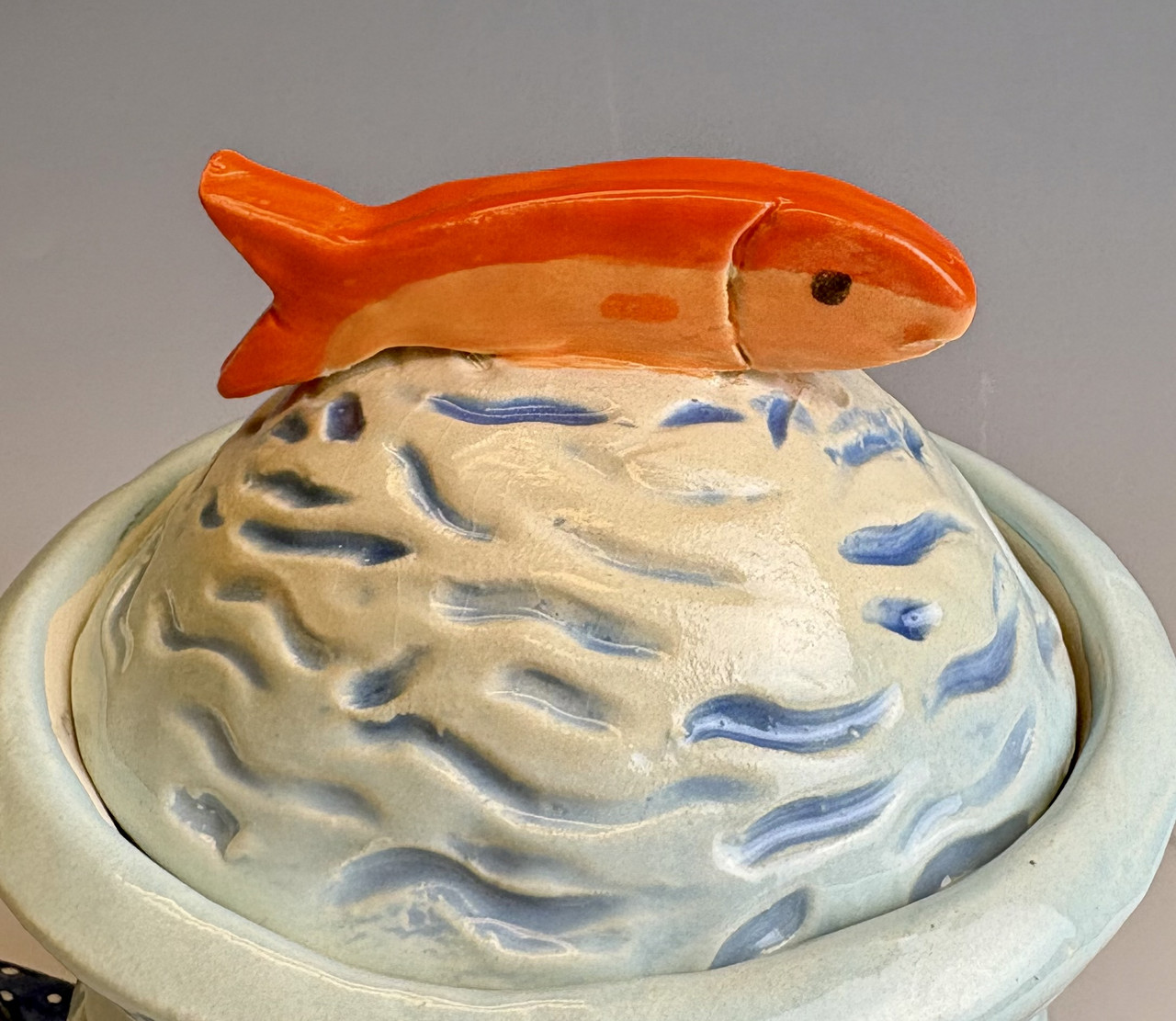
Alexis Rodriguez, Untitled, 2026. Ceramic clay, 5″ x 5″ x 8.” Seabreeze High School, FL.
Artist Statement: “I chose to do a whale shark because I think it is interesting how they migrate all throughout the year. so I decided to make a whale shark migrating in the ocean to symbolize how peaceful they are.”
Charlie Ross-Settineri
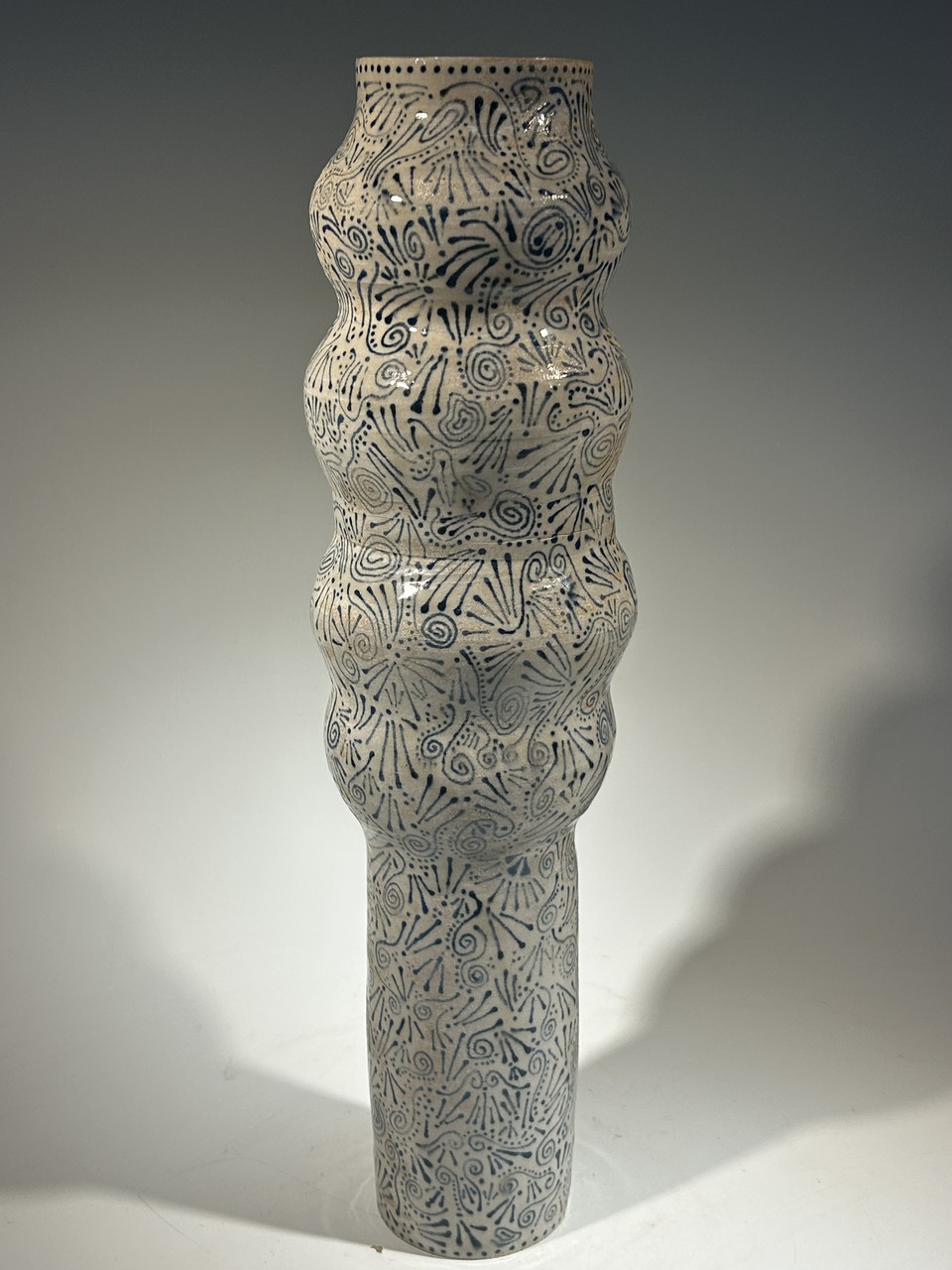
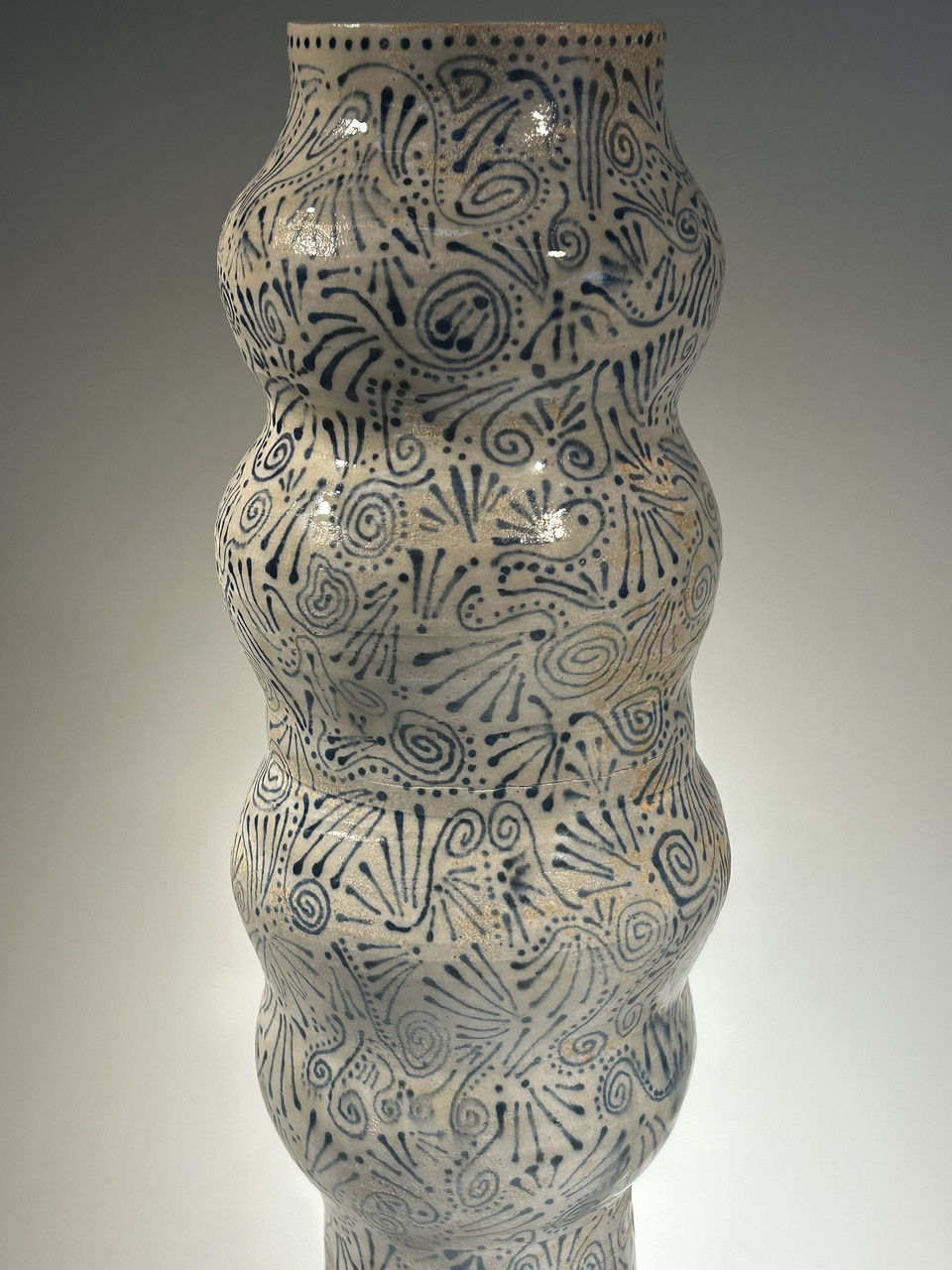
Charlie Ross-Settineri, Spiral Descent, 2026. Hop white clay, black/blue under clear overglaze, 22″ x 3.75″ x 20.25.” Harvard Westlake High School, CA.
Artist Statement: “Over the course of high school I have been inspired by delft blue intricate designs. I researched Mediterranean tiles and different patterns that eventually inspired me to create my own kind of design. As for the process, I always start with hopkins white clay, underglaze with a mixture of medium blue and jet black (this creates the design) and finally I overglaze with a clear color to reveal the blue design.”
Chloe Rucker
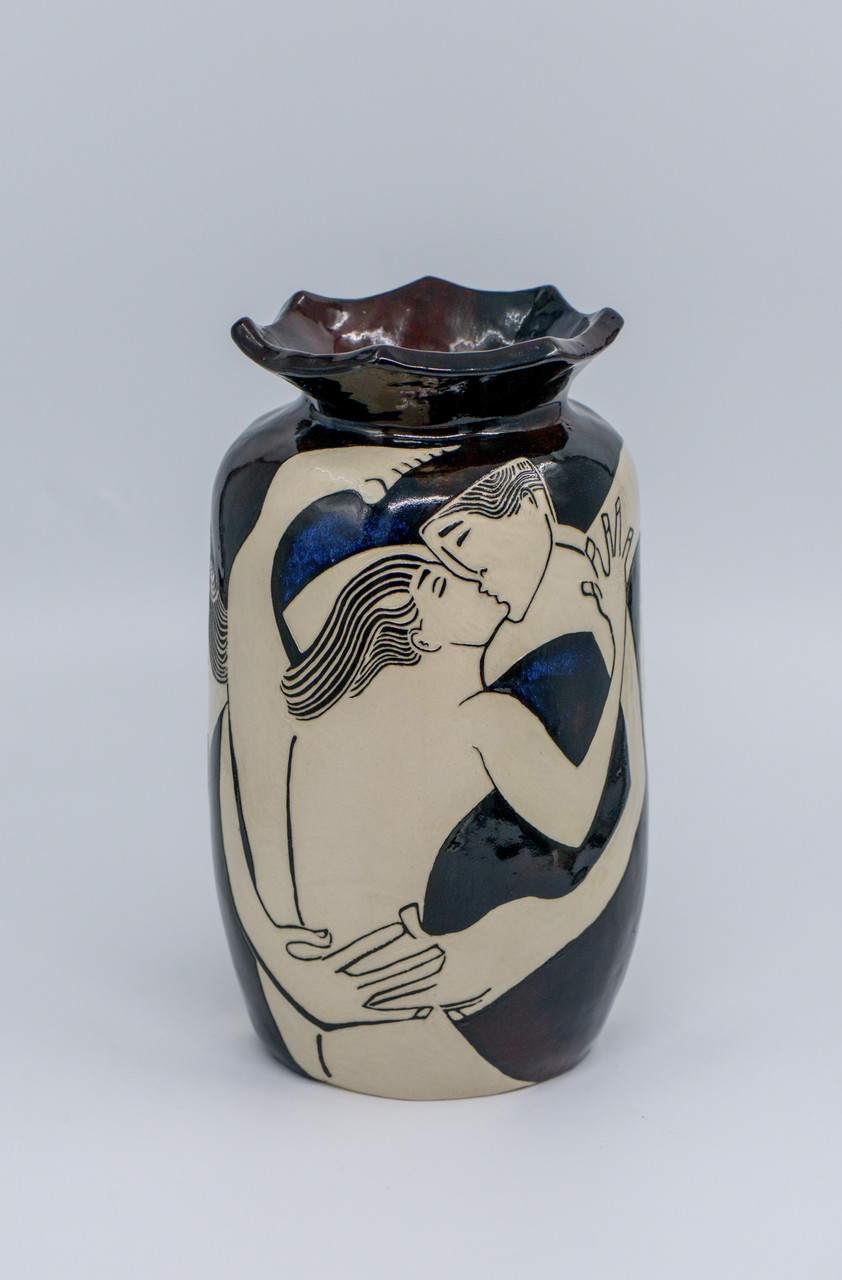
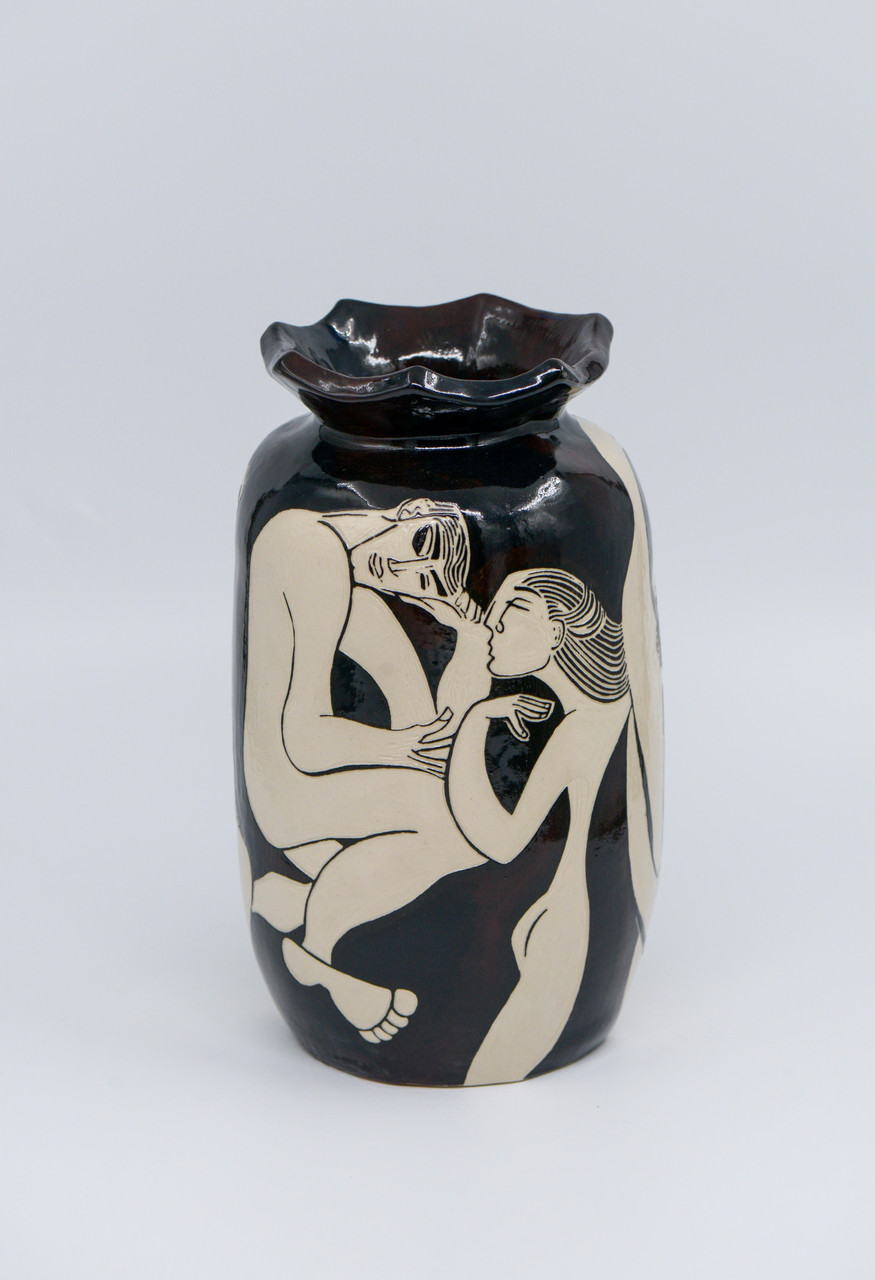
Chloe Rucker, The kiss, 2026. Ceramic, Glaze, 12″ x 4″ x 4.” South Carolina Governor School for the Arts and Humanities, SC.
Artist Statement: “This vessel was inspired by one of my favorite paintings, “The Kiss” by Gustav Klimt. Taking his painting into consideration, I created similar scenes in a cubist style. I used sgraffito to create a high contrasted design after applying black slip to the vessel. Once bisque fired, I applied red and blue glaze to add some variation to the black. By using a cubist approach, I was able to emphasize motion, distortion, and the experience of seeing a drawing move around a three dimensional form.”
Sofia Salas
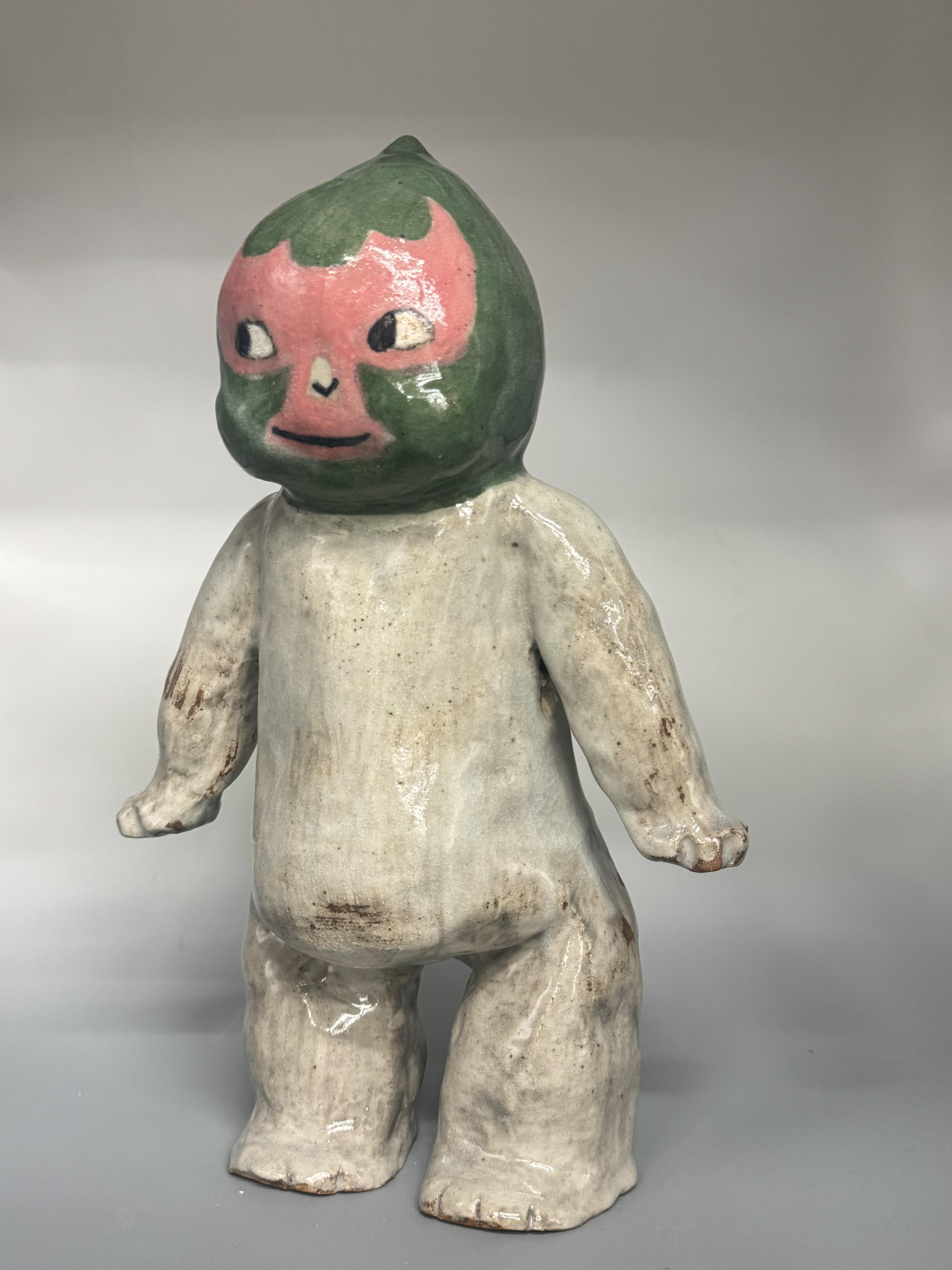
Sofia Salas, Luchador, 2026. Ceramic, 7″ x 5″ x 14.” Diamond Bar High School, CA.
Mia Schactman
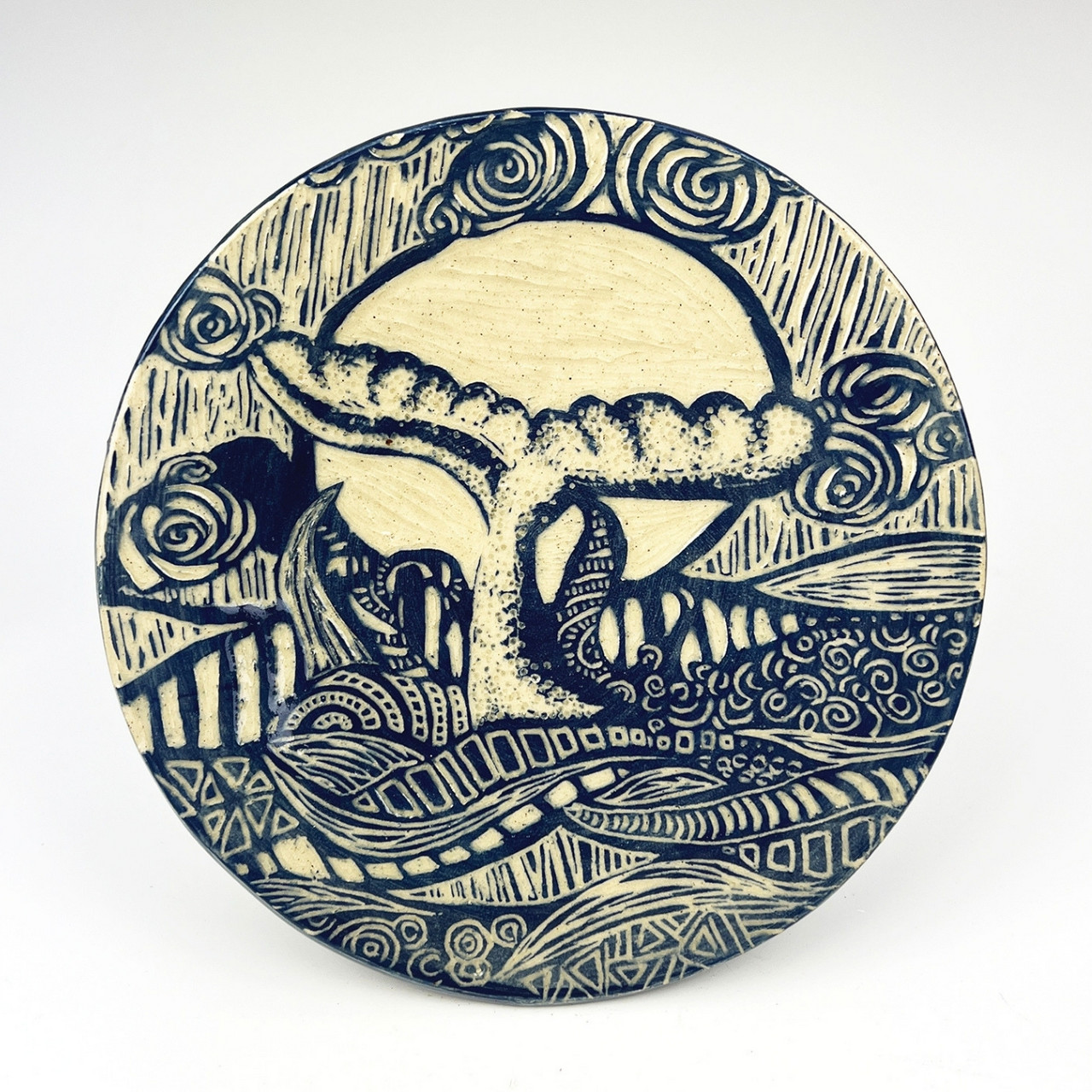
Mia Schactman, After Nightfall, 2025. Stoneware clay, underglaze. 11″ diameter. John Burroughs School, MO.
Artist Statement: “This piece explores drawing on a ceramic surface through the sgraffito technique. I was interested in building a layered composition where different visual elements interact within a contained space. The design combines organic forms and repeated patterns, creating a sense of movement and rhythm across the surface.
I used a dark underglaze over a light clay body, carving through the surface to reveal the linework beneath. This process allowed me to approach the piece as both drawing and carving, balancing precision with spontaneity.
My approach was influenced by observing natural forms and patterns, as well as the way imagery can be compressed and organized within a circular format. The final piece reflects an interest in detail, contrast, and the relationship between structure and fluidity.”
Gabriella Spina
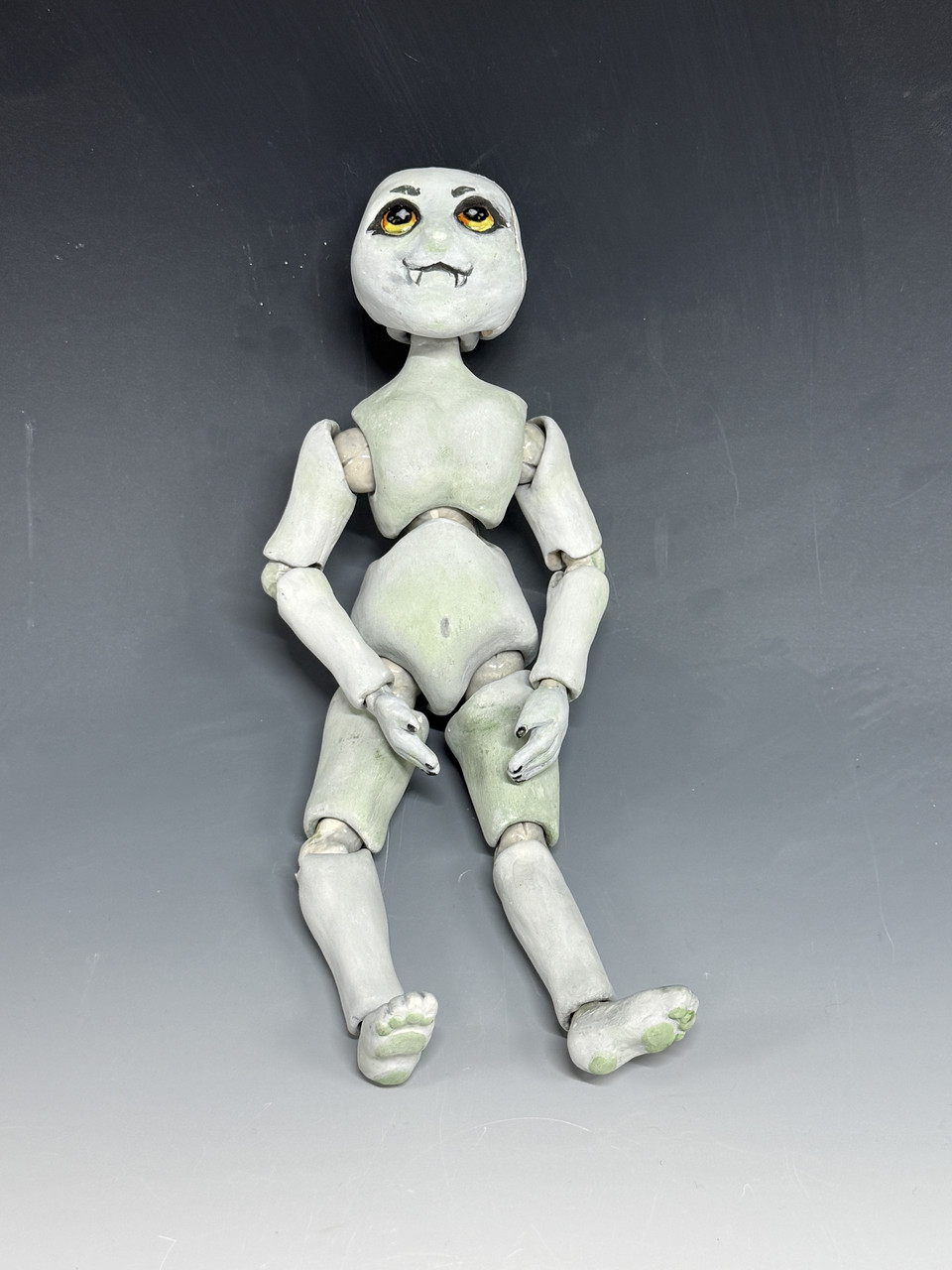
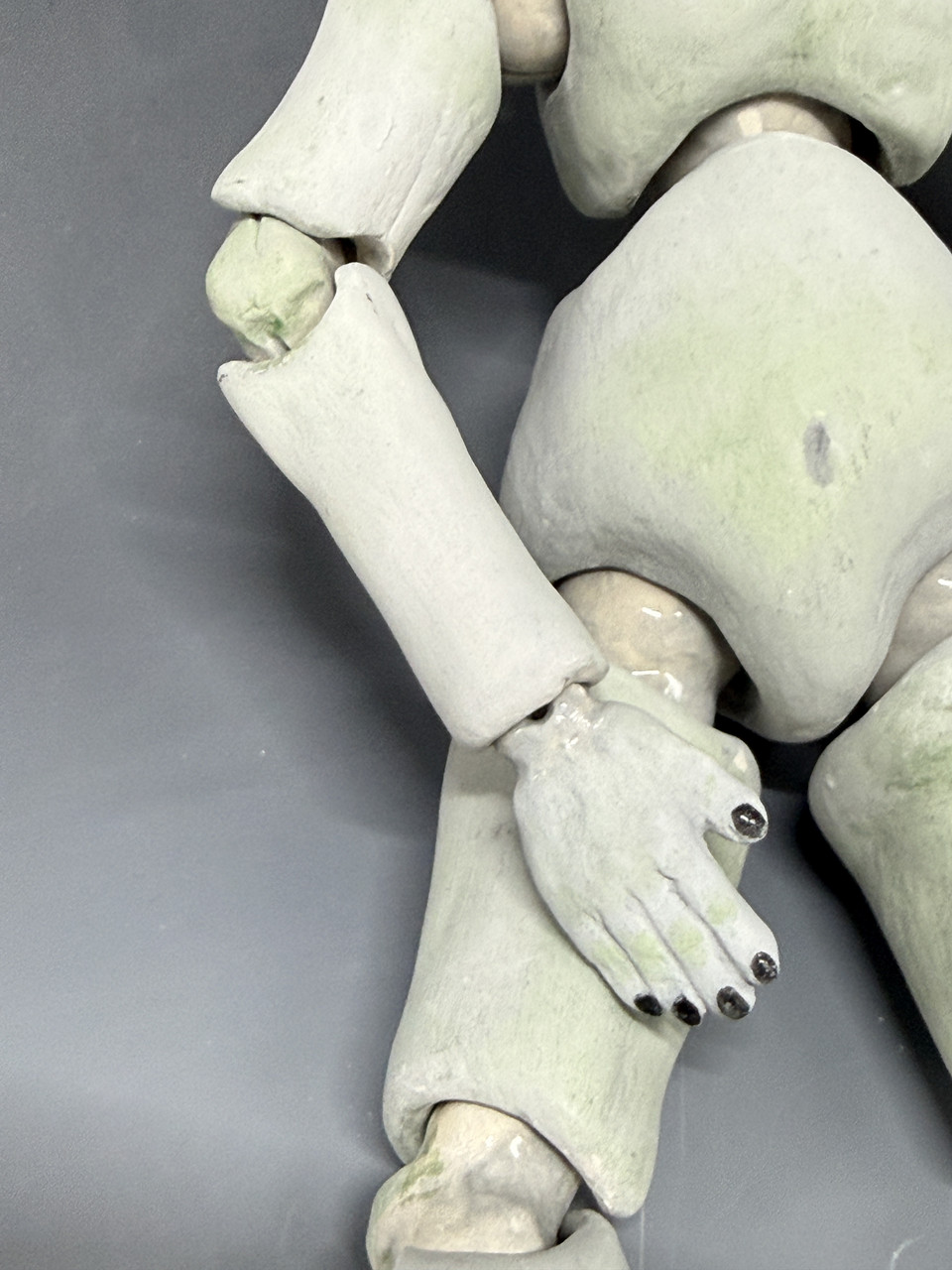
Gabriella Spina, Nepdoll, 2025. Ceramic, 7″ tall. Perrysburg High School, OH.
Artist Statement: “I like dolls, several of my friends like dolls, and I was looking for an artistic challenge!! For that reason, I decided to make this ball-jointed doll. 🙂 Her name is Nepdoll and I love her.”
David Sundell
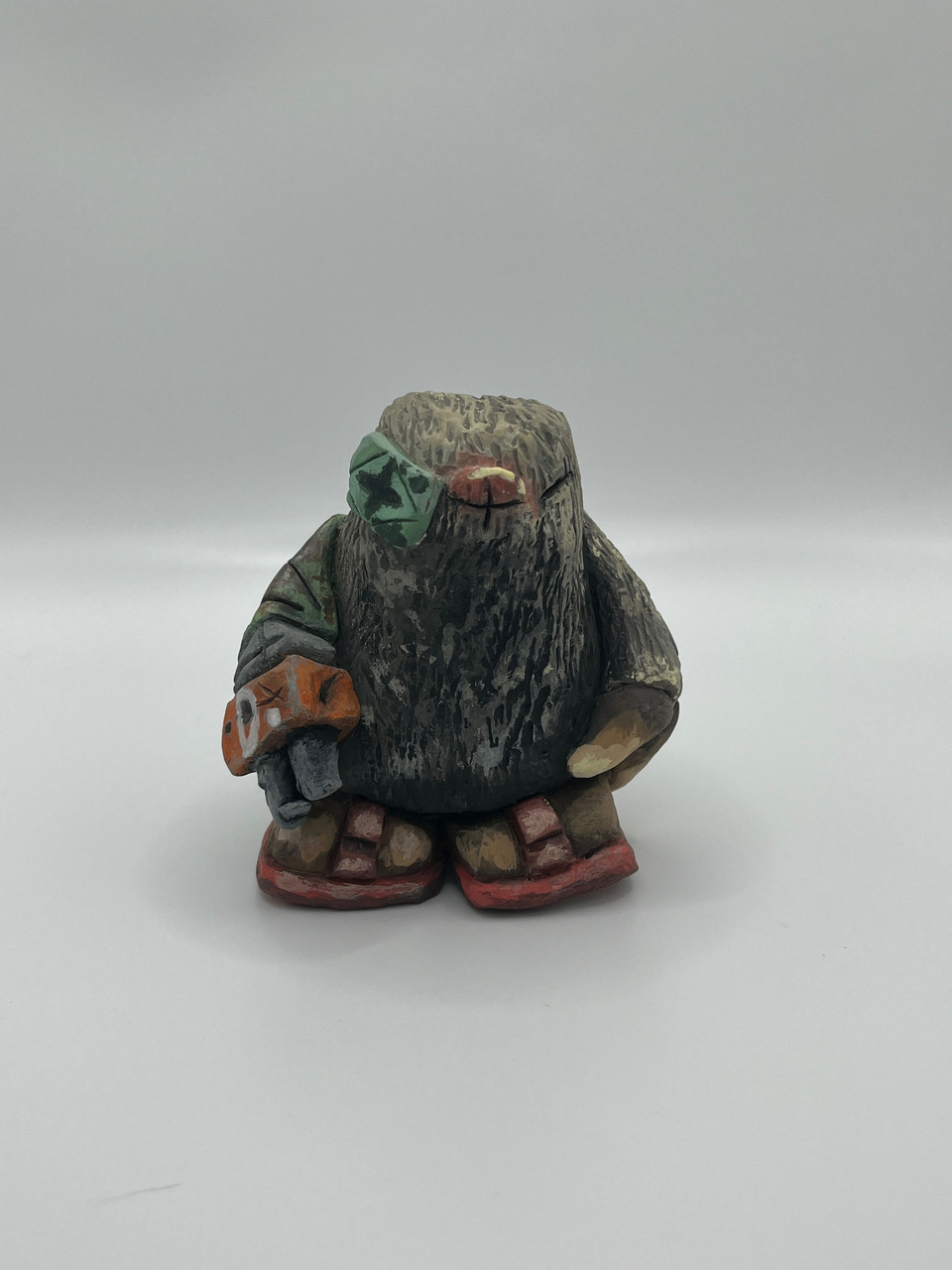
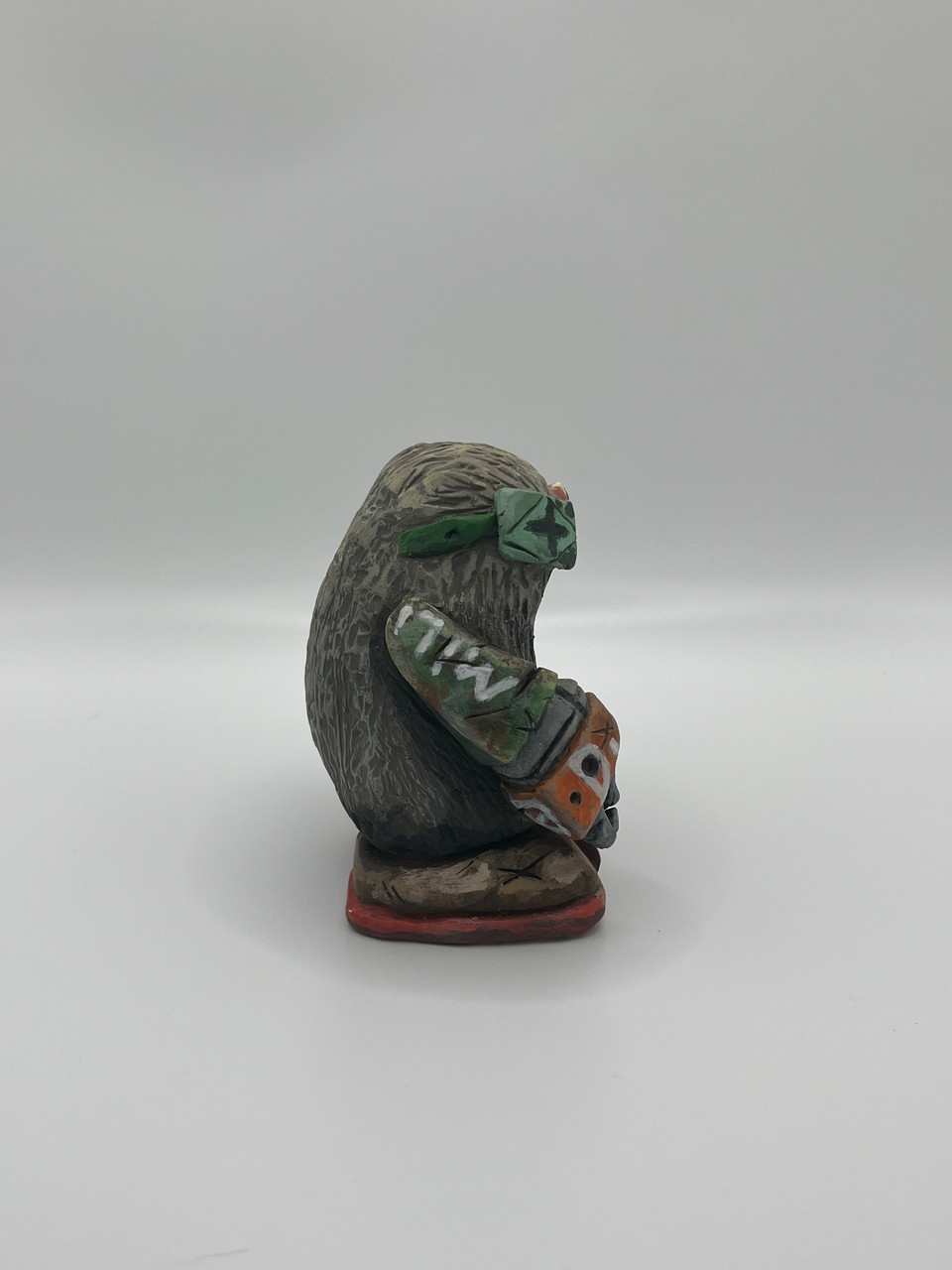
David Sundell, Dusty, 2026. Ceramic clay and acrylic paint, 6″ x 4″x 3.” PJ Reynolds High School, NC.
Artist Statement: “The sculpture is an original character I made from a fictional universe I have called the gublands; he’s a technologically smart mole named dusty.”
Cody Taylor
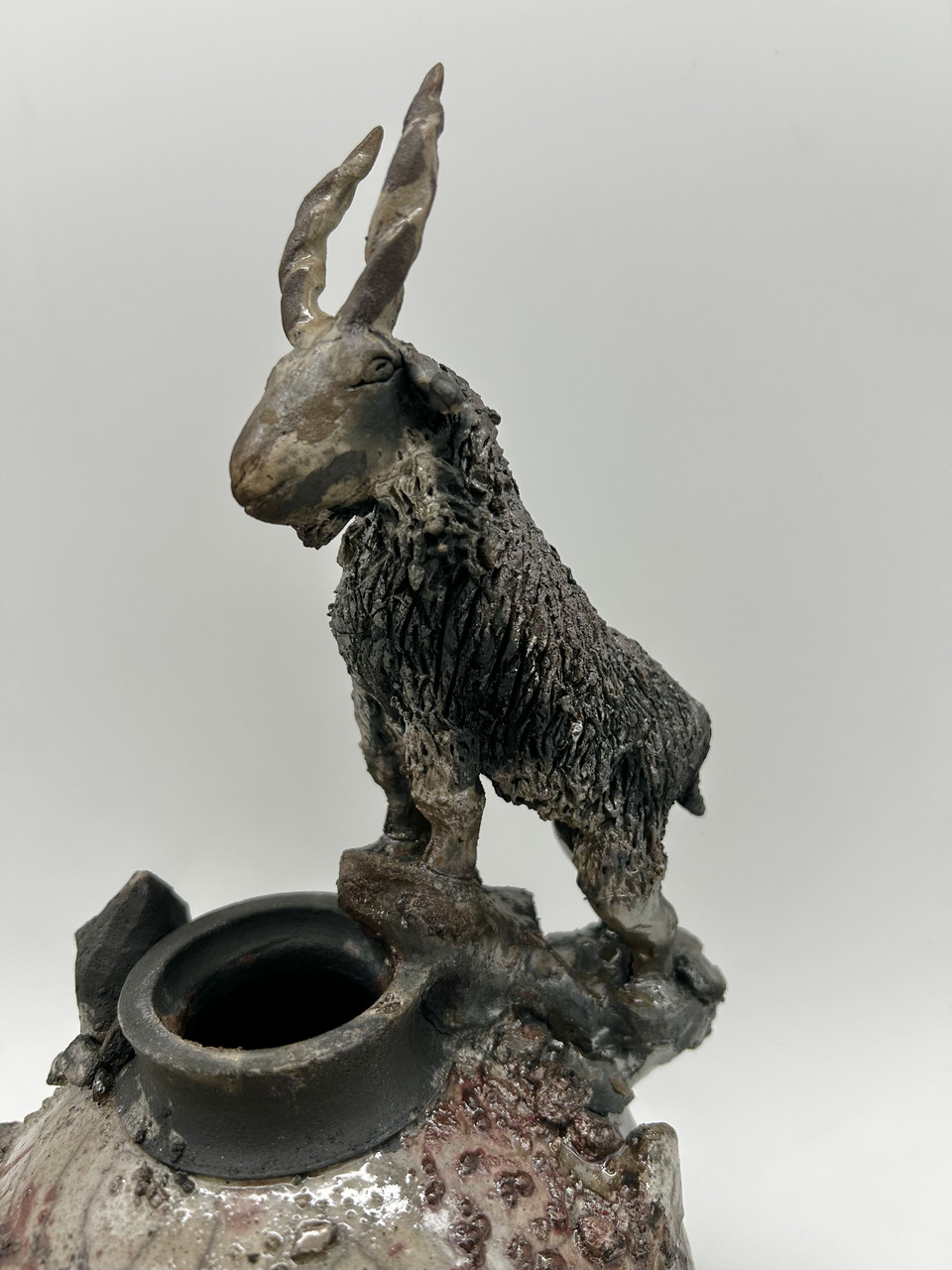
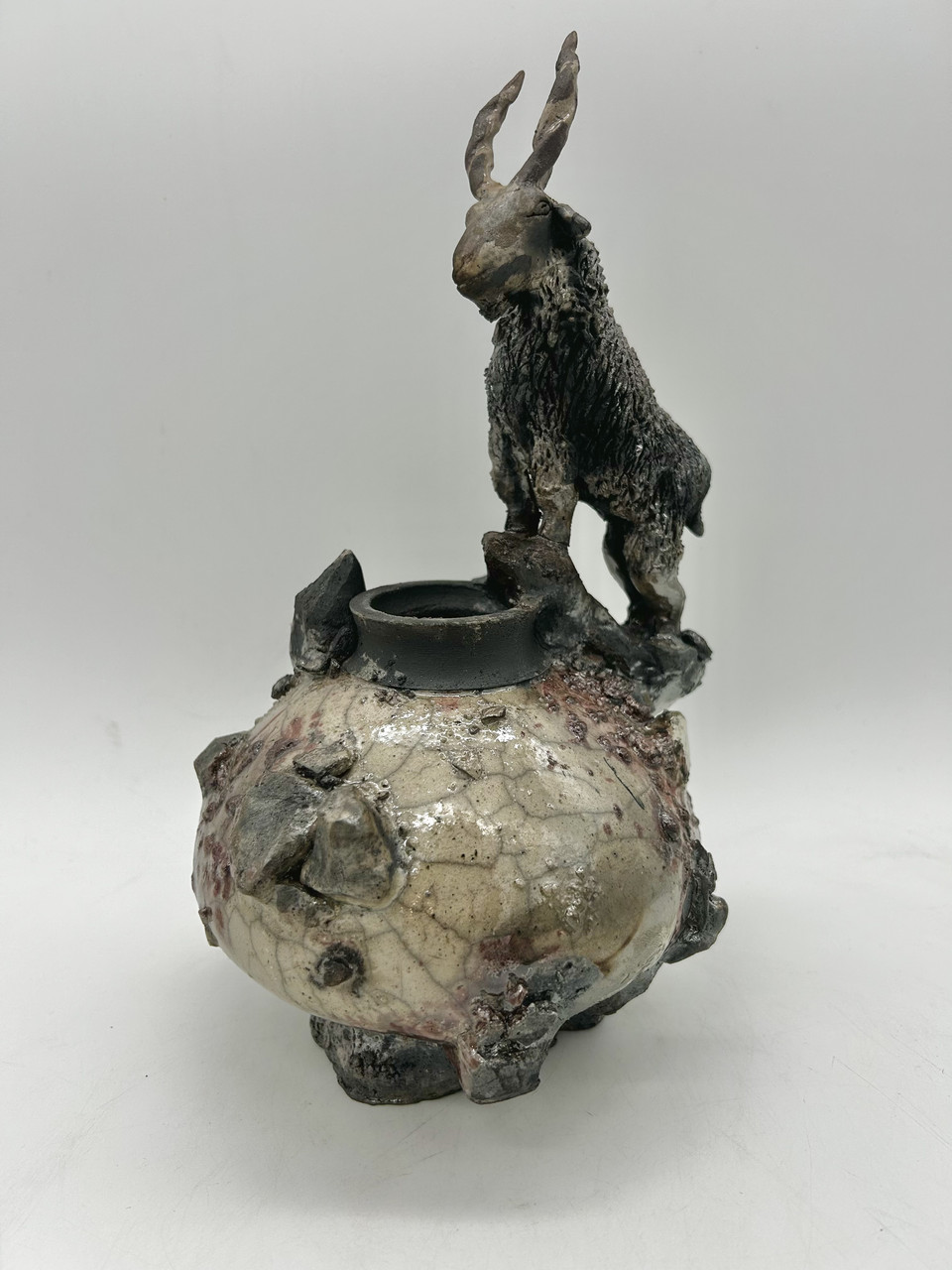
Cody Taylor, The Summit, 2025. Raku Clay, Glaze, 4.5″ x 4.5″x 9.” Sacopee Valley High School, ME.
Artist Statement: “This piece was a wheel-thrown vase, which was created for a foundation of a goat standing on top of the vase. As I started using various rock techniques in my previous work, I wondered what type of animal would best connect to a rock environment. The goat was a perfect vision to correspond with the rock “mountain.” This piece was then fired in an outdoor firing process called Raku firing.”
Miriam Trevino
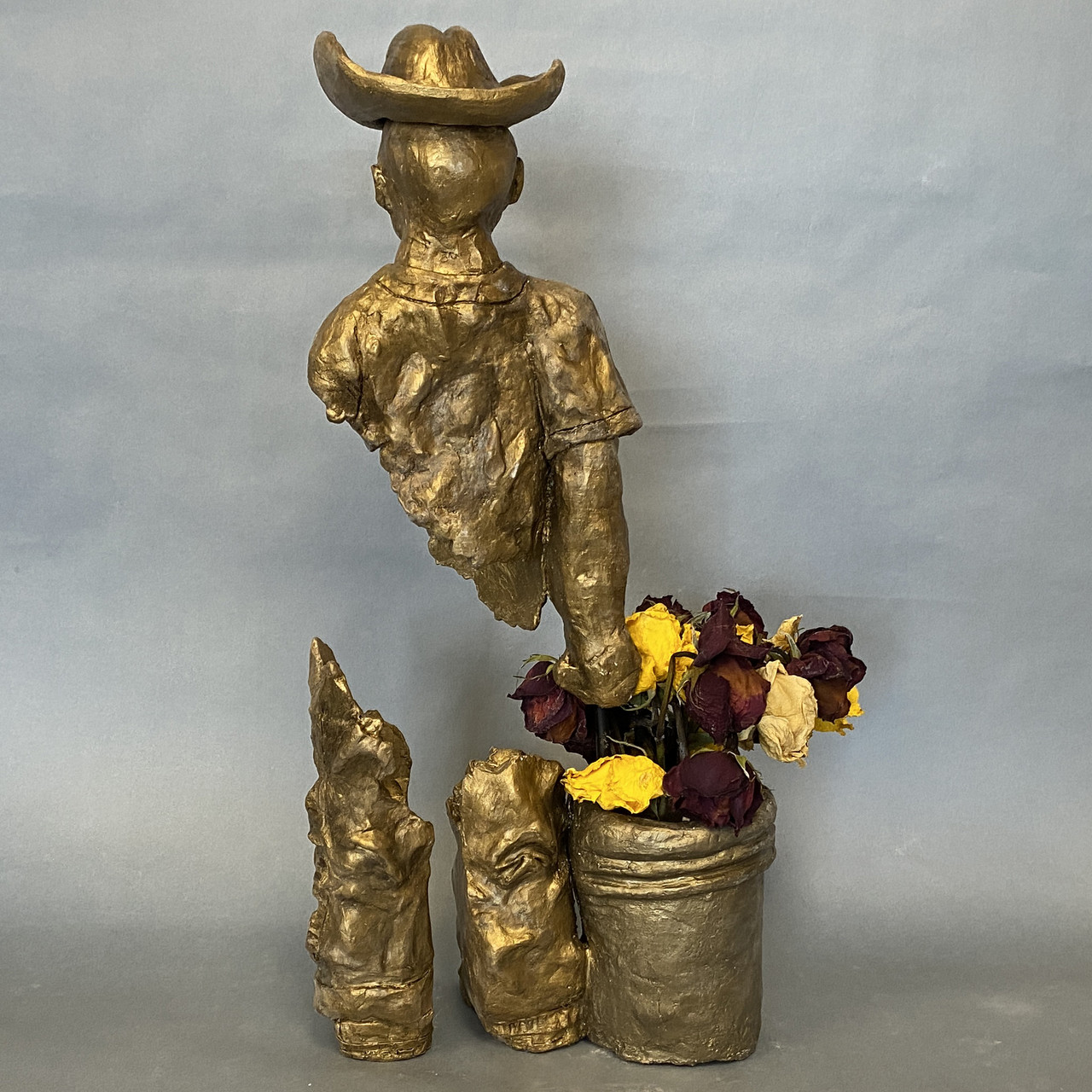
Miriam Trevino, Fractured, 2026. Ceramic, metal rod, real roses and painted with acrylic paint, 22″ x 10″x 5.” Liberty High School, OR.
Artist Statement: “My vision for this statue that I call it, was a man selling flowers on the side of the road. He’s an immigrant, struggling, he has a wife and kids and a family he loves. I wanted him to be kind of fading but also broken and I hoped when you saw my piece you could imagine so many meanings for the empty space in the middle. My main goal was to make you feel like he has this broken part of himself that he can’t fix while providing for his family, he ignores his own problems because as long as he can provide for his family that’s what makes him feel whole. I had to use a metal rod so my statue would stand up, I had to make the upper body really light by hollowing it out having one arm reached down holding the bucket, the bucket is connected by the right leg while the left leg is its own piece I had to have the same process with hollowing out the legs and the bucket and connected those two so it would even out the upper body’s weight. The flowers are supposed to have a meaning of working yourself off, so I thought by using dried flowers with yellow roses that mean friendliness and happiness, the red roses that mean love, courage, respect and passion. All these meanings reminded me of my hard working father that doesn’t take breaks for us but is also willing to take breaks for his family.”
Jacqueline Velado
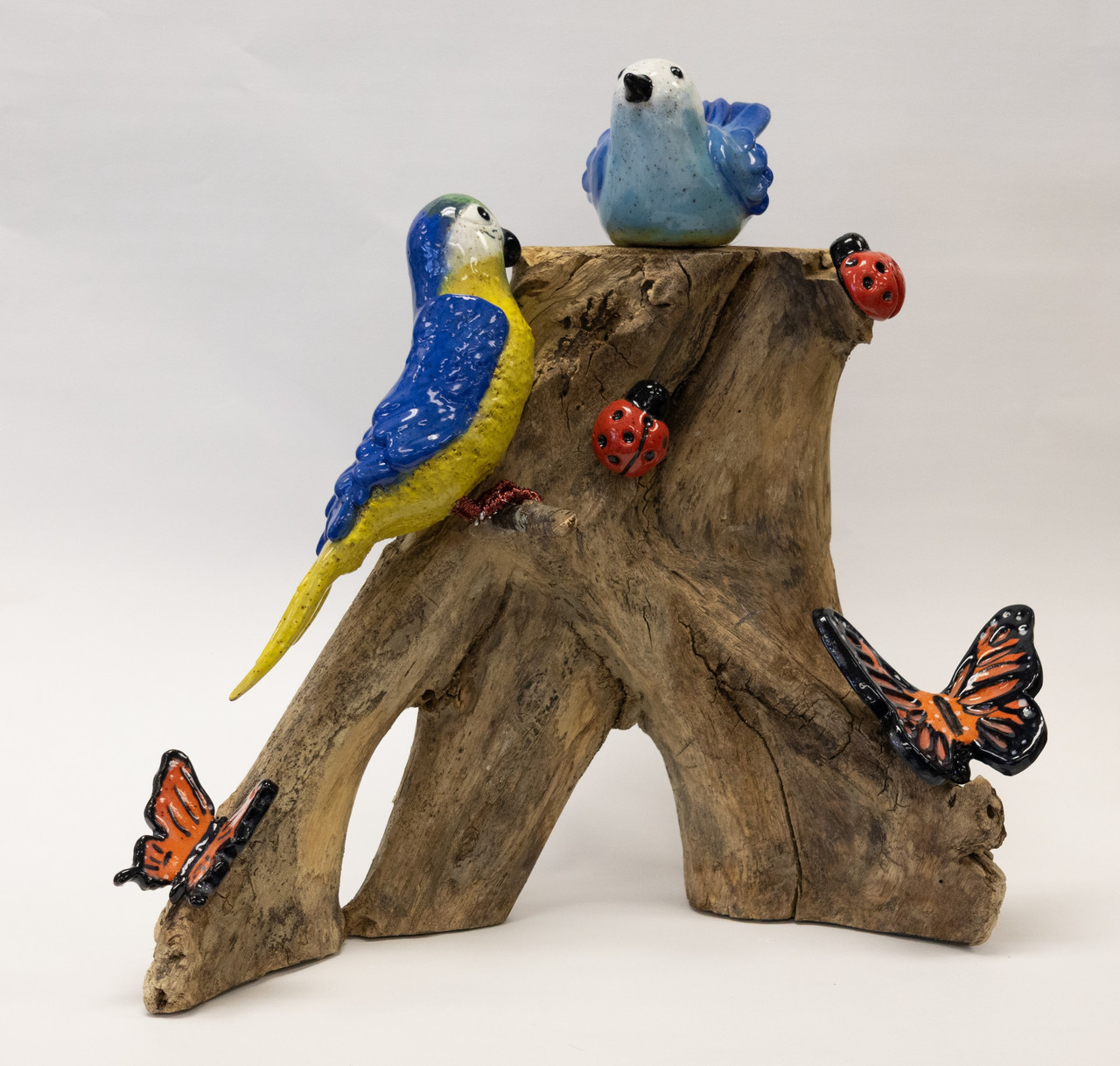
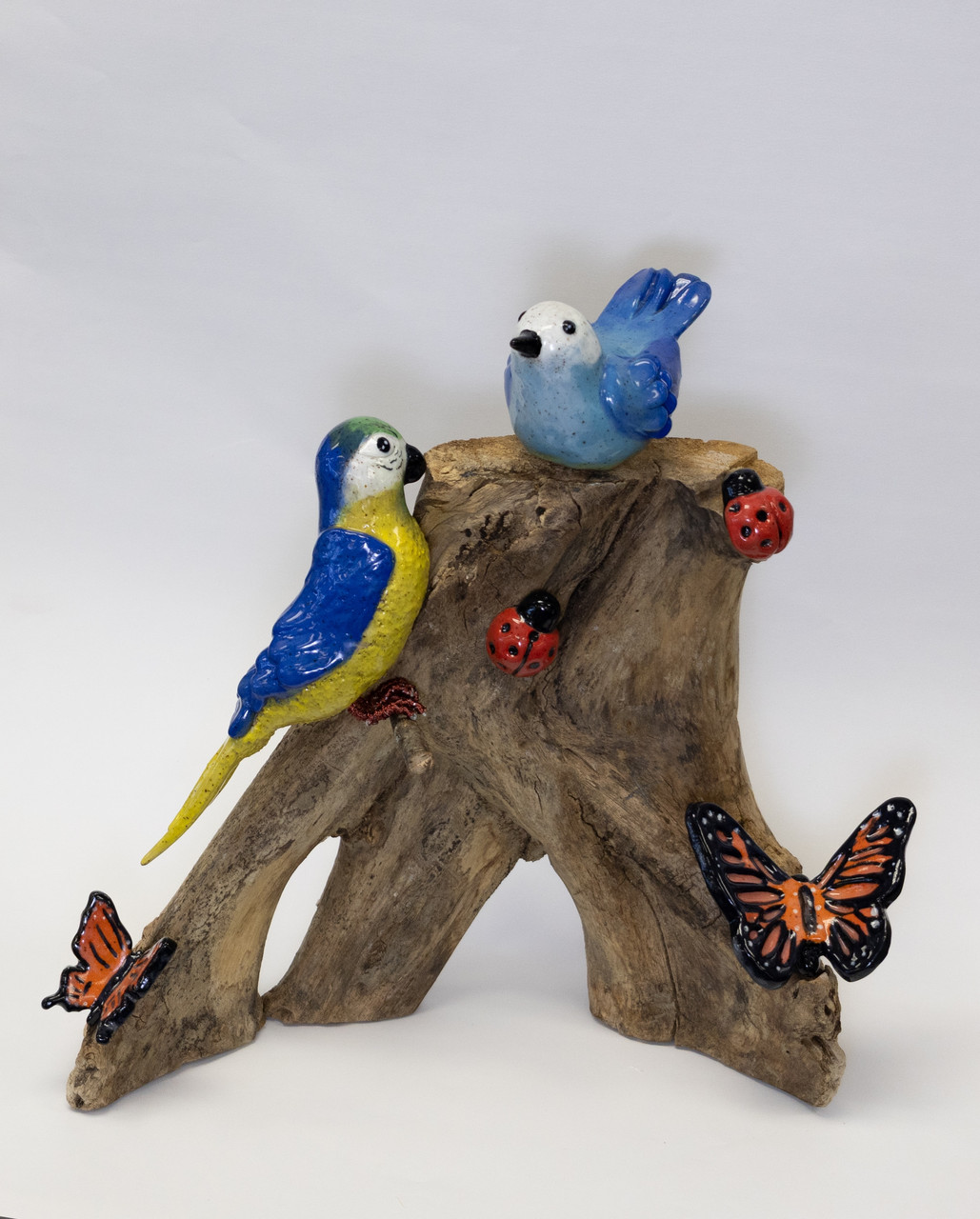
Jacqueline Velado, Our Shared Branch, 2026. Clay, Wood, Wire, and Hot glue, 14″ x 16″x 7.” Riverhead High School, NY.
Artist Statement: “My vision in creating this artwork was to involve my family in a ceramics project. This sculpture serves as a symbolic family portrait, utilizing the organic forms of nature to represent deep personal bonds. The Matriarch (The Top Bluebird): Perched at the very highest point of the driftwood this bird represents my mother, as the ¨number one¨ in the family, she holds the place of honor, watching everyone from the peak with peace and grace. The Pillar (The Parrot): The vibrant blue and yellow with some green spots represents my father. Anchored firmly to the main trunk, he represents the strength and presence, acting as a colorful support system that keeps the family structure bright and steady. The Heart (The Ladybugs): The ladybugs represent me. Positioned as the heart and center of the piece, they signify a vital part of the family ´ s daily life, bringing energy and connection to the core of the sculpture. The Spirits (The Butterflies): Two Monarch butterflies are situated on the lower branches, representing my brother. Occupying the base and sides, they represent transformation and freedom. Their placement makes them appear as though they are lifting the whole piece up, giving the tree its wings. The materials I use on this project are clay, wood, wire, and hot glue. As a student of Advance ceramics I had worked on many projects that involve making sculptures. Some techniques I implied is the experience achieved throughout the process of making sculptures.”
Colette Wang
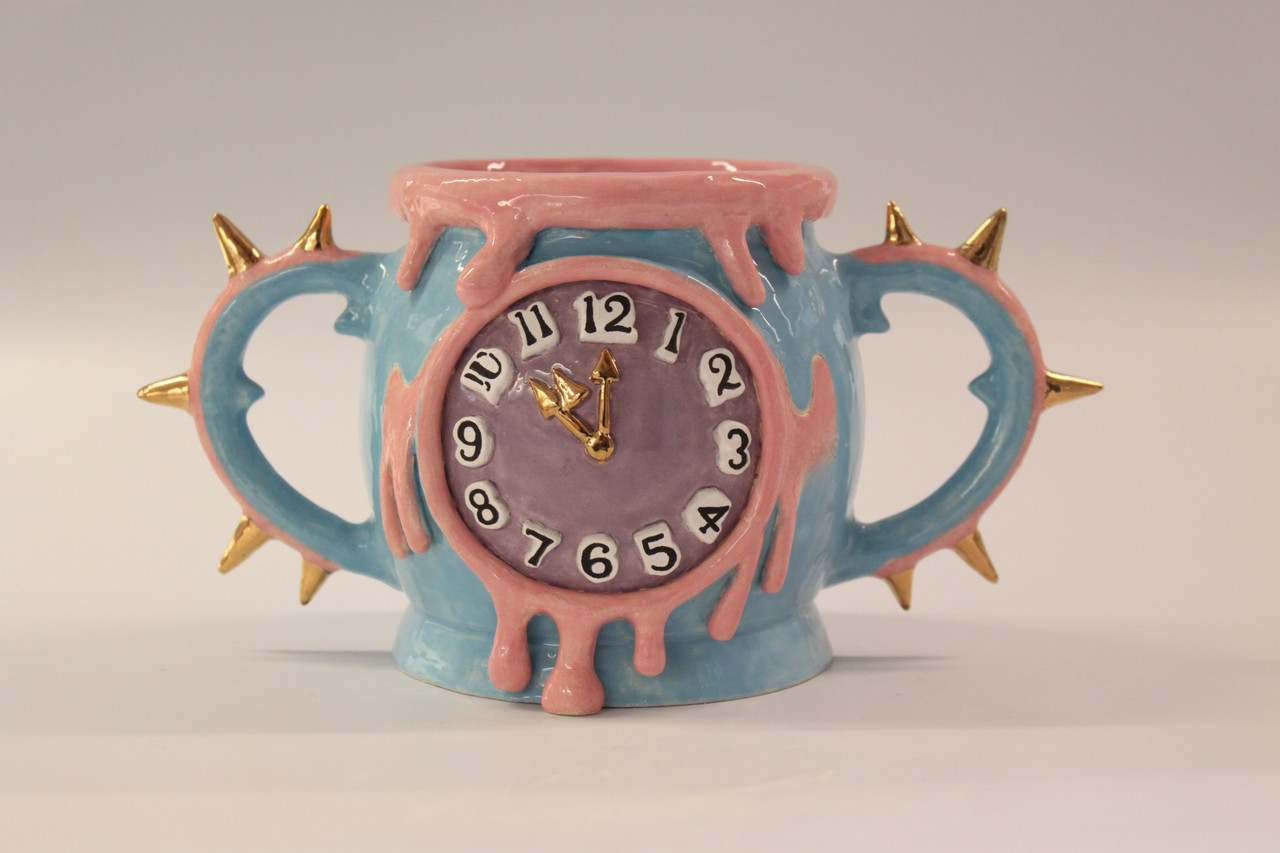
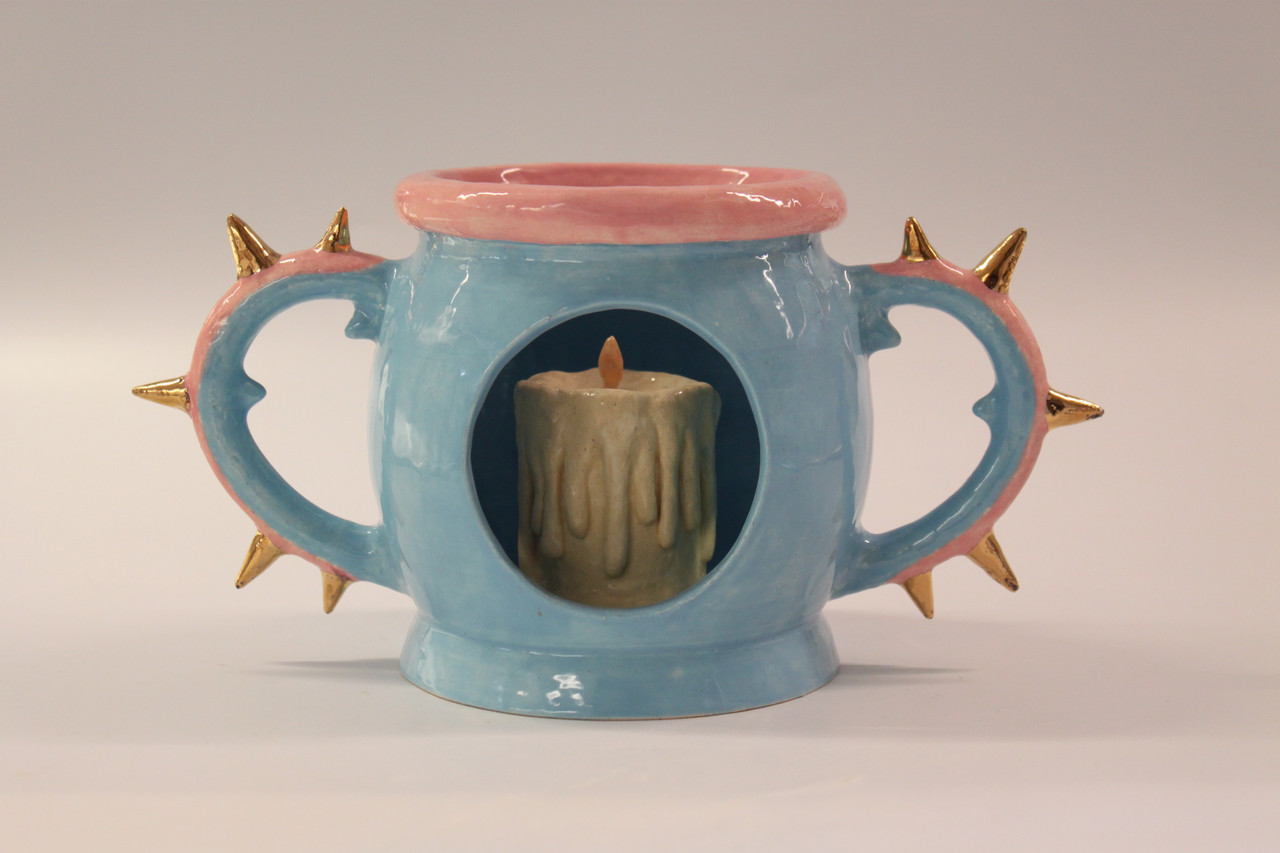
Colette Wang, Convergence, 2025. Stoneware, underglaze, glaze, gold luster, 5″ x 8″x 5.” Marlborough School, CA.
Artist Statement: “Salvador Dalí’s painting The Persistence of Memory has captivated me since childhood, particularly its exploration of the fluidity of time. This fascination has significantly influenced my artistic journey, and this mug is a continuation of that. With this piece, I aim to express the interconnectedness of the past, present, and future. The candle, which has historically been used as a way to mark the passage of time, represents the past. It is encased within a clock, the modern way of telling time, which is a symbol of the present. The assignment required the concept for this mug to be generated by artificial intelligence, which symbolizes the future. These elements are unified in a cohesive form meant to evoke a surreal sense of continuity as well as transformation. I started by throwing a round form for the foundation of the mug, and then I pulled the handles and handbuilt the details, such as the spikes, drips, and numbers. After glazing the mug, I applied gold luster on the clock hands and spikes. I hope this piece stirs in the viewer the same sense of wonder and curiosity that first drew me to Dalí’s work.”
Jake Weiss
Jake Weiss, River Stack, 2026. Clay, light bulb, electrical, lamp shade, 19″ x 10″x 10.” Dana Hills High School, CA.
Artist Statement: “I started with the idea of human made rock stacks in nature, and decided to add a lean to it to add depth. For the colors I used stain to keep it as natural as possible and used a different mix of red iron oxide, black, and brown on each rock.”
Yuehan Yang
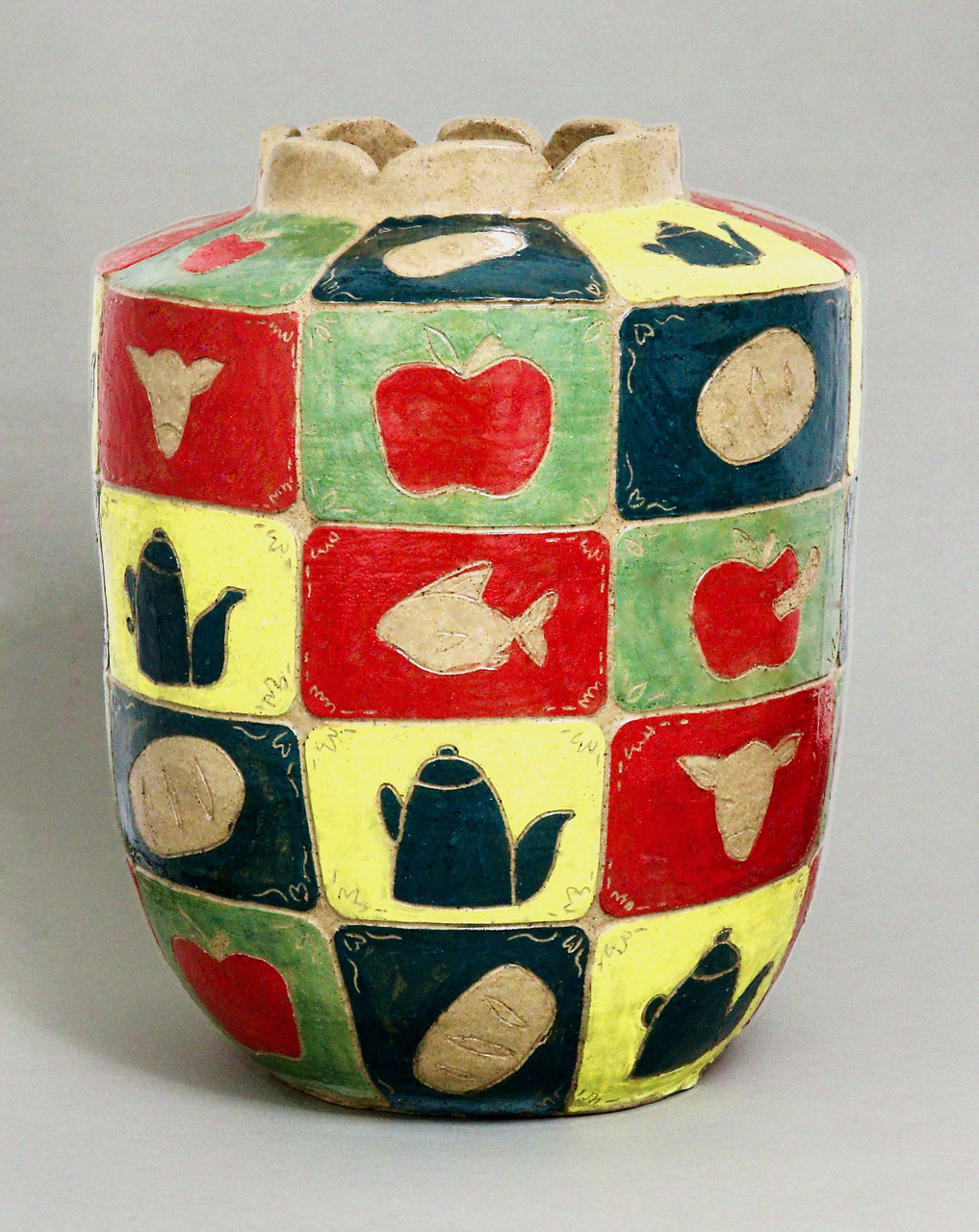
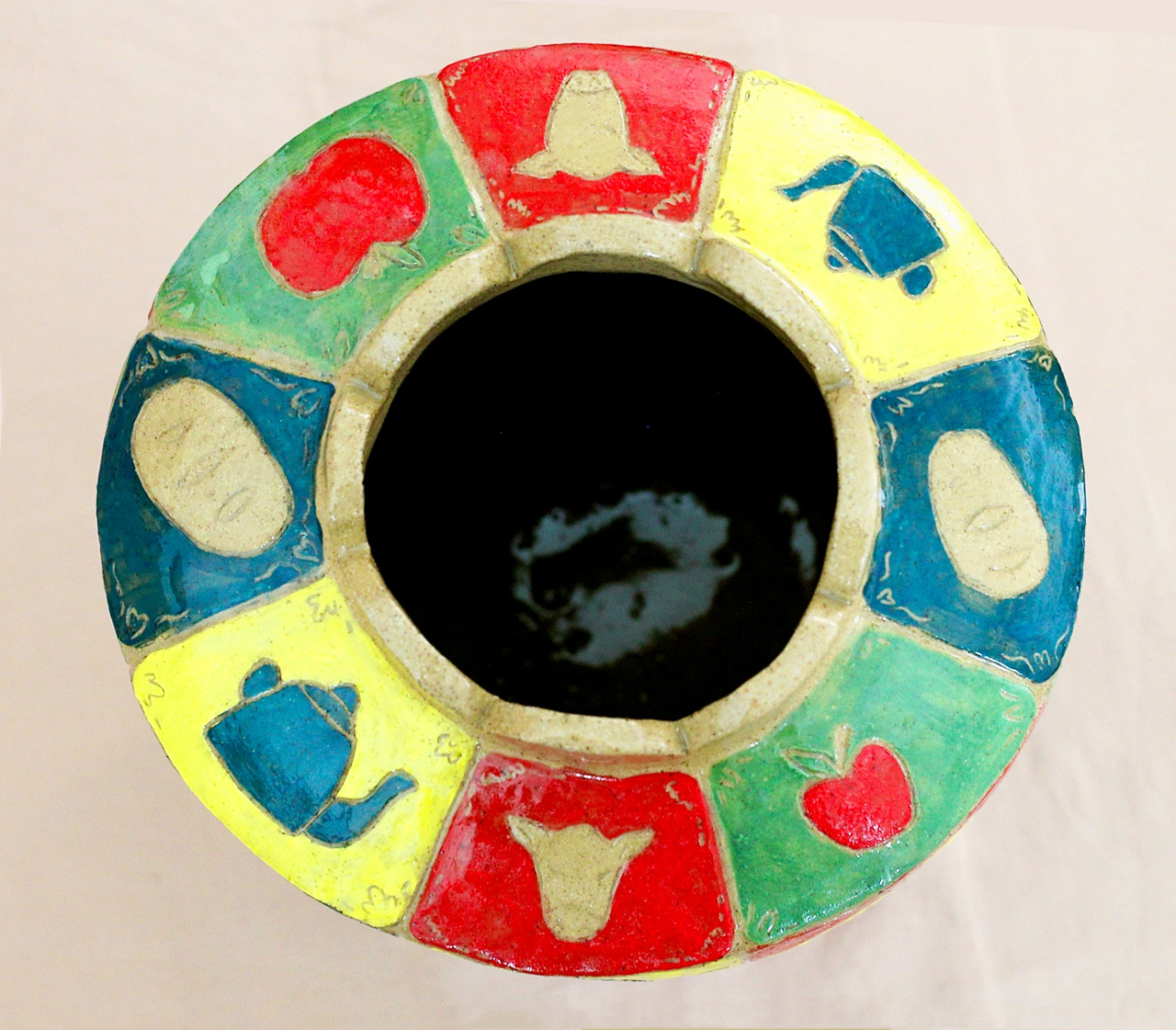
Yuehan Yang, Life support, 2025. Ceramic, 14″ x 11″x 11.” R J Reynolds High School, NJ.
Artist Statement: “The piece Life Support was inspired by a grain pot or a granary jar, which are used to store food. The tile design on the jar features the fundamentals of cuisine: grain, fruit, meat, and water. Every single person requires these resources to survive, and yet some lack access to them. This piece represents the crime of humanity against itself through the excessive hoarding of resources necessary to sustain life, while simultaneously wasting so much of it, and how this system rewards greed and punishes those who cannot afford it.”
12th Grade
Kaline Adams
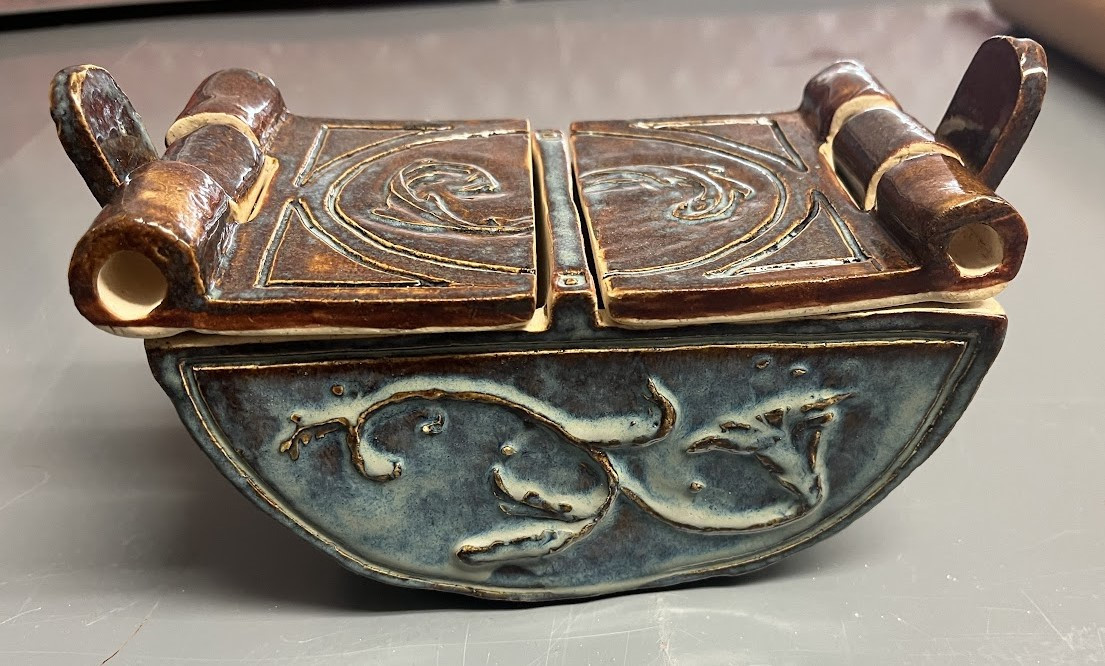
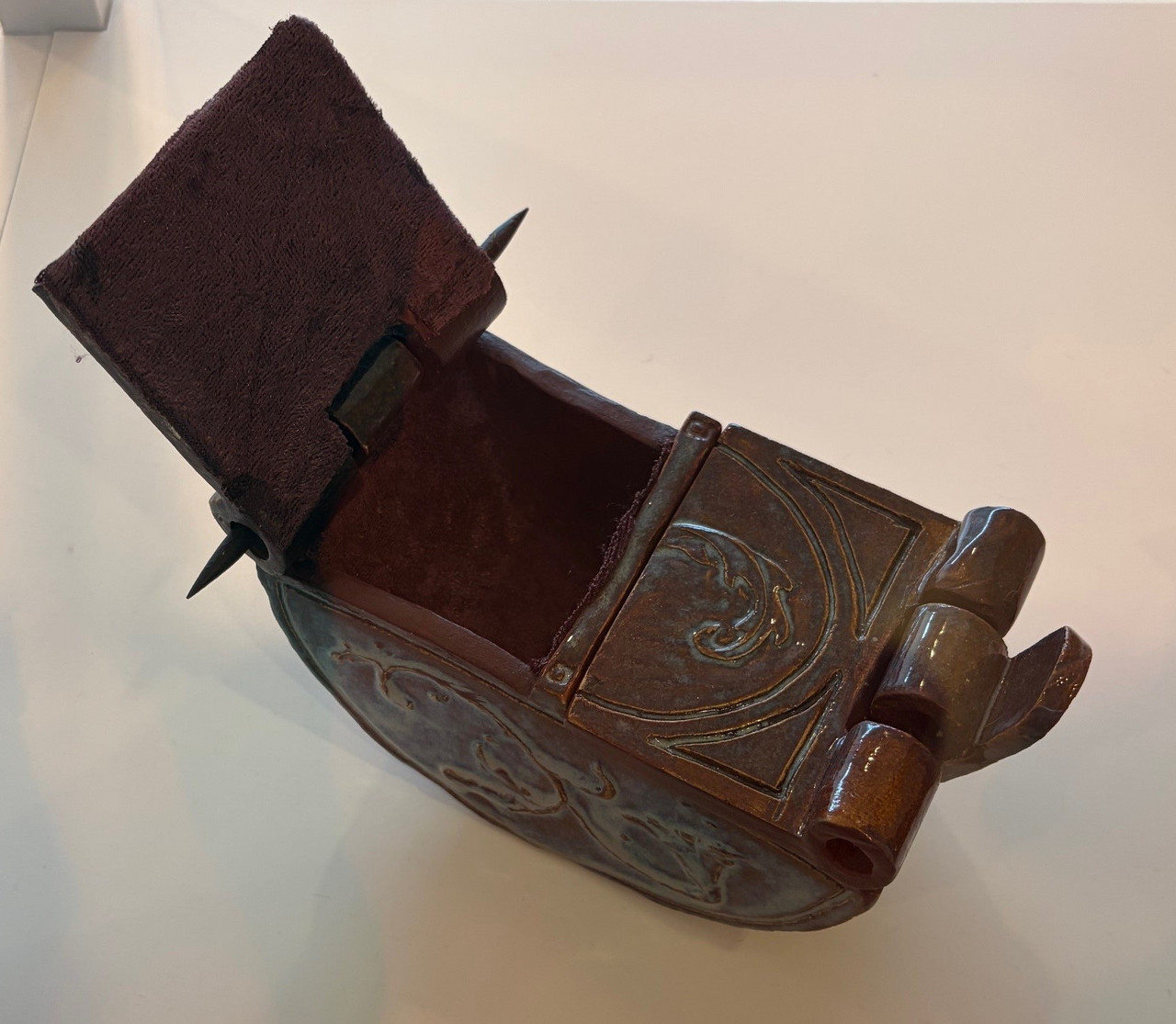
Kaline Adams, Antiquing, 2026. Clay fired with colored glaze, 4.5″ x 8″ x 4.” Lane Tech High School, IL.
Artist Statement: “I wanted to create an Art Nouveau-inspired piece in a shape that I hadn’t created before. This composition – something I hadn’t seen – was a half-circle prism. I also wanted to simulate an antique, wooden-like feel through a ceramic piece. I worked to capture Art Nouveau detail and golden spirals, and I was excited to attempt functioning joints.
My process included a hand-made slab template with slip and carved and relief carving design. For the lid, I did relief carving, which is common in tile making, when you press around the side to make the design look like it is rising up. For the sides, I used slip training, which I refined with a similar relief carving process as I did to the lid.
In my study of Art Nouveau, I’ve found that it is deeply connected to spirals and intricate details as core stylistic elements. Art Nouveau often has been inspired by natural forms such as the curves of stems and flowers as I did here. Straight lines contrast with shaped curves and spirals to create a sense of harmony and beauty. Vines and stems in Art Nouveau compositions twist, turn, and spiral in ways that guide the viewer’s eye through the composition with this organic flow being central to the style’s identity.”
Derek Adkins
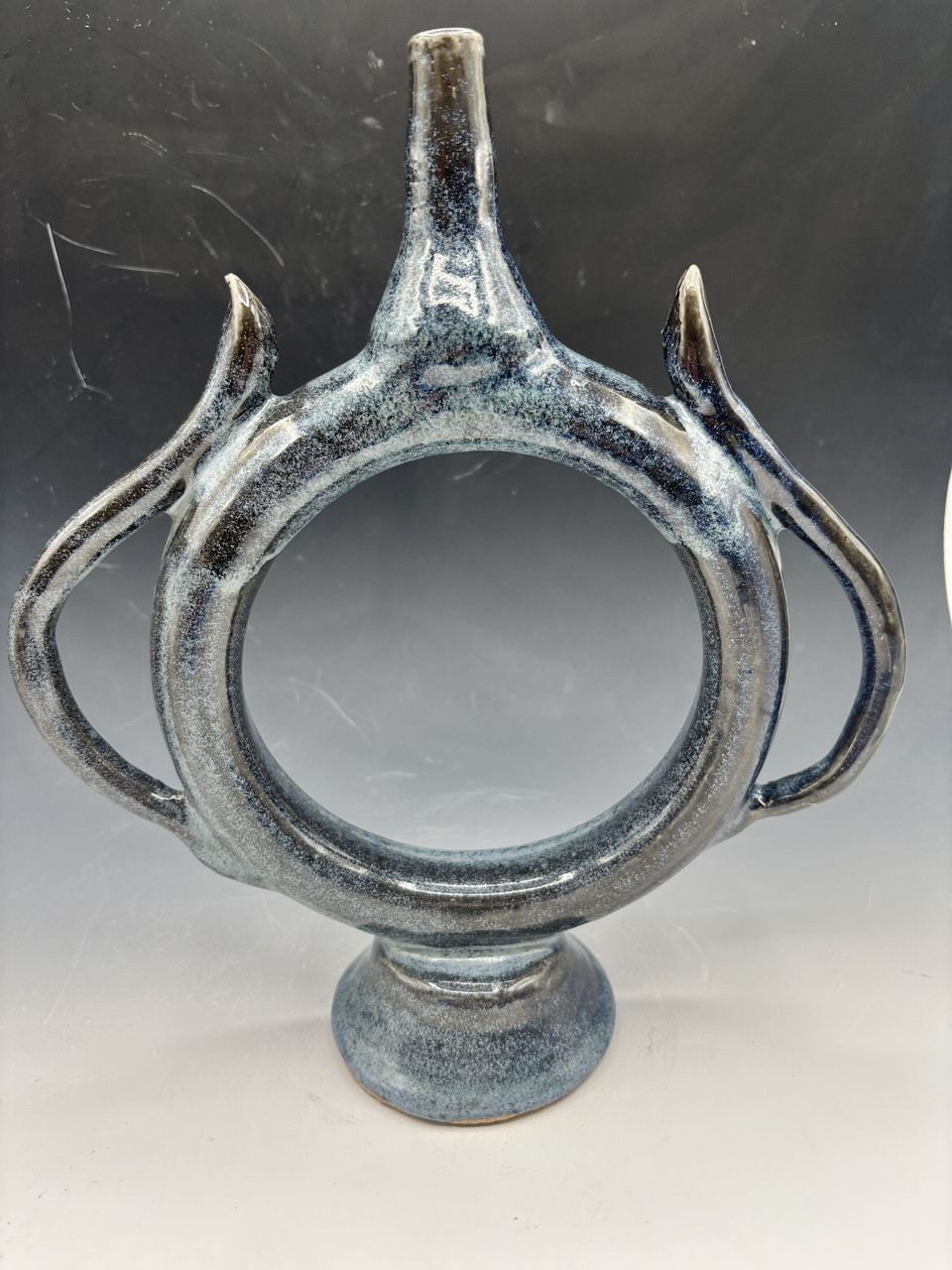
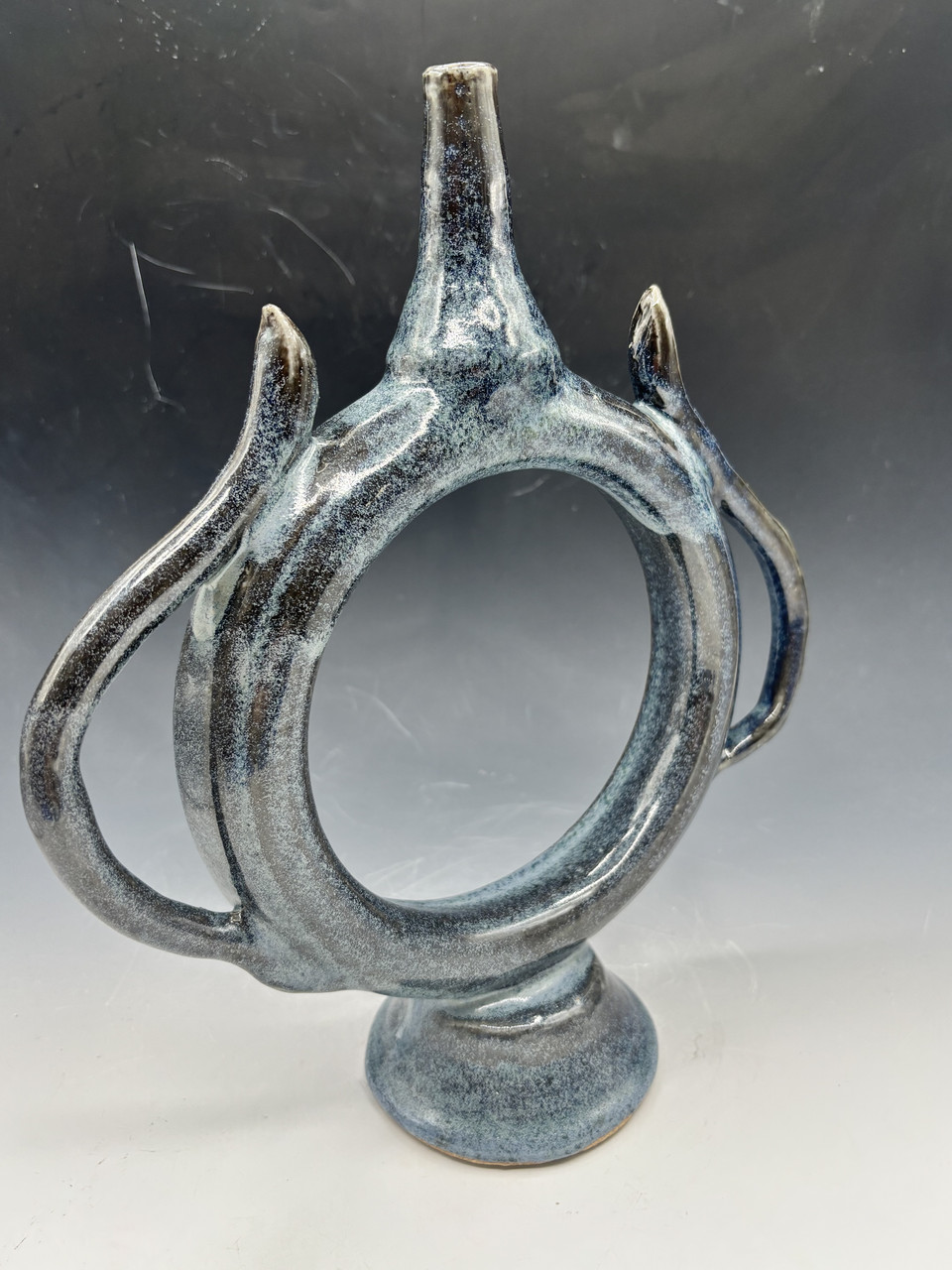
Derek Adkins, Dark donut, 2026. Clay, 11” x 10” x 4.” Rim of the World High School, CA.
Artist Statement: “Basically I went into the project that I made thinking it was just for a grade. It was only going to be a donut shaped ceramic piece then I wanted the donut to stand up and be more like a display. Then I made the handles into something that looks more like horns at the top which gives the piece an evil look to it which I really think is unique. To make the donut it requires precision with the cutting the donut in the middle so that it’s hollow in the middle of it. In order to make this project I used plenty of tools like a bucket of water, sponge, metal rib, needle, trimming tool and a potters stem.”
Dylan Agetstein
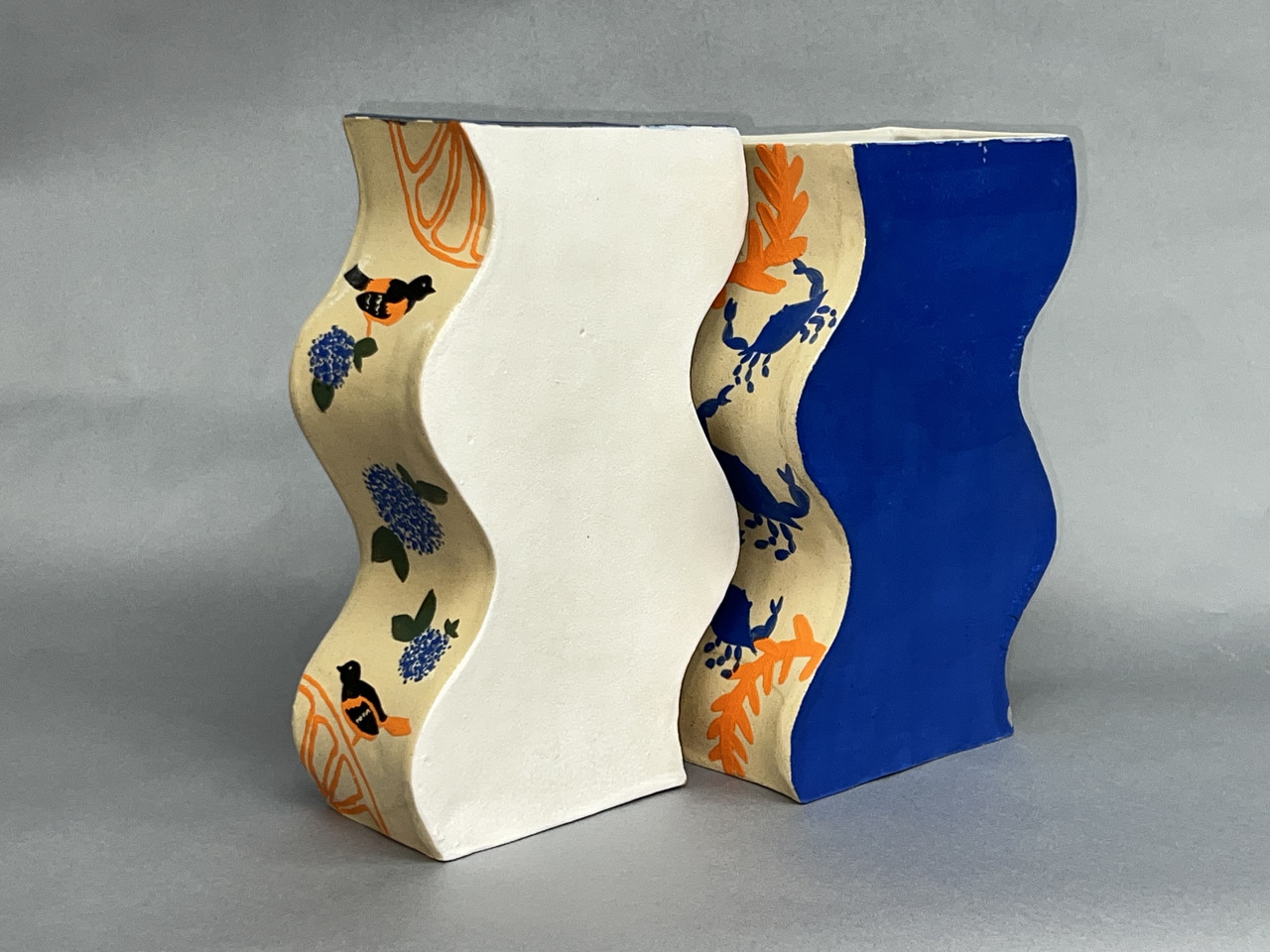
Dylan Agetstein, Complementing Vases, 2025. Stoneware, each 12” x 8” x 5,” Holton-Arms School, MD.
Artist Statement: “My inspiration for creating this artwork was my parents. Crafted out of slabs of white stoneware clay, cut down the center and pulled apart to make two identical vases that fit perfectly together. Continuing the theme of complementing, vase one is glazed white on the inside and blue on the outside, whereas vase two is glazed blue on the inside and white on the outside. On the shorter sides, I chose to paint out of underglaze images of things that represented my parents. Vase one primarily represents my dad. I painted baseball stitching to represent his childhood (since he played baseball) and Maryland blue crabs, since it is his favorite food, as well as a nod to him growing up in Baltimore. Vase two represents my mom with orange slices to represent her childhood in Florida and hydrangeas, which are her favorite flowers. Additionally, on both vases, I included elements to represent my parents’ favorite baseball team and the topic of conversation that sparked their relationship, the Baltimore Orioles. I included an orange Oriole bird on vase two, as well as pops of the color orange throughout both vases, since the team’s color is orange.”
Kylie Alexander
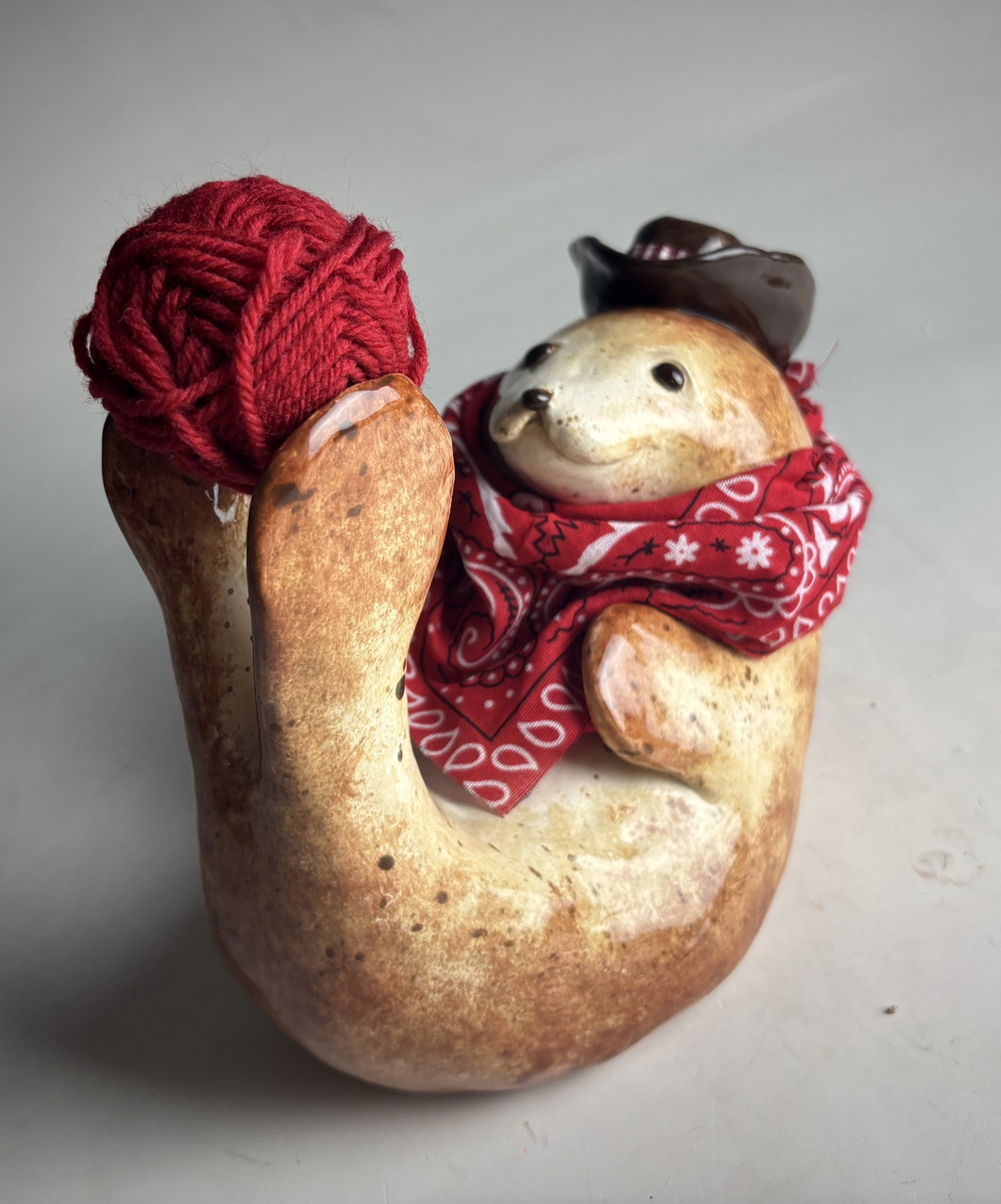
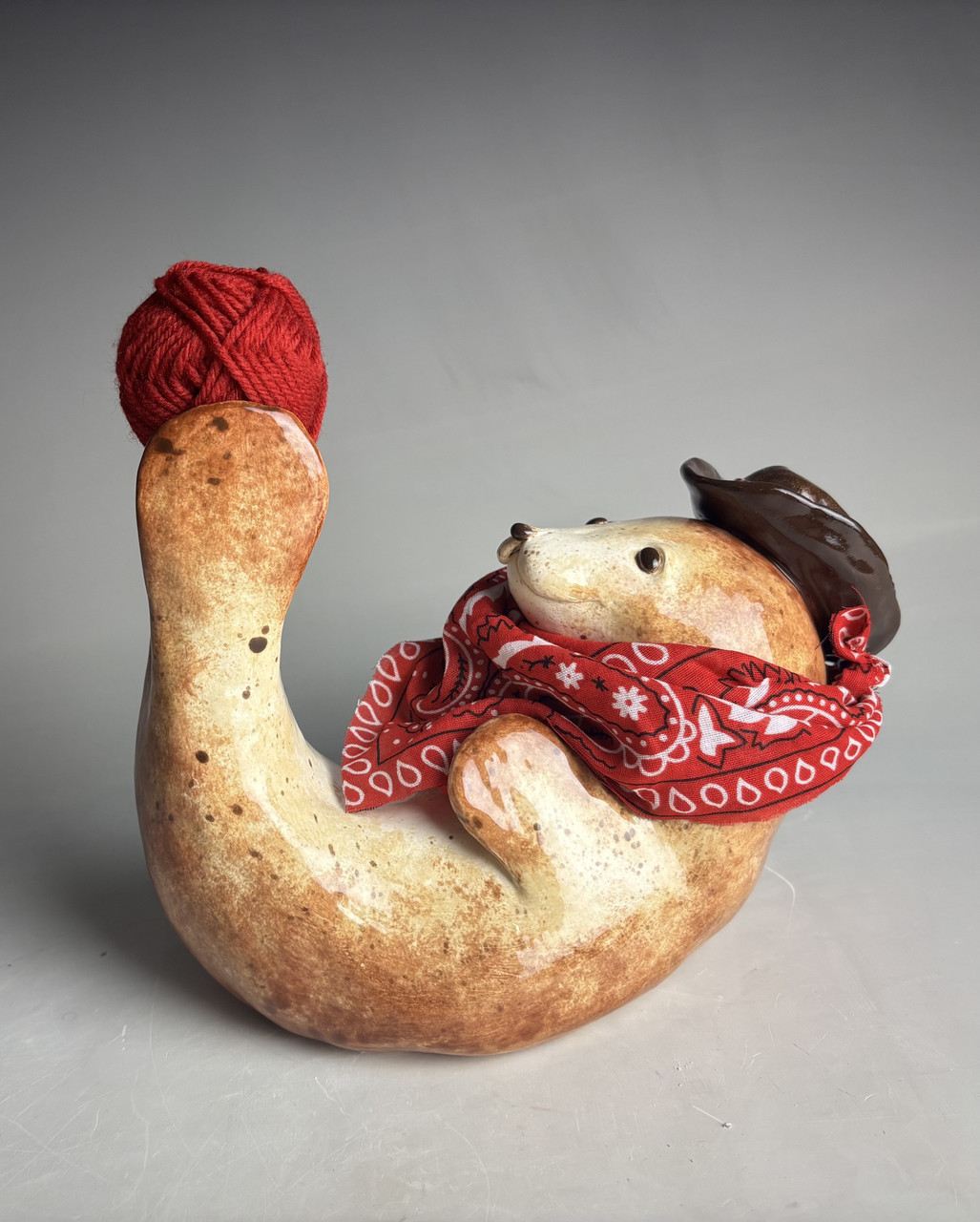
Kylie Alexander, Cowseal, 2024. White earthenware clay, fabric, yarn, 9” x 4” x 7.5.” Seabreeze High School, FL.
Artist Statement: “I enjoy sculpting a variety of different animals, trying to better understand the anatomy and motion of the animals while making a piece that still has it’s own special meaning.”
Erin Barber
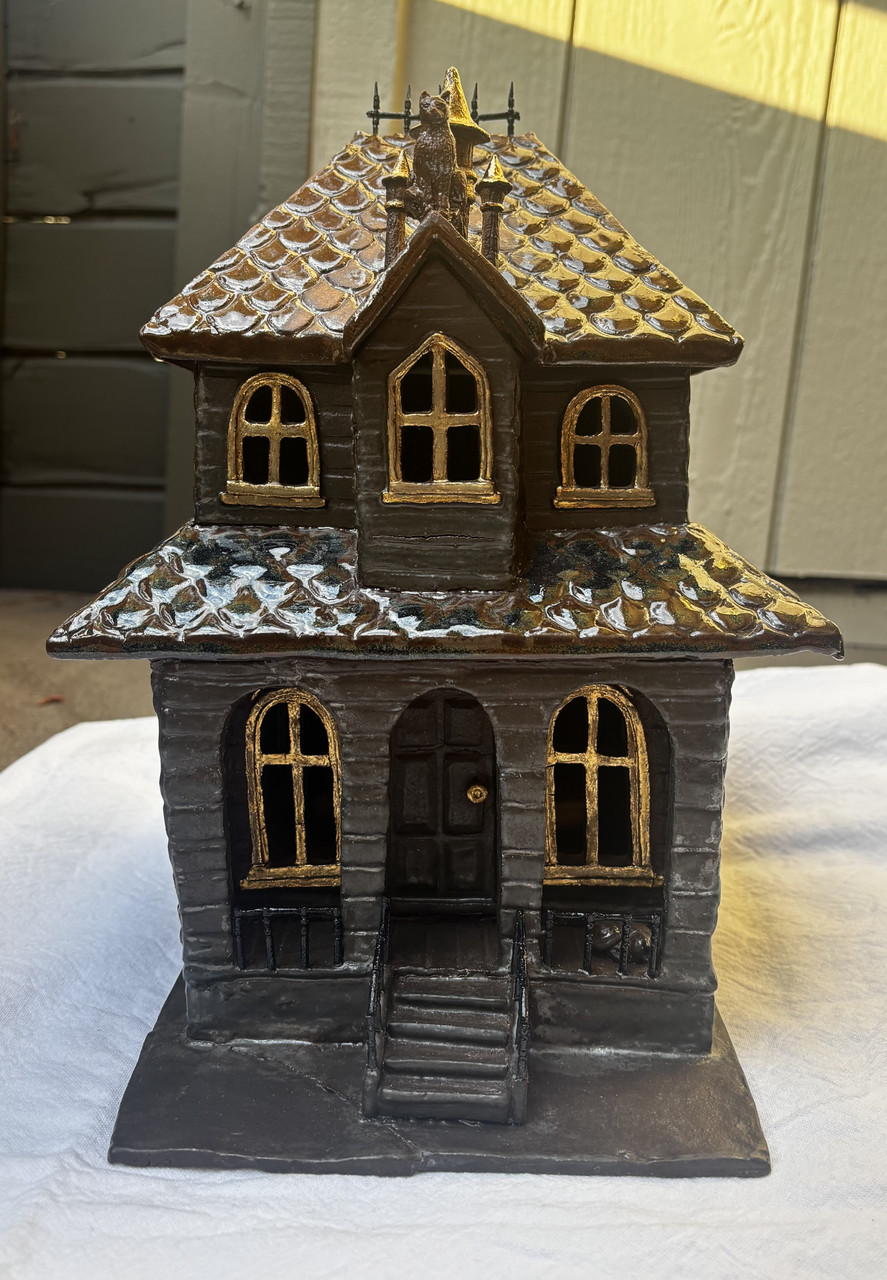
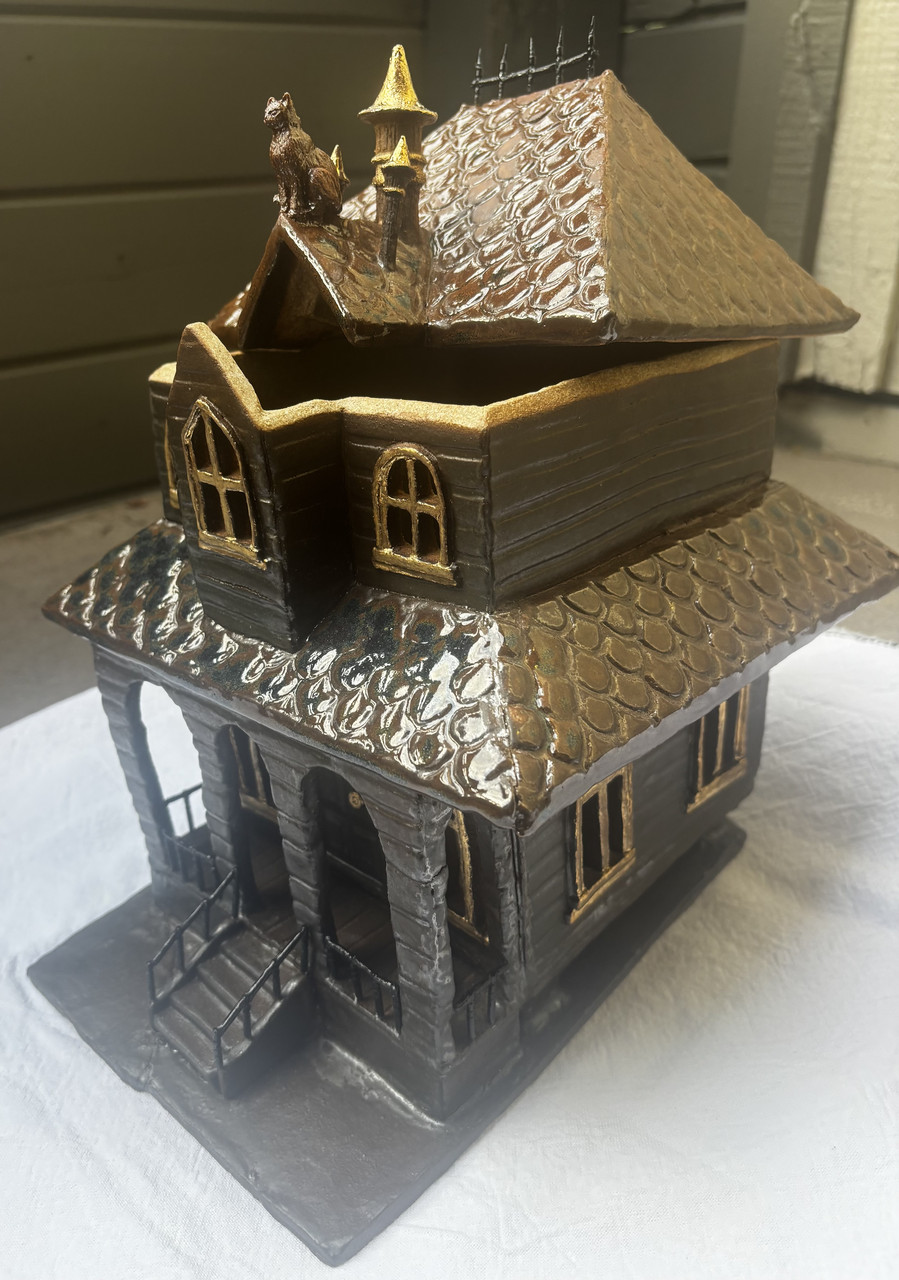
Erin Barber, Midnight Manor, 2026. Ceramic, glaze, gold luster, toothpicks, paint, 12” x 9” x 10.”Santiago High School, CA.
Artist Statement: “I wanted to combine architecture with ceramics, since I am currently taking an architecture class. I created a house inspired by Gothic architecture using the slab box technique. The piece is made entirely out of clay, except for the fences and roof cresting, which are toothpicks painted with black paint and clear nail polish. The top roof comes off like a lid. I added two cats to bring it to life. One is on the roof, and the other is curled up sleeping on the right side behind the fence on the porch. I used gold luster on the window frames, doorknob, and the decorative towers to give it more of a luxurious look. I made the whole design from my imagination without any references. It was tricky to attach all the pieces with slip without them falling off. I sprayed a greenish-black glaze on the walls and hand painted a brownish-black glaze for the roof. I plan on placing LED lights inside to give it a warm glow.”
Emily Brooke-Schmoyer
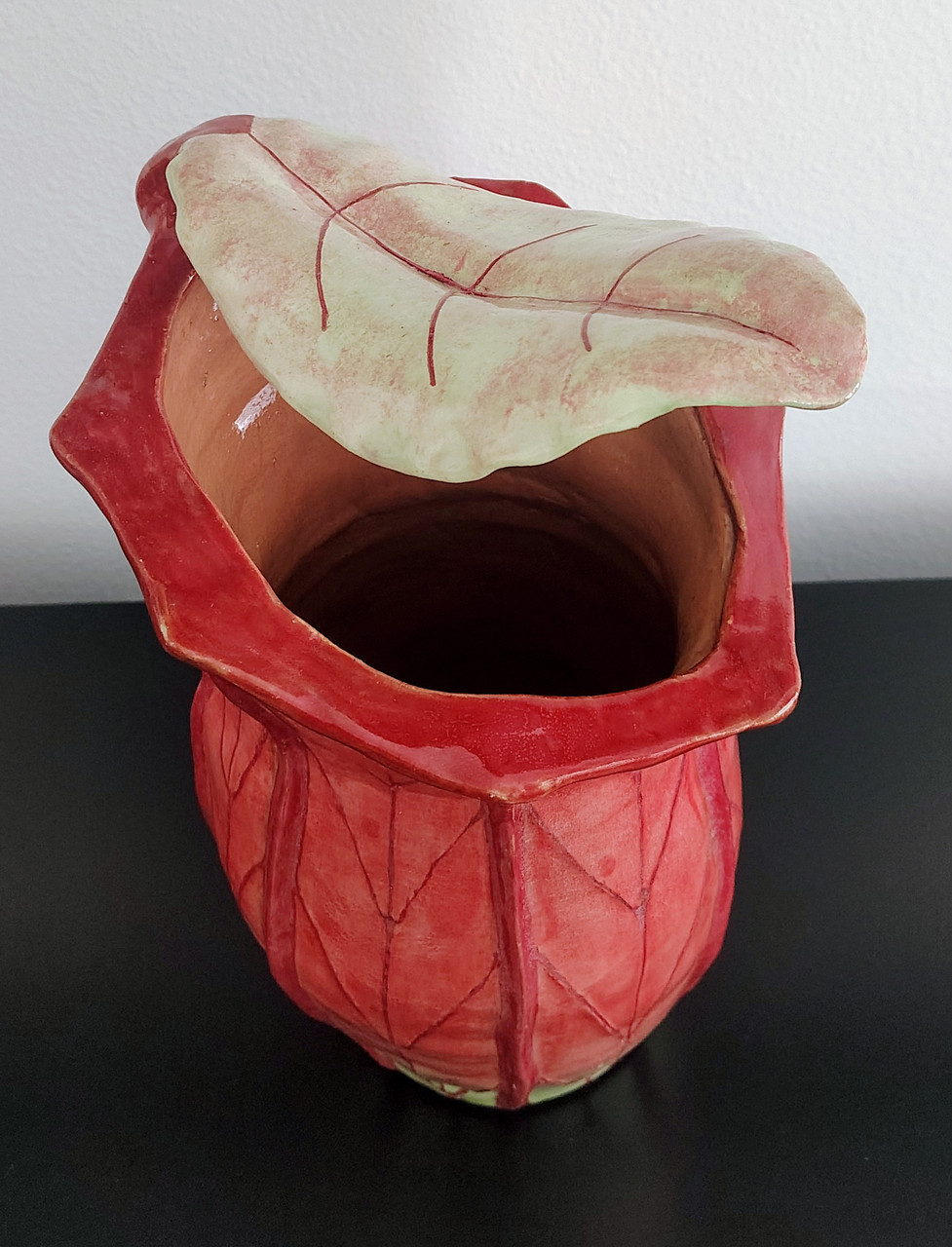
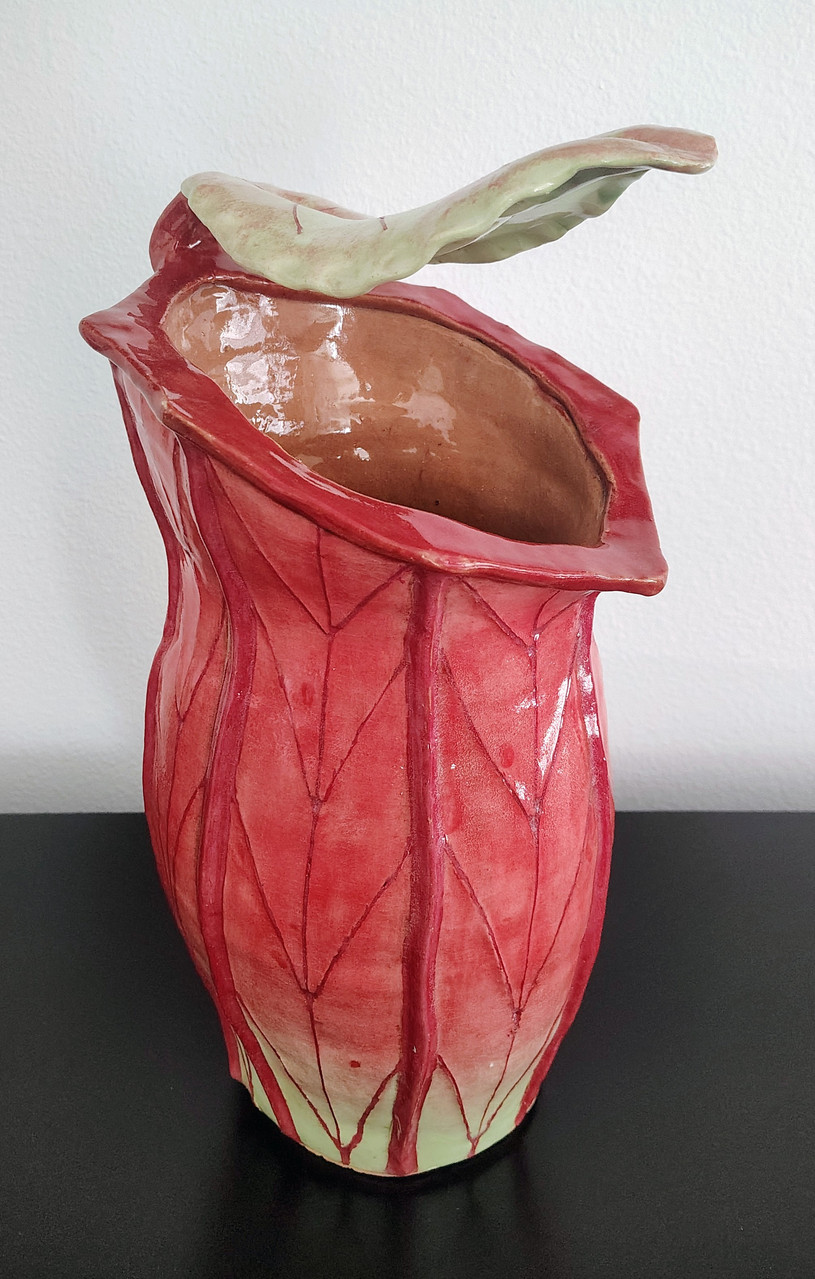
Emily Brooke-Schmoyer, Vase Plant, 2025. Clay, glaze, underglaze, 8” x 8” x 15.” Seabreeze High School, FL.
Artist Statement: “For my art pieces, I work primarily with white earthenware and red earthenware clay. I use a variety of hand-building techniques, including slab construction, coil building, and pinch pots, depending on the form I want to create. To add texture and detail, I use a needle tool for both scraffito and mishima techniques, and loop tools to hollow out sections of my pieces. I smooth surfaces with damp sponges along with metal and rubber ribs, and I use silicone brushes to refine tight or intricate areas. For color and finish, I experiment with glazes such as Blick gloss glazes, Macho Element glazes, and Mayco underglazes. While I primarily use traditional clay, I often explore mixed media to expand the possibilities of my work. My pieces usually blend sculptural and functional elements and reflect my cartoony, exaggerated style. I also research techniques and materials to push the textures, forms, and finishes I can achieve in each project.
My artwork is a ceramic vessel inspired by carnivorous plants, especially pitcher plants. It has a tall, organic form with carved vein textures, a wide folded rim, and a leaf-like extension that adds movement. I used red, pink, and green tones to emphasize its natural look, with texture and contrast as key elements.
I created this piece using coil construction with some slab work. I shaped the form, carved vein details, and smoothed the surface with ribs and sponges. I used underglaze for the base and applied gloss glaze to the dark red veins and rim for contrast.
My goal was to improve my sculptural skills while keeping the piece functional and experimenting with texture and glaze. I learned how to better balance form and design, and this piece will influence me to keep exploring organic shapes and surface detail in future work.”
Taylor Buckner
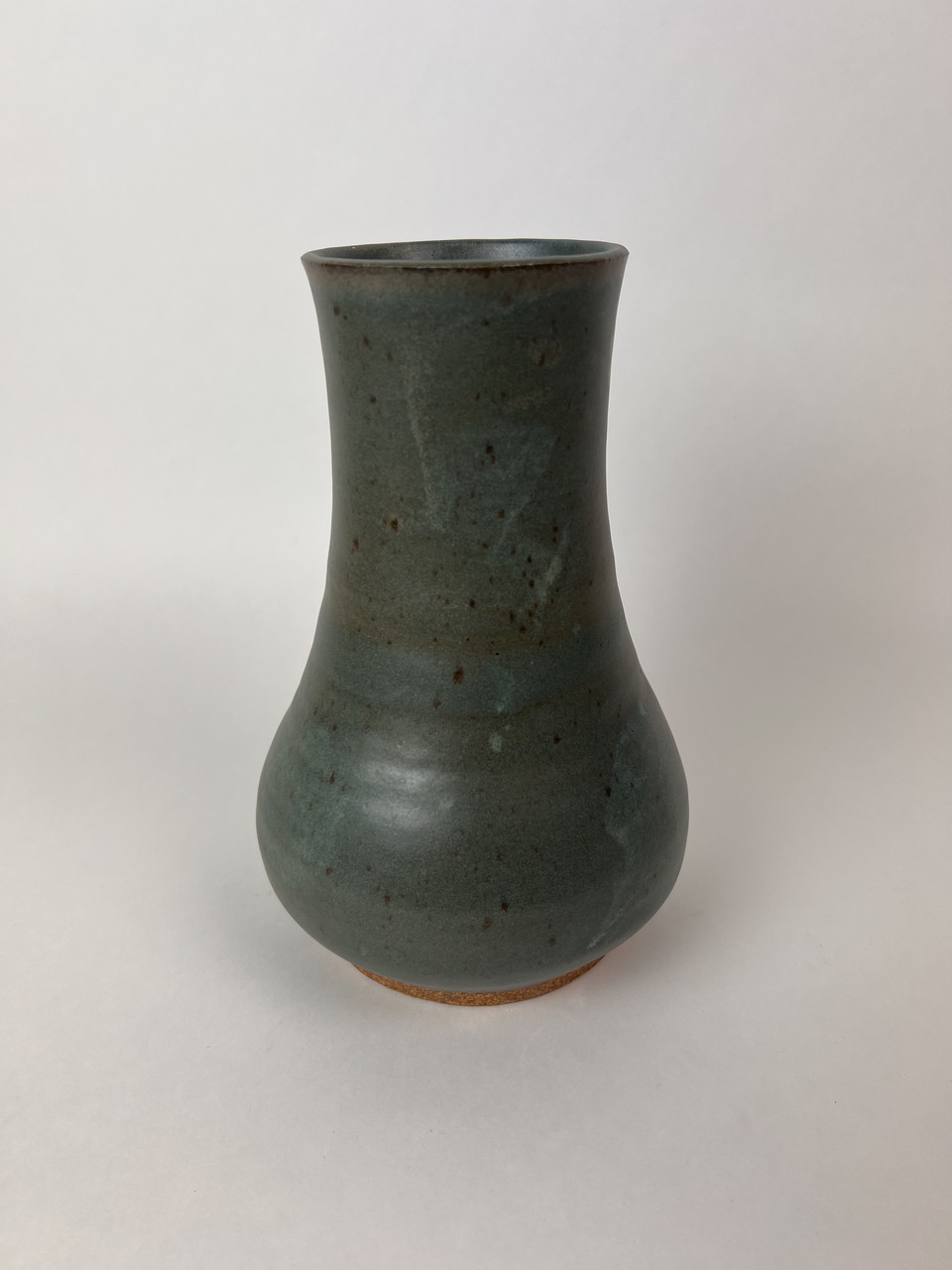
Taylor Buckner, Deep Green Vase, 2026. Ceramic, glaze, 10” x 6” x 6.” Dobson High School, AZ.
Artist Statement: “When creating this piece, I wanted to make an elegant vase that would have brush strokes in beautiful blue hues, however it ended up firing a very unexpected yet gorgeous green. The vase itself is a compound form, meaning I threw it in two pieces, and connected them after allowing them to slightly harden.”
Wilder Bundra
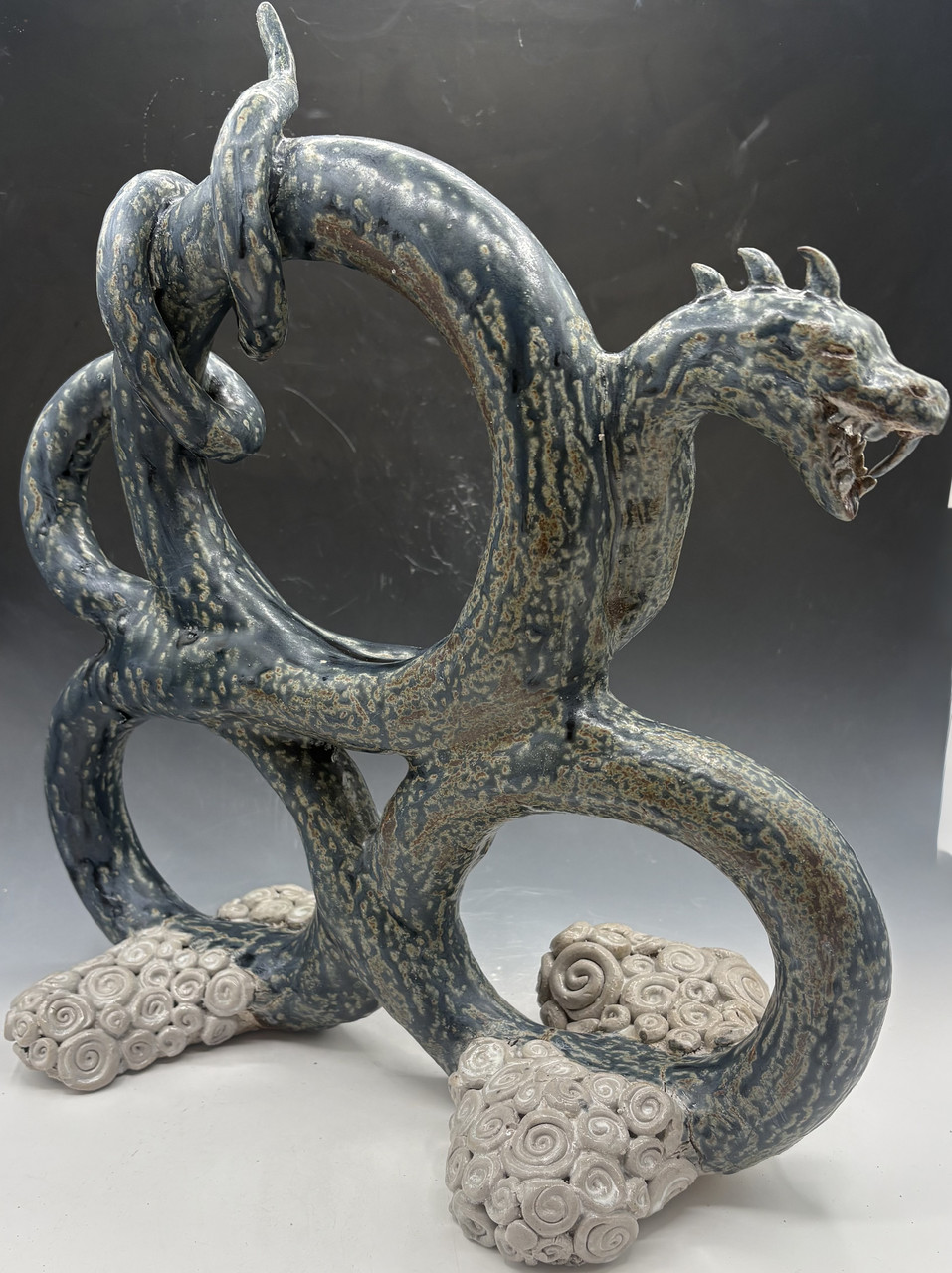
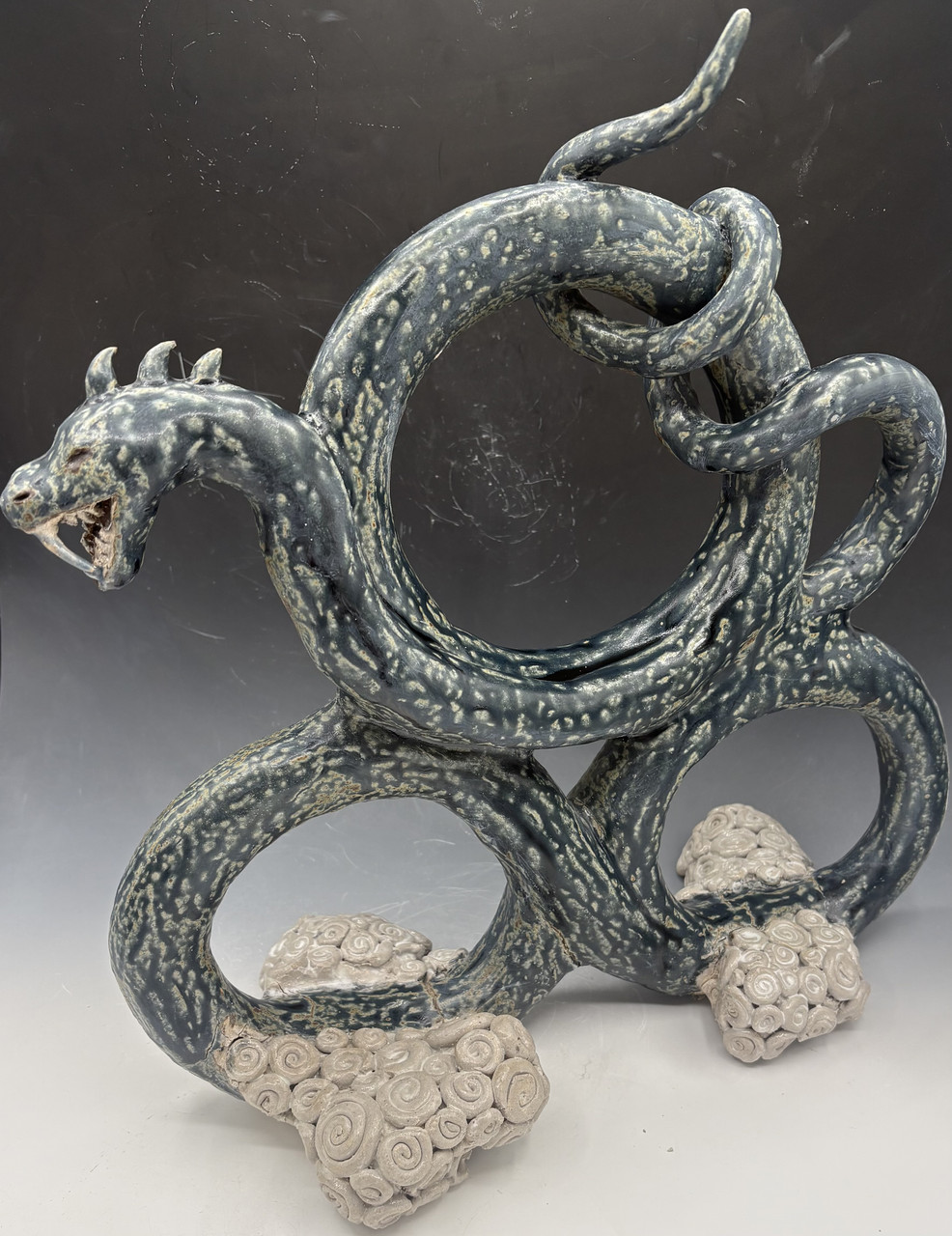
Wilder Bundra, Tempest, 2025. Ceramic, glaze, 16” x 15.5” x 6.75” Rim of the World High School, CA.
Artist Statement: “Using clay, I first formed three separate hollow donuts on the ceramics wheel. I then molded them together and added excess clay to create an image of the three donuts being connected in one large form. I then attached a hollow base to keep the piece upright. I used coils to add details to make it appear as clouds the serpent would soar on. I also used coils to attach the teeth and spikes on the creatures back. After putting it through a bisque fire I hand painted the entirety of the serpent with high-fire glaze to give it the view of the creature having scales.
For as long as I can remember I’ve been inspired by dragons and they have always been the main focus of my art pieces, so this piece represents a piece of who I am.”
Carina Caballero
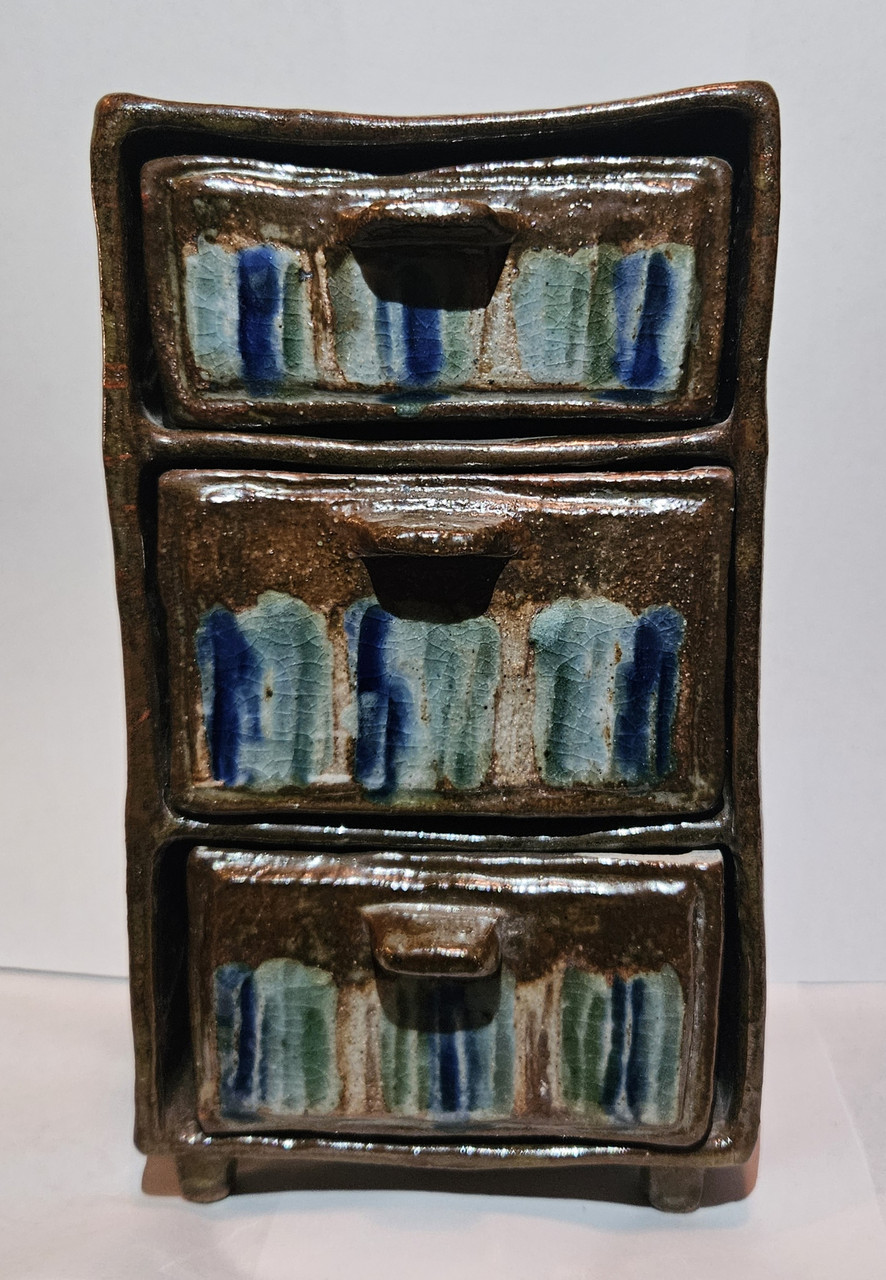
Carina Cab, Creative By Nature, 2025. Ceramic, Underglaze, Glaze, 8.5” x 4.75” x 3.5.” Montclair High School, CA.
Artist Statement: “Inspired by whimsical, rustic and natural environments, this desk drawer set explores the intersection of nature and human creativity while holding everyday tools for supporting that creativity. Through depth of textured underglaze and translucent glazes, the casing resembles wood – one of the most important natural materials and structures for life to thrive. In contrast, in the layered vertical stripes of vibrant glazes on the front panels of the drawers demonstrates playful color and human creativity, a direct result of nature’s support. While fully functional, it serves as a subtle reminder of the beauty of the wonders around us that support human creativity.”
Leia Camacho Fuentes
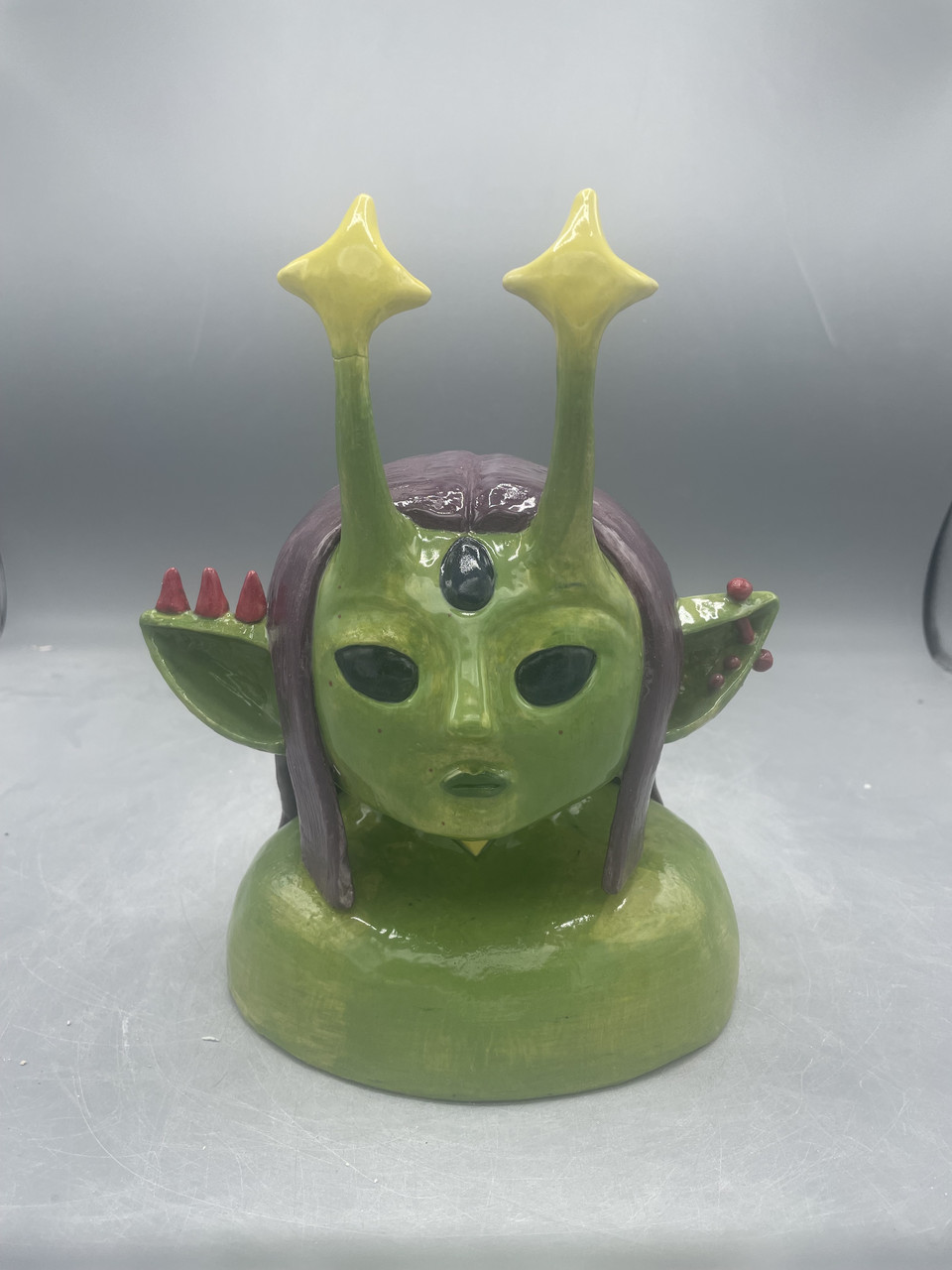
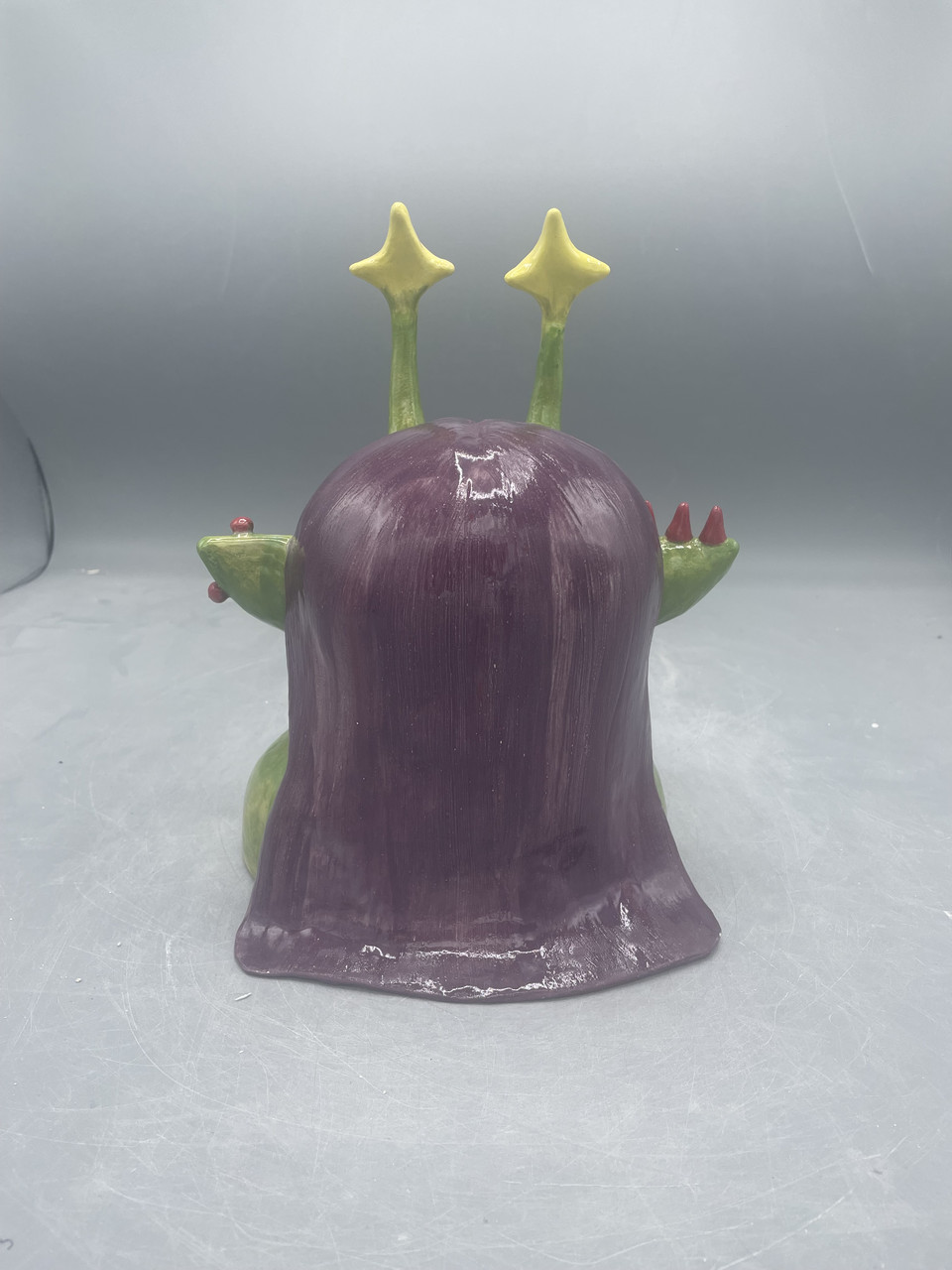
Leia Camacho Fuentes, Azul, 2026. Clay, Glaze, Underglaze, 23 cm, W: 21 cm, L: 14.4 cm. Carlmont High school, CA.
Artist Statement: “I made this piece out of coils and the inspiration was a character of my own creation. Her story is a complex story about social hierarchies and how with combined forces equality can be achieved. But is it all even real and who even are you decide if you’re not who you say you are? This is the main challenge that my character Azul faces as the princess of the totalitarian monarchy of her planet who also wants social justice.”
David Castaneda
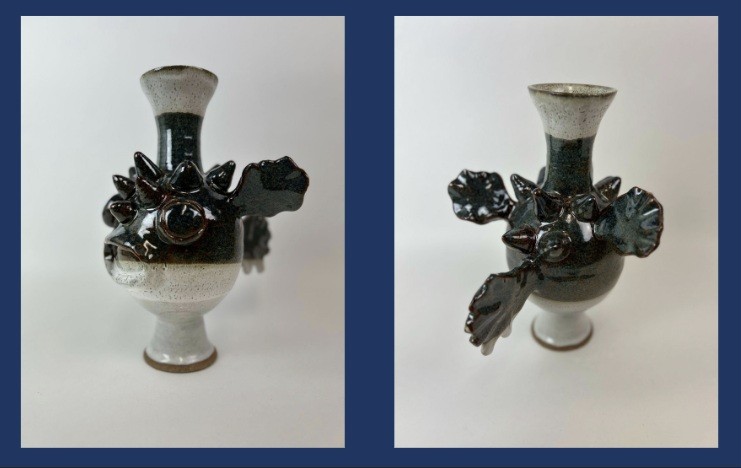
David Castaneda, Puffer Fish Pot, 2026. Ceramic, 12” x 10.5” x 9.” Dobson High School, AZ.
Artist Statement: “My Idea was to incorporate sea life features into functional vessels. I used sculptural techniques along side with wheel throwing to develop my pieces. I had learned all necessary techniques in class and did my research on the characteristics of the sea creatures.”
Hudson Cerwin
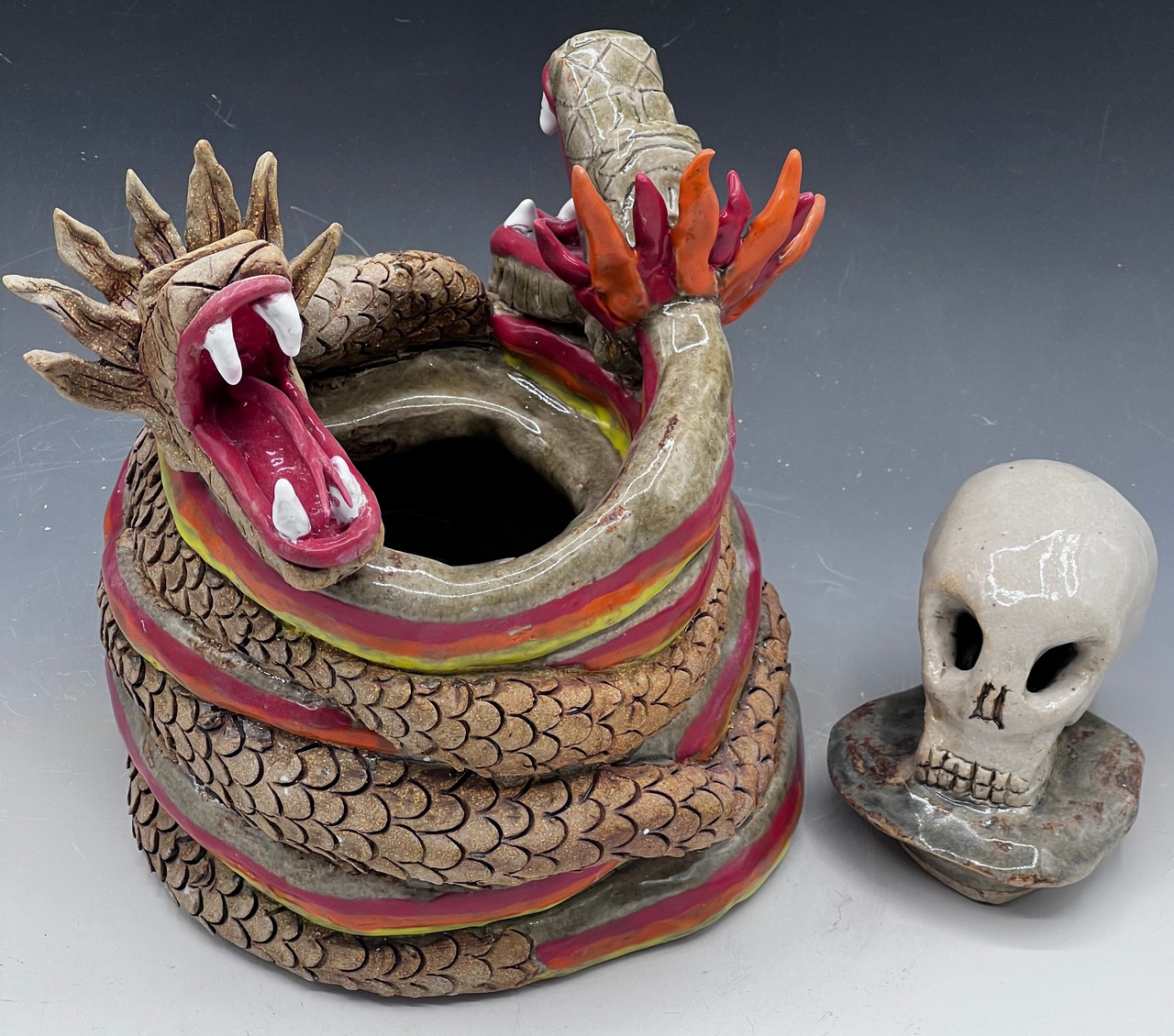
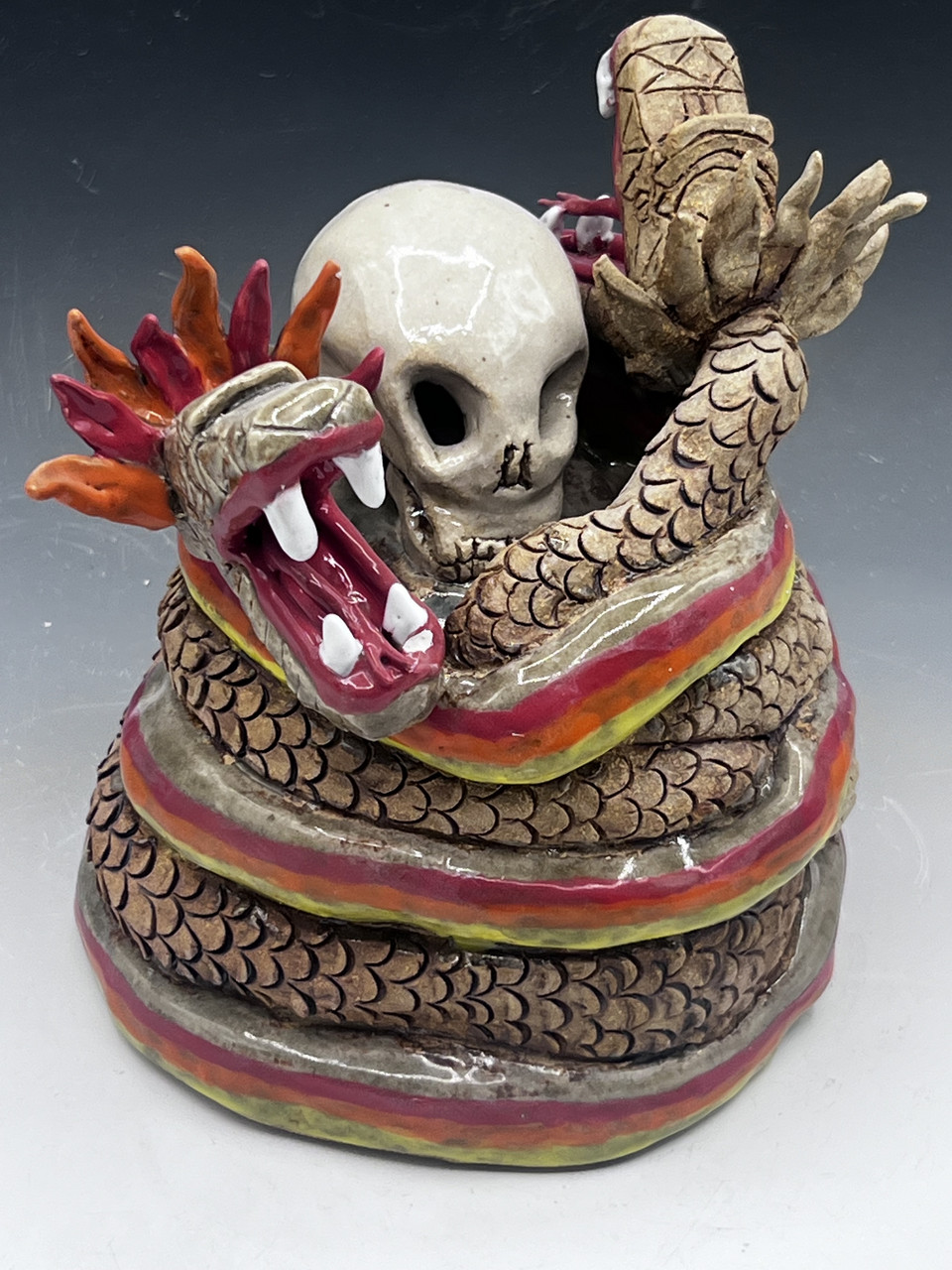
Hudson Cerwin, God of Wisdom, 2026. Ceramics, High Fire and Low Fire Glazes, Stain. 6” x 6” x 7.” Rim of the World High School, CA.
Artist Statement: “For this piece I decided to create it based on the ancient civilizations, to go along with my AP portfolio theme, so I chose the Mayans and the Aztecs. Ceramics is the oldest art form so I thought it would be interesting to find historic pieces and make a newer version of them. After all of the research I was able to find that the God of Wisdom for the Aztecs and the God of Wisdom for the Mayans, both were depicted as snakes but also different styles. So for that reason I decided to create the jar with a two headed snake because one half was for the Aztec God and the other for the Mayan God.
I started by rolling out a slab for the base, then I went to make the snakes that wrap up and make the vase, with hand rolled coils. After making the snakes I started designing the heads based off of carvings of the Gods at ancient temples and artifacts. I combined the two different cultures and made one design that I repeated on both of the snakes. To separate the two cultures I made one half of the snake rough with a scaled texture that I decided to stain to keep the contrast between the snakes, while the other half I left smooth and first put a green glaze coat on before I put all the colors over the glaze coat. To top off the piece I made the lid to the jar by sculpting a skull because of both cultures’need for sacrifice.”
Ainslee Cleveland
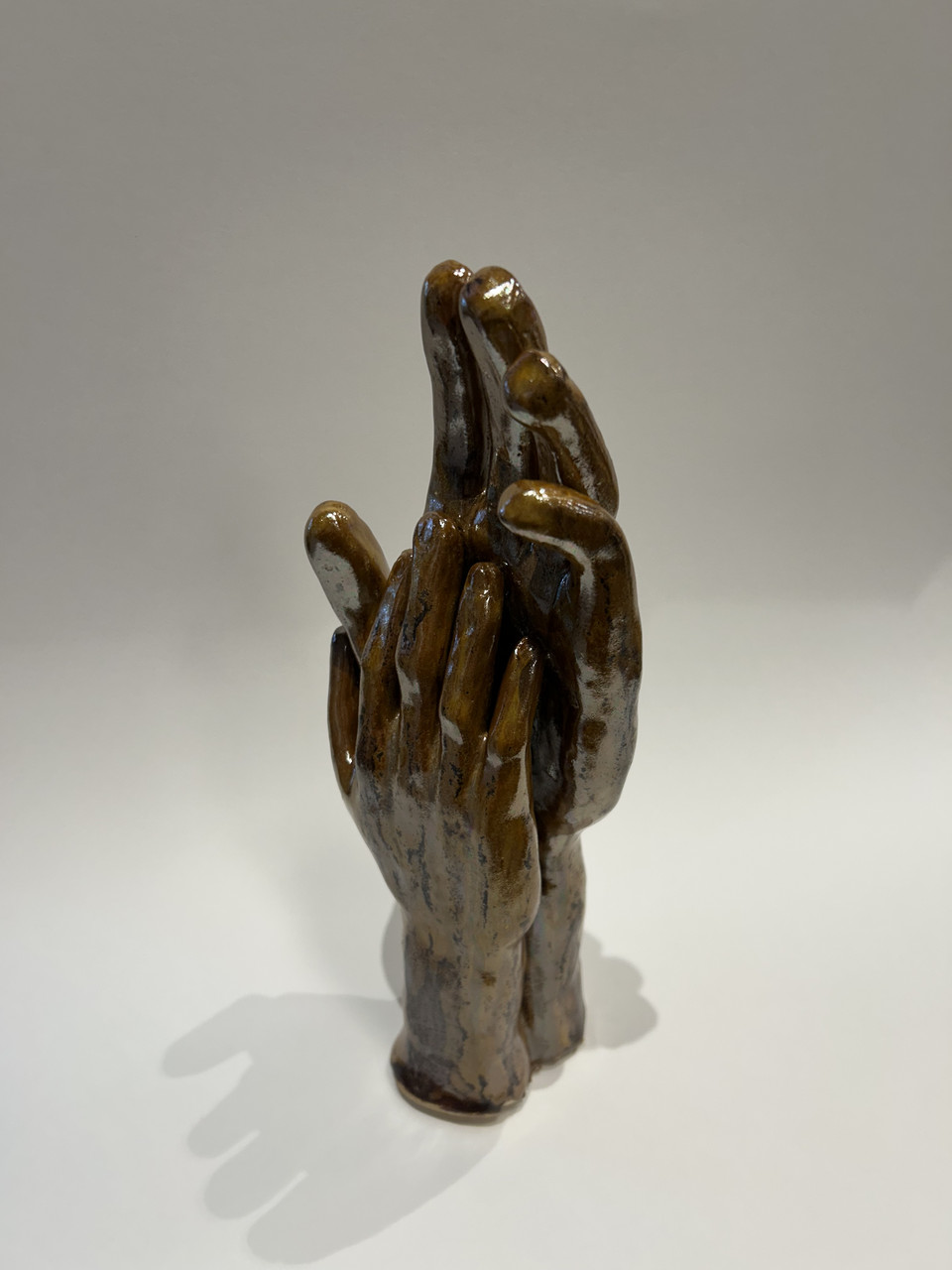
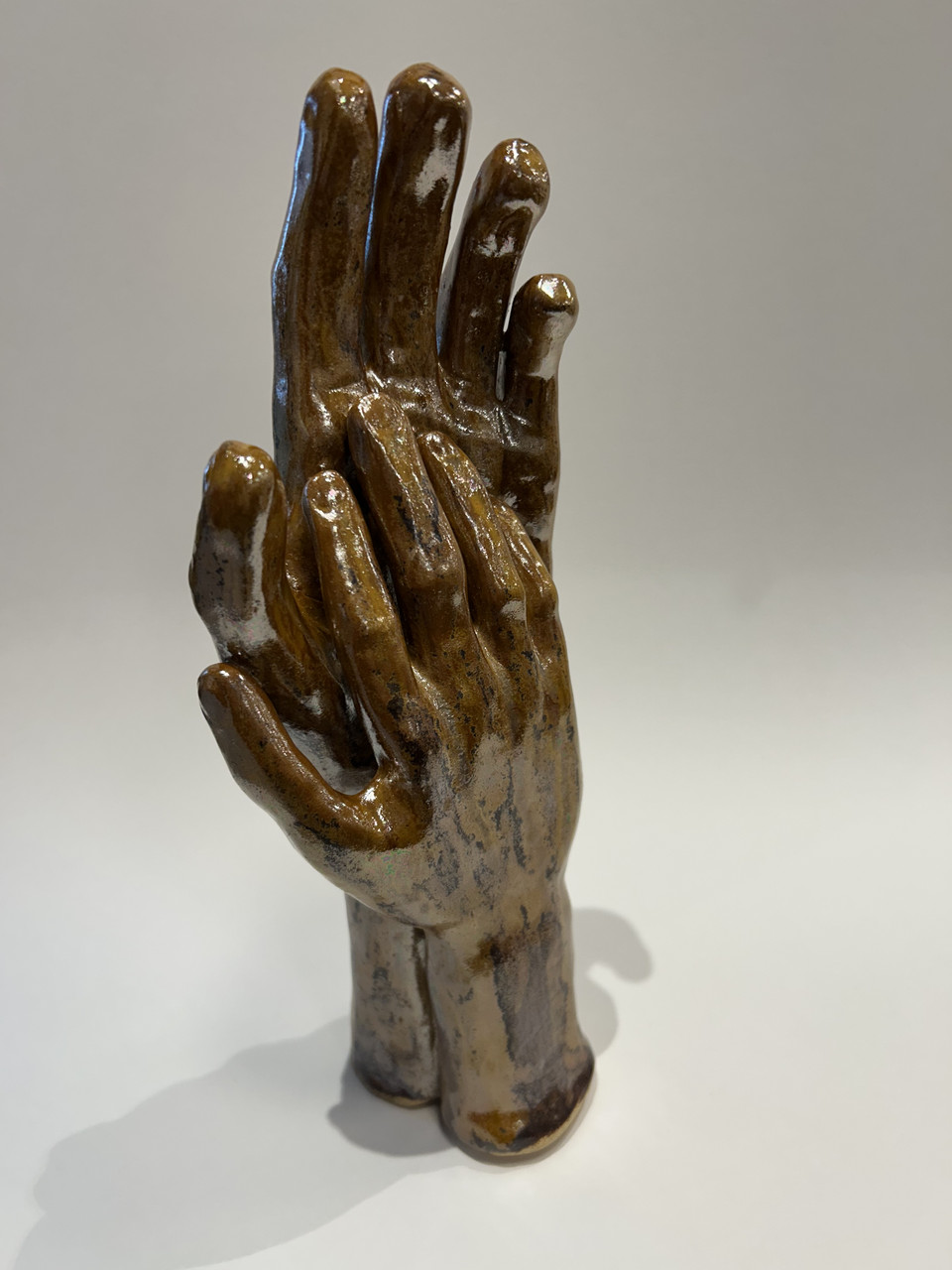
Ainslee Cleveland, Hold my hand, 2026. Clay. 11.5″ x 4.5″ x 4.5.” Olympic High School, WA.
Artist Statement: “I wanted to explore an anatomical sculpture for this project, I had the idea to make two hands and started modeling one after my own hand and then realized I wanted to make the second one after my boyfriend’s hand. Both hands I made as close to the actual size as possible, I used both of for reference for everything down to the shapes of the fingernails, I then used my favorite glaze that i had used for many of my other projects for the finished product.”
Ella Cole
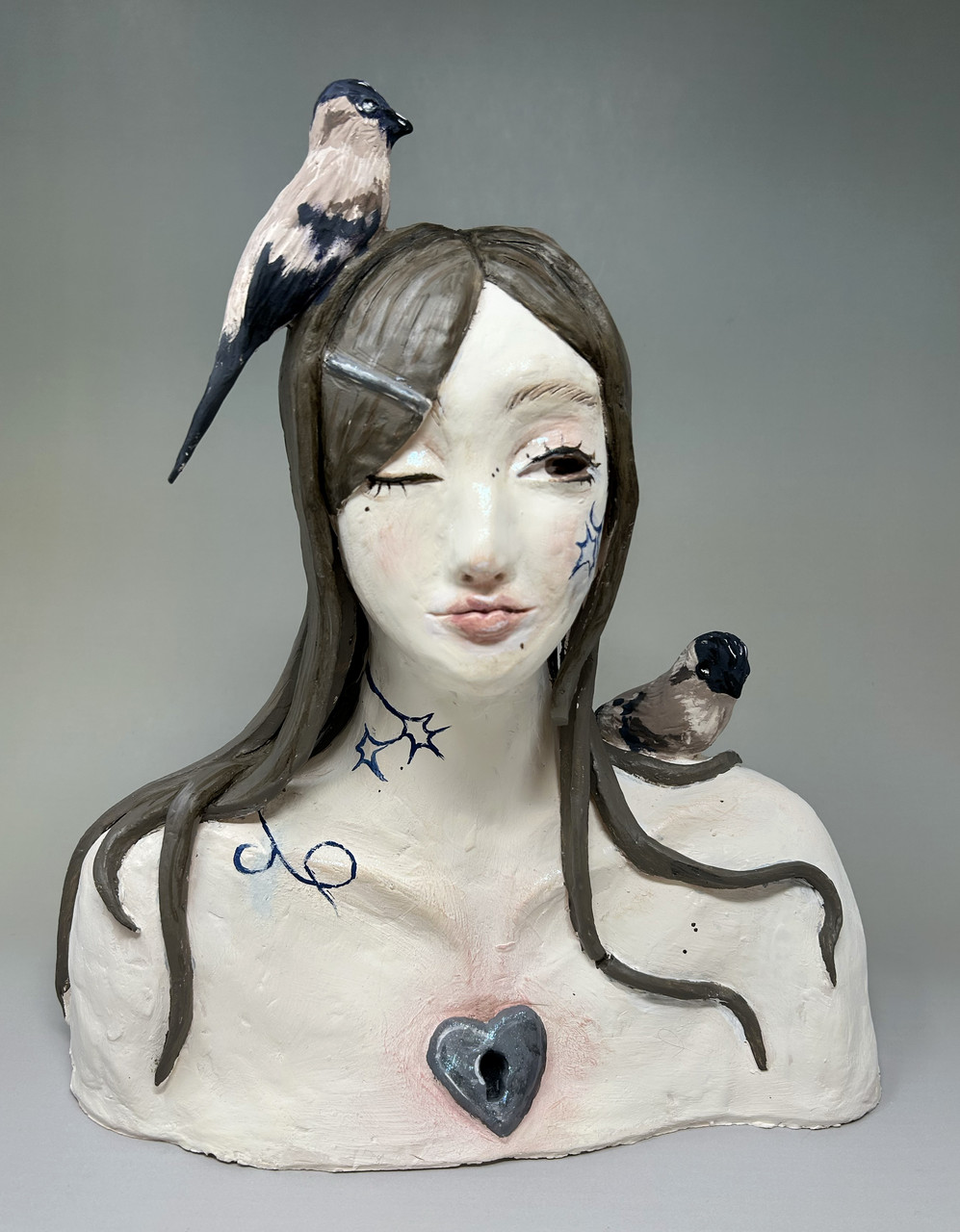
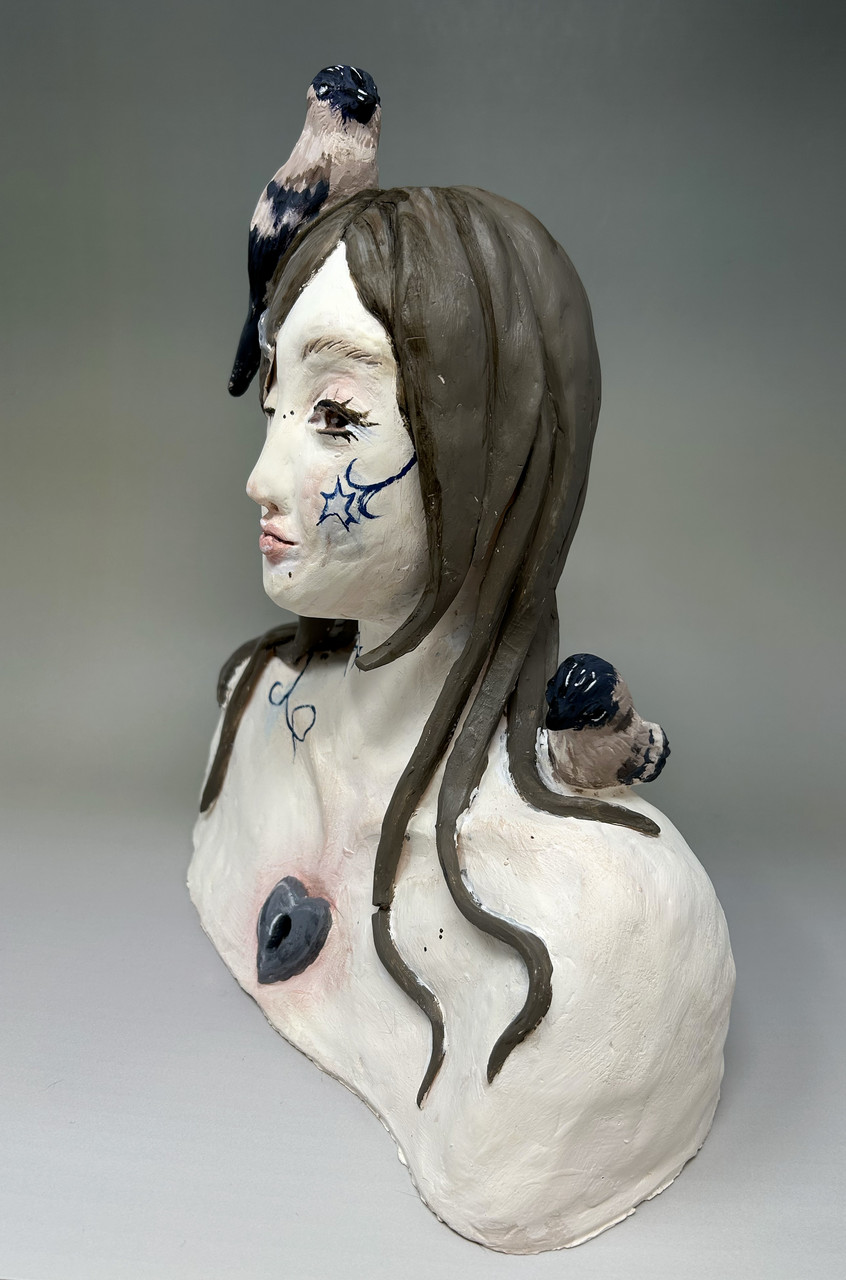
Ella Cole, Rooted In Femininity, 2025. Ceramic, Acrylic paint, 20” x 16.” Shawnee Mission Northwest High School, KS.
Artist Statement: “My vision for this piece was to show something that embodied the beauty of femininity and growth, inside and out. I wanted it to represent how it is okay to embrace your femininity, while still being strong and independent, similar to mother nature. I studied different parts of nature that reminded me of my own beauty, and what makes me feel connected to the earth. I chose to make the hair resemble roots winding around her shoulders, showing how she is strong, but elegant. Birds adorn her shoulders and head to represent peace and harmony, and how animals feel at ease with her. The lock on her chest represents how she is almost a peaceful sanctuary to these avians. Constellations spread across her skin to show how she is in her most celestial form while being in touch with nature. All of these features come together to show how women are an important part to the earth around us.”
Henry Cook
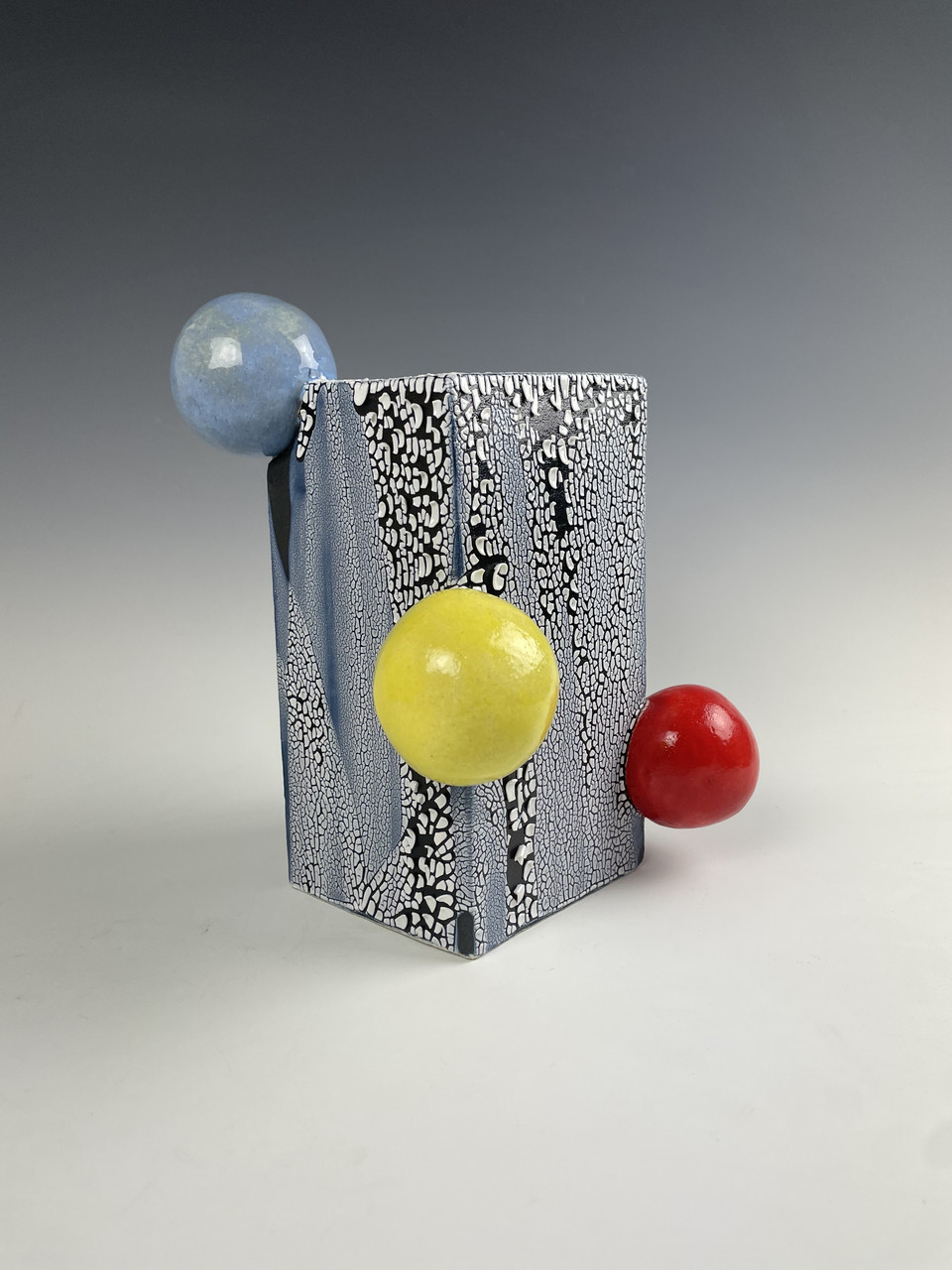
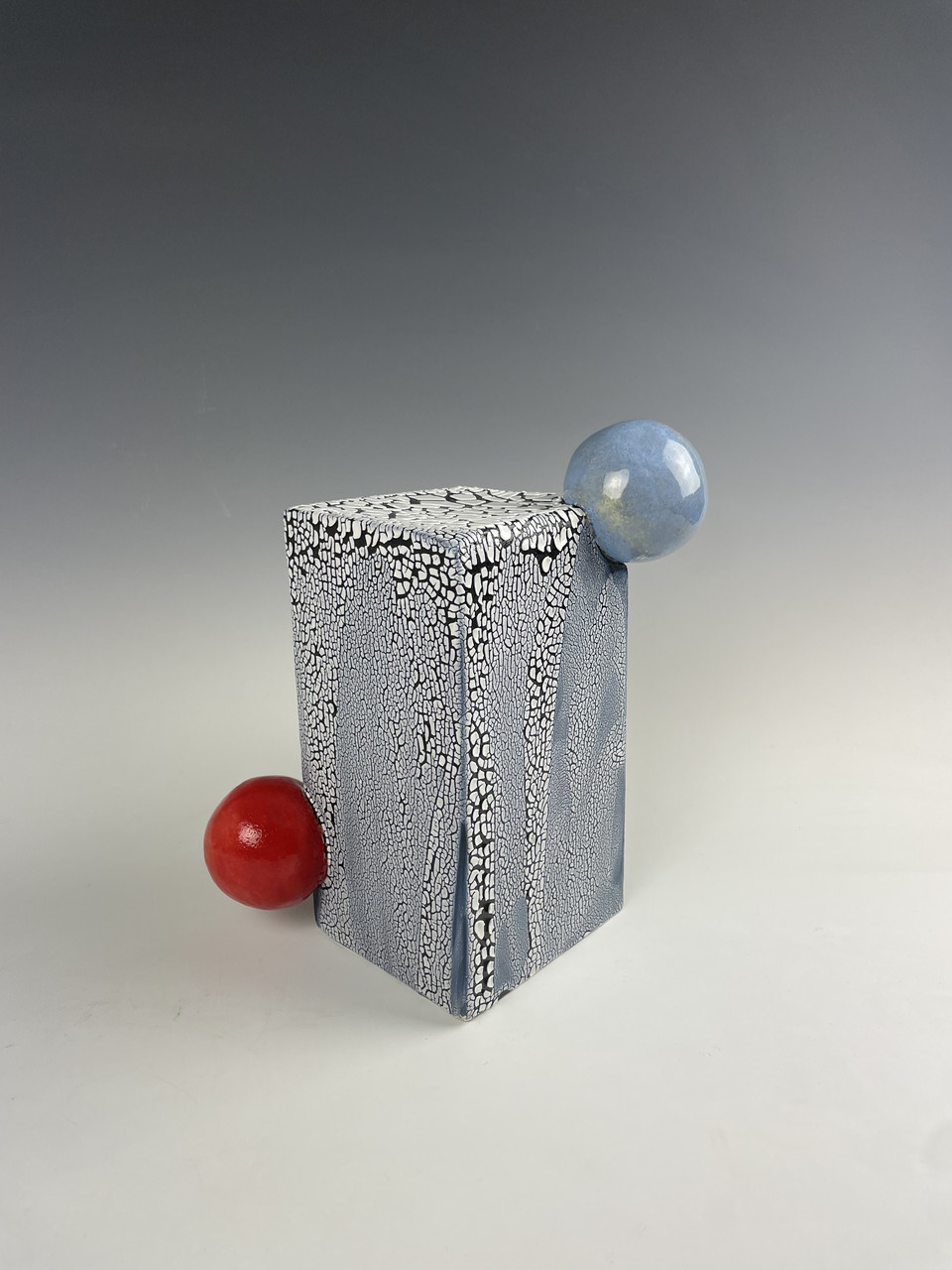
Henry Cook, Untitled, 2025. Oxidation Fired Stoneware, 12” x 7” x 7.” El Dorado High School, CA.
Artist Statement: “My process included the creation of something abstract, the idea of creating something not only I haven’t seen but something everyone hasn’t seen. I started with creating want is know as a slab box then after the creations of that combining half spheres and creating 3 round spheres and cutting a whole in the slab box and gluing them to the slab box with a slip texture made from clay then after it became bone dry. I applied a underglaze on the slab box part before the first firing then after that firing I applied three different colored Laguna glazes as well Aavark glazes then on the part I underglazed I applied what’s called a liken glaze which gives it the crackle effect. Then the second firing happened and it all came as I saw it through my ideas.”
Angie Cristancho
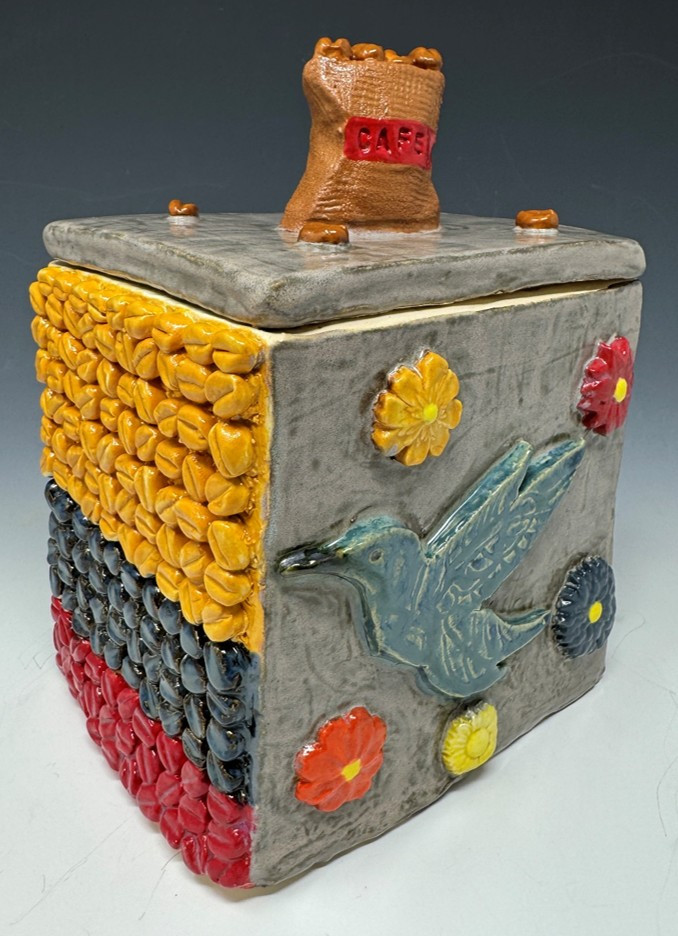
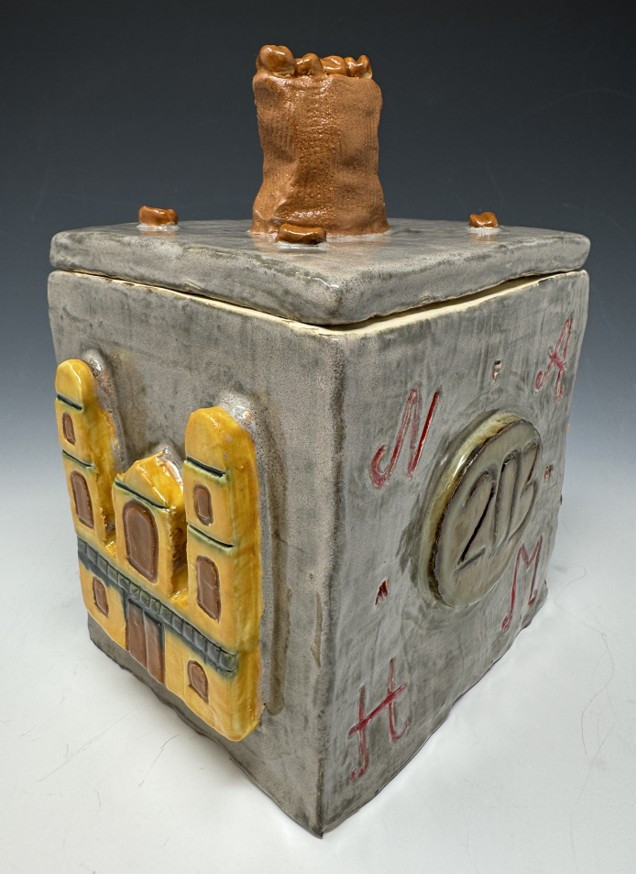
Angie Cristancho, Mi Tierrita, 2025. Iceman Clay, Potters Choice Glazes, 9” x 6” x 5.” Belleville East High School, IL.
Artist Statement: “The slab box is an homage to my homeland, Columbia. I used symbols like the coffee beans, hummingbird, and other imagery that represents my country. I wanted to honor the culture.”
Valentina Cruz
Valentina Cruz, Peter Griffin mug, 2026. Ceramic. 6” x 4” x 4.” Montclair High School, CA.
Artist Statement: “The Peter Griffin mug was made for my sister as she wanted a mug from one of her favorite cartoons and I just wanted a nice clown mug to go with it. I combined both wheel throwing and hand building, I also used some carving tools as well.”
Katie Doran
Katie Doran, Unjust Trophy, 2026. Stoneware Clay, resin, felt, acrylic paint, collage. 16″ x 12″ x 7.” Wall Township High School, NJ.
Artist Statement: “This piece is a stoneware clay built Rhino head with a broken off clay horn. The head is mounted on a wood panel like a trophy with a collage background. The wound is built with loose felt and red colored UV Resin. The broken off horn is hung around the neck of the Rhino on a fake gold chain. The surface of the Rhino is hand painted in layers using acrylic paints. This piece is designed to invoke the inhumane nature of the slaughtering of the rhinos for the their horns to make jewelery.”
Aadi Dubey
Aadi Dubey, Leather Jacket, 2025. Stoneware clay, black high fire & underglaze, 3.5” x 3.5” x 4.5.” Redmond High School, WA.
Artist Statement: “This Ceramic Anthropomorphic Animal Bust sculpture is constructed from stoneware clay using pinch, slab, and coil techniques, with fine details articulated using a needle tool. Underglaze creates a soft, matte finish in the zebra’s stripes, while a high-fire black glaze is applied to the pupils and leather jacket, producing a glossy contrast against the surface of the head.
The piece began as a playful exploration of a favorite animal paired with a bold fashion element, but evolved into a reflection on the tension between wildlife and human consumption. By depicting a zebra, an animal historically hunted for its hide, wearing a leather jacket; the work presents a deliberate contradiction that questions material desire and the cost at which it is satisfied.
A restrained monochromatic palette unifies the form, allowing variations in texture and surface quality to carry visual interest. The zebra itself serves as a metaphor for authenticity, community, and balance, reflected in its black-and-white patterning and herd-oriented nature.
Overall, crafting this sculpture was a very rewarding experience, because something that began as a fun project to make a creative character, developed into a more refined symbolic expression of balance.”
Joel Duncan
Joel Duncan, War At A Cost, 2025. Iceman Clay, Acrylic, Electrical Wire, 6” x 8” x 12.” Belleville East High School, IL.
Lauren Dupree
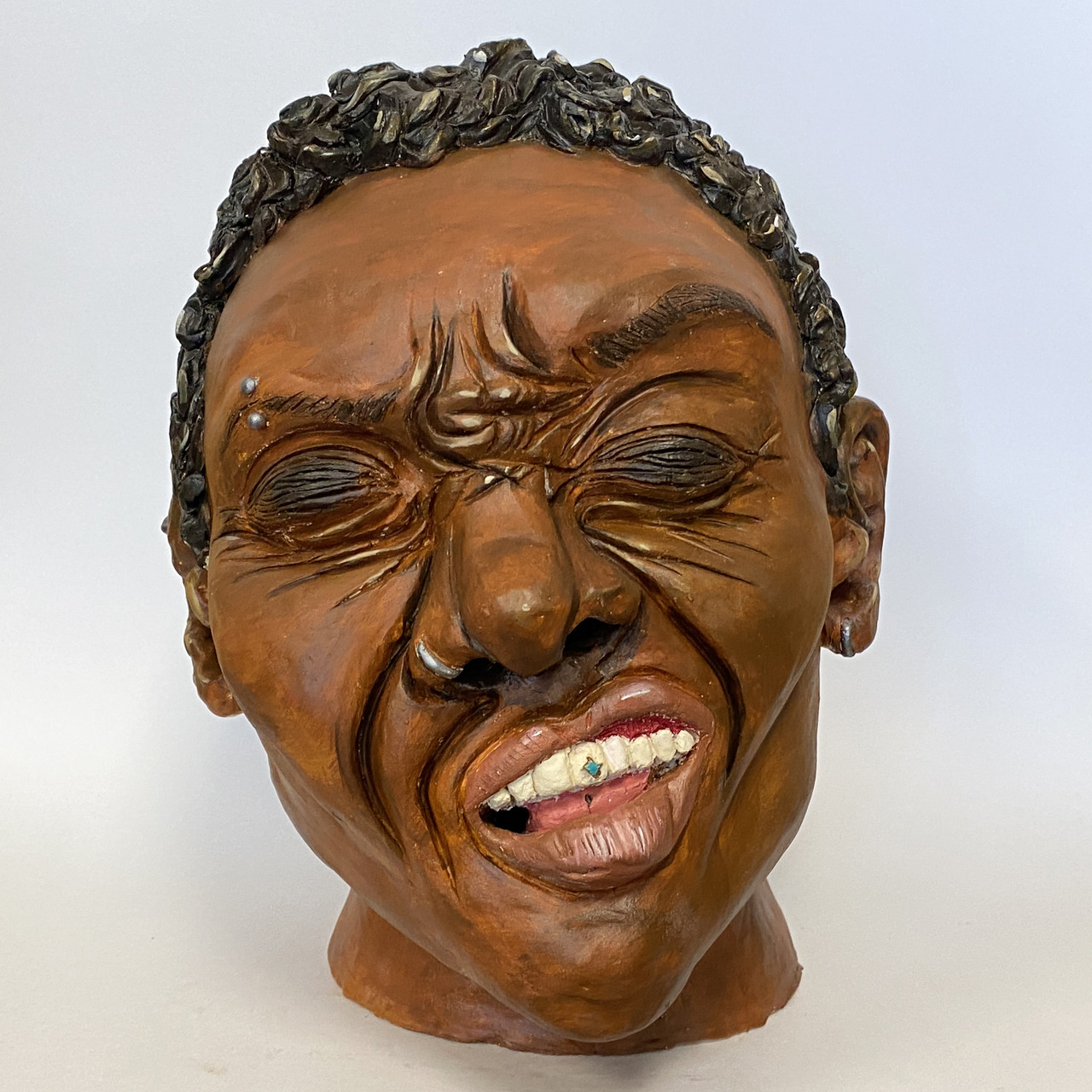
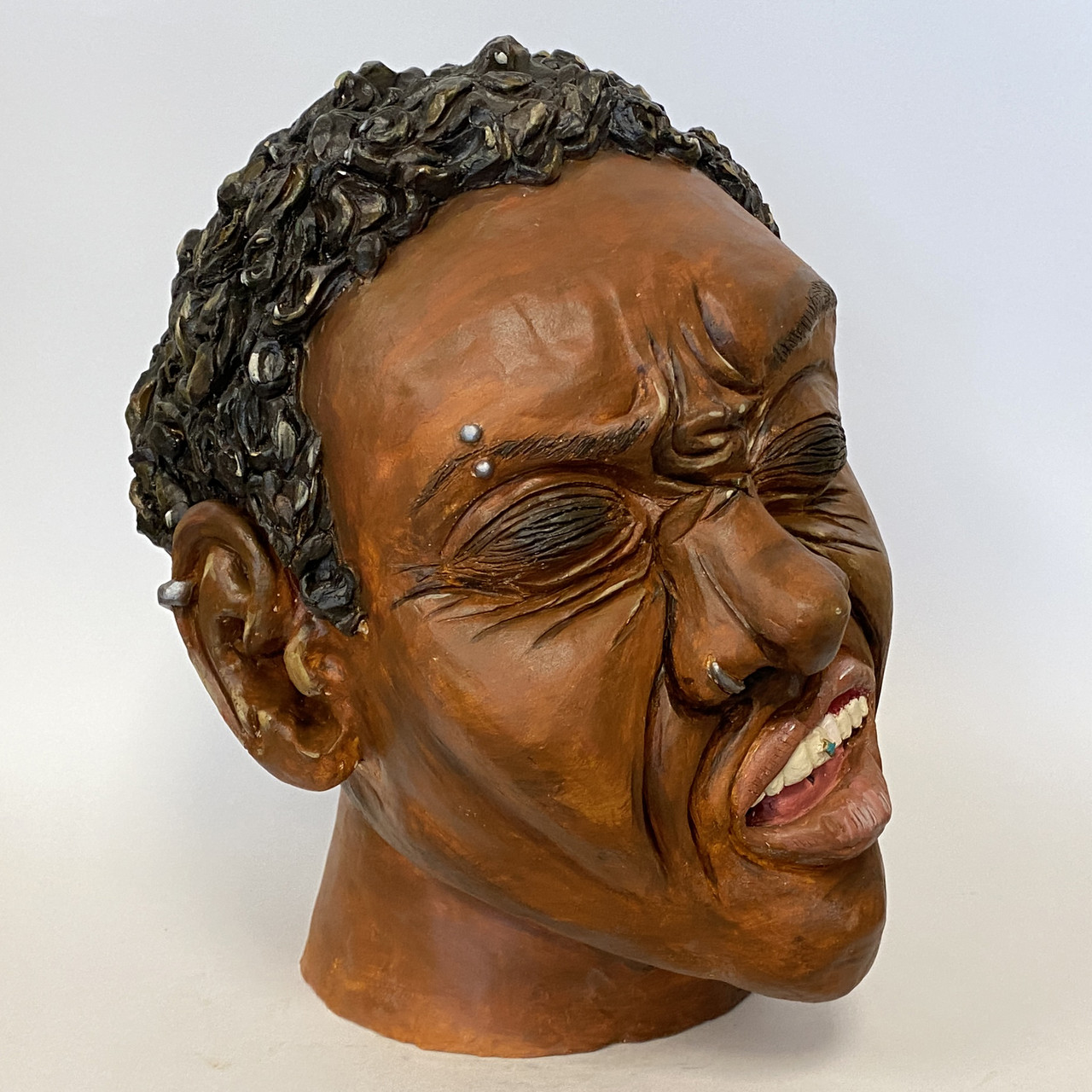
Lauren Dupree, Adorned, 2025. Clay, acrylic, metallic acrylic, 8” x 11” x 17.” Liberty High School, OR.
Artist Statement: “I wanted to decorate and detail this bust as much as possible and I did that through stuff I added to the figure but also the detail of the face. I wanted this piece to celebrate personal expression symbolize the pride we should have in showing the world ourselves. Deciding that this would be a person of color also symbolizes that this expression is so important for all kinds of people, but even more to show no matter who are are, you can express your true self in this divided world.”
Andre Ferreira
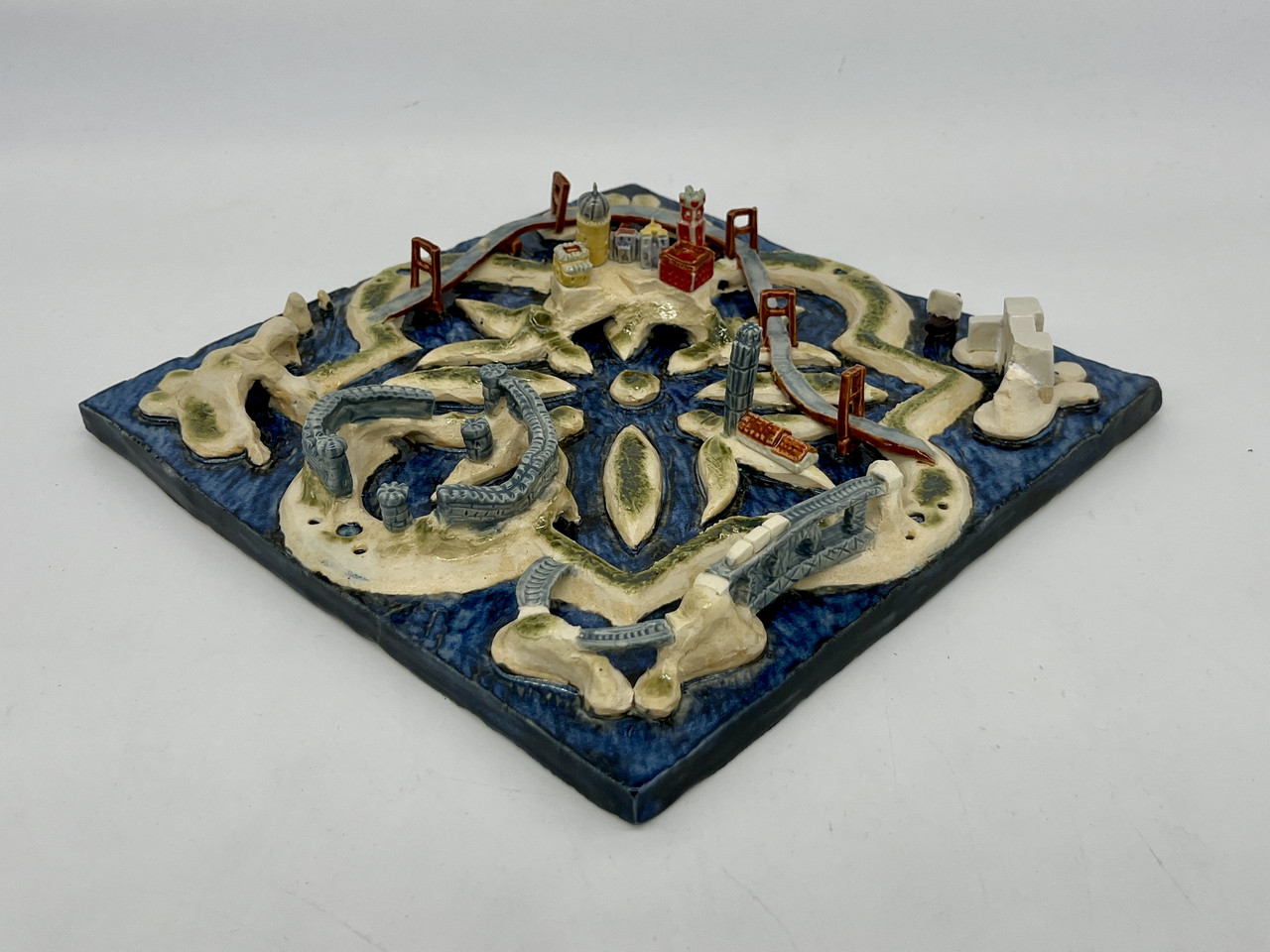
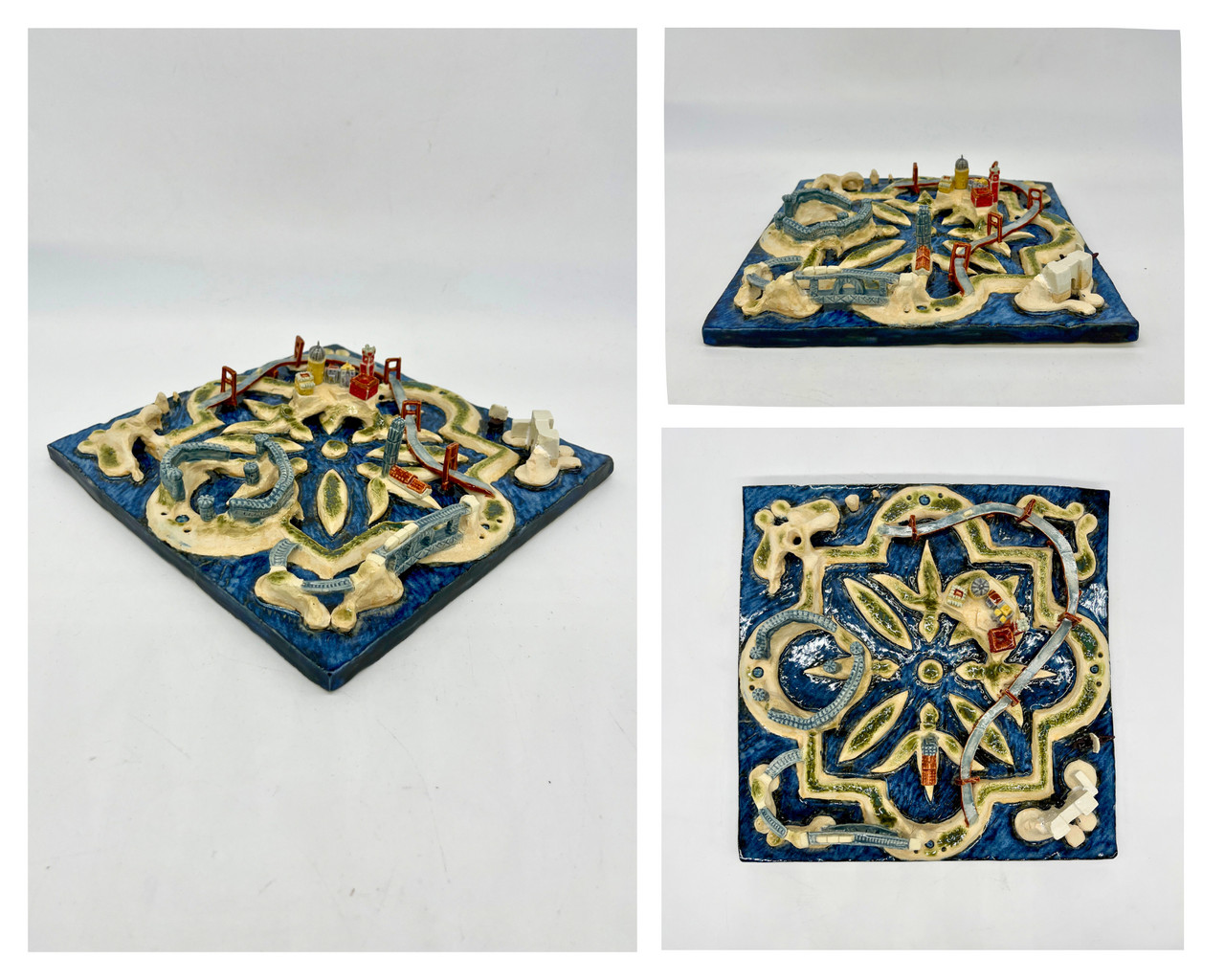
Andre Ferreira, Porcelain Tides, 2025. Sea mix clay, sculpting tools, Amaco and Potter’s, 3” x 10″ x 10.” Lake Washington High School, WA.
Artist Statement: “Porcelain Tides is inspired by Portugal’s traditional tilework, azulejos, which contain the root word for blue in Portuguese. I wanted my piece to be a representation of my relationship to my culture, with famous landmarks and historical buildings, combined with places that are significant to my childhood and memories. For the piece itself, I took a traditionally vertical piece that adorns walls and turned it into a topographical map that I could build upon. The blue components of these tiles became the ocean and to tie my piece to Portugal’s maritime history, and the white components are the ‘land’ for my buildings to rest upon. I chose to layer glazes and underglazes to create depth in the ocean and contrast the matte sandstone cliffs that Portugal is famous for with the landmarks I wanted to highlight.”
Taylor FitzHenry
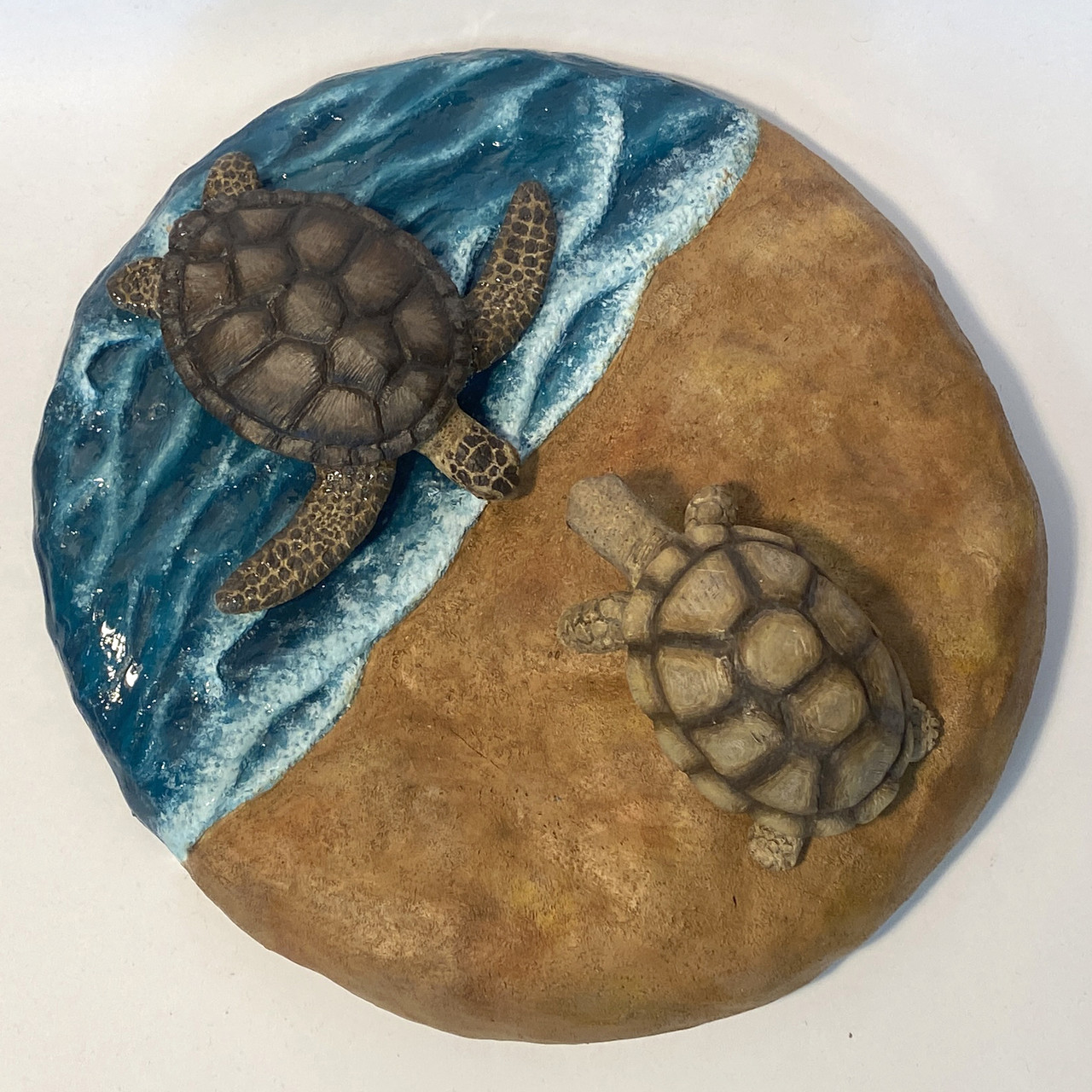
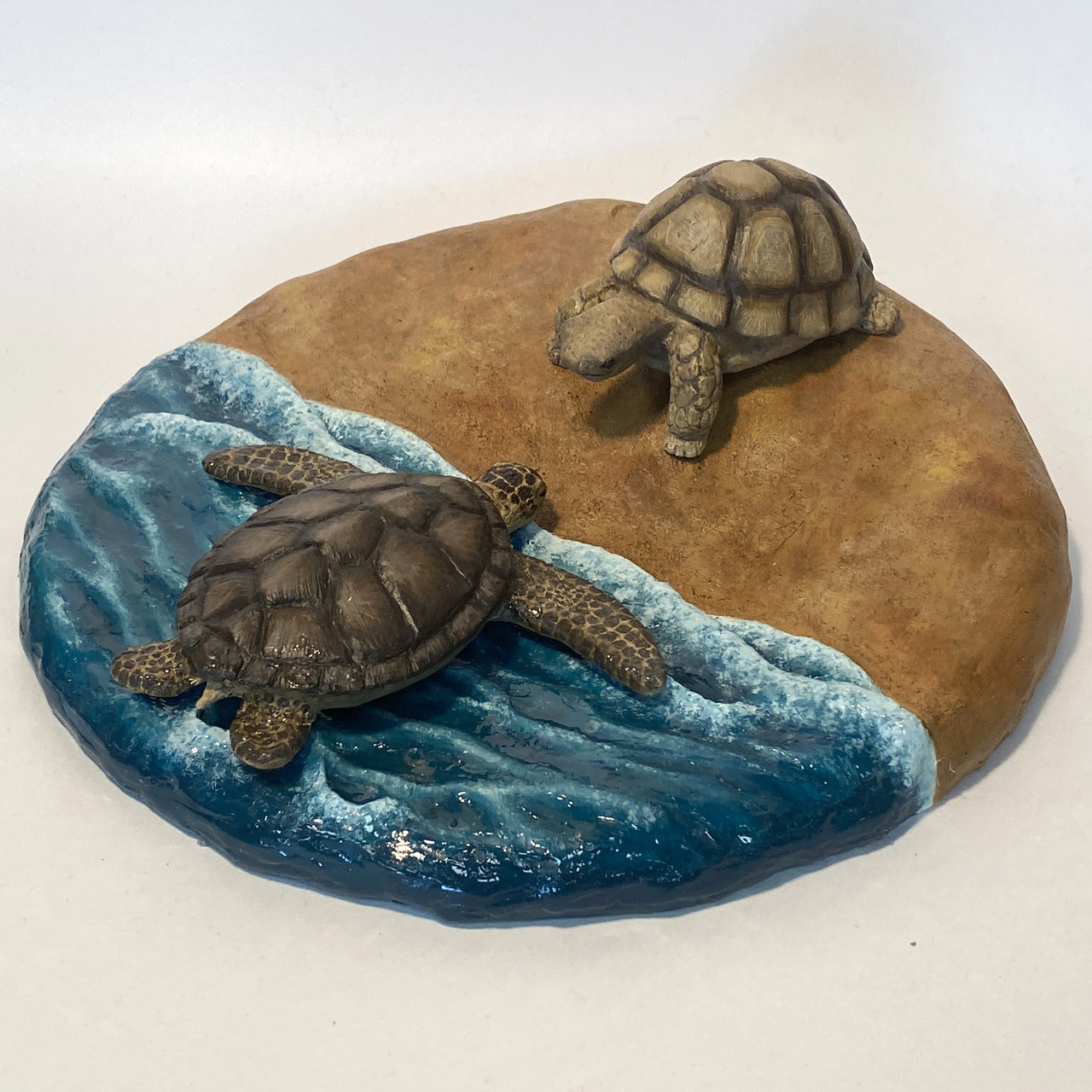
Taylor FitzHenry, Turtles, 2025. Clay, Acrylic Paint, 11” x 11″ x 3.” Liberty High School, OR.
Artist Statement: “My vision was to create a conversation between land and sea creatures. The materials used were also clay and acrylic paint. In all of my projects I strive to create realism to the best of my ability and represent these animals correctly.”
Emily Flores
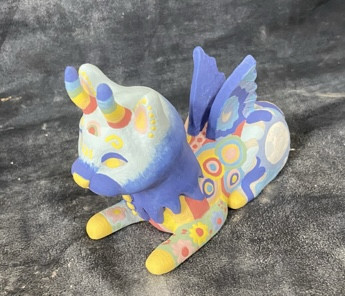
Emily Flores, My culture, 2025. Clay, paint, and glaze, 3” x 2″ x 5.” Everett Alvarez High School, CA.
Artist Statement: “In class we did a fun project called the surreal creature, which I had to combine two animals together and I decided to do a cat and a dragon. I thought it would be clever to make it into a alebrije to represent my Mexican culture, specifically a holiday called Día de los Muertos. I took inspiration of the colorful Mexican pottery called Talavera and I used bright colors and intricate patters to paint my alebrije. I used references of 3D cat models and examples of cat sculptures in order to create my project. I made the body by making pinch pots and I slip/score them together. I used coils for the arms, tail and horns.”
Mackenzie Ford
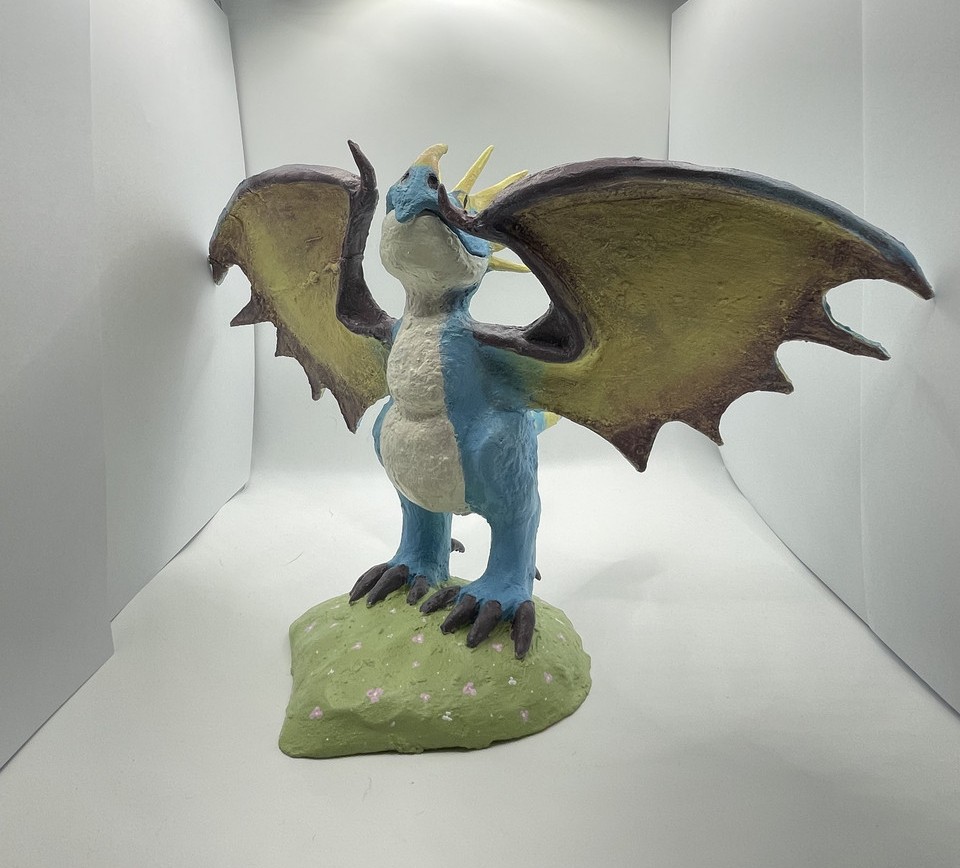
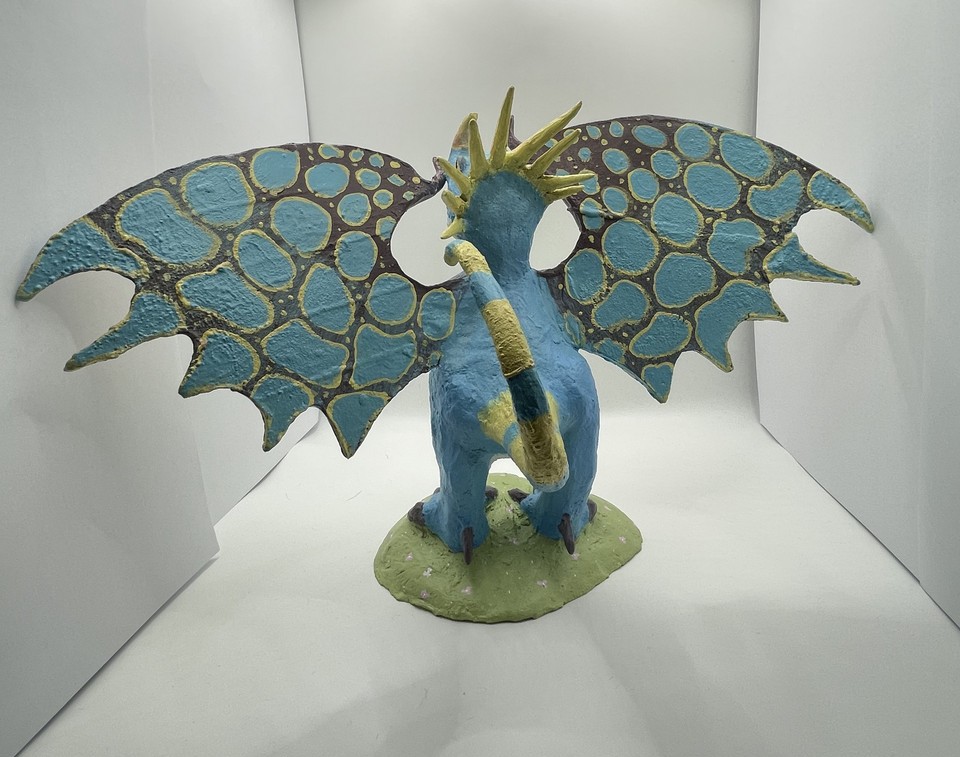
Mackenzie Ford, Deadly Nadder Dragon, 2025. Ceramic, 13” x 7″ x 8.” Huntington Beach High School, CA.
Artist Statement: “While creating this artwork I was thinking of my favorite childhood cartoon, How to Train Your Dragon. I decided to recreate one of my favorite characters in the best way I knew how, through sculpting with ceramic clay. I spent time drawing out plans on how to make each piece of the dragon, comparing my drawing to images from the movie, then sculpting and comparing to my drawing. I made the body out of a pinch pot, used slabs for the wings, and hand sculpted the face, legs, and smaller details. After the first firing, one of the wings broke, so I remade some of the left wing out of oven bake clay and attached it with epoxy glue. I had to mix most of the colors of the dragon to get the perfect shade of blue and purple, I was constantly referencing a color chart to make sure the color turn out how I wanted it too.”
Joy Fuller
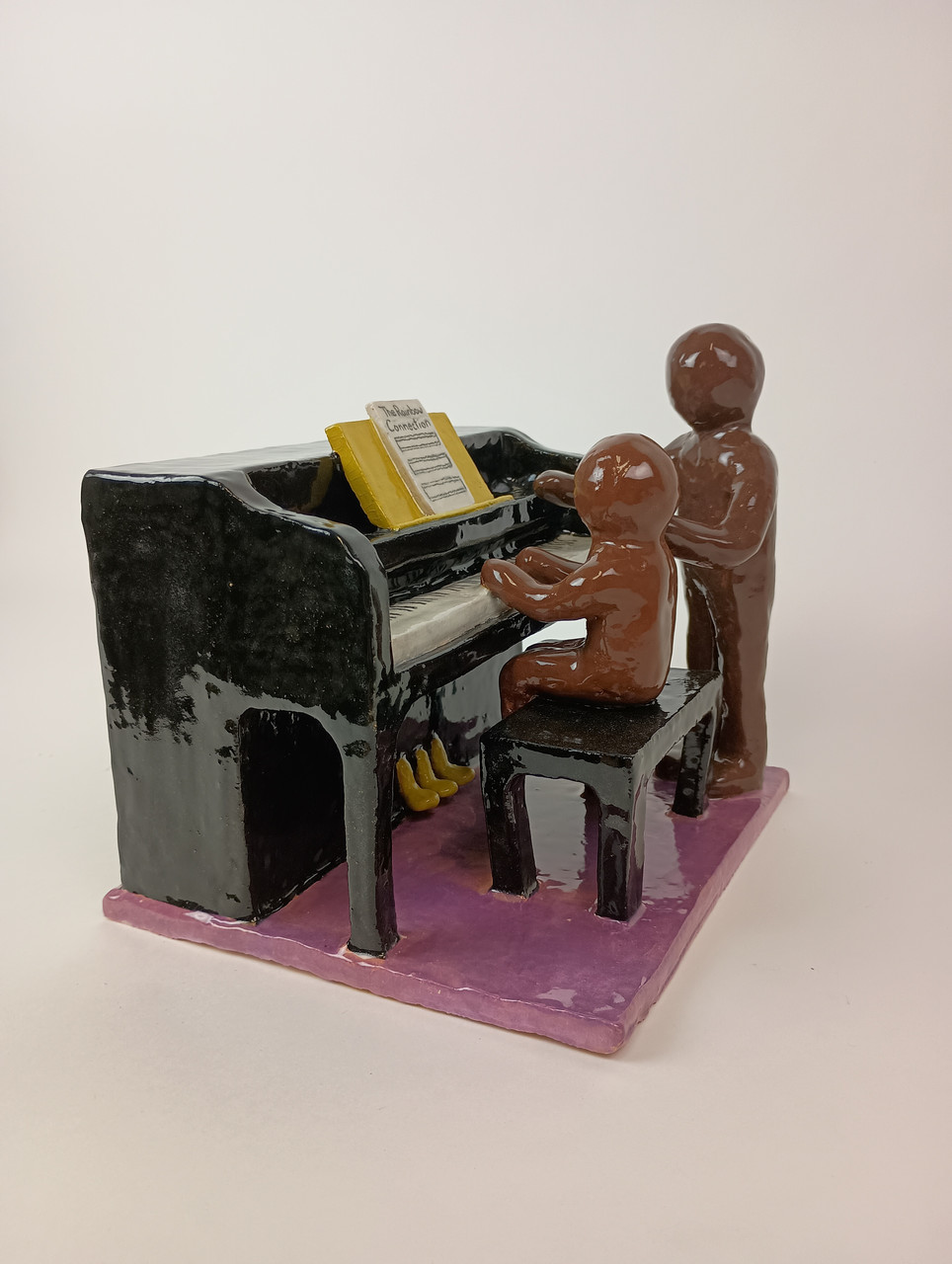
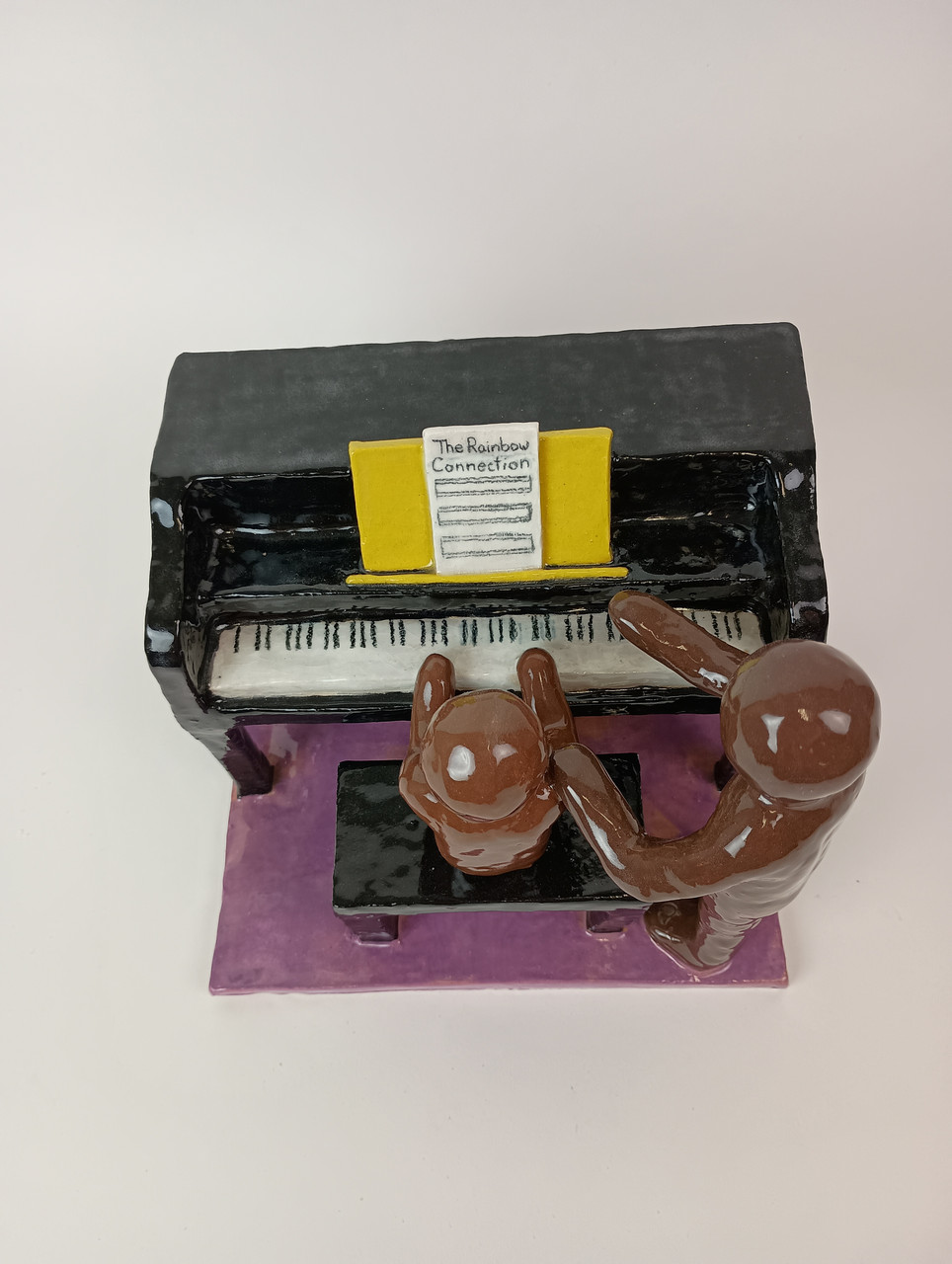
Joy Fuller, Playing Piano, 2026. Ceramic, underglaze, clear glaze, 7.5” x 6.5″ x 7.” Dobson High School, AZ.
Artist Statement: “This piece is part of a larger collection that was created for my Art Seal and AP 3-D Art submissions. When it came to research, I took photos from multiple angles of my family’s piano at home. The people and the piano are all hollowed out to speed up the drying process and prevent cracks, the whole piece sits on a clay slab to keep the pieces stable and in place. I had to be very careful when adding the pedals, but I’m glad I did because they make it look much more complete! The skin tones were two out of eight that I spent a fair amount of time custom mixing in order to get a good variety. I mixed teddy bear brown with yellow to get a color closer to a gold for the stand and pedals, and I did multiple coats of black to ensure the piano was a solid color. When it came to the writing and the sharp/flat keys, Mrs. Foust allowed me to use an underglaze pencil, which was so helpful. When it came to underglazing and clear glazing my piece, I checked every nook and cranny I could to make sure I glazed everything as thoroughly as possible.
This piece is based off of my personal experience learning how to play piano as a child. The bond between teacher and student is unique. As the teacher helps the student improve, they are also helping them express themselves through a new medium. In doing so, the teacher and student tend to understand each other very well. I should know, I’m still close to my piano teacher.”
Luke Ghammachi
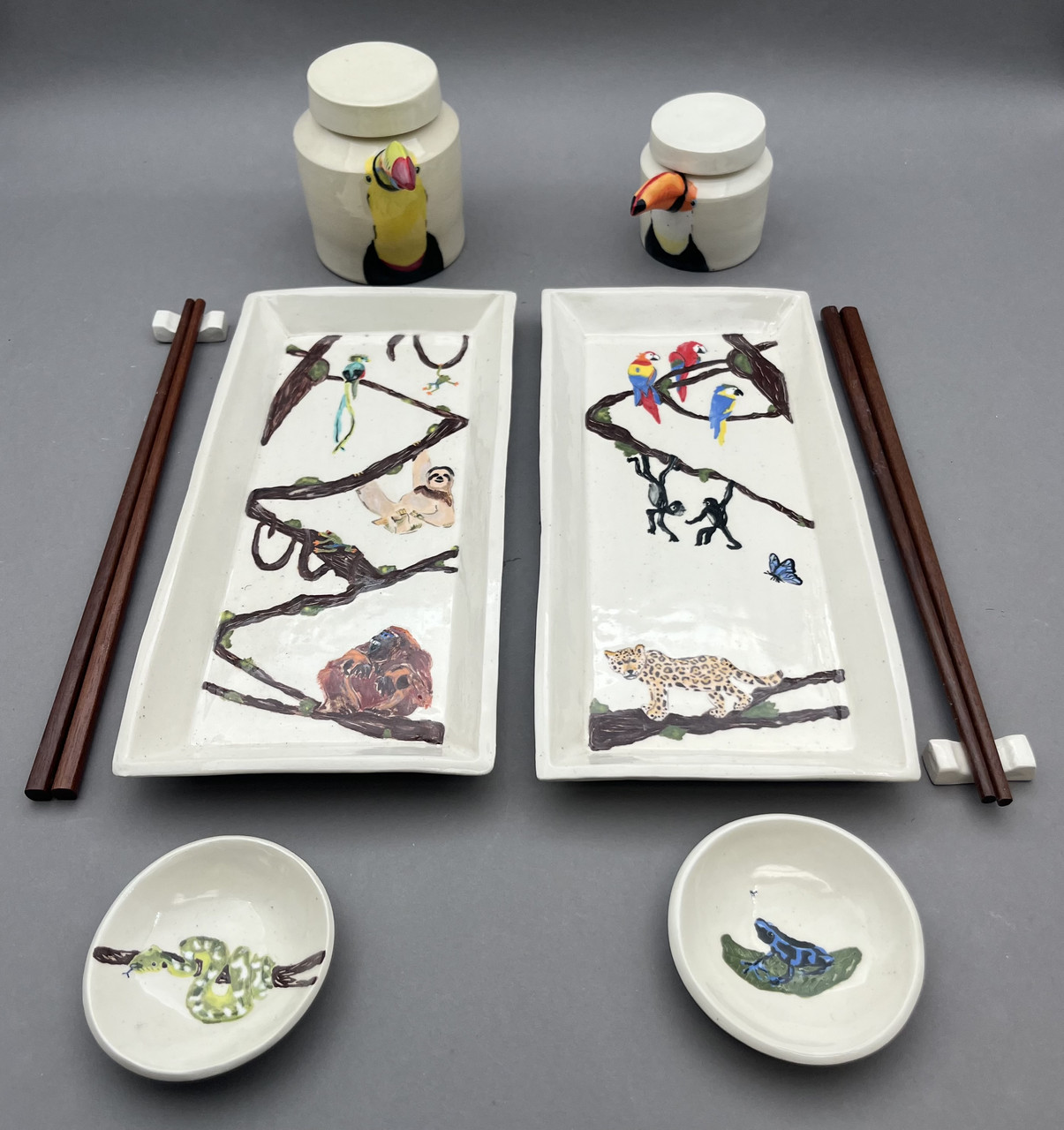
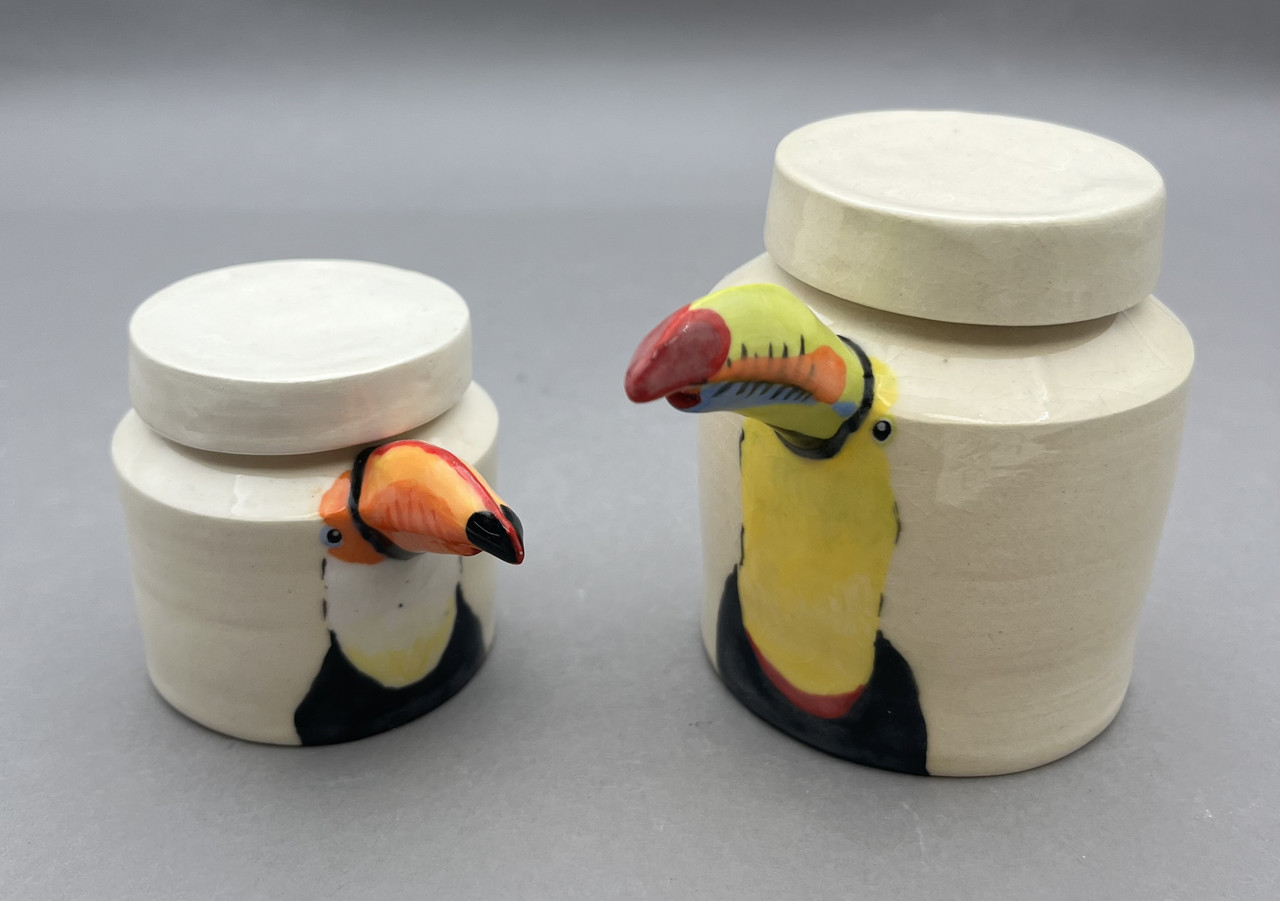
Luke Ghammachi, Tropical Rainforest Sushi Set, 2026. Earthenware clay, underglaze, gloss glaze, 15” x 10″ x 4.5.” Chadwick High School, CA.
Artist Statement: “My ceramic sushi set emphasizes the biodiversity of a tropical rainforest ecosystem through functional, everyday objects.
I incorporated thrown, hand-built, and structural elements into this set to create two sushi plates, two soy sauce bowls, chopstick holders, and a rice vinegar and soy sauce pourer. Each component of this set is inspired by rainforest flora and fauna, with emphasis on vibrant colors and intricate design that mirrors the complexity of these environments. The soy sauce and rice vinegar pourers have toucan beak spouts, acting to both enhance the form/theme and functionality of the set.
This work brings awareness to the natural world by highlighting biodiversity on an everyday object used for eating. It also helps to convey the beauty and fragility of biodiverse ecosystems like a tropical rainforest, creating appreciation for ecosystems that people may not think about in their everyday lives.”
Abigail Gharst
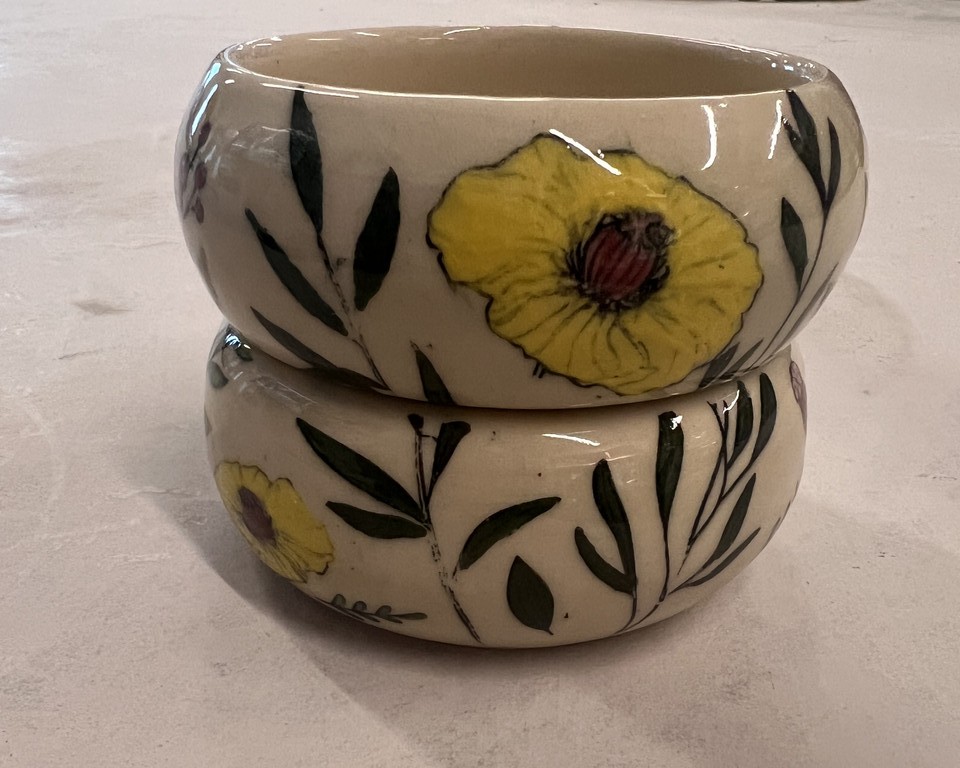
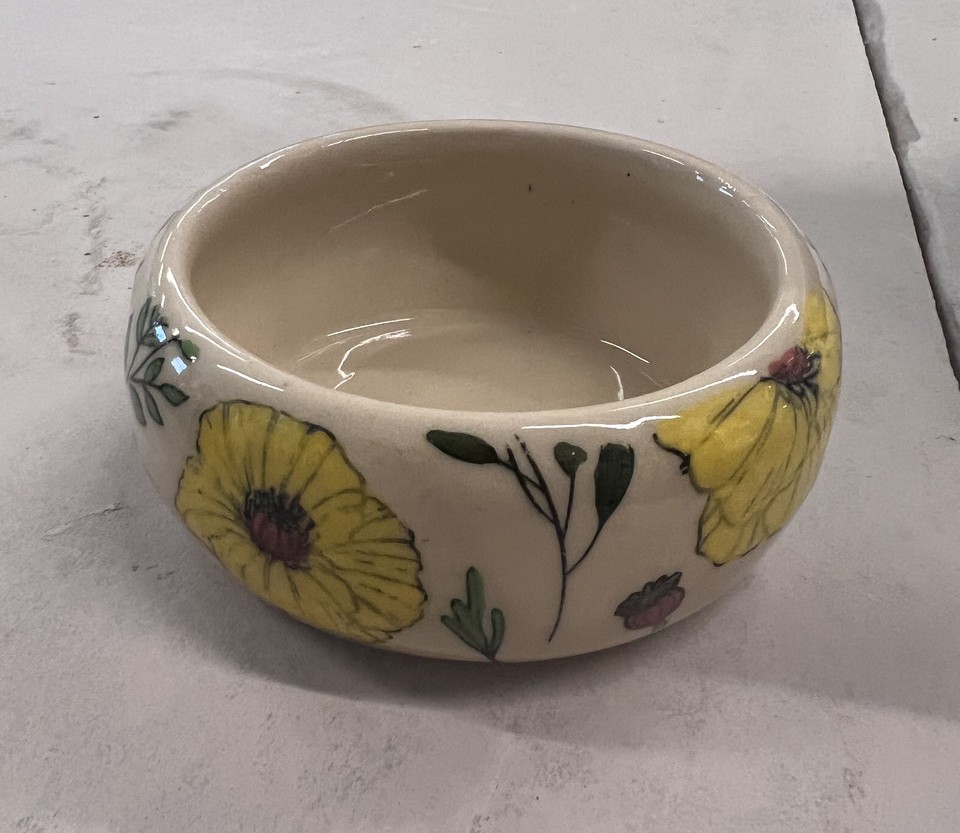
Abigail Gharst, Nature Bowls, 2025. Clay and glaze, 5” x 5″ x 2.” Mountainside High School, OR.
Artist Statement: “I wanted to create a fluid movement on my bowls, allowing them to match up and create a continuous picture of nature. I used underglaze and image transfer techniques to create the designs on my bowls.”
Emily Graves
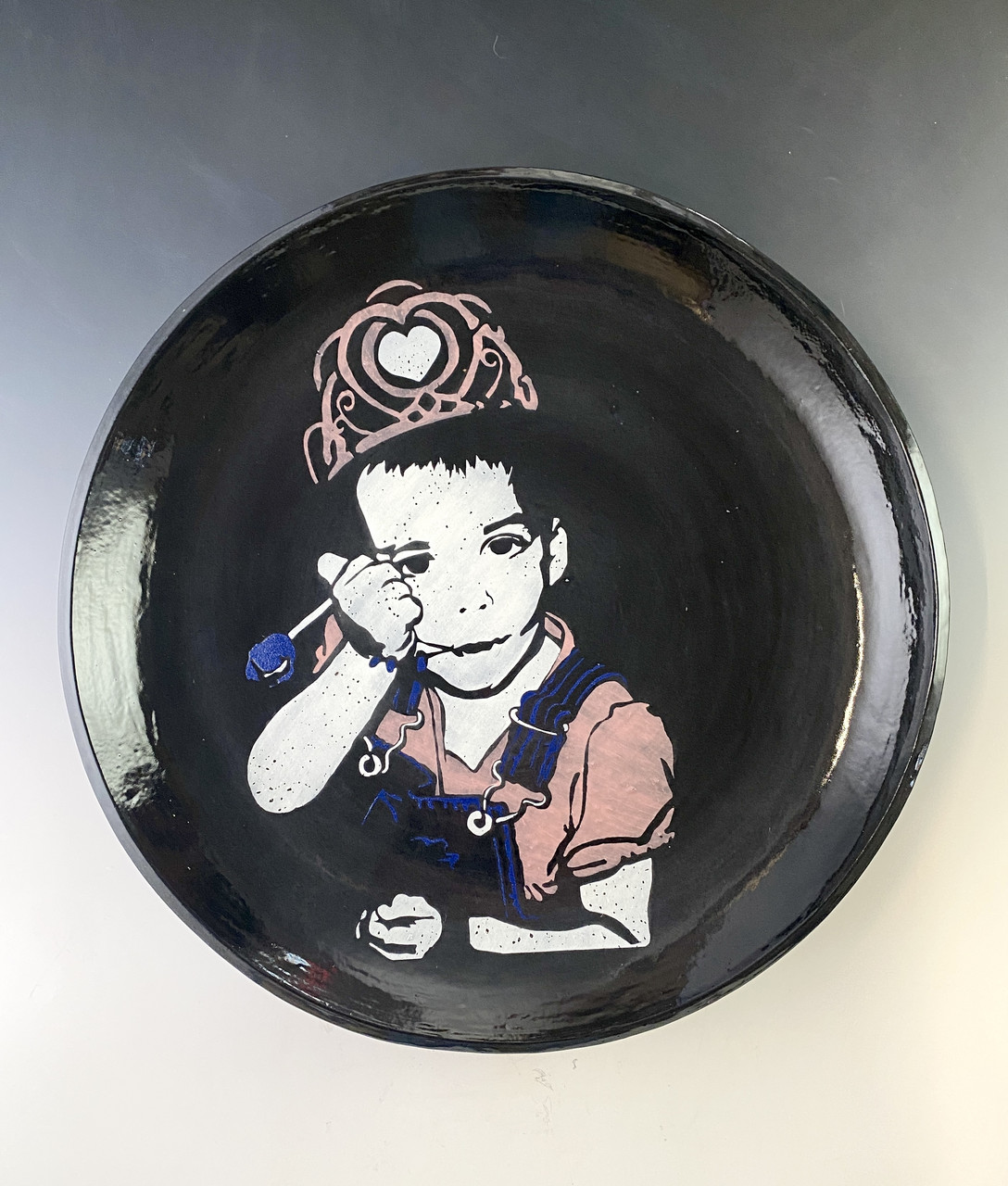
Emily Graves, Div[a]ine, 2026. Stoneware with Underglazes and Clear Gloss, 3” x 20″ x 20.” Laguna Creek High School, CA.
Artist Statement: “I have spent the last four years of high school dedicating almost every elective class spot I have to ceramics. I work at a small arts studio teaching children’s pottery classes, and I volunteer with the Elk Grove Festival of the Arts each year to help bring the arts to the community. I am planning on attending a four-year university to work towards a Bachelors in Arts with a focus in Ceramics, with the hope of either becoming a high school arts teacher or a full time production potter. I am so grateful to have the opportunity and the resources to be able to make a career and a life out of the thing I love so dearly and I cannot wait to get started.
Div[a]ine: I miss the carefree little kid I used to be. I can only aspire to be as happy as a four year old on her birthday with three forms of sugar, a birthday crown, and little blue overalls. Using digital design media, I was able to map and cut out three blocks of color in this image of a younger, happier version of myself. The differences in glaze textures, the pinhole white, sandpaper-feeling blue, and bubbly pink, were complete accidents but create much more visual interest in the color-block style of image.”
Xiang (Ria) Han
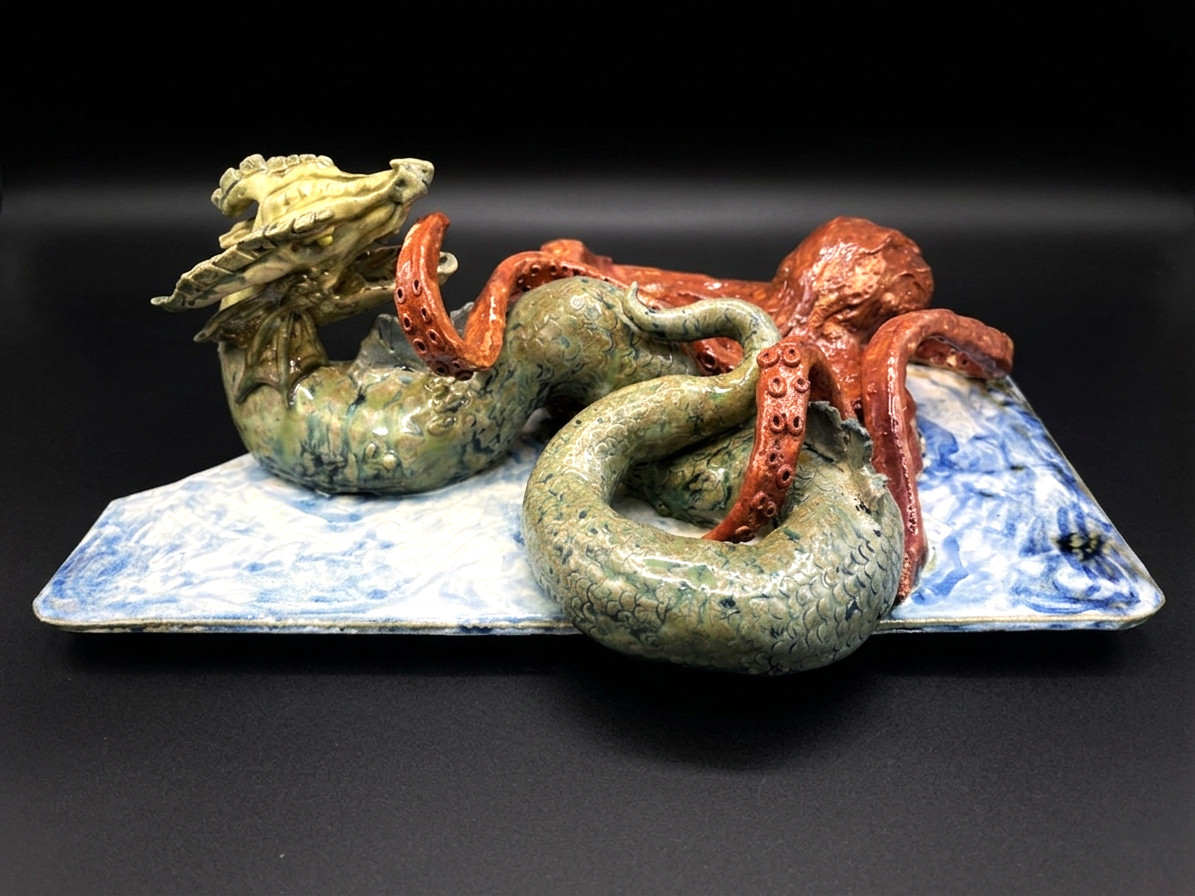
Xiang (Ria) Han, Leviathan and Kraken, 2026. Ceramics clay with liquid glaze (glass), 16.5” x 6″ x 12.15.” California School Of The Arts, CA.
Artist Statement: “My vision is about the idea that both God and Mother Nature gently hold everything in the world. I sculpted the mythical creatures called the Leviathan and Kraken as symbols of something powerful and beyond human control. Instead of making them purely fight, I intertwined their forms so it feels more like a performance, like they are part of the same force, rather than enemies. I worked with ceramics for this piece because it let me shape the movement in a very natural, beautiful way. The gestures of the creatures were shaped in a way to symbolize the currents of the ocean; and the gloss adds onto the piece by making a glow. (I glazed the Leviathan and sea floor by swirling my paint brush over the fired clay atleast 4 times. The octopus looks and feels more matte to the touch, and this is because I want the octopus’s skin to appear more rough. To achieve the “rough” look, I painted the Kraken with a firm old paintbrush two times.) My idea that helped me develop this piece is that no matter where you are, you’re being held by nature and something spiritual.”
McKenna Hawley
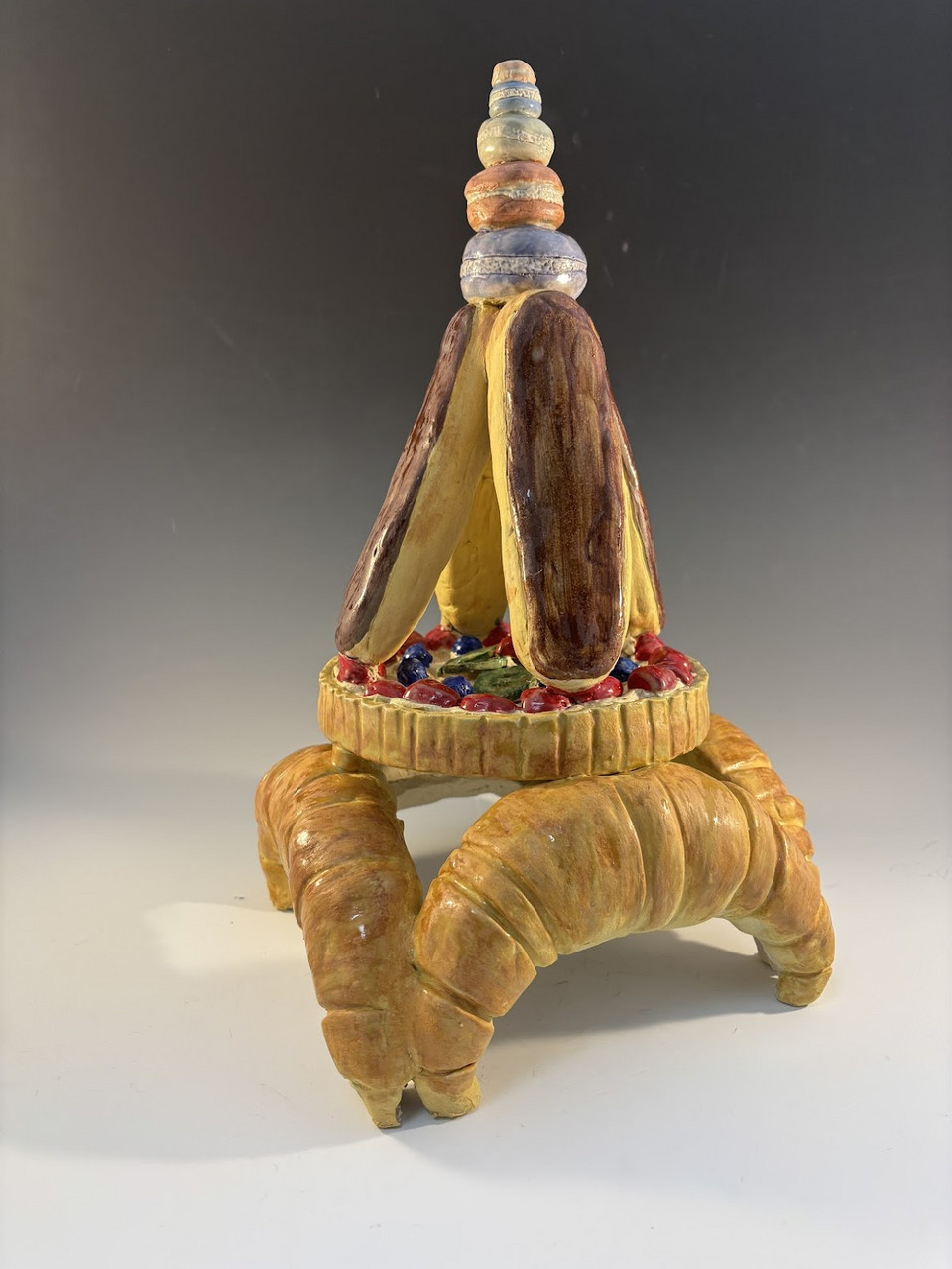
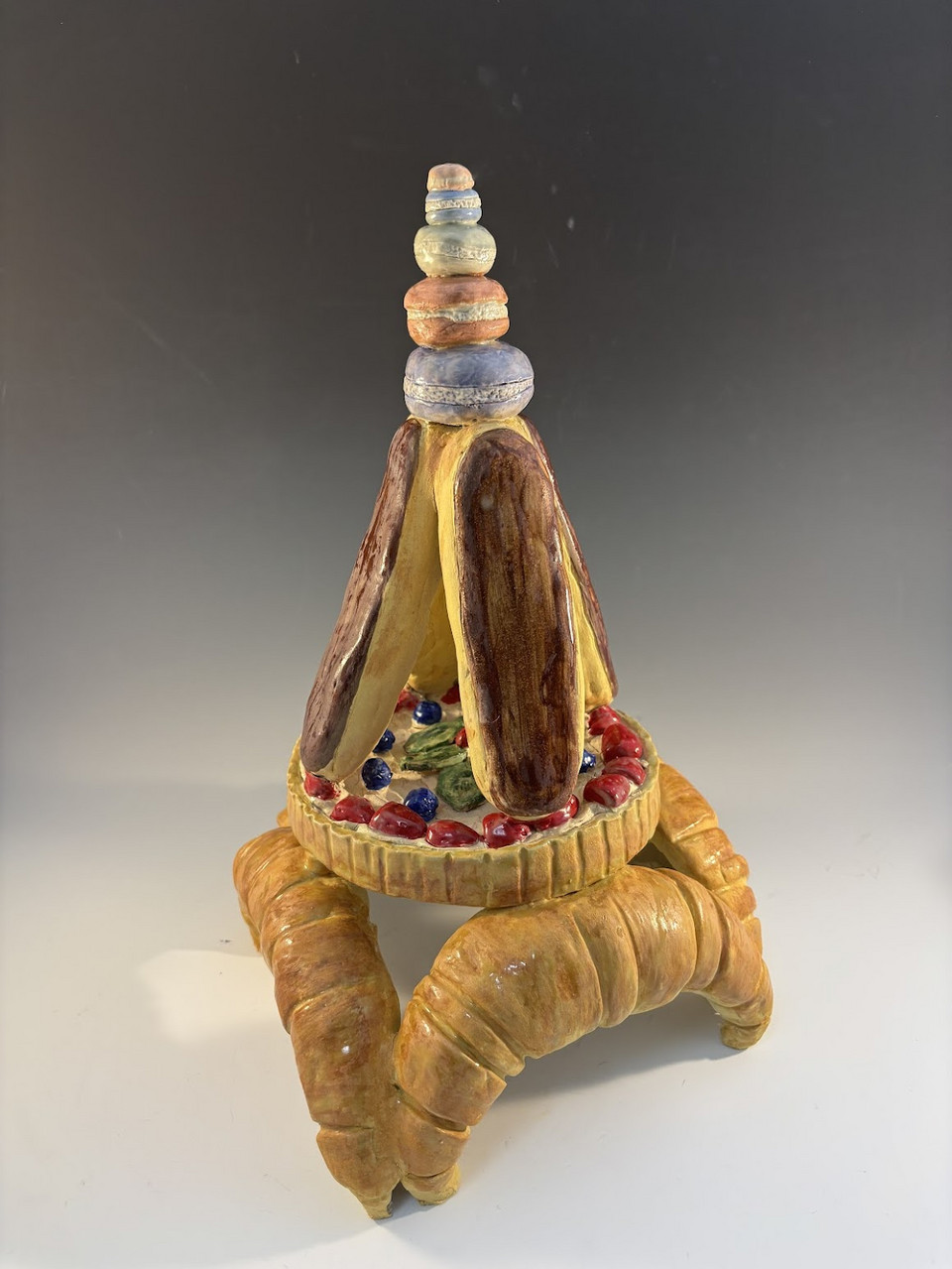
McKenna Hawley, Tower of Delights, 2026. Stoneware Clay, Underglaze, 27” x 16″ x 16.” Trinity Preparatory School, FL.
Artist Statement: “My vision for this piece was to explore how food can represent cultural identity by recreating a recognizable monument using desserts that are strongly tied to a specific place. I wanted the structure to still feel like architecture, but also clearly look like food, so there was a balance between realism and exaggeration. I wanted people to feel like they wanted to visit this place but also eat the food because it looks so delicious. I started by building a strong base and forming the tower legs using coil and slab techniques shaped like croissants, then added a textured platform with fruit and stacked macaron-like shapes on top. I went through a lot of experimentation and revision to fix balance issues and make sure the structure wouldn’t collapse while also improving the details. I used glaze with layered browns, yellows, and brighter colors to create a realistic baked look and highlight the center. I also researched the Eiffel Tower and French pastries to keep it recognizable, with the goal of showing how food and architecture can reflect culture in a creative way.”
Jazmine Hernandez
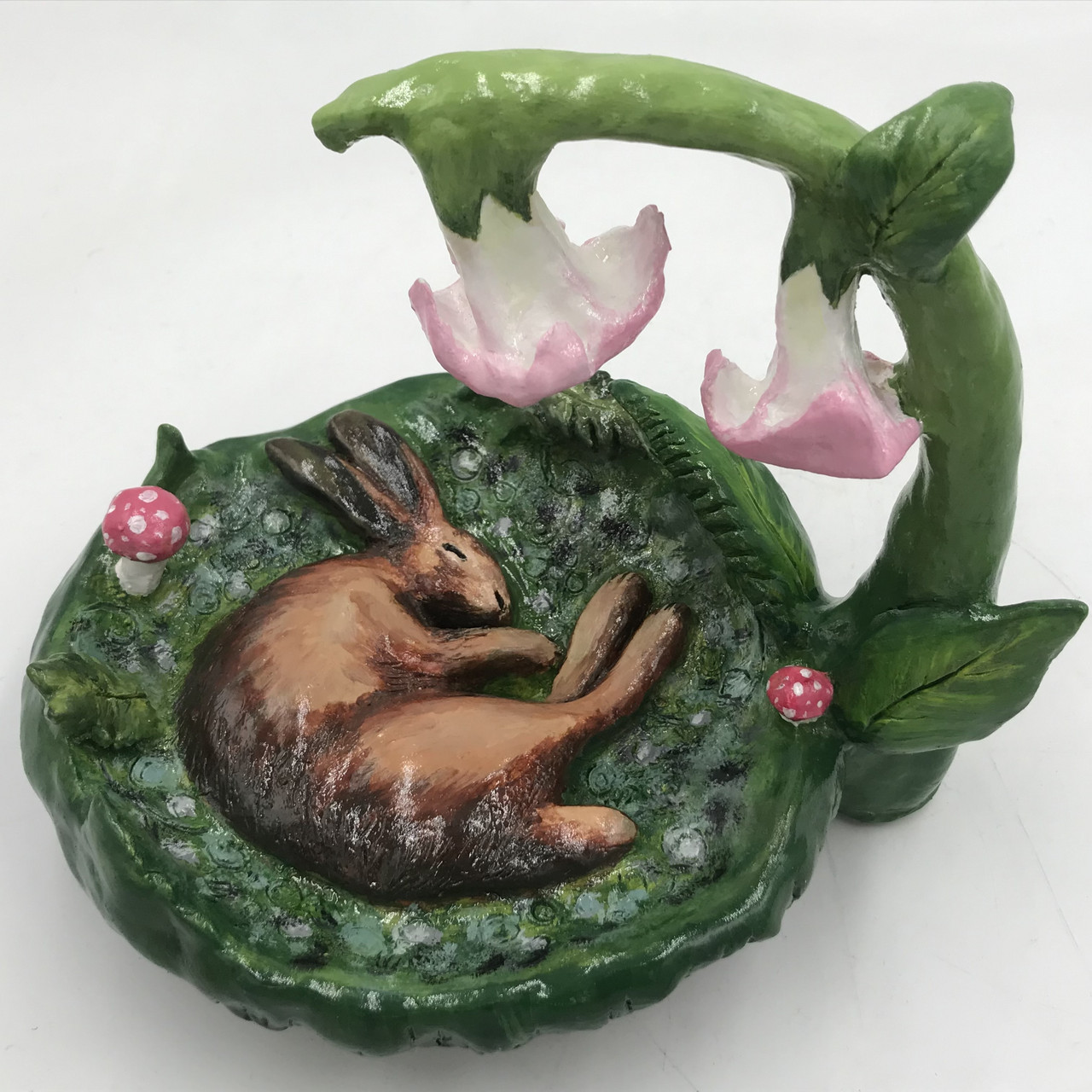
Jazmine Hernandez, The Still Rabbit, 2026. Ceramic and Acrylic, 7” x 7″ x 5.5” Cheyenne High School, NV.
Artist Statement: “This piece is meant to represent finding comfort in your own despair, and how hard it can be to get out of depressive periods of your life. I wanted this piece to have a seemingly innocent appearance as it can sometimes be difficult to tell when someone is struggling, but also with subtle hints at an issue present. The flowers hanging over the piece are angel trumpets and are poisonous. They act as enablers in your life that push for an endless cycle of harmful behavior. The rabbit lays still in a sunken rabbit hole where it appears peaceful but in reality it’s hopeless. The rabbit is surrounded by growing mold that has appeared due to the time it’s spent there and to represent how its lifestyle has become toxic. This piece was made with ceramic clay and painted with acrylic paint. With acrylic paint I was able to make smaller details and texture in the piece.”
Nina Hidajat
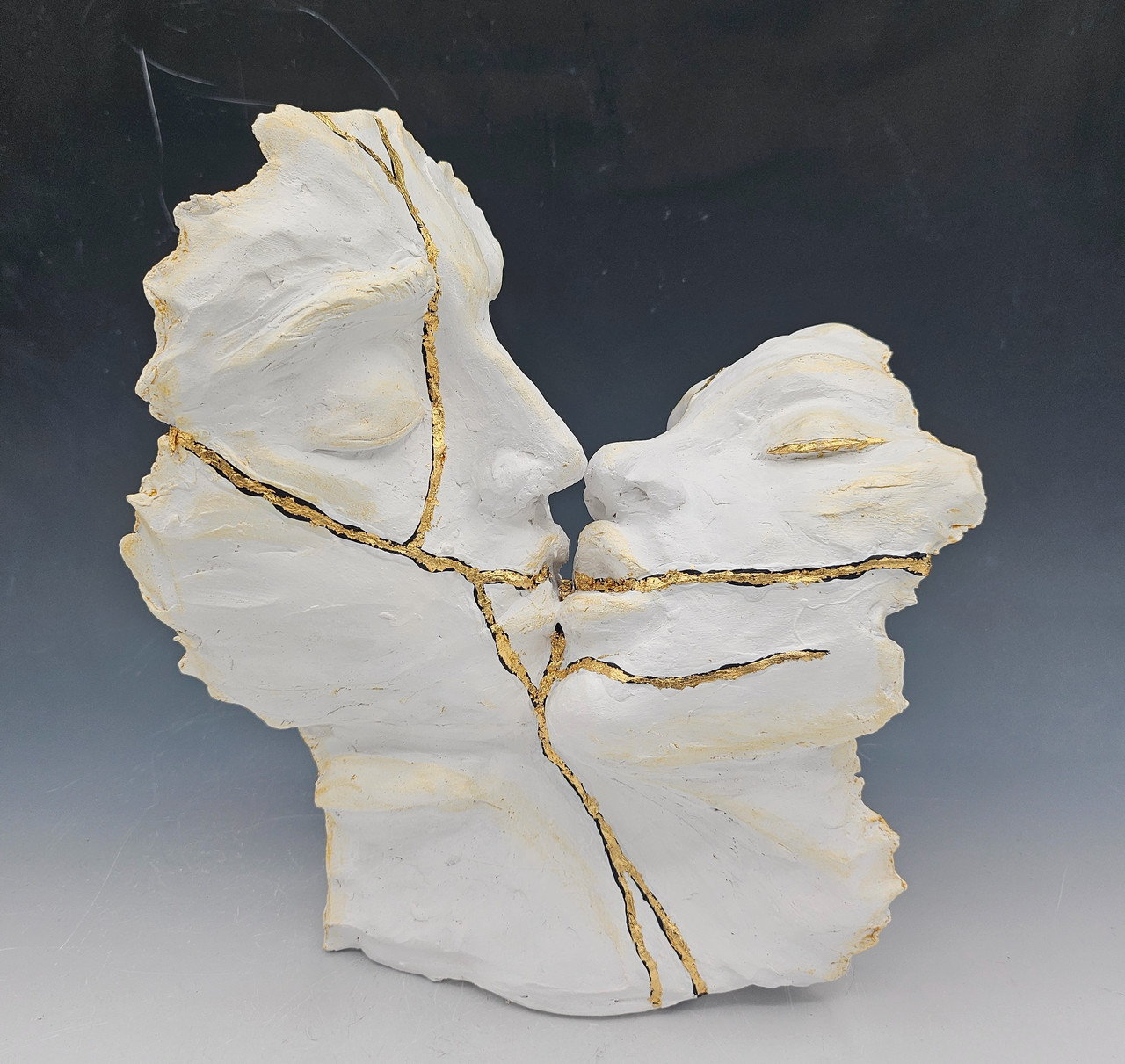
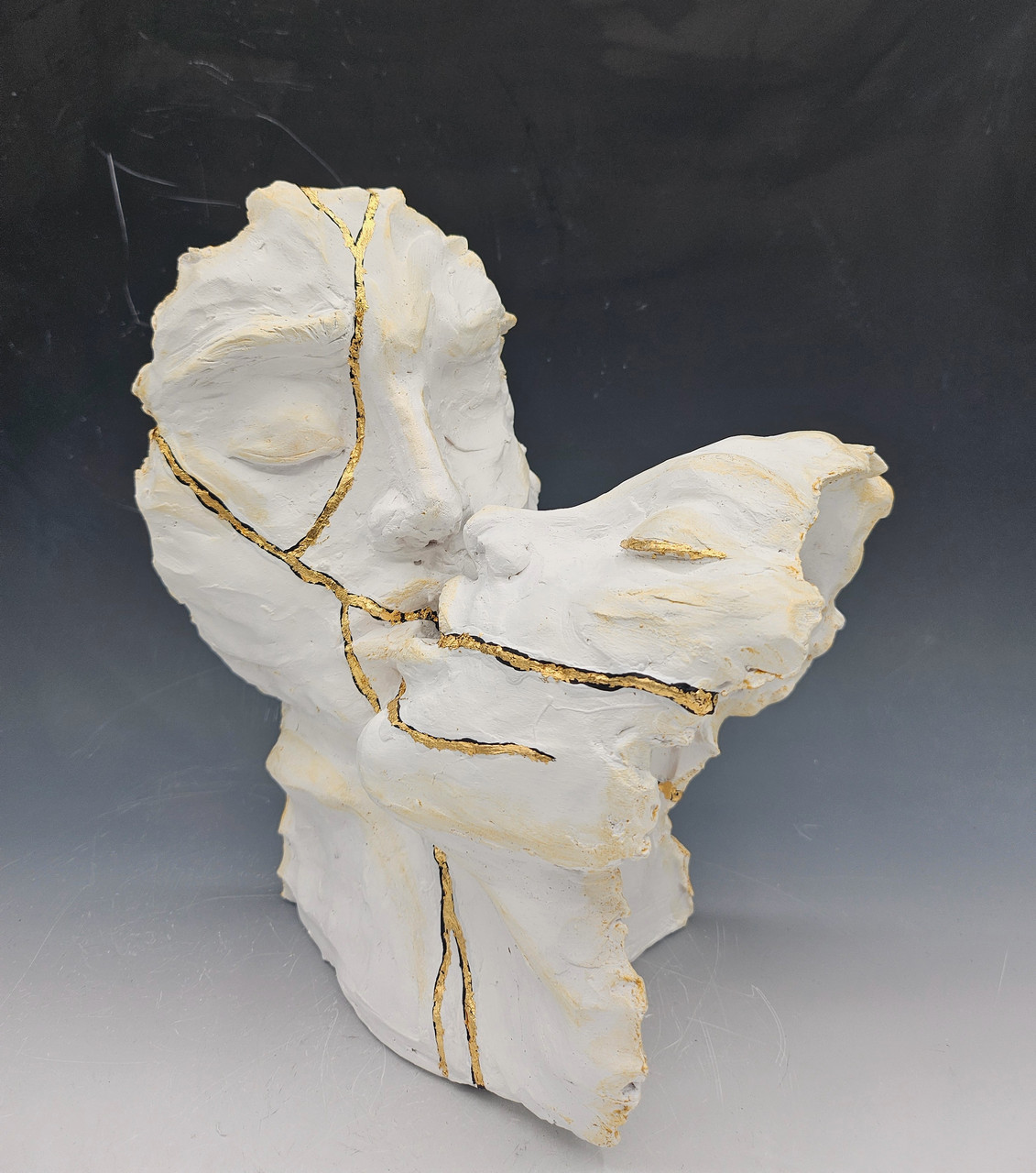
Nina Hidajat, Passion, 2025. Clay, acrylic paint, gold leaf, 10” x 9″ x 6.” Rim of the World High School, CA.
Artist Statement: “For my sculpture I wanted to capture how sometimes love and passion is romanticized and can turn destructive and obsessive. I symbolized this through the golden cracks.”
Luke Hinton
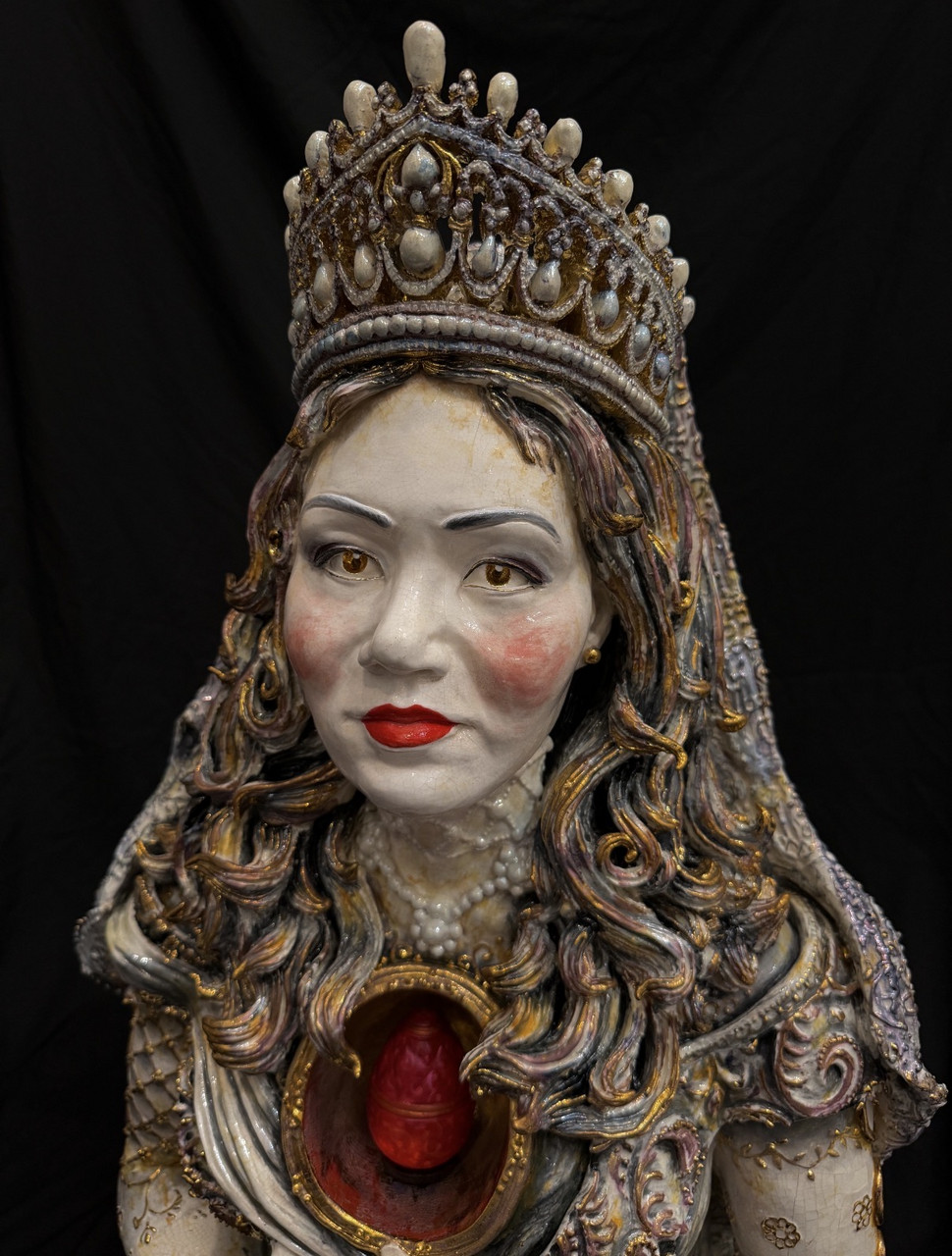
Luke Hinton, Mother’s Egg, 2026. Ceramic clay, glaze, 27” x 19″ x 16.”Lafayette High School, MO.
Artist Statement: “I was fascinated by the intricate designs of the Faberge eggs and the beautiful messages they carry. I used my mother as a model because Russian Emperor Nicholas II gifted his mother and wife Fabergé eggs every Easter. I sculpted her wearing the clothing and jewelry of Nicholas’ wife, Alexandra Feodorovna, and I slipped trailed designs of different Fabergé eggs onto her body. The sculpture Mother’s Egg is a gift to my own mother, just as Nicholas II gifted his mother the precious eggs.”
Nadeen Jaridly
Nadeen Jaridly, Plated History, 2025. Ceramic, glaze, 14” x 15″ x 1.5.” El Dorado High School, CA.
Artist Statement: “My piece Plated History is composed of ceramic thrown plates in varying sizes, each with their own uniquely olive branches and stems. Every letter was carefully hand painted using an underglaze, creating a consistent theme across the surfaces of each plate. The olive branches represent the deep rooted history of Palestinian olive groves in Gaza and throughout the West Bank. The olive branches also embody the resilience and resistance of Palestinians. I created this piece to bring awareness to the ongoing genocide in Gaza, while also honoring the strength, persistence, and humanity of the Palestinian people.”
Iggy Larkin
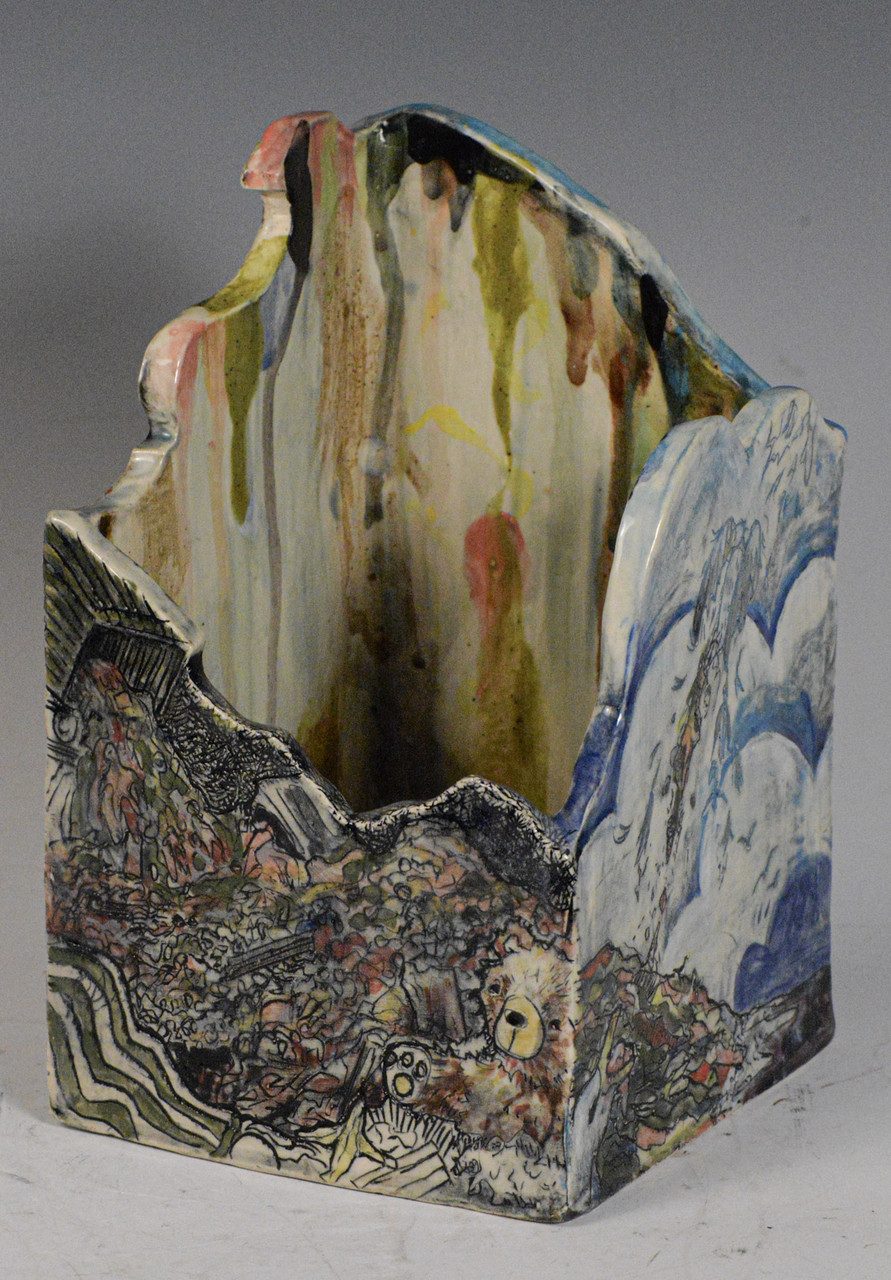
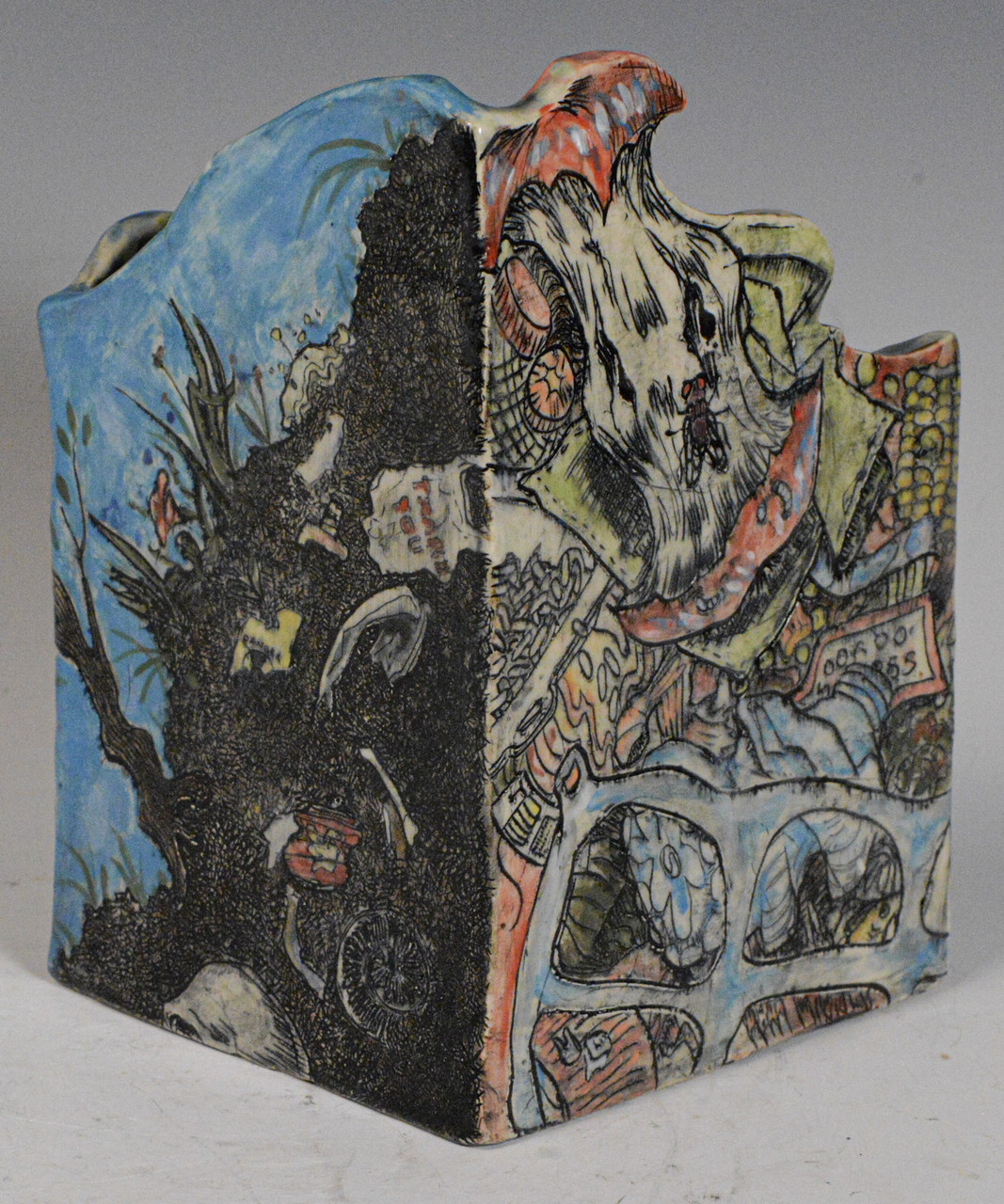
Iggy Larkin, Signs of Life , 2025. White clay with underglazes and glazes, 25 cm x 14 cm x 14 cm. South Carolina Governor’s School for the Arts and Humanities, SC.
Artist Statement: “I used Mishima technique and underglazes on a slab built vessel to create the imagery of garbage in 4 different consecutive contexts: garbage in the home, landfills, fashion waste improperly disposed of on beaches, and old trash mixed in with natural parts of the environment. This is meant to consider human impact on the environment and the fact that regardless of the value we place on these objects, they will outlast us as the primary signs of our lives and existence. I used a full color palette and crowded composition to convey that it is a collective effect, not the result of a single action. I used textured glazes on the interior of the vessel to look like mold growth and waste on the inside of a dumpster and show beauty in things that have been purposefully ignored.”
Sophia Mayer
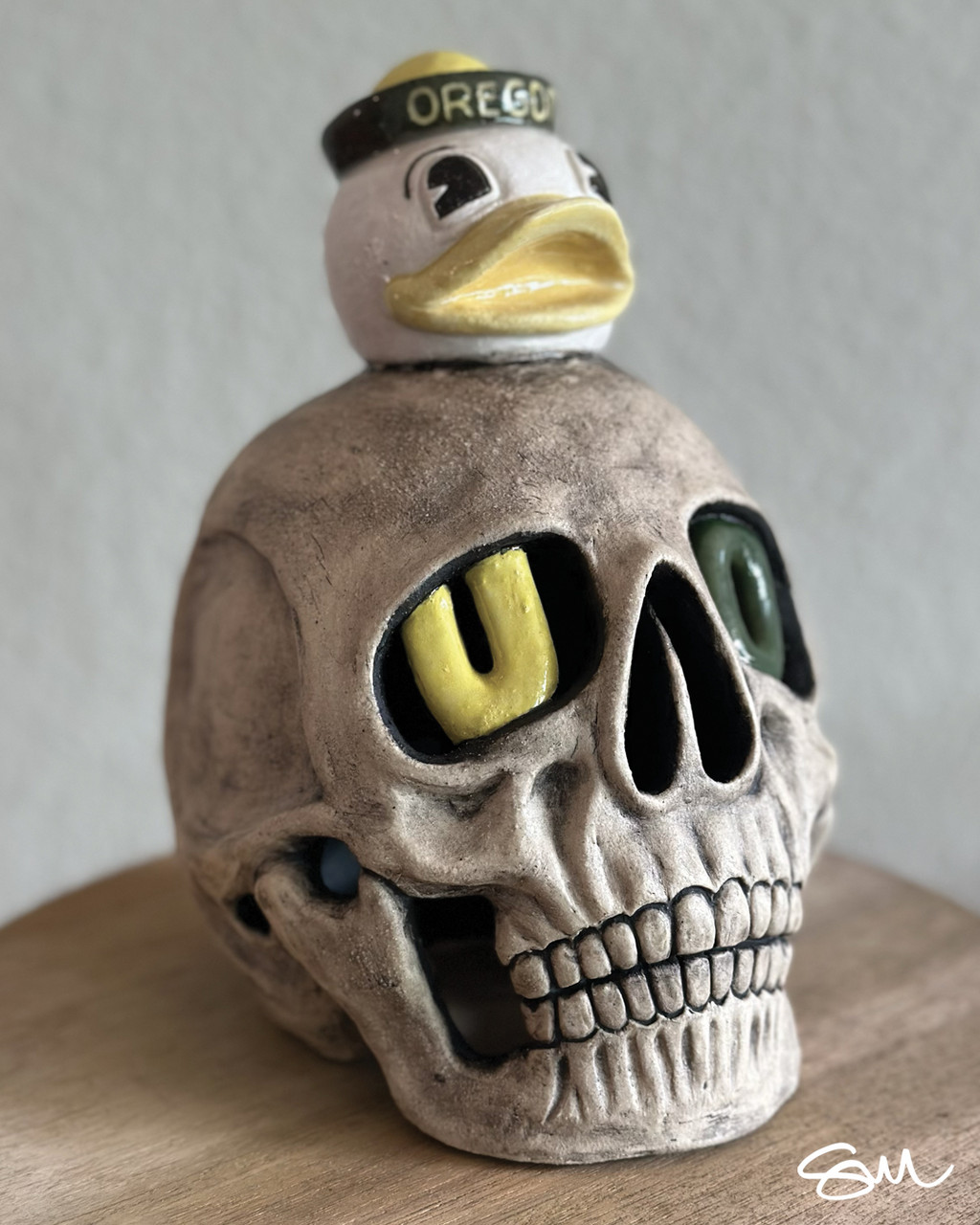
Sophia Mayer, Grateful Duck , 2025. Stoneware clay, black stain, underglaze, 4″ x 7″ x 5.” Dana Hills High School, CA.
Artist Statement: “This piece is dedicated to my older brother and hold deep personal significance. The assignment in my ceramics class was for, “Dia de los muertos” either create skull or pumpkin with 3 symbols included. So I drew inspiration from the same reoccurring skull image on my Pinterest board and the Grateful Dead theme at the Aztec Stadium, this concept felt especially fitting.
I began to coil build the head of the skull then smoothened it out into a ball shape on the wheel. Then I started to carve out basic shapes of the eyes, nose, and so much detail into the teeth. The symbols I added were the letters “U” and “O” represent the college and of course the mascot “The Duck” had to be included. When it came time to glaze it my teacher had introduced us into stains, so to get that perfect look I used a black stain only on the head of the skull than under-glazed and painted the eyes and duck to give it some shine.
This is by far one of my favorite and most important piece of art I have created, not only as an expressed outcome of my work but it holds such a deeper meaning behind it for my brother.”
Olivia Mixon
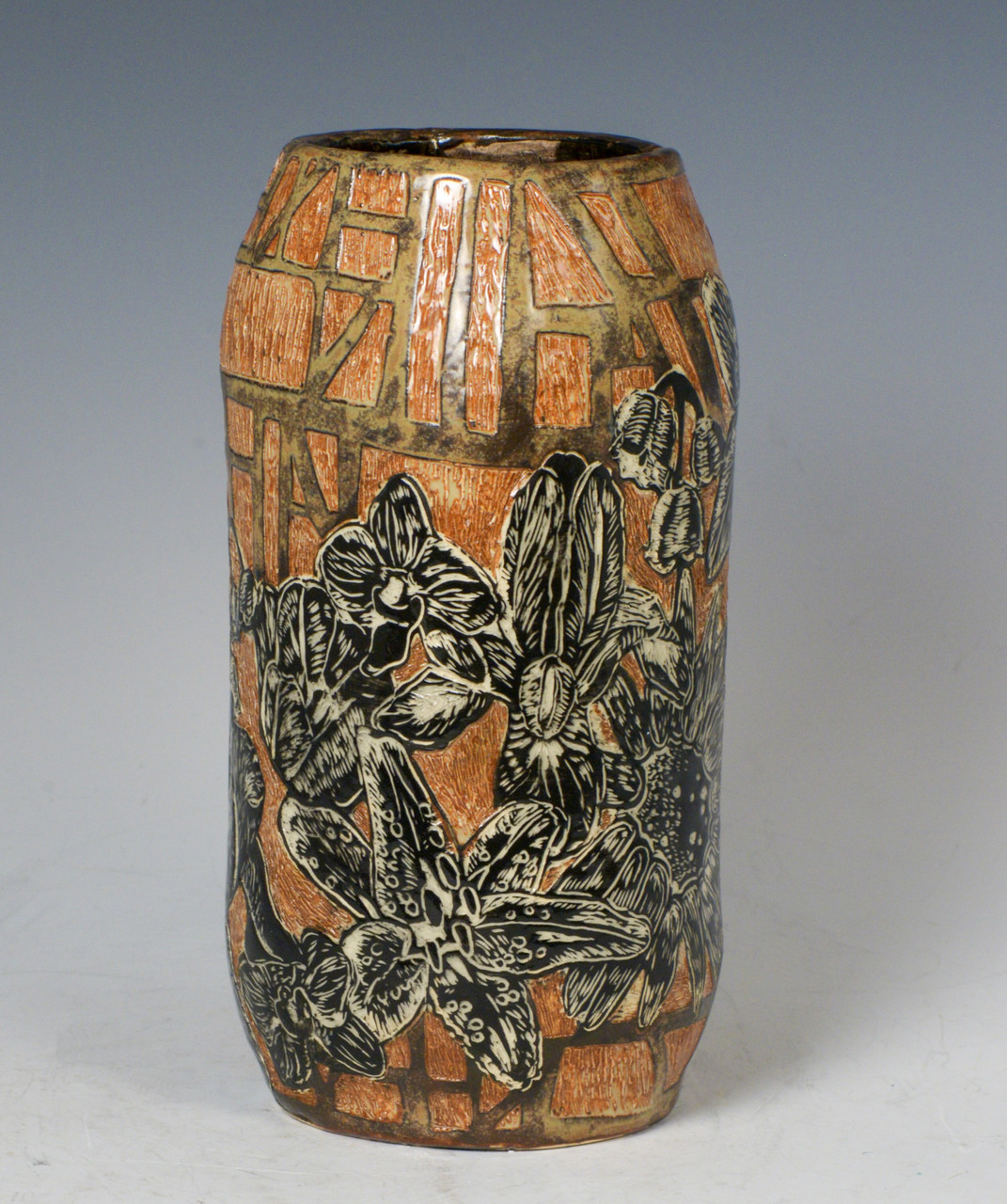
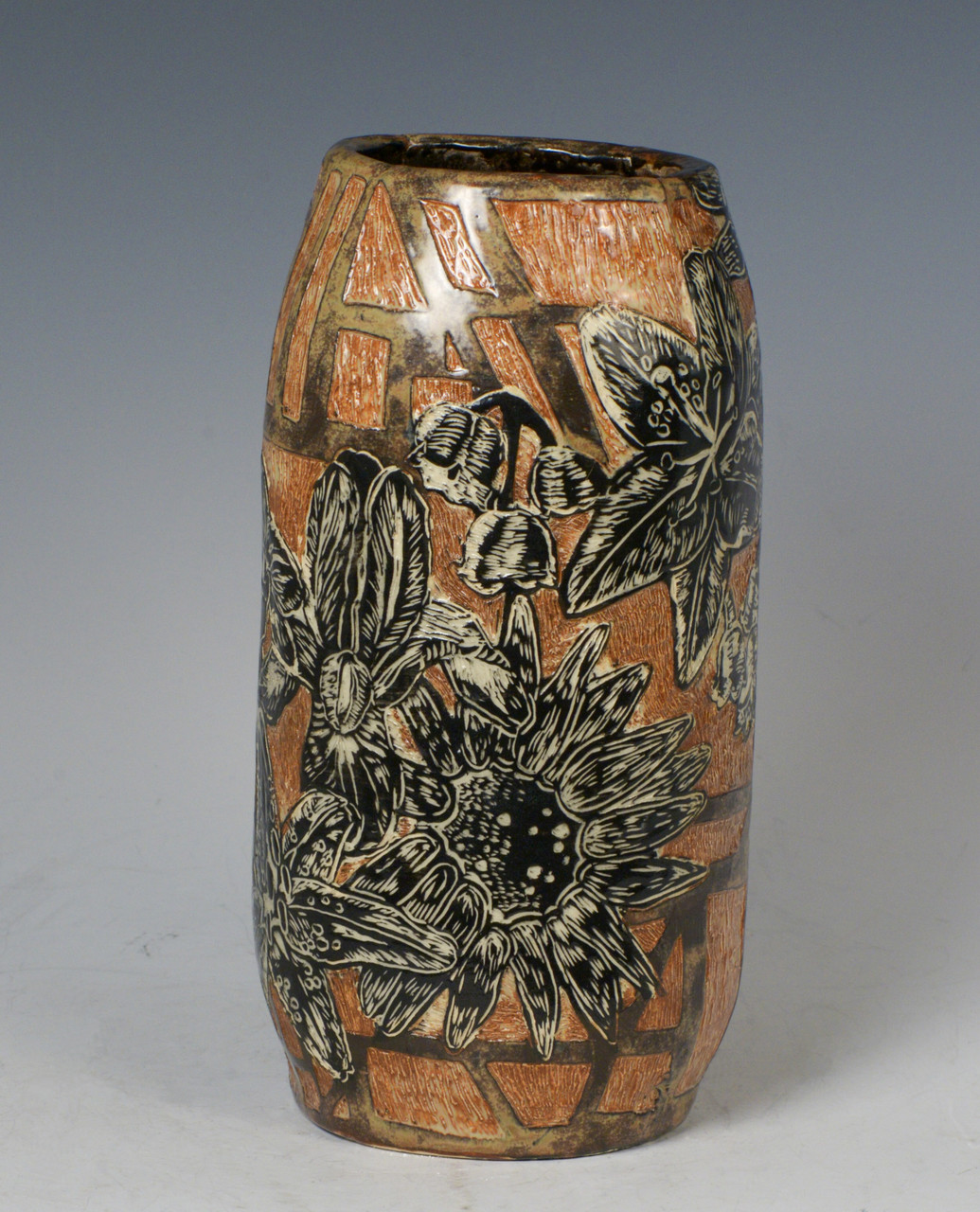
Olivia Mixon, Intertwined Lives , 2025. Stoneware Clay, Black slip, Glaze. South Carolina Governor School of the Arts and Humanities, SC.
Artist Statement: “This vessel’s title is called Intertwined Lives because of my life having a love for florals and also a love for my German culture. The geometric lines are traditional wooden panels that go outside of houses. It is called Fachwerk. The flowers are my family’s favorite flowers to represent my family and what flower they love. The composition is also thought of having the organic shapes and flowers combined with the geometric lines in the background.
I enjoy the look of sgraffito while working. I pull from the qualities of printmaking which is another medium I enjoy working with. I do recurring imagery with family members as well as identity and memory. I am going to continue doing ceramics in college and using sgraffito as my visuals.”
fatima muhumud
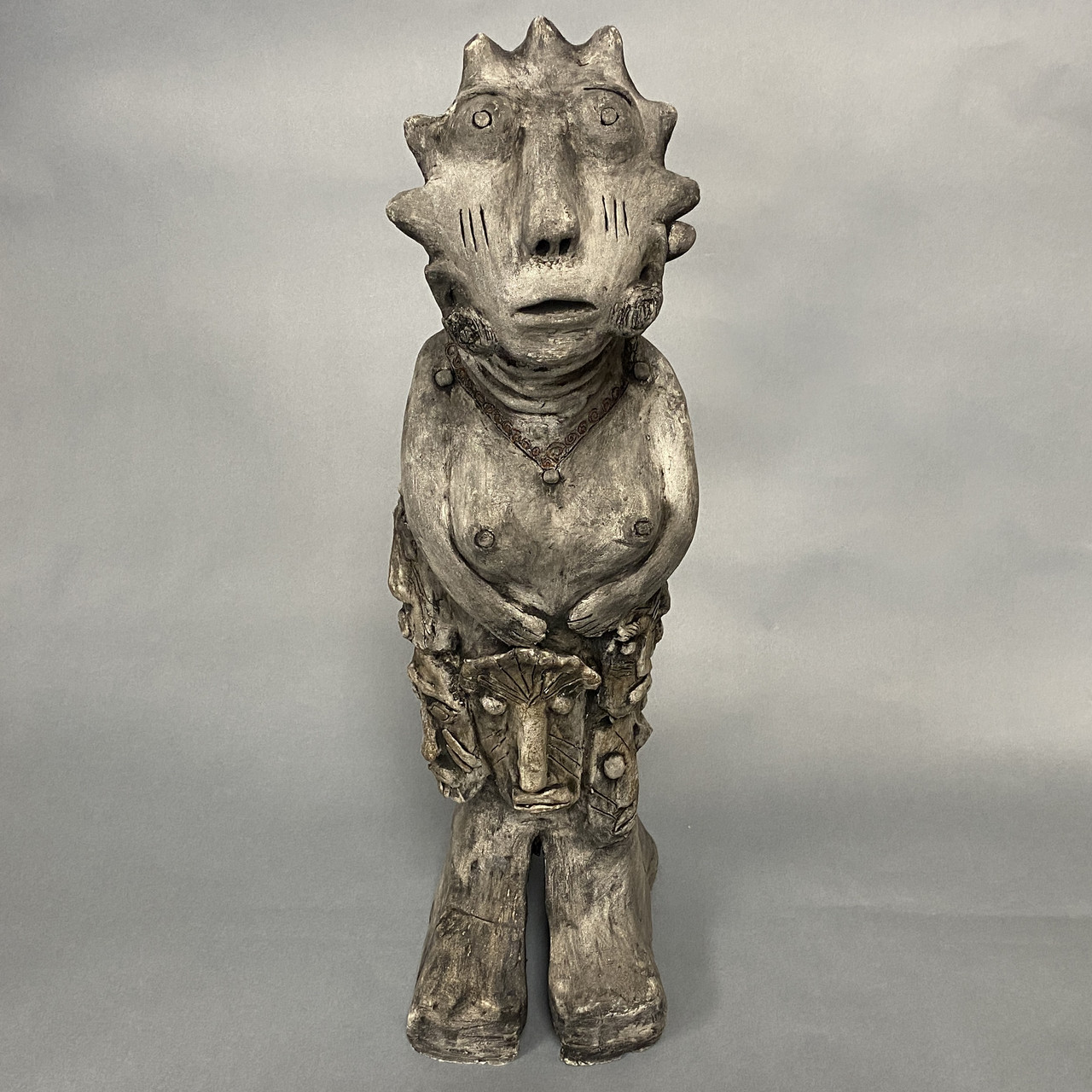
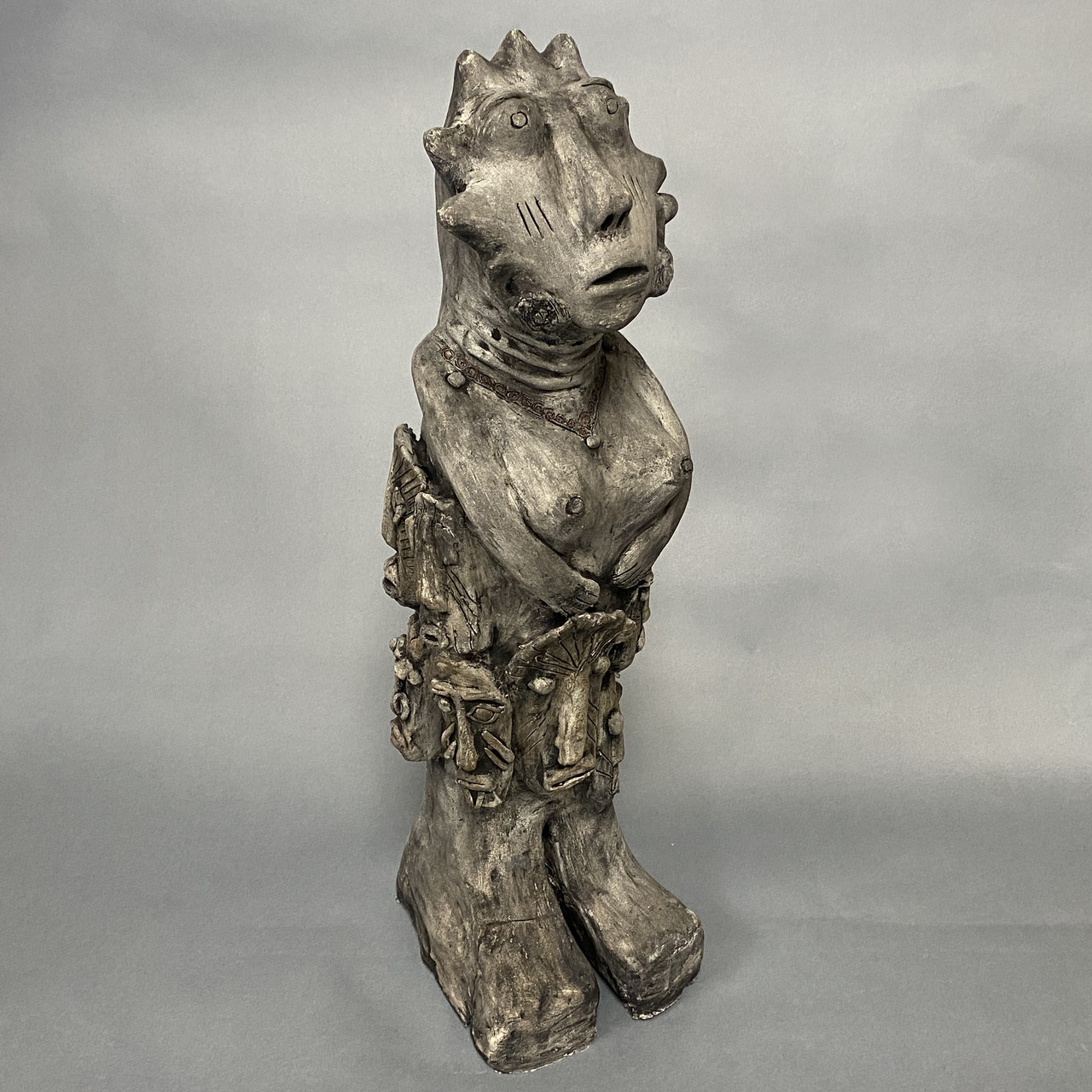
fatima muhumud, Koma , 2025. Clay, acrylic paint, 21″ x 6″ x 7.5.” Liberty High school, OR.
jaslene ortiz-guillen
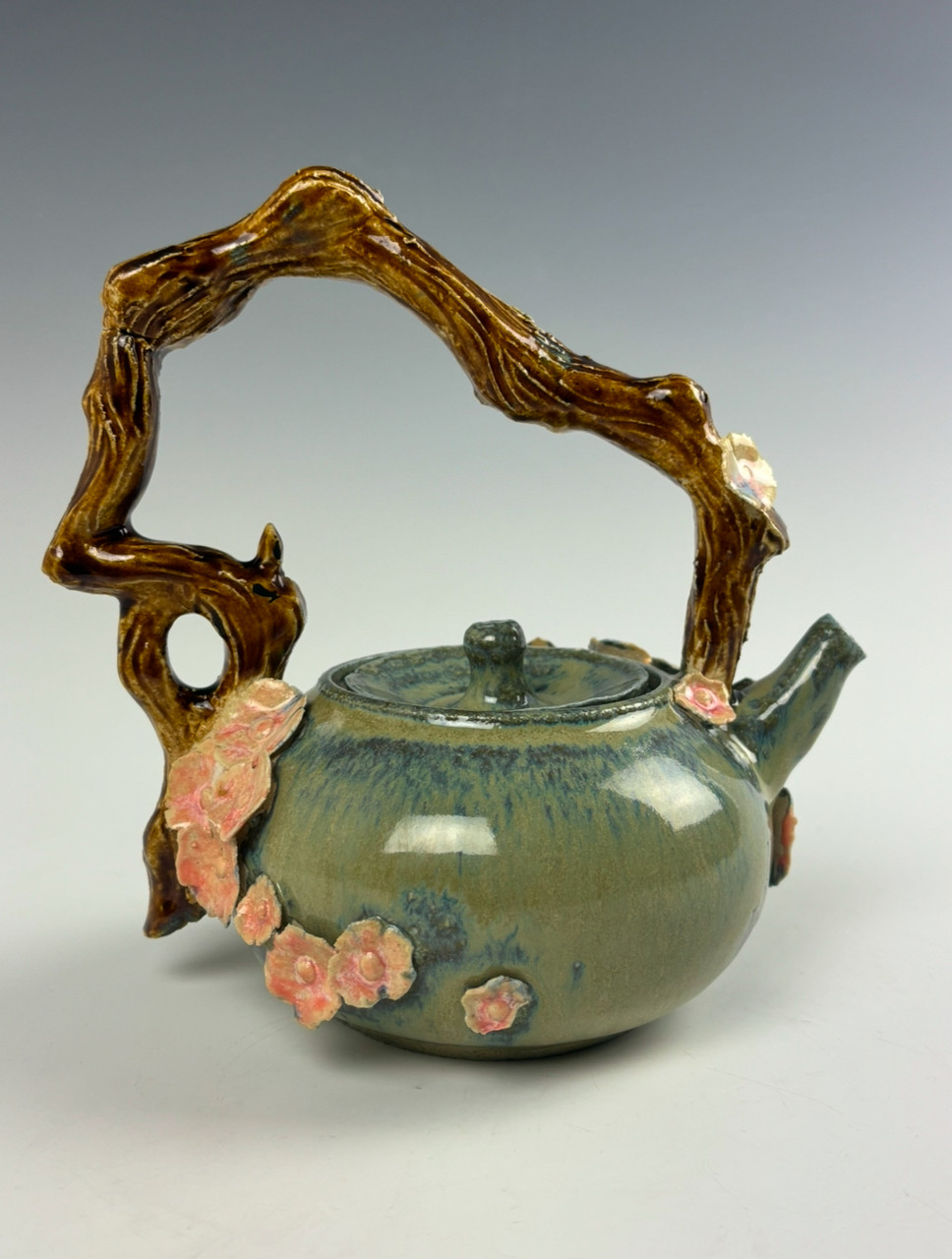
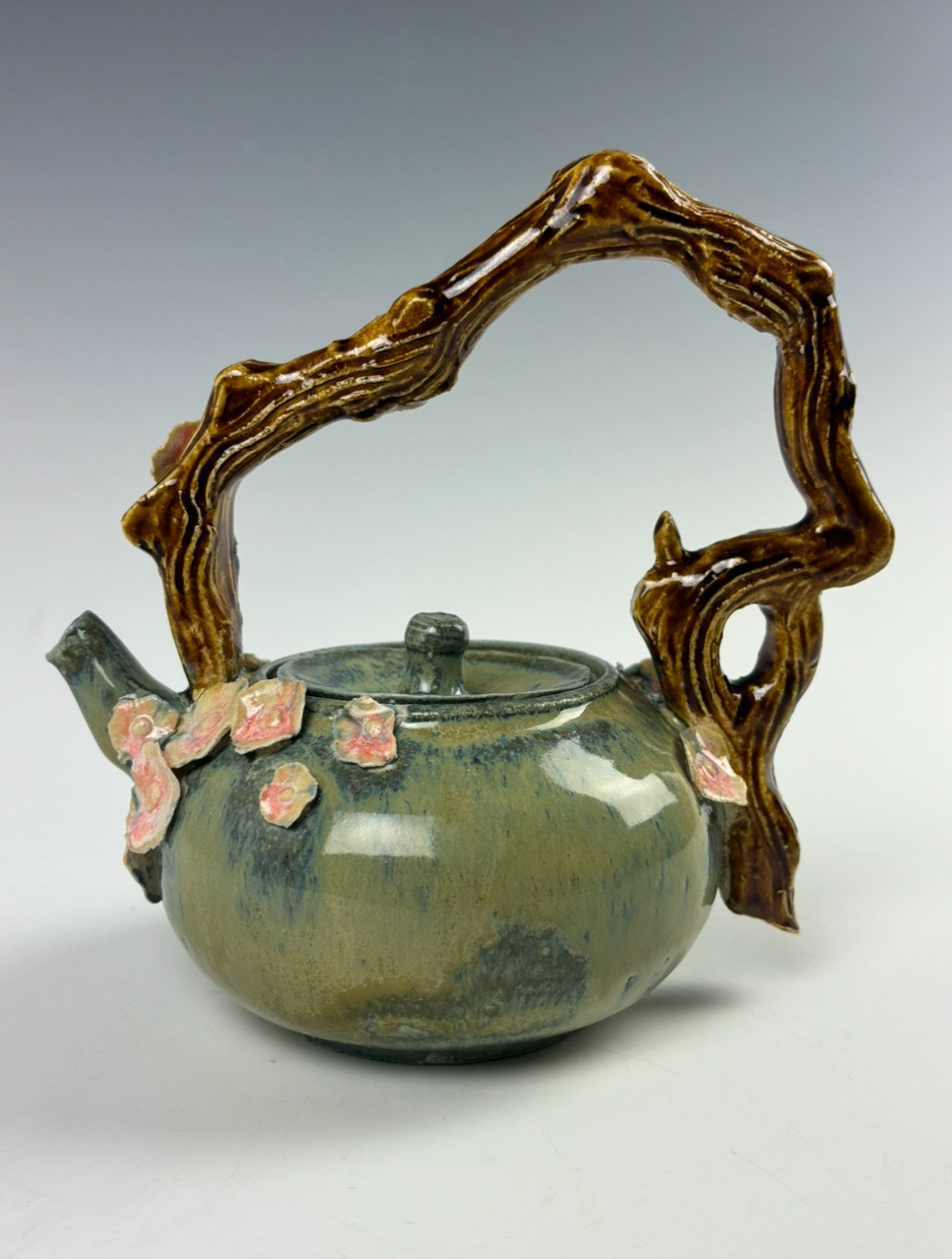
jaslene ortiz-guillen, Cherry Blossom Tea Pot , 2025. Cone 5 stoneware, 5″ x 5″ x 9.” El Dorado High School, CA.
Artist Statement: “While making my teapot I was heavily inspired by the Arizona Green Tea can, funnily enough. I used cone 5 stoneware to make the pot, lid and spout and I handcrafted the handle by rolling out a large coil, shaping it to a branch like shape, and molding/carving to add details. I made the flowers as well by rolling out flat little bits of clay and pinching at the edges and bent them a bit to resemble petals. I really wanted the flowers to look as if they were floating in water so I tried placing them in areas as if they were clustered together while afloat.”
Moises Patino
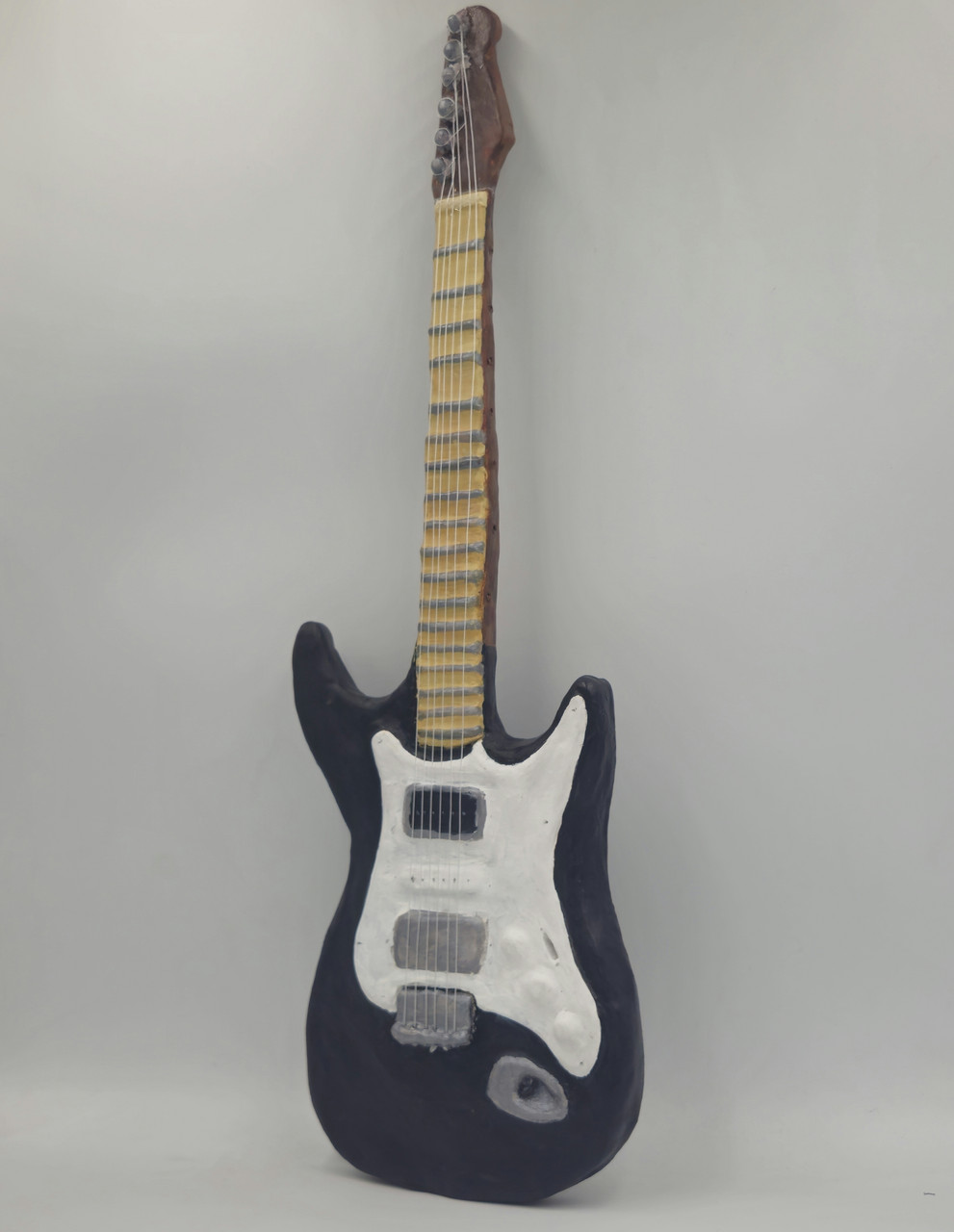
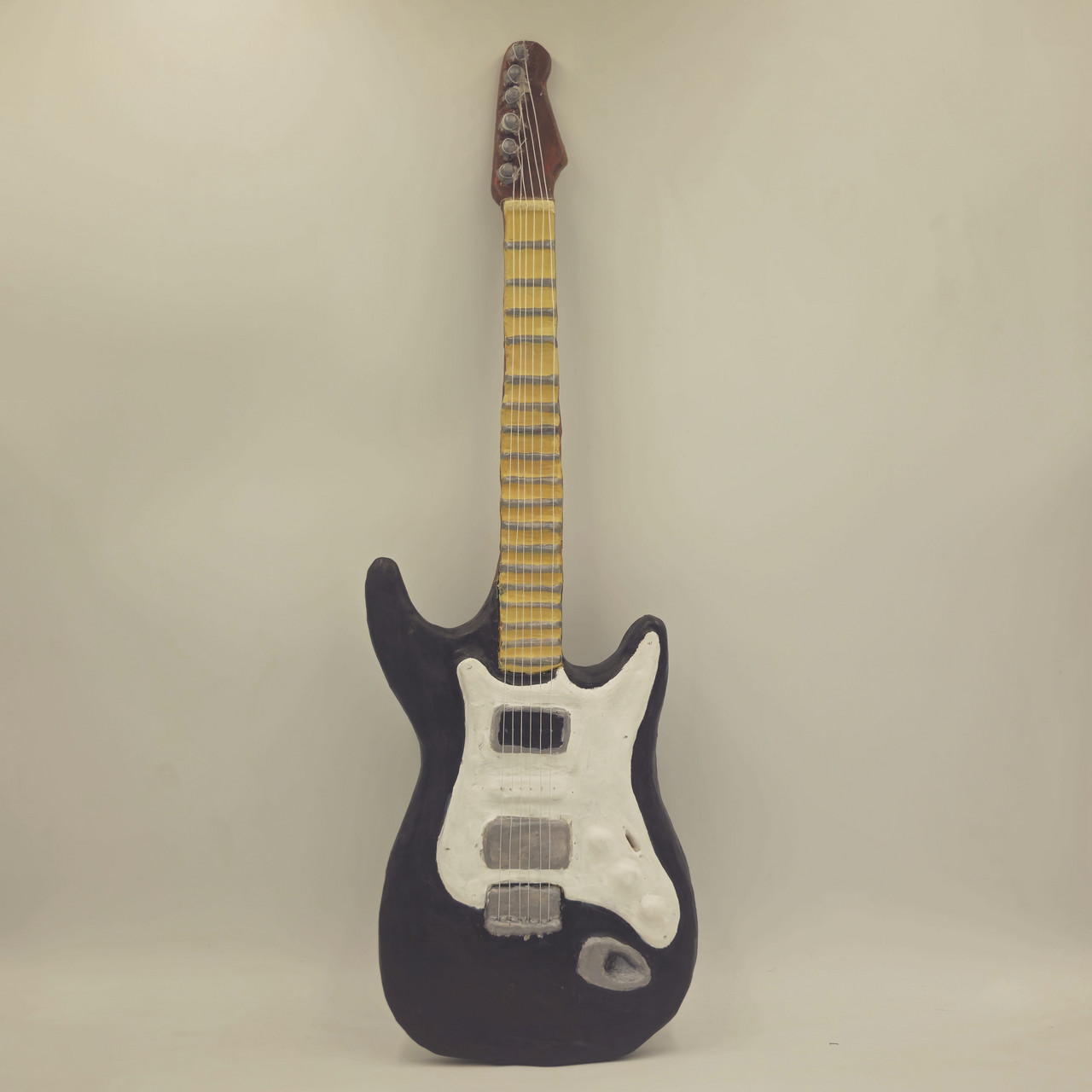
Moises Patino, Length of Life , 2026. Ceramic, Acrylic Paint, EVA Adhesive (Glue), Polye, 19.75″ x 7.125″ x .8.” Cheyenne High School, NV.
Artist Statement: “My process in creating this artwork was to create a template based on a concept I had heard of some time ago, that being how Isaac Newton (and/or Leibniz) first proposed that the most rudimentary approach to calculating the area under a slope would be to first calculate the area of known shapes, downsize them as they gradually approach the slope, then estimate the area based on the sum of all the shape areas; this was later refined by Bernhard Riemann, and was coined the Riemann Sum. Although I am not formally acquainted with this process, I applied its logic to creating a template made of poster board for my project.
I spent approximately 10 hours throughout 3 days taking measured estimates of individual parts of a “real”, full-size guitar, then downsizing its dimensions to a template that was 1/2 the size. (For instance, if I measured the maximum width of the original guitar’s body to be 17.5in, I would downsize it to 8.75in accordingly).
Upon completing the template, I spent several days using slabbing techniques to adjoin individual parts of the guitar’s composition into one whole. After smoothing the exterior and accounting for structural stability difficulties in the neck of the guitar, my piece underwent a bisquefiring process; I then spent 2 days painting the piece with a variety of arcylic paints. I chose acrylic to prevent a glossy look, as it was not something I desired; I believed a solid, muted look would be more accurate to that of a “real” guitar.
My vision in creating this artwork was to convey my love for music through what is essentially material epistemology; the guitar is a symbol of a contribution to the man-made music, as it acts as a vessel for its creation.”
Calli Peer
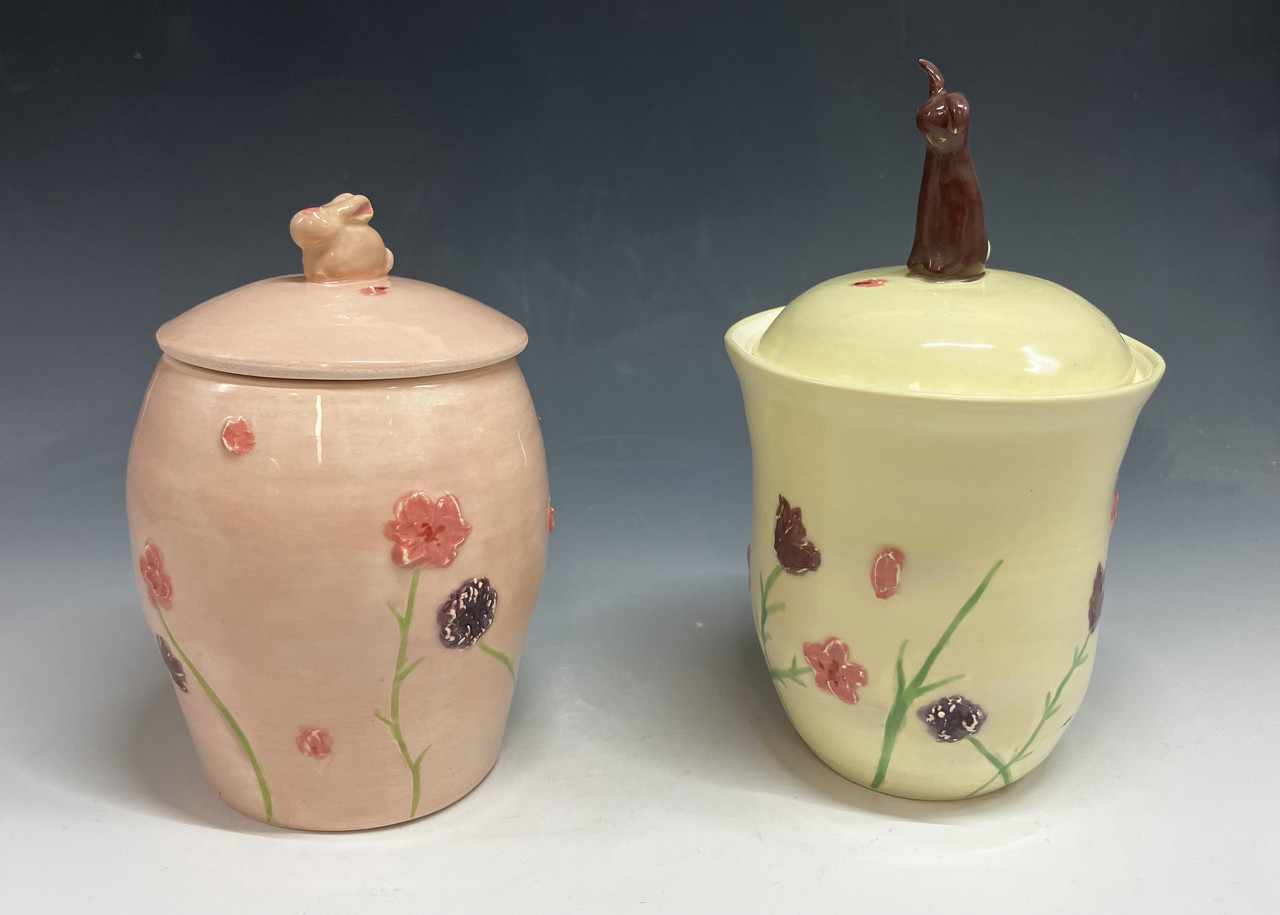
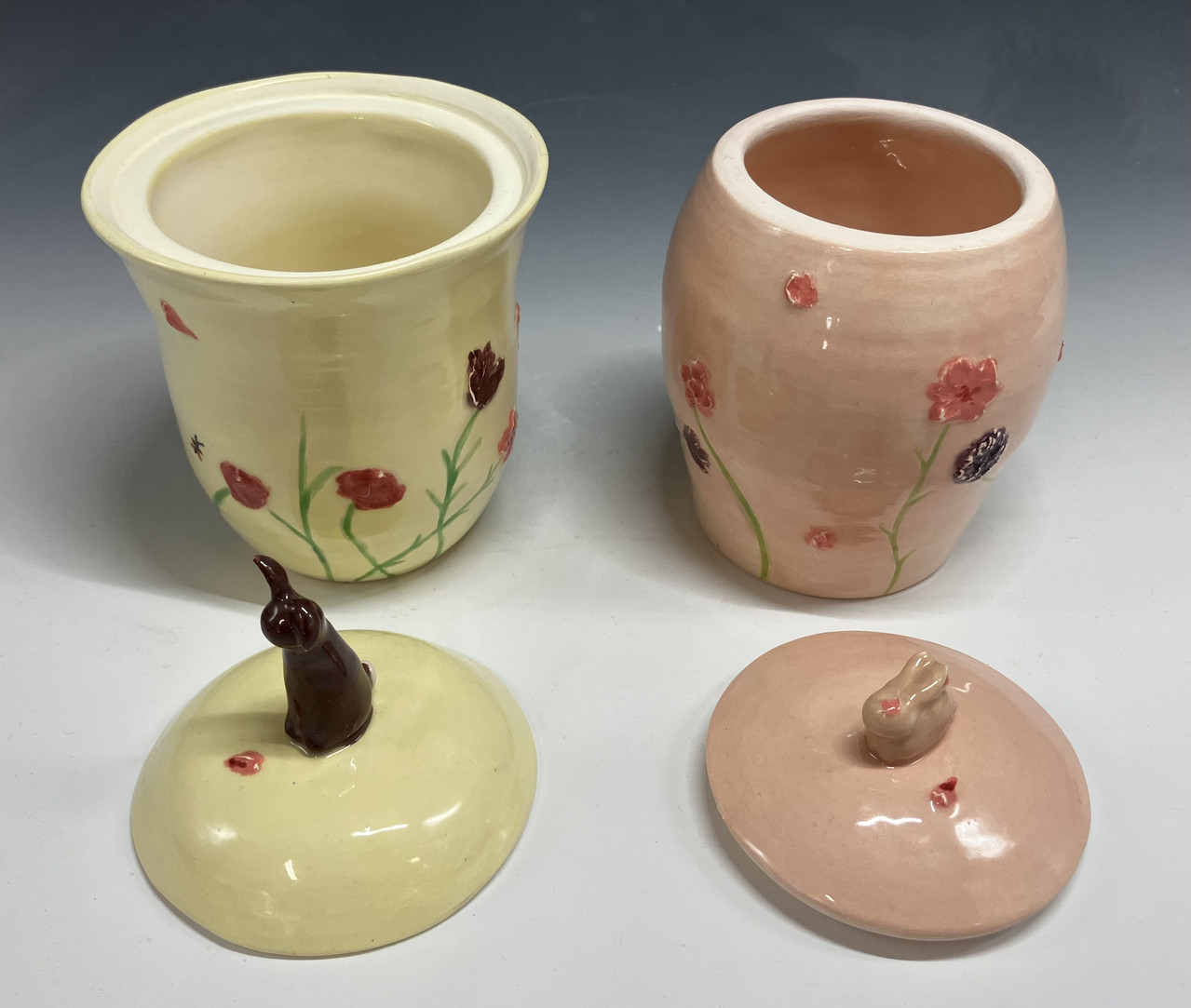
Calli Peer, Jars of Spring , 2026. Ceramic, glaze, 5.5″ x3.5″ x 3.5.” Perrysburg High School, OH.
Artist Statement: “I was given the assignment of making a set of jars, one with a flange on the jar part and one with a flange on the lid part, both with knobs on top. Easter was coming up and I have always loved rabbits, so I decided to make my knobs different rabbit figures. Also with the spring theme, I wanted flowers all over the jar bodies. Throwing the jars went very smoothly and I was able to get the shapes I wanted for both jars, a more round shape for the lid flange jar and a kind of skinnier shape for the jar flange jar. The lids were harder to make because most of the shape had to be formed during trimming. But I was still able to get my desired shape for both lids. I carved into the jar bodies to make flower stems and used slip to make the flowers themselves. I found references for both different rabbits and recreated the references with minor differences, then attached them to the tops of the jars. Then I glazed each of the jars with very light color, pink for one and yellow for the other, then glazed the rabbits different colors and glazed the flowers based on a mood board I created of flowers that I really liked. This project was also a lot of fun to make and I really love the result and how the jars look together.”
Lyla Pinto
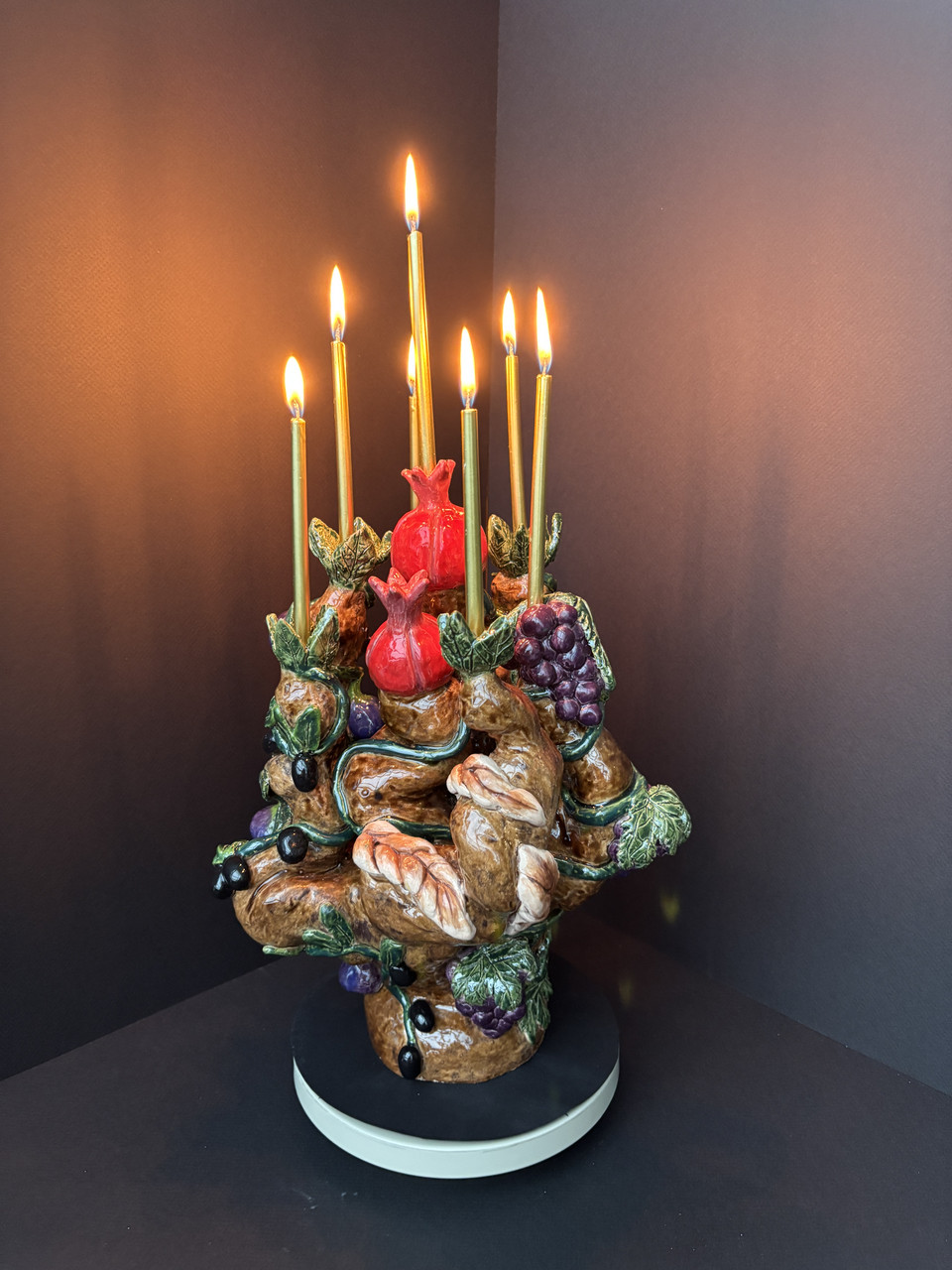
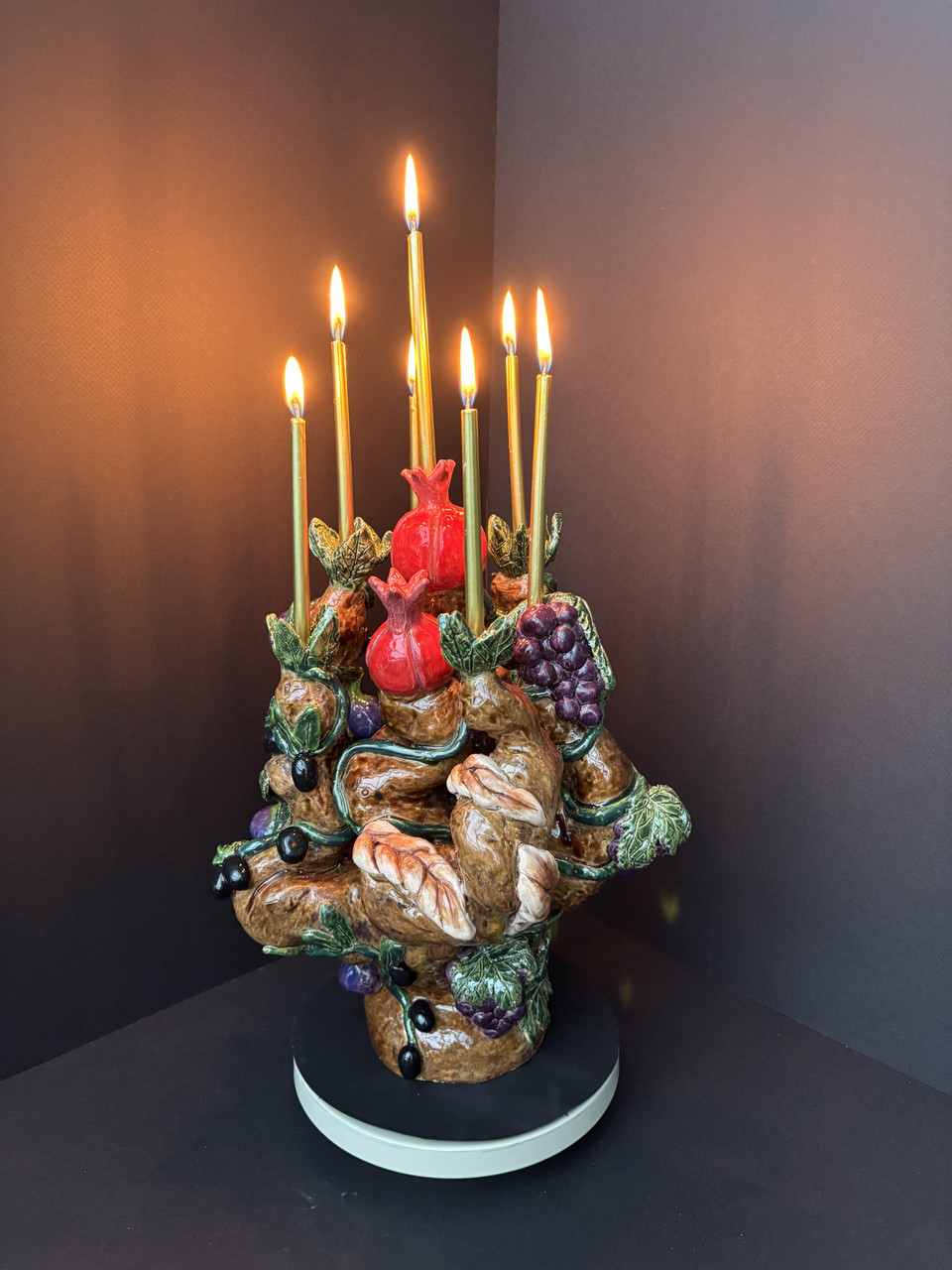
Lyla Pinto, Shivat Haminim , 2025. Clay, Glaze, Underglaze, Candles, 18″ x 18″ x 24.” Long Beach High School, NY.
Artist Statement: “My goal when creating Shivat Haminim was to emphasize the significance of Parshat Eikev’s Seven Species. My work concentrates mainly on these seven species, figs, pomegranates, olives, dates, grapes, wheat, and barley. Each symbolizes a special gift and a strong bond with the Land of Israel. I placed them on a menorah-shaped tree with seven branches to emphasize both their uniqueness and unity.
I made this as a ceramic because of its earthy, natural character, which reflects the Seven Species’ agricultural origins. I created an organic structure that symbolizes development and sustenance by layering coils to create the tree and branches using coil-building techniques. This technique reinforced the concept of life and nourishment by producing an organic, growing form that resembles a tree’s natural growth. I created each species by hand, adding depth and texture with carving techniques to give them a unique appearance. To elevate each species above its physical form and highlight its spiritual value, flames were placed on each branch to symbolize heavenly light and holiness.
My research focused on Parshat Eikev and how the Seven Species stand for abundance, blessing, and the relationship between G-d, the Jewish people, and the Land of Israel. I was inspired by this to give each species an individual place in the piece. In general, my art communicates spirituality, development, and a deep bond with the land.”
Alisha Qureshi
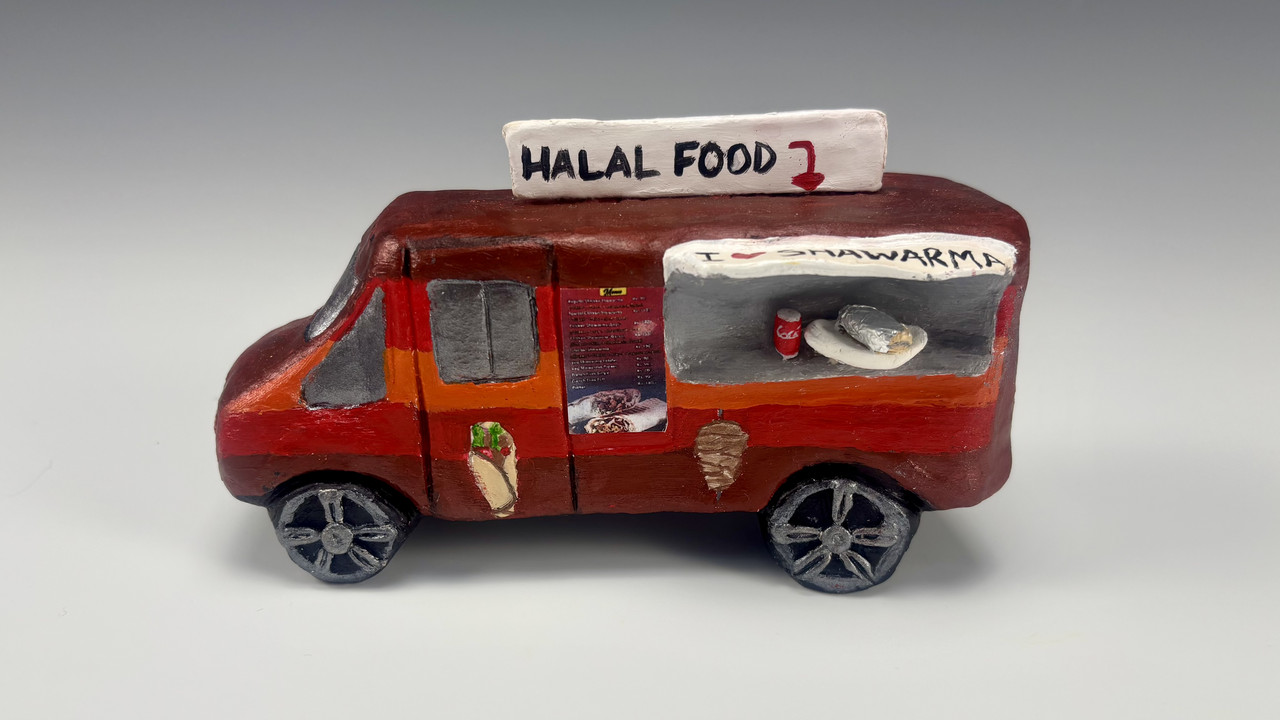
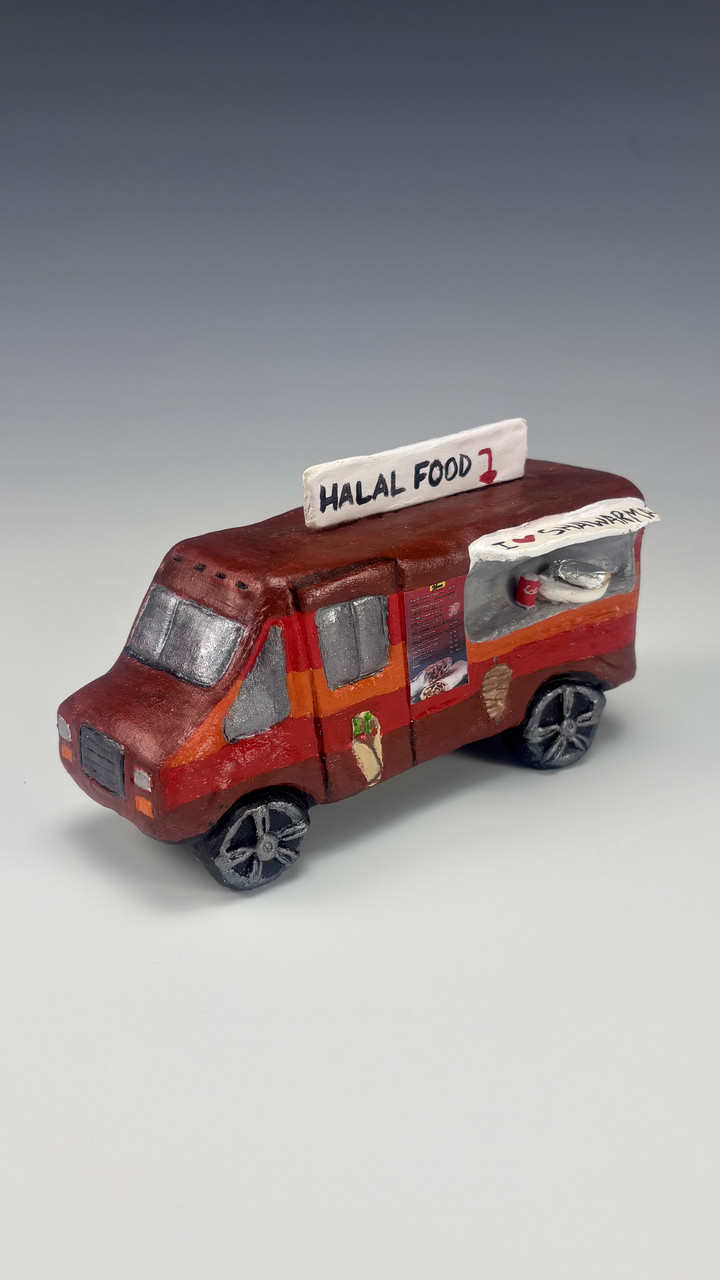
Alisha Qureshi, Halal Food Truck , 2026. Clay, acrylic paint, 3.2″ x 5.8″ x 2.2.” The John Cooper School, TX.
Artist Statement: “In my artwork I explored my dual cultural identity being a Pakistani American through miniature objects. I paired objects, one from each culture, to highlight the similarities and differences between them showing how I balance my two worlds.”
Nikitha Rao
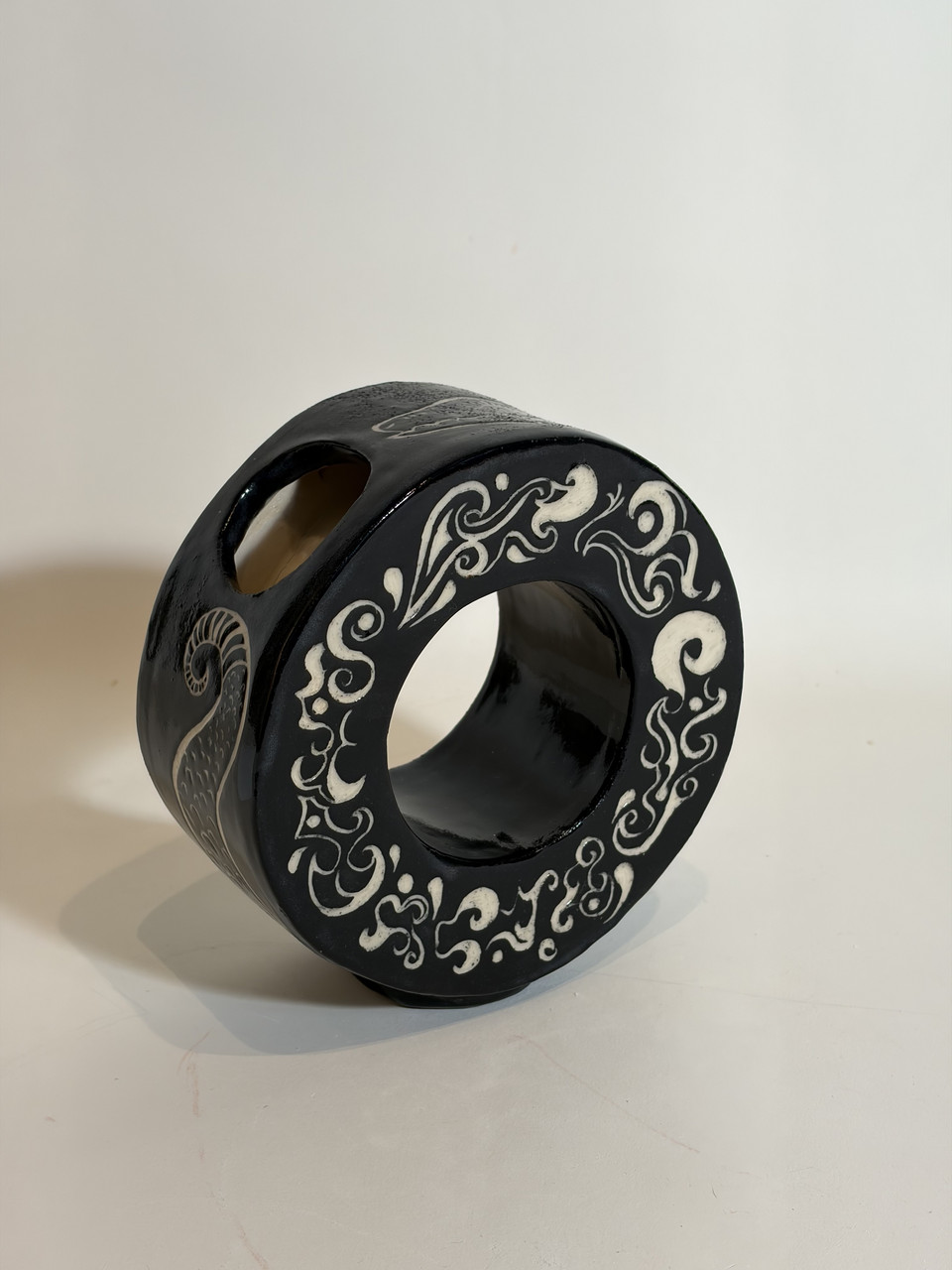
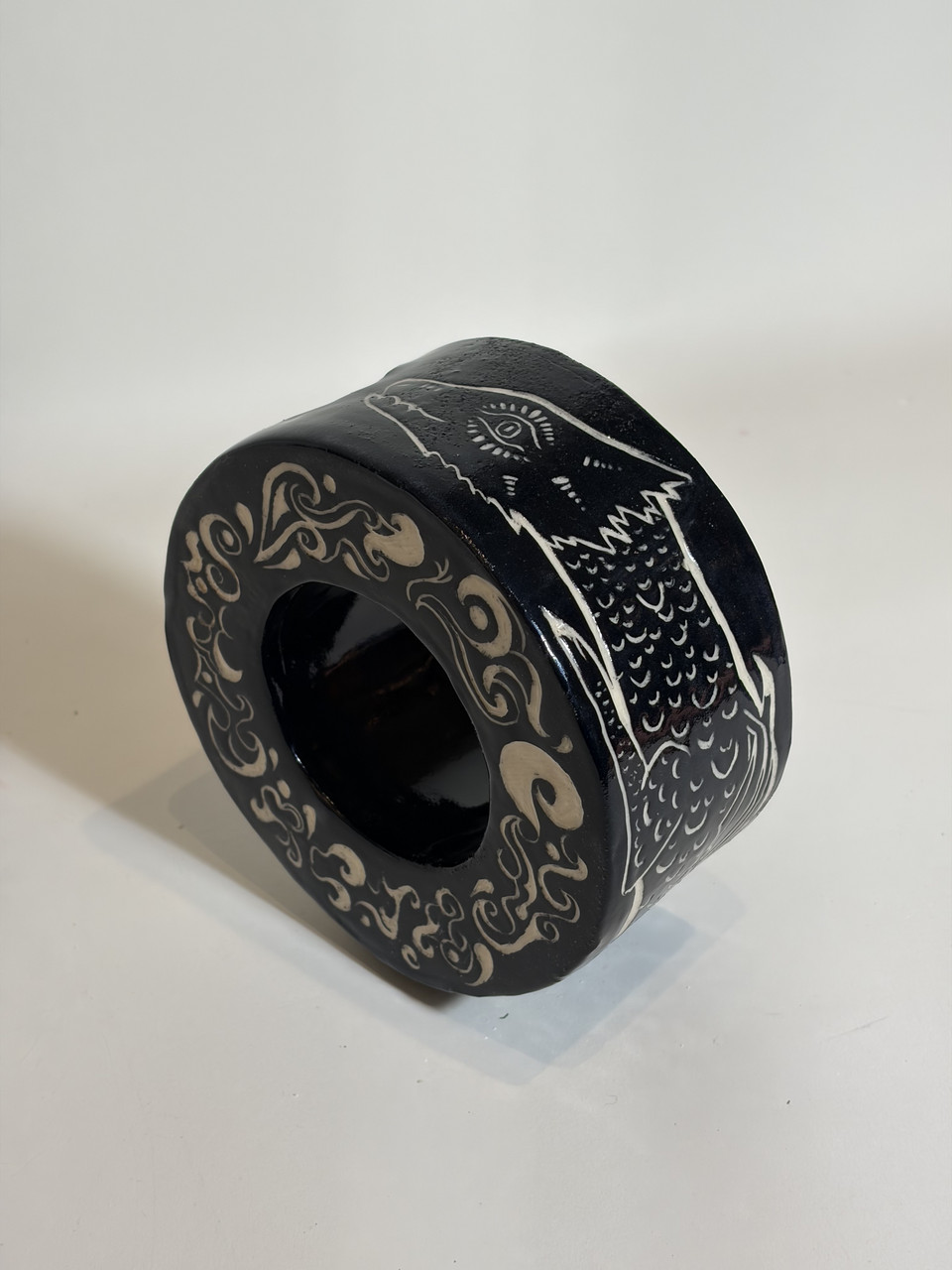
Nikitha Rao, Ring of Fire , 2025. Ceramic, Underglaze, 5.5″ x 5.5″ x 2.5.” Dublin High School, CA.
Artist Statement: “I have always loved slab building, it is a much more calming process for me than throwing or hand building, so I decided to make this vase with slabs into a donut shape. I painted the whole vase with black underglaze and used the sgraffito technique to scrape away the top layer. In many cultures, dragons are a symbol of wisdom, strength and power, whose fire represents transformation. 2024, the year of the dragon, was a transformative year for me, which is why I decided to carve dragon’s fire on the front and back of the vase as well as an actual dragon wrapping around the whole piece.”
Jazmin Rojas
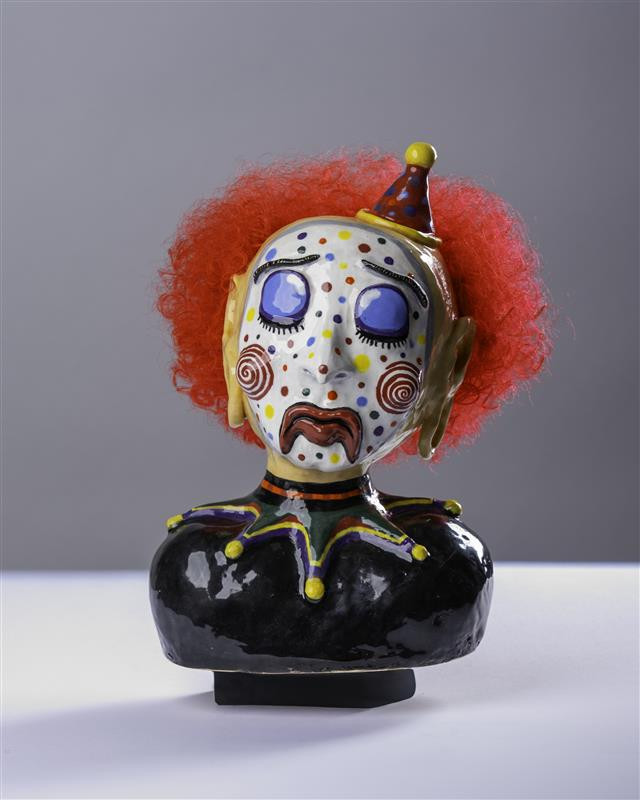
Jazmin Rojas, The Quiet Pattern , 2025. Clay, Glaze, and a Wig, 12″ x 4″ x 18.” Copper Canyon High School, AZ.
Artist Statement: “This piece represents what it feels like to hide heavy emotions behind a bright, performative surface. The bold patterns and exaggerated features show the act of pretending everything is fine, even when I’m struggling to figure out who I am. The contrast between the playful design and the clown’s expression reflects the pressure to seem “okay” on the outside while dealing with confusion, self doubt, and the sense of not measuring up. Through this art piece, I wanted to show that even people who look cheerful can be carrying a lot deep down.”
Alexandra Rose
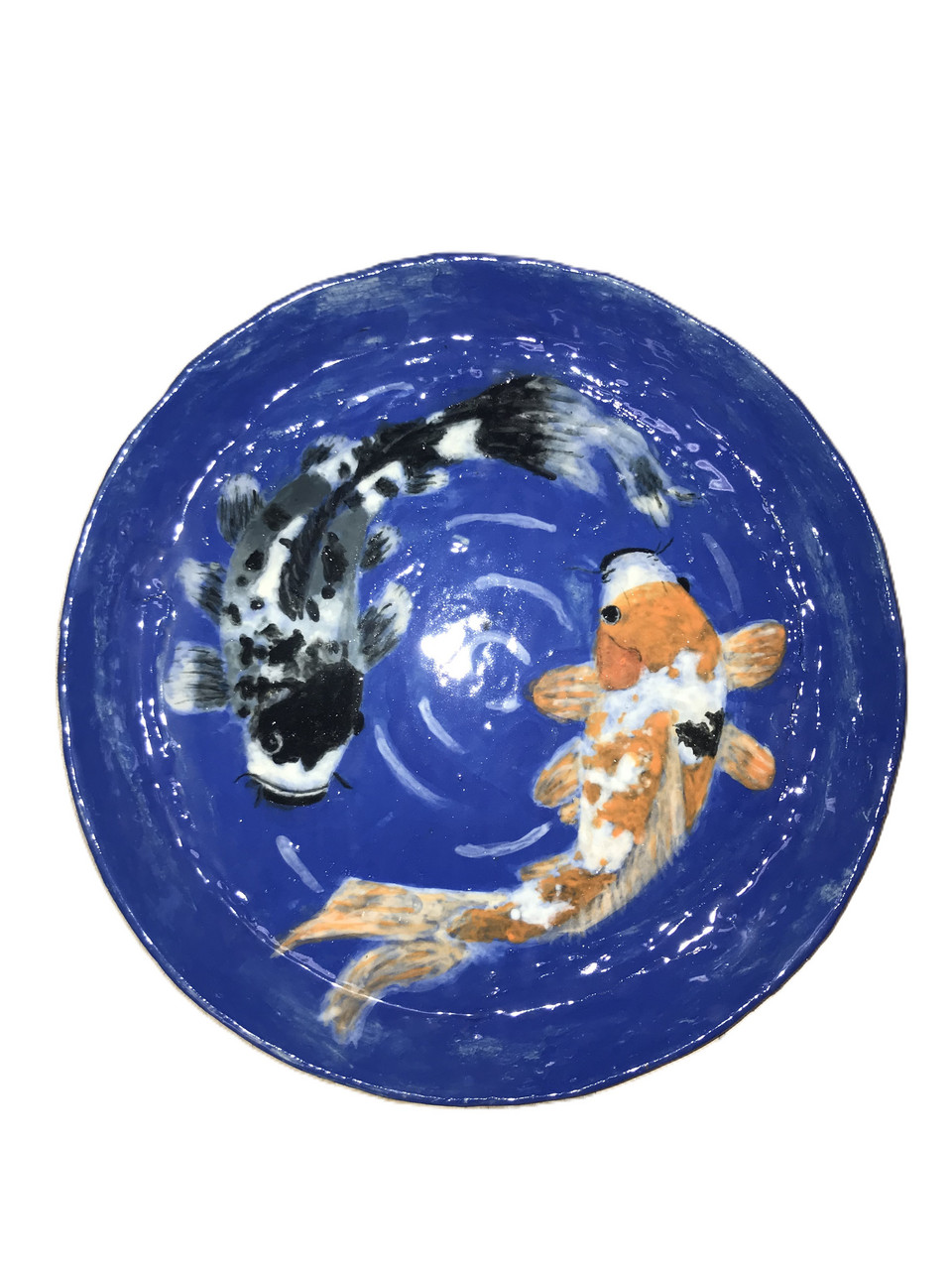
Alexandra Rose, Koi Fish Plate , 2026. Clay, underglaze, and clear high fire glaze, 10″ x 10″ x 1.” Herbert Hoover High School, CA.
Artist Statement: “My vision was to create two fish swimming in a pond. I choice koi fish because they are beautiful. I used a mold to create the plate and I hand painted the koi fish and ripples.”
Kayan Rowell
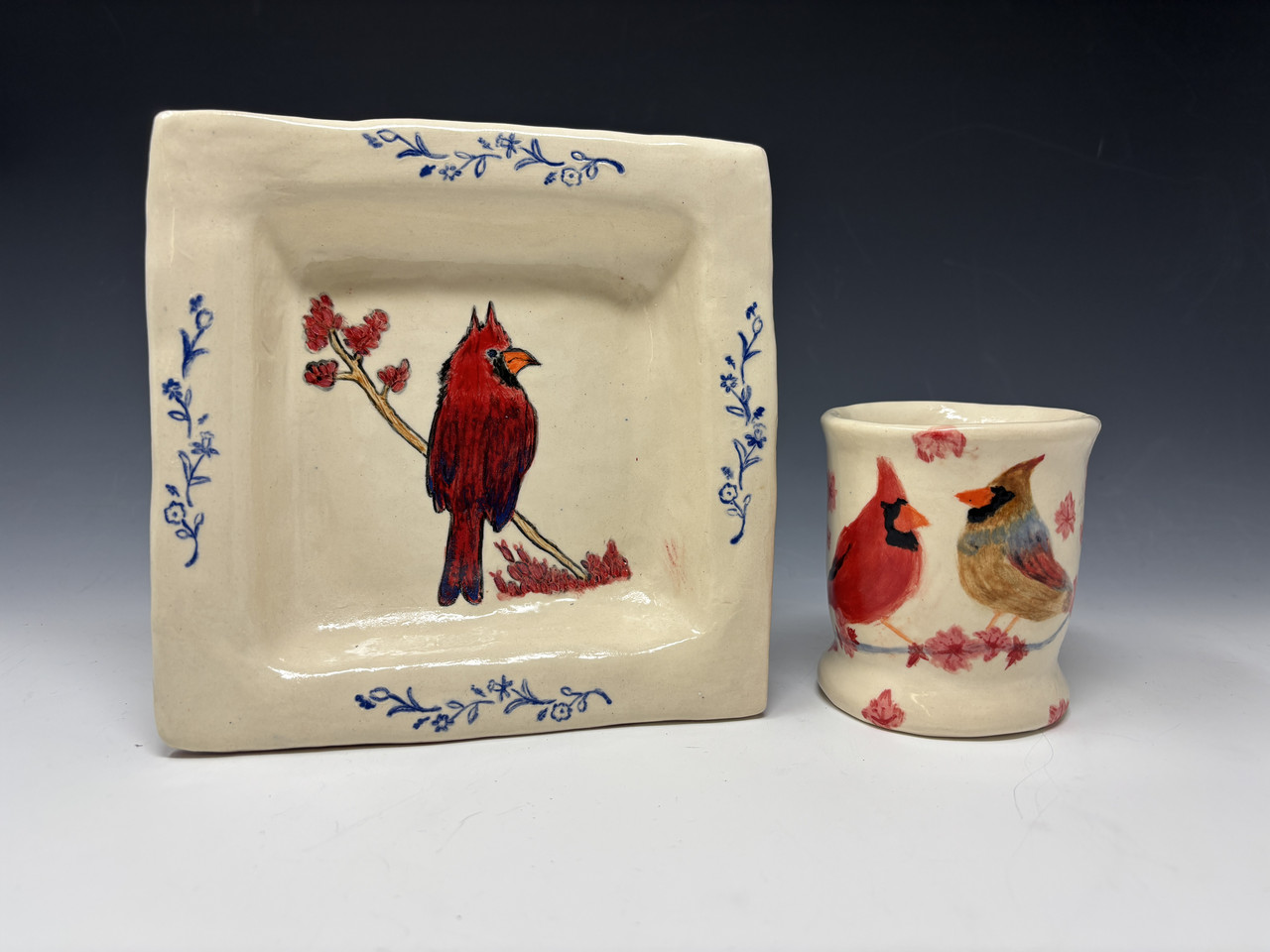
Kayan Rowell, Red Birds , 2025. Iceman Clay & Potters Choice Glazes, 12″ x 3″ x 10.” Belleville East High School, IL.
Nikko Sandez
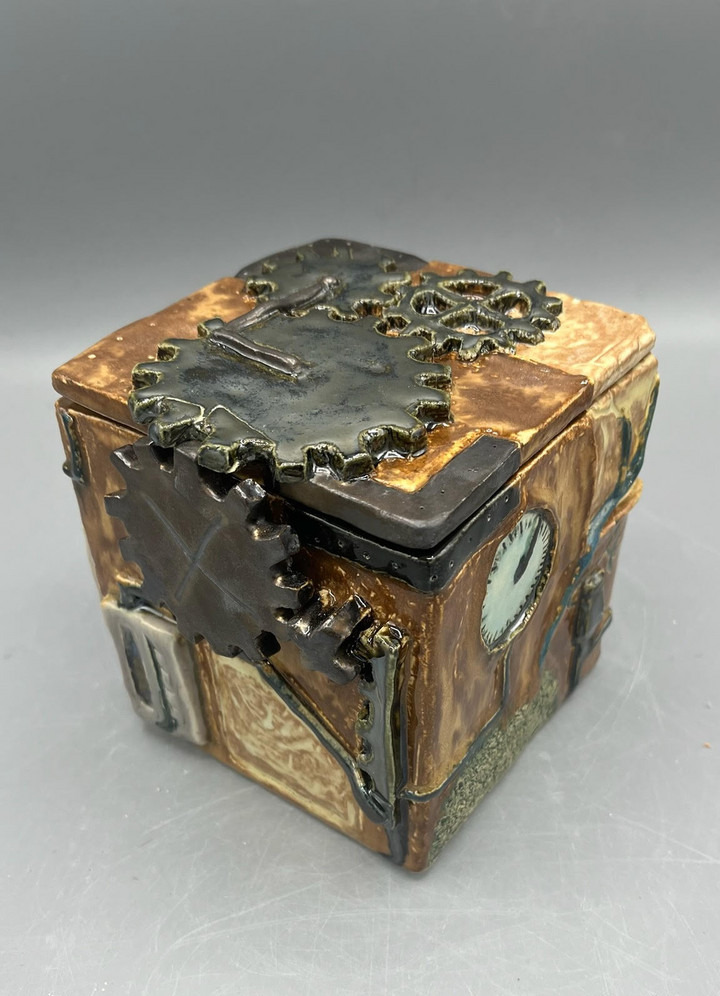
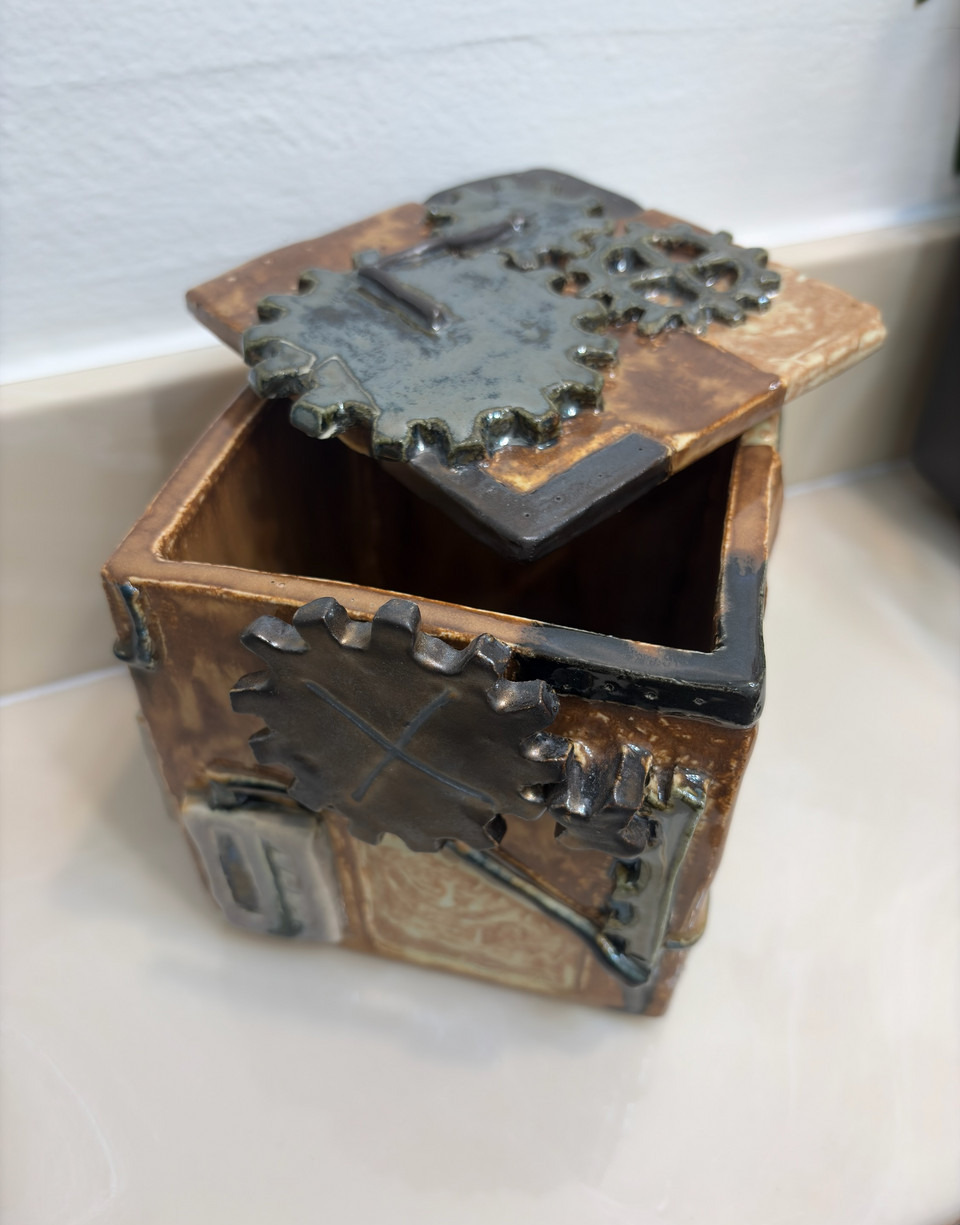
Nikko Sandez, The Pressure Chamber , 2025. Clay, Glaze, 5.5″ x 5″ x 4.5.” Carlmont High School, CA.
Artist Statement: “I created this steampunk gearbox called The Pressure Chamber, to express emotions I had been holding inside. Around the time I made the piece, I was dealing with the loss of my grandparents, and I felt like I was keeping a lot of my feelings contained rather than showing them. I used the idea of a gearbox and mechanical parts to represent that pressure and the way emotions can feel trapped inside, like energy building up in a machine.
To build the piece, I mainly used the slab method to form the gearbox’s main structure and walls. I also focused on layering different parts to create a complex mechanical appearance that fits the steampunk style.
My goal was to combine steampunk design with personal meaning, using the turning gears as a symbol of the emotions and memories that continue to move even when kept inside.”
Nikko Sandez
Nikko Sandez, The Pressure Chamber , 2025. Clay, Glaze, 5.5″ x 5″ x 4.5.” Carlmont High School, CA.
Artist Statement: “I created this steampunk gearbox called The Pressure Chamber, to express emotions I had been holding inside. Around the time I made the piece, I was dealing with the loss of my grandparents, and I felt like I was keeping a lot of my feelings contained rather than showing them. I used the idea of a gearbox and mechanical parts to represent that pressure and the way emotions can feel trapped inside, like energy building up in a machine.
Miko Scheuer
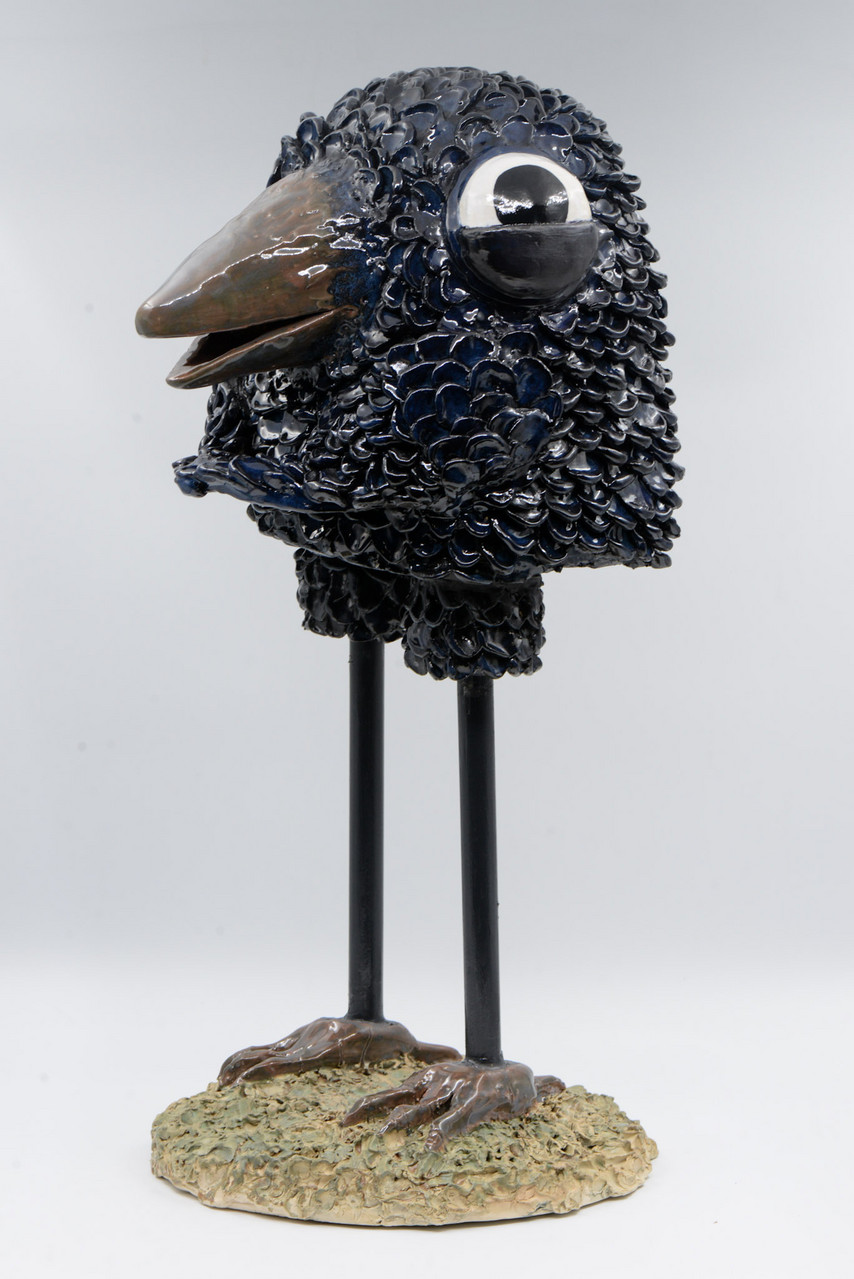
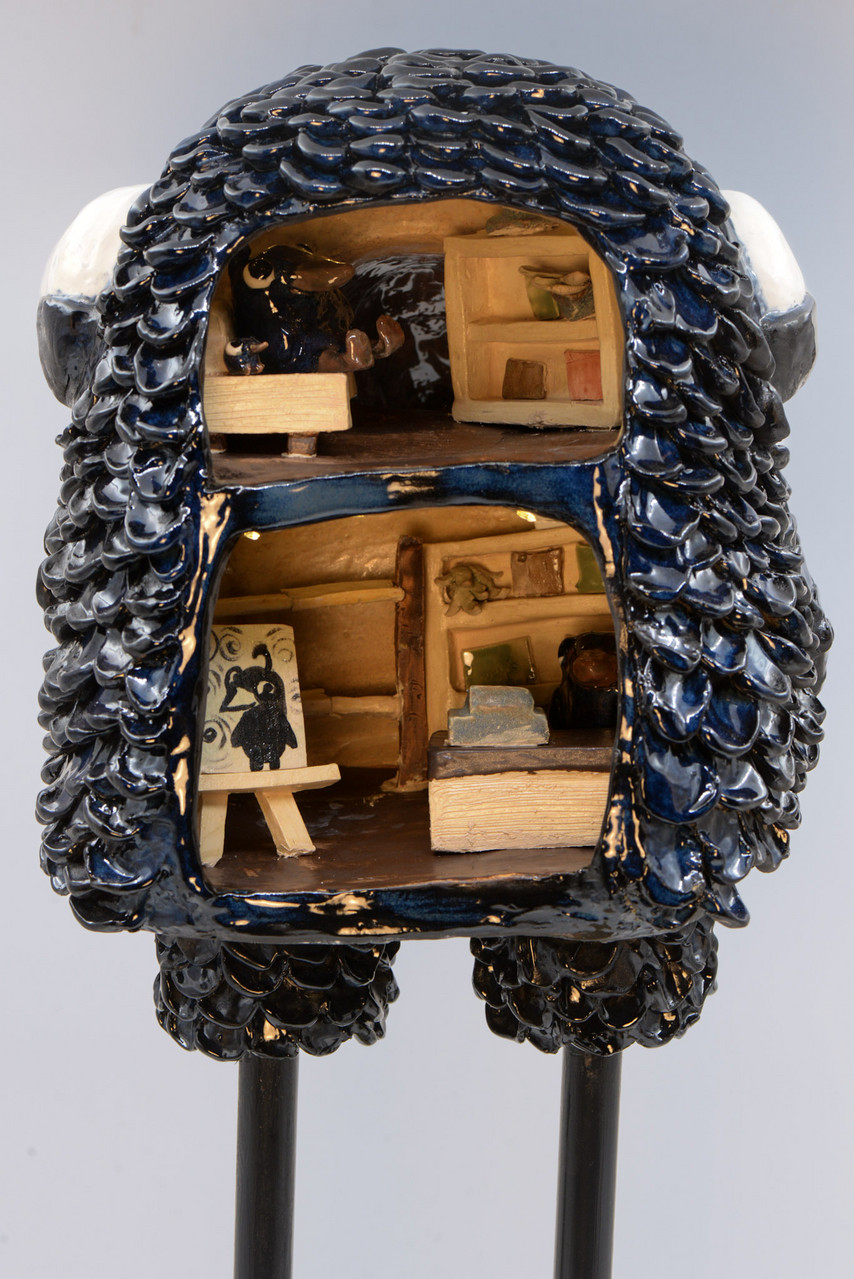
Miko Scheuer, Bartholomew II , 2025. Stoneware Clay, Underglaze, Glaze, and Mixed Media, 10″ x 14″ x 22.” South Carolina Governor’s School for the Arts and Humanities, SC.
Artist Statement: “Bartholomew II is my second rendition of my character Bartholomew the crow. I wanted to strengthen the connection to human lives through the use of a home inside of a crow. The head and body are being held up by steel rods that are placed into the feet to elevate and stabilize the piece. Unlike the first ceramic Bartholomew I created, this Bartholomew has a joyful expression, and the home is illuminated by warm lighting. There is a family of crows living inside the home, with the first floor being an art studio shop and the second floor being their home. This work exemplifies my whimsical birds and hope for the future that I, too, can have a happy home and art studio. It was also solidly built and made with stoneware clay, underglaze, and glaze. Mixed media can be found in the interior.
I’m planning on going to school for art, majoring in ceramics and minoring in marketing to then make a career from my art. I’m leaning towards ceramics because of its versatility. The ability to create sculptural and functional work inspires me to sell affordable art that makes a positive impact towards my community. My work is to evoke thought and happiness through silly creatures and bright details.”
Kavya Singh
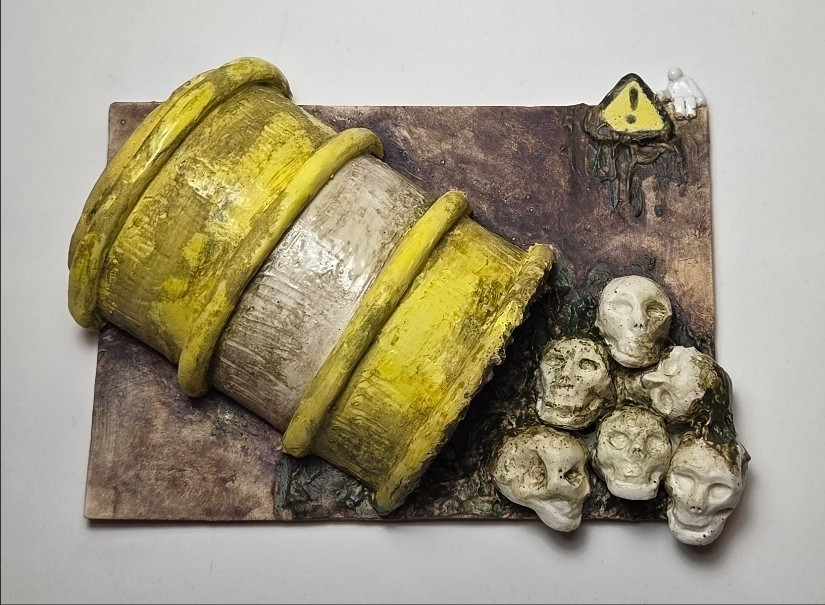
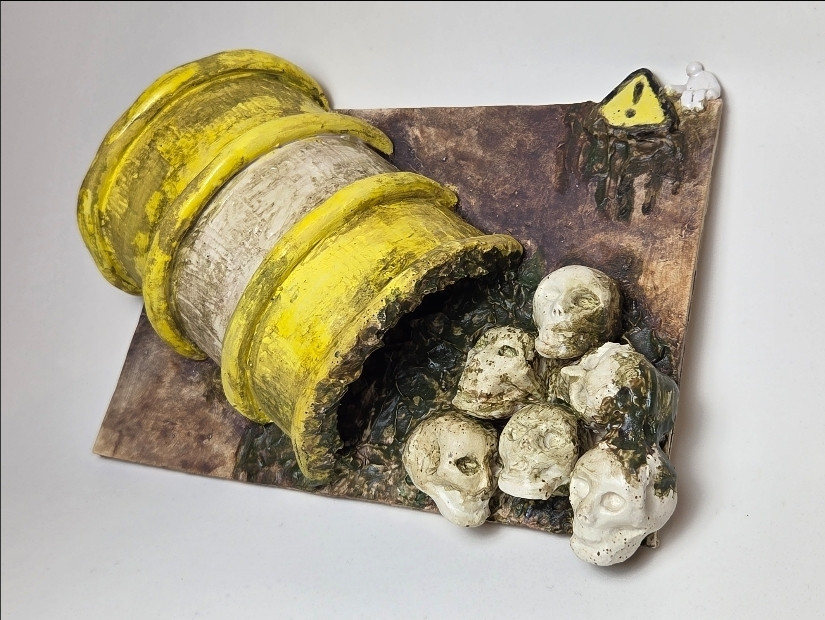
Kavya Singh, Toxic Waste , 2025. Clay, stain, glaze, 9″ x 6.5″ x 2.75.” Dublin High School, CA.
Artist Statement: “For the toxic waste sculpture, I wanted to comment on and draw attention to the environmental issue of nuclear waste on our planet and it affecting us/being dangerous to humanity. The skulls are to show how humanity will come to ruin if the growing environmental problems are not addressed.”
Damian Slakov
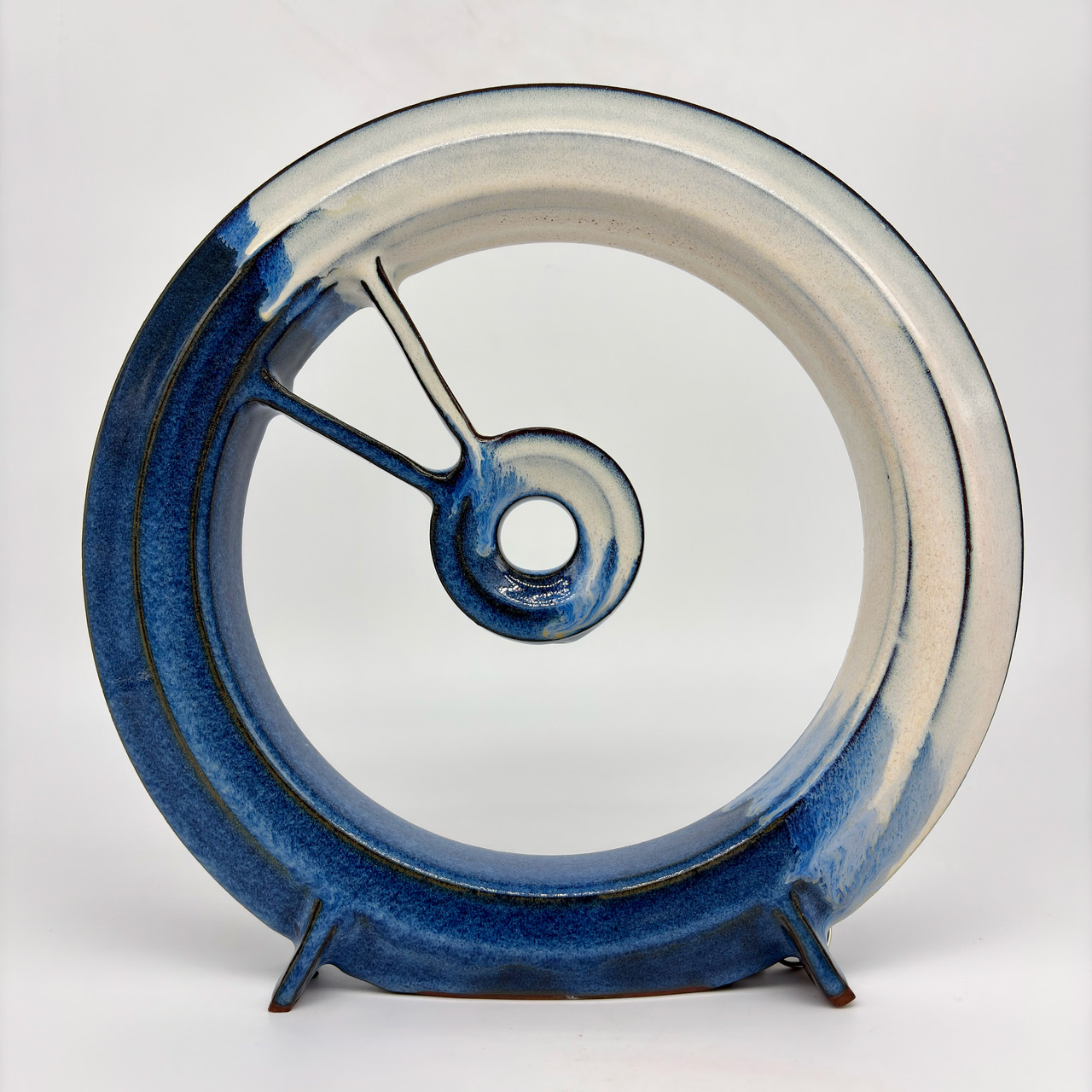
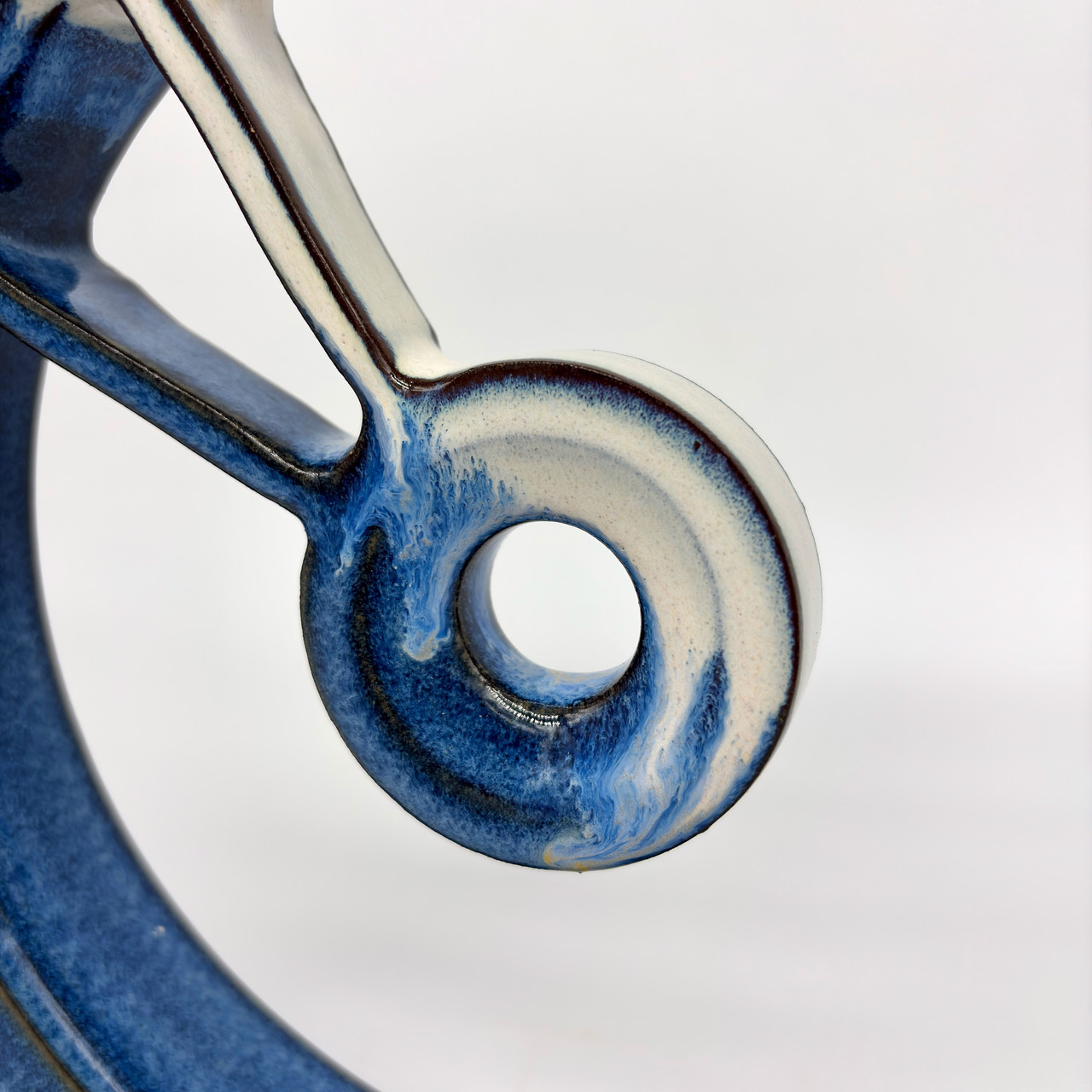
Damian Slakov, Tidal , 2026. Ceramic, 10″ x 10″ x 2.” Valencia High School, CA.
Artist Statement: “This piece is made from wheel thrown donuts that are then altered to create the artwork shown. I am drawn to donuts as an unconventional form that can be thrown on the wheel, and I find that the negative space creates opportunities to play with visual balance and structure. I enjoy challenging myself by transforming somewhat simple wheel thrown forms into something more complex and expressive.
Tidal is named for its similarities to a tidal wave, with white water crashing on top and deeper blue tones below. When I am not in the classroom working with clay, I am always looking for new inspiration. One of my favorite ceramicists that I follow is Florian Gadsby, and this piece mimics his angular style. I approached the inner form as a structural element, focusing on clean angles and connections to create an architectural feel within the piece. The glaze combination of Rabbit’s Fur and Floating Blue further enhances the form itself through the contrast created between the off-white, blue, and dark edges where the glaze breaks, as well as the fluidity of the glaze versus the rigidity of the shape.”
Kaavya Tailor
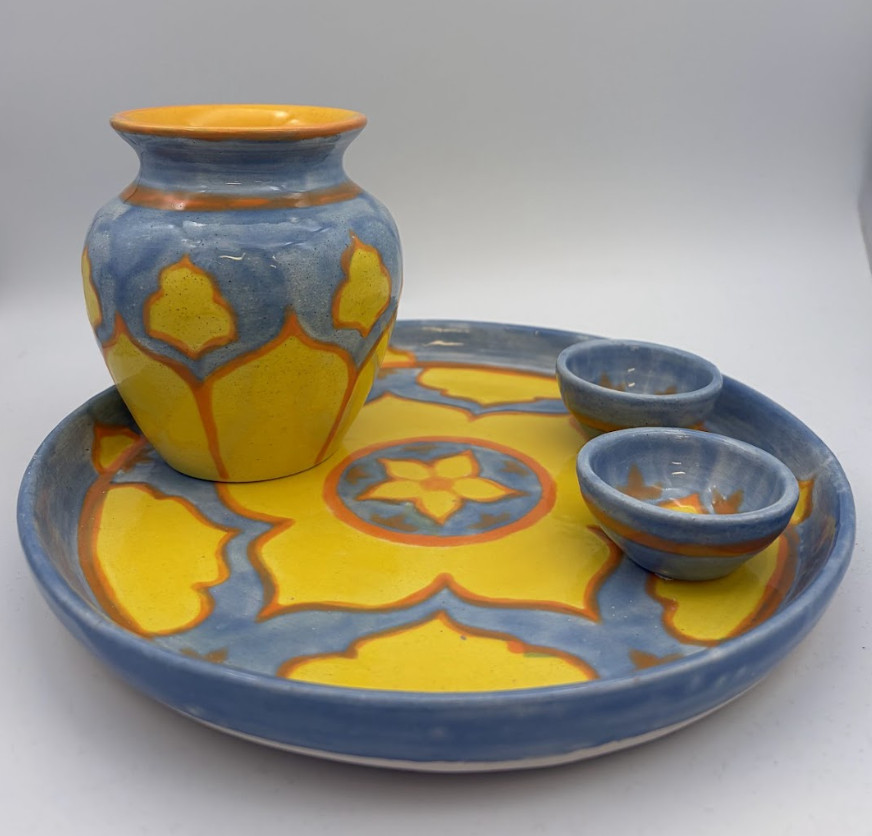
Kaavya Tailor, Divine Beginnings, 2026. Stoneware Clay. Apex Friendship High School, NC.
Artist Statement: “I’m currently developing my AP Portfolio in 3D Art, and my inquiry is: how can forms inspired by Gujarati culture explore how tradition is preserved and passed down through generations? Through this, I wanted to create a plate set that symbolized good fortune and wealth. Normally, in Gujarati families, it’s tradition to do ceremonies or poojas for occasions like weddings or housewarmings to bring ‘good luck’ in our lives. I made this set as a reflection of its importance to me and wanted to add my own homemade touch to recognize its symbolism. I used the wheel to make all four pieces, trimmed them, and later used Wonderglaze to add intricate detailing. The colors also show growth and optimism.”
Zoe Toney
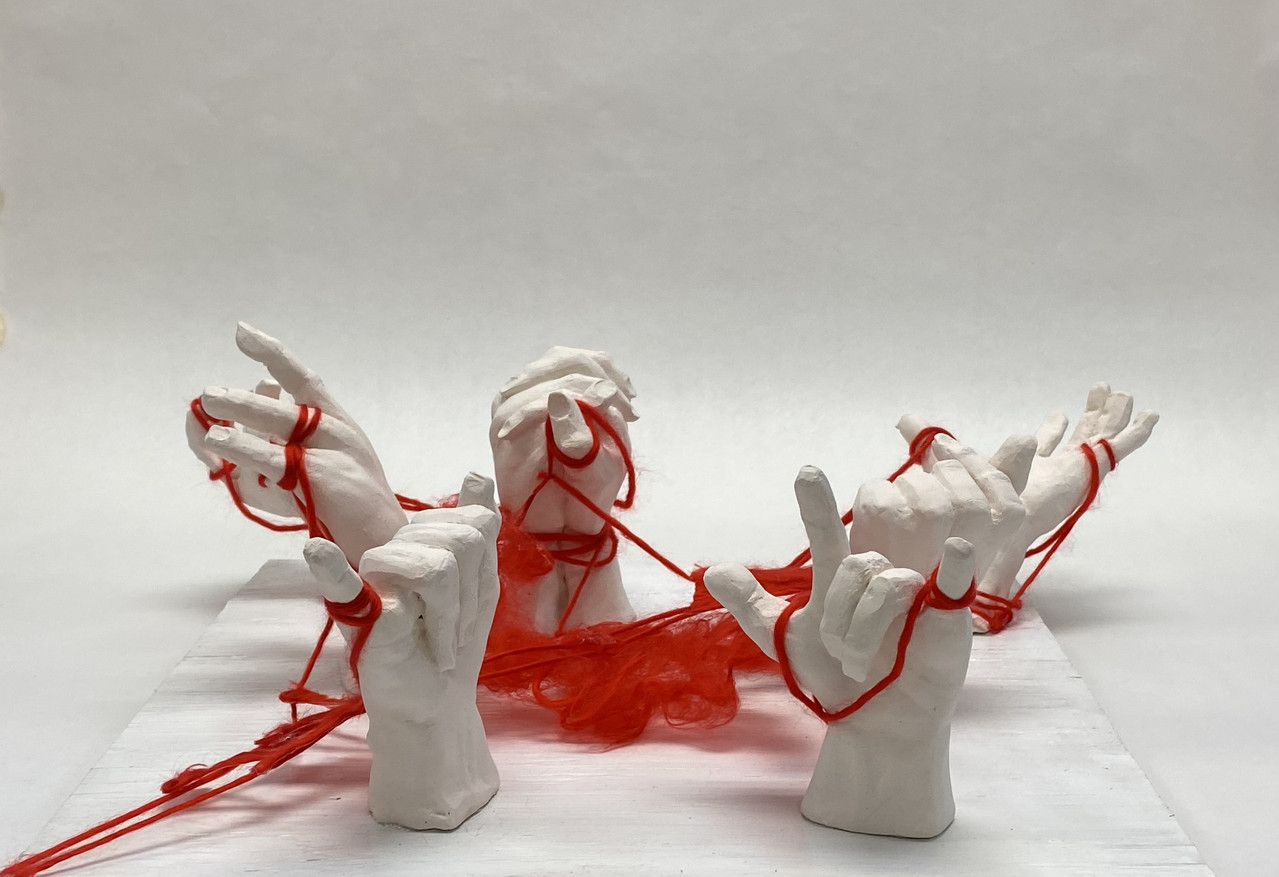
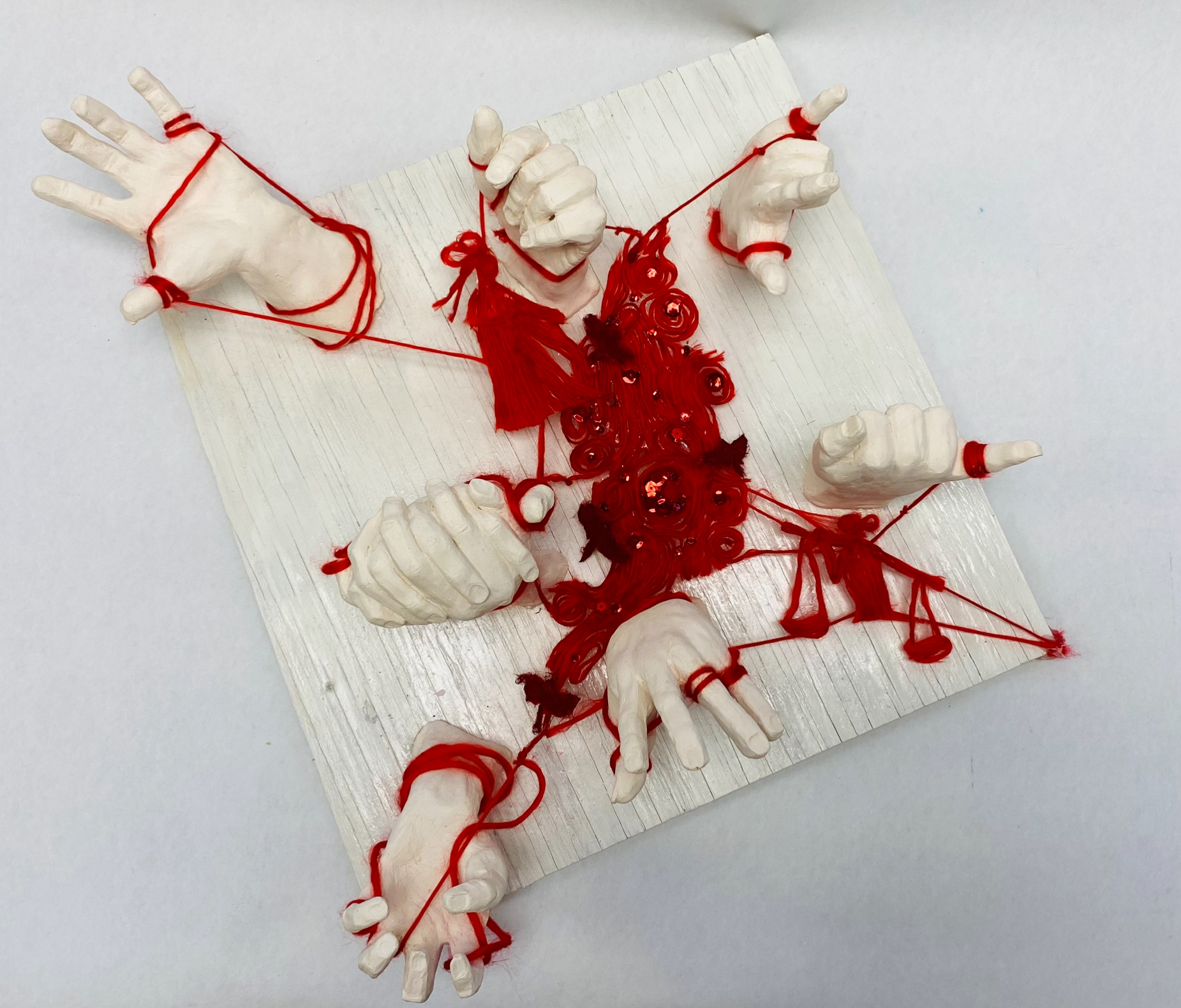
Zoe Toney, Predestined Fate, 2025. B-mix Clay, Red Yarn, Wood, Plastic Wrap, Glue, 16.5″ x 16.5″ x 6.5.” Western Christian High School, CA.
Artist Statement: “The idea for this piece was based off of the idea of the myth about the Red String of Fate from Chinese, Japanese and Korean mythology. From there I asked, how do I depict love as a beautiful thing that could be tragic?
I created eight hands depicting either reach for love or representing love symbols, then I interwove red yarn between all of the hands, connecting them all to each other like the myth. In the center of the piece I used many different weaving techniques before settling on a technique based off of the Huichol art, creating the image based off of the myth of the Weavergirl and the Cowherd. The image depicts the tragic love story of star-crossed lovers. The Weavergirl and the Cowherd can only meet once a year on a bridge, the rest of the year the Weavergirl resides in the stars and the Cowherd resides on earth.”
Axel Weeks
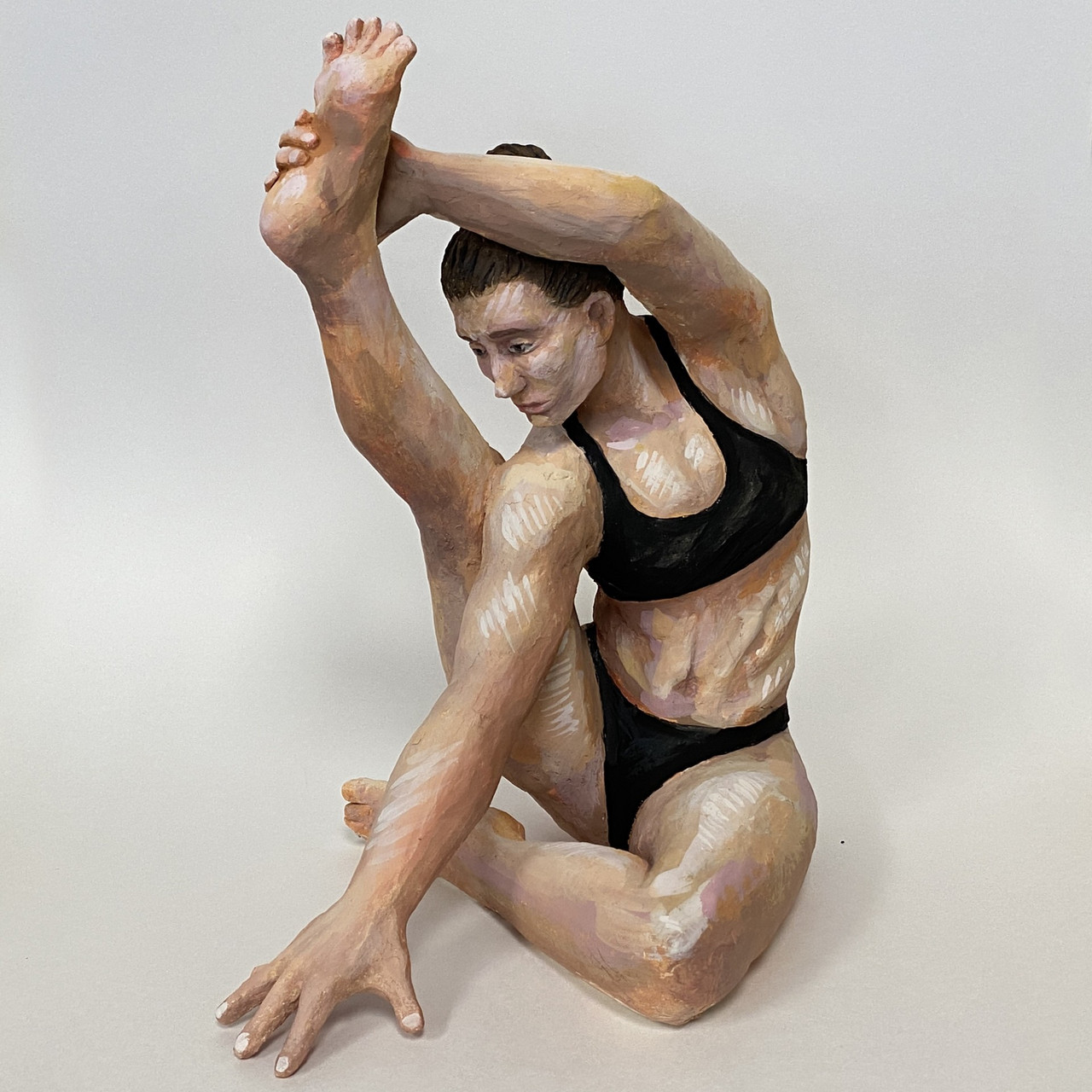
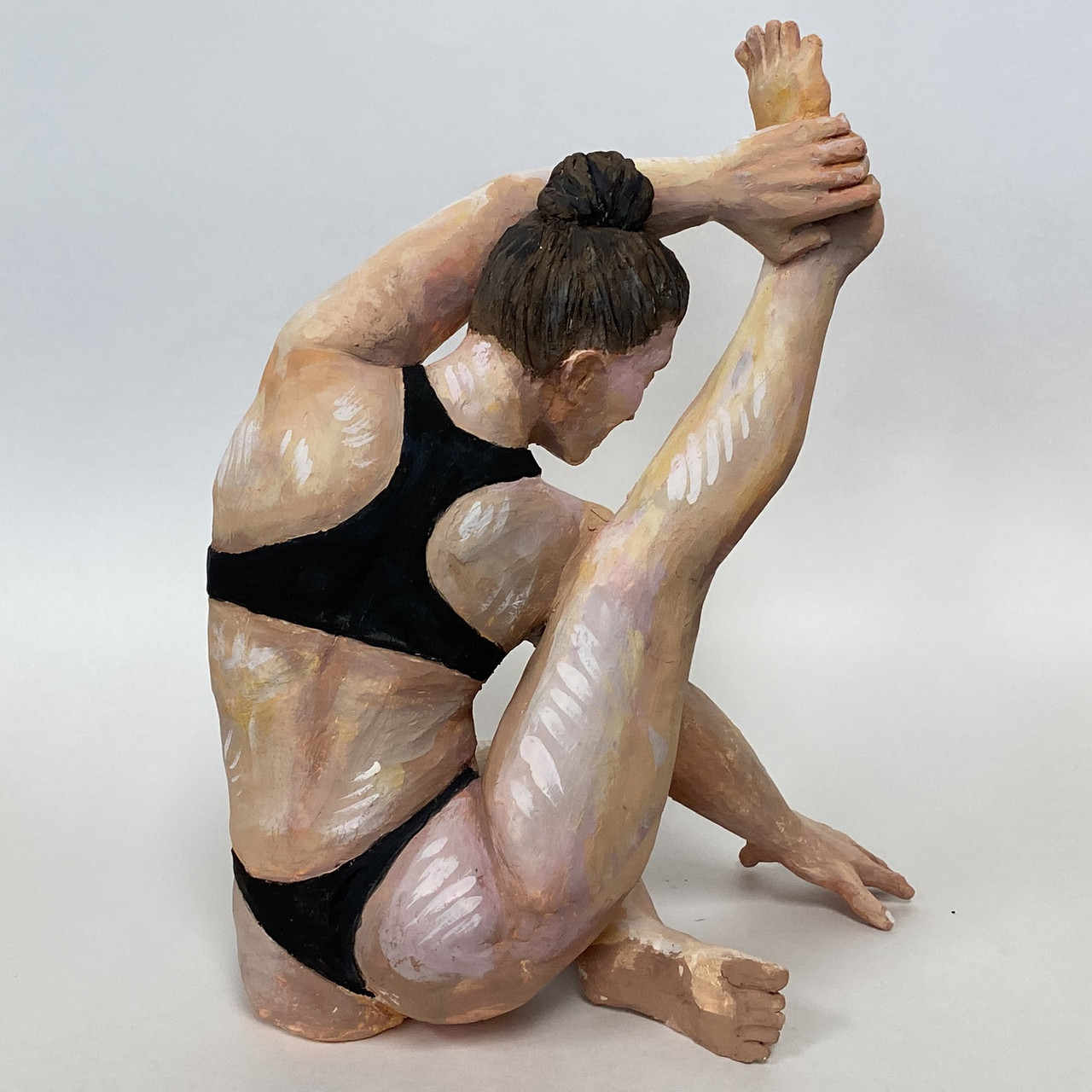
Axel Weeks, Compass, 2025. Clay, Gouache, 12″ x 8″ x 7.” Liberty High School, OR.
Artist Statement: “The human condition is a whole world to study. On one side, you can move however you’d like and explore any path you choose. But on the other, the impacts we have and the products we make might ultimately be the thing that causes our downfall. These pieces focus on two facets of being a person, and they illustrate the complexities of everyday life.
Compass is a woman with her arm stretched over her head to hold her ankle. She is in a yoga pose called compass. The piece shows that we get to choose where we go, and that no matter what situation we’re in, we always have the option to move on. The process began with a large chunk of clay, shaped into the general form. I referenced pictures of a person in the pose I was aiming for, so as I sculpted, I checked each angle to make sure they all lined up with the references. The detailing consisted of sculpting the face, fingers, toes, edges of clothing, and minor muscle detail. I painted the figure with gouache after it was fired.”
Sonya Wilde
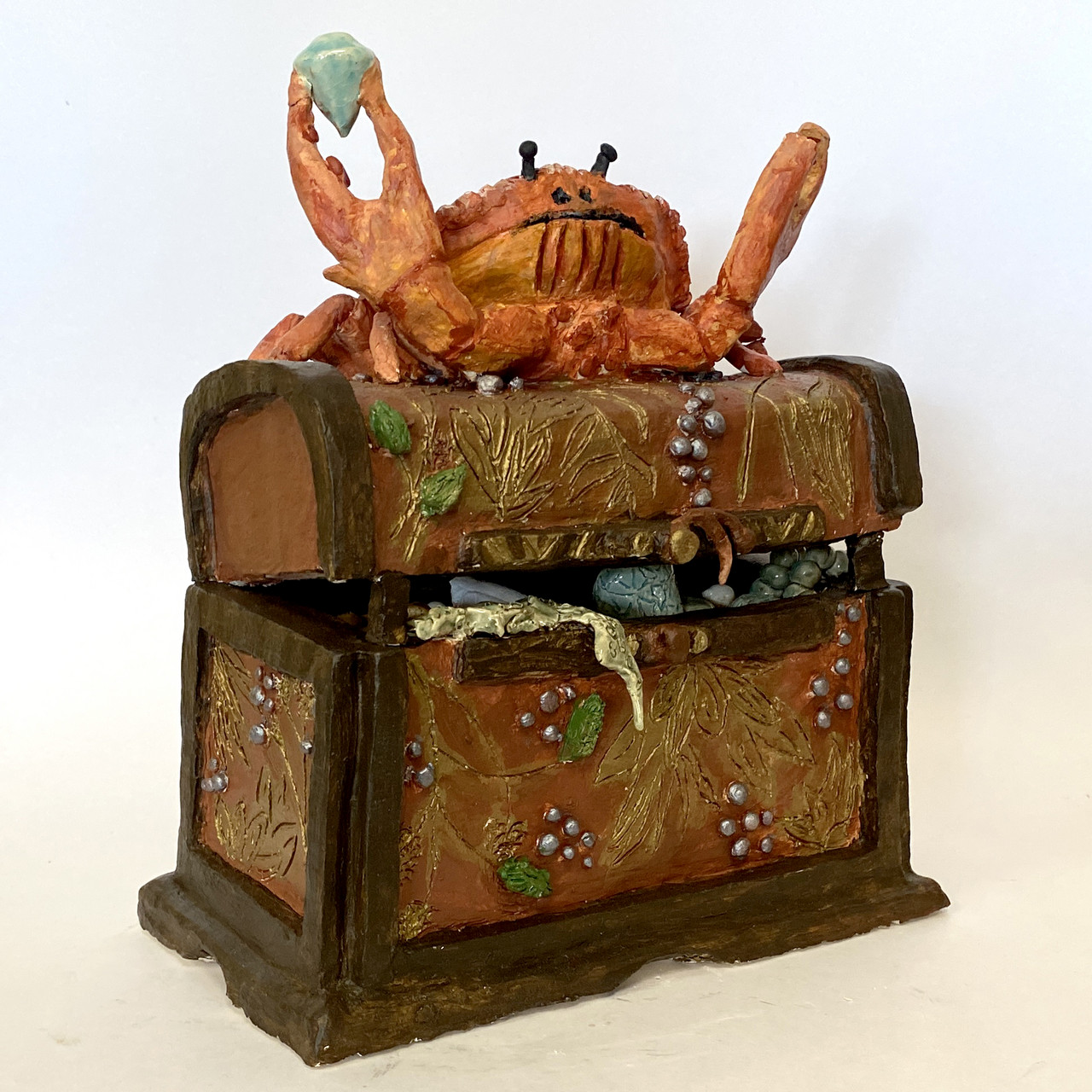
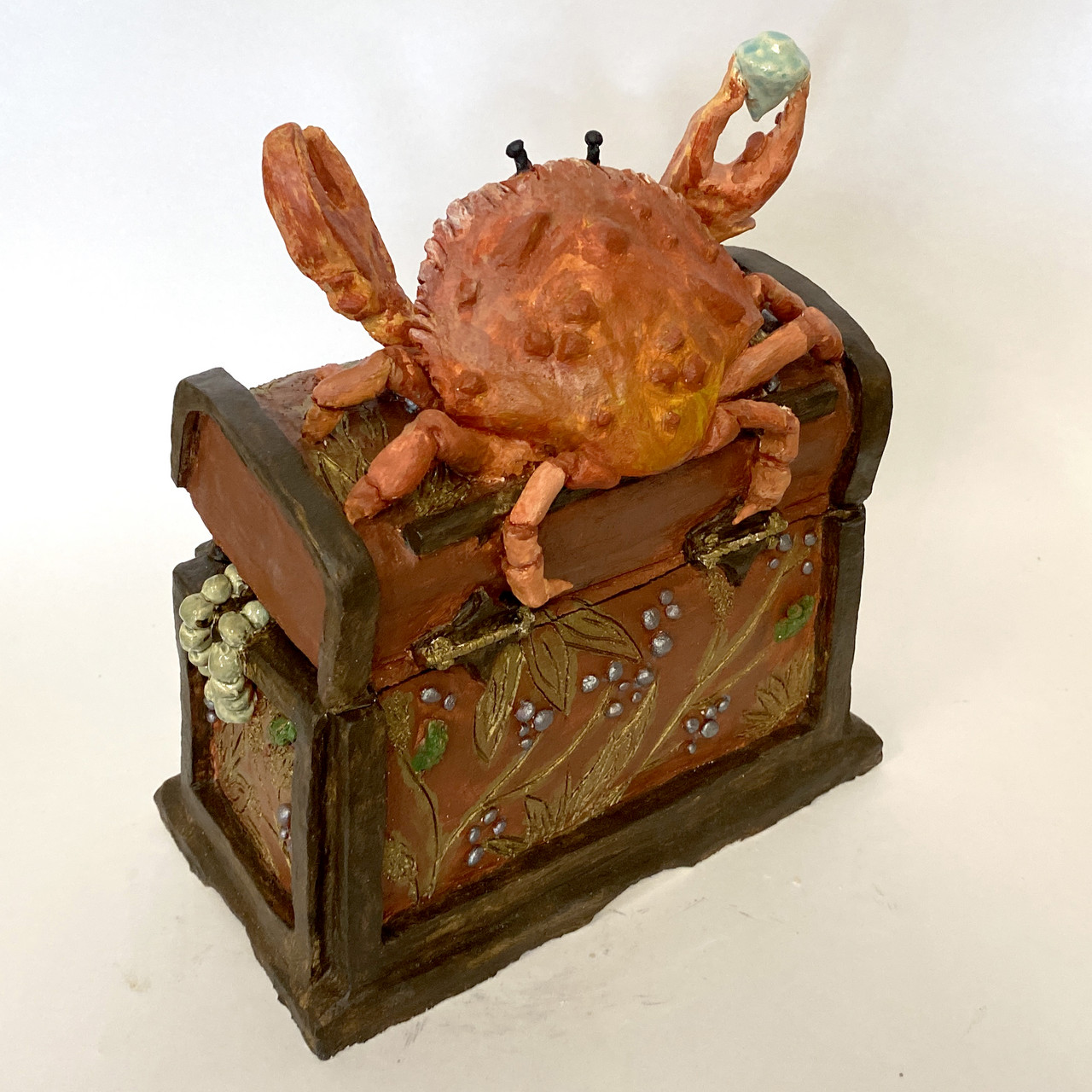
Sonya Wilde, Crab’s Greatest Treasure, 2025. Clay, tools, acrylic paint, glaze, 8″ x 4.5″ x 9.” Liberty High School, OR.
Artist Statement: “I wanted to focus mostly on the relationship between the crab and the treasure chest in this piece, while also working to create a story out of it. The project was meant to combine the organic with the geometric while also maintaining a strong connection between both parts. I started with the treasure chest by building the main structure of it and letting it harden a bit so it wouldn’t loose its structural integrity. I spent a lot of time making sure the corners and edges were sharp and straight in an effort to ensure its geometric shape. The lid of the chest was difficult to construct because I knew I would like to keep it cracked open, so I had to use chunks of unattached clay to keep the chest open while drying two little pieces for a more permanent support. I then began to build the main body of the crab, using references online to ensure that the shape and proportions were correct. I added and scored the jewels and other objects into the box before I attached the lid of the chest and the crab. I then began the process of adding the legs and details to the crab, which was challenging because of how fragile they were. Finally, I added organic forms of detail to the box in order to strengthen the relationship between the crab and the box. In the end, this piece became a narrative piece that explored one exciting point in this unknown crab’s life.”
Sage Wilson
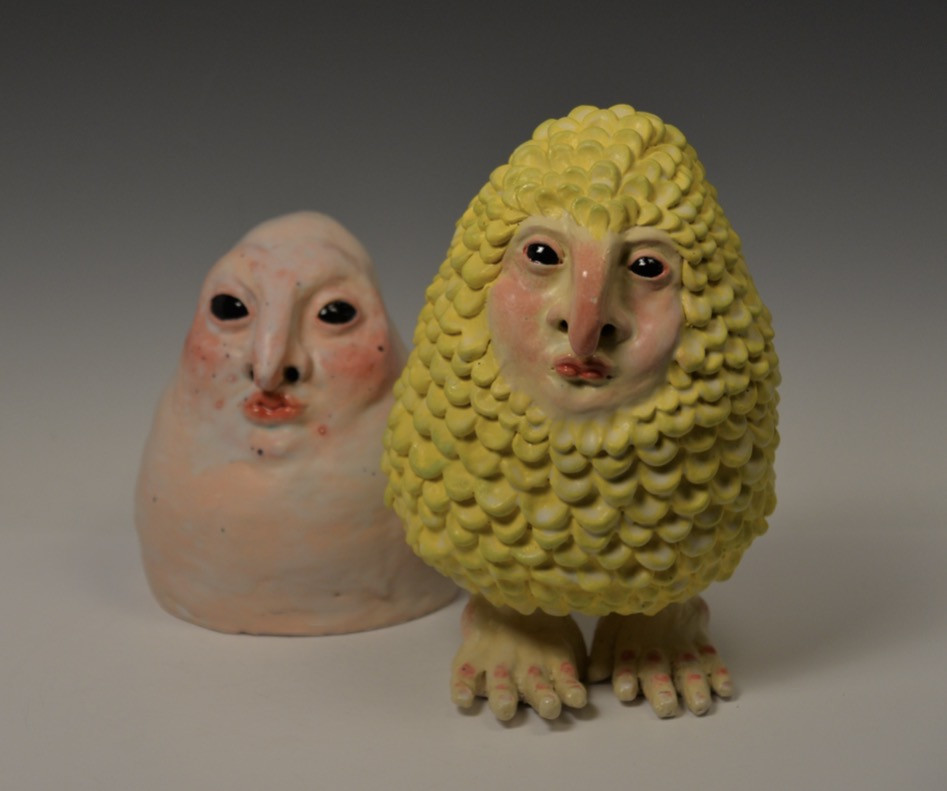
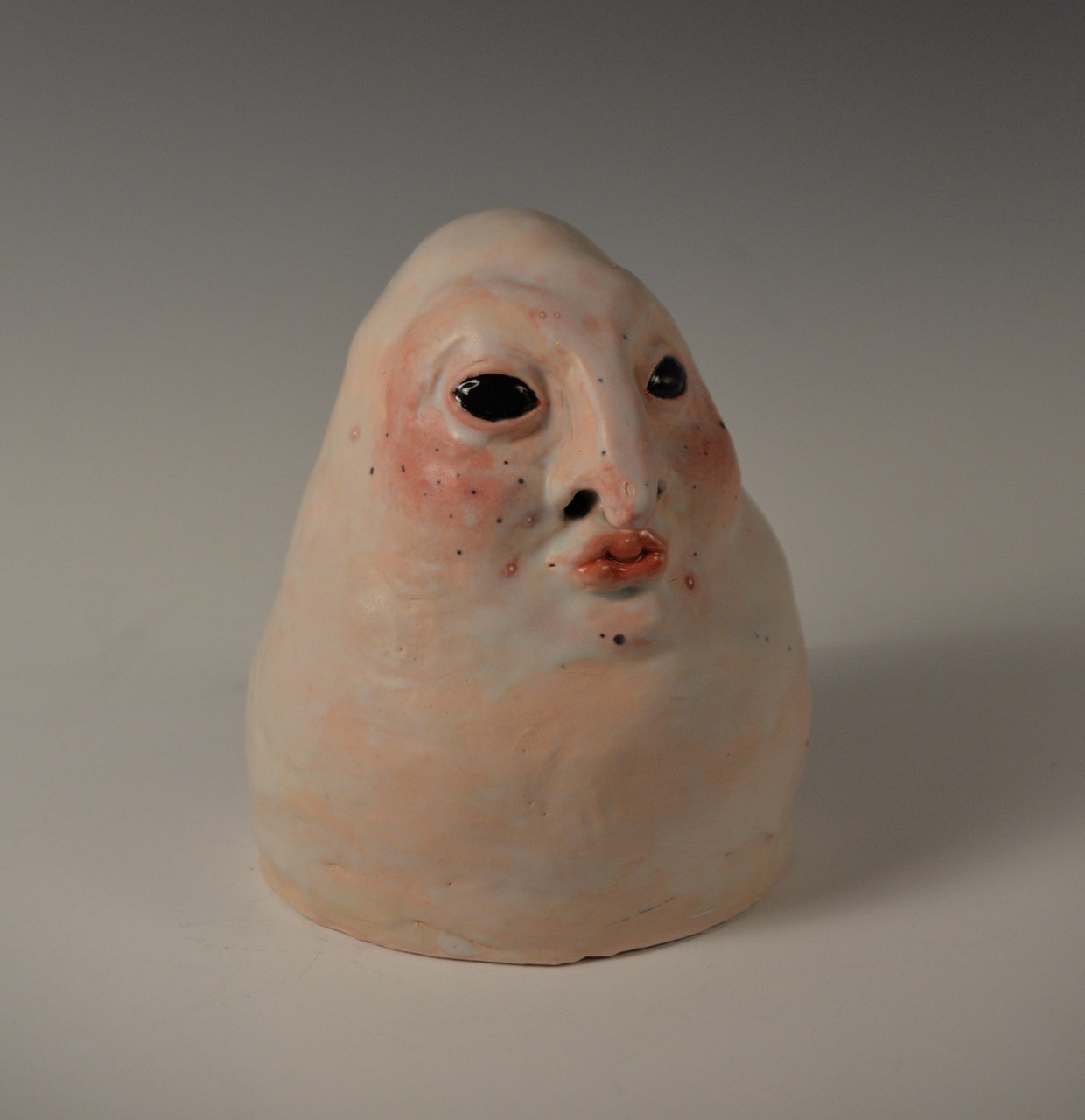
Sage Wilson, Mother and Child, 2026. Clay, glaze, 11″ x 7″ x 7″ (mother), 9″ x 7″ x 7″ (child). South Carolina Governors School for the Arts and Humanities, SC.
Artist Statement: “I was originally inspired by a person on TikTok known as “jonmud”, he creates AI characters and his account has reached a wide audience. I decided to create a ceramic sculpture of one of his bird creatures, thinking it was ironic to put so much effort into physical media even though the inspiration was AI. I started off by coil building the oval like structures for the base, then I started carving the details into the face. After that, I attached many layers of clay feathers, I also attached the clay hands that I sculpted separately. Finally, I applied the skin color and the yellow with underglaze, then coated the final sculptures with a matte glaze on the skin and feathers, then a glossy glaze for the eyes and lips to make them look moist.
I enjoy story telling even if it’s up to interpretation. Although I enjoy making scary art, I also enjoy creating things relating to my silly side. I’m a very humorous person, I enjoy making myself and others happy and sometimes those feelings inspire me to create ugly little creatures. My inspiration is fluid, sometimes a question gives me ideas, other times it’s music or other people’s artwork.”
Praise Wonplo
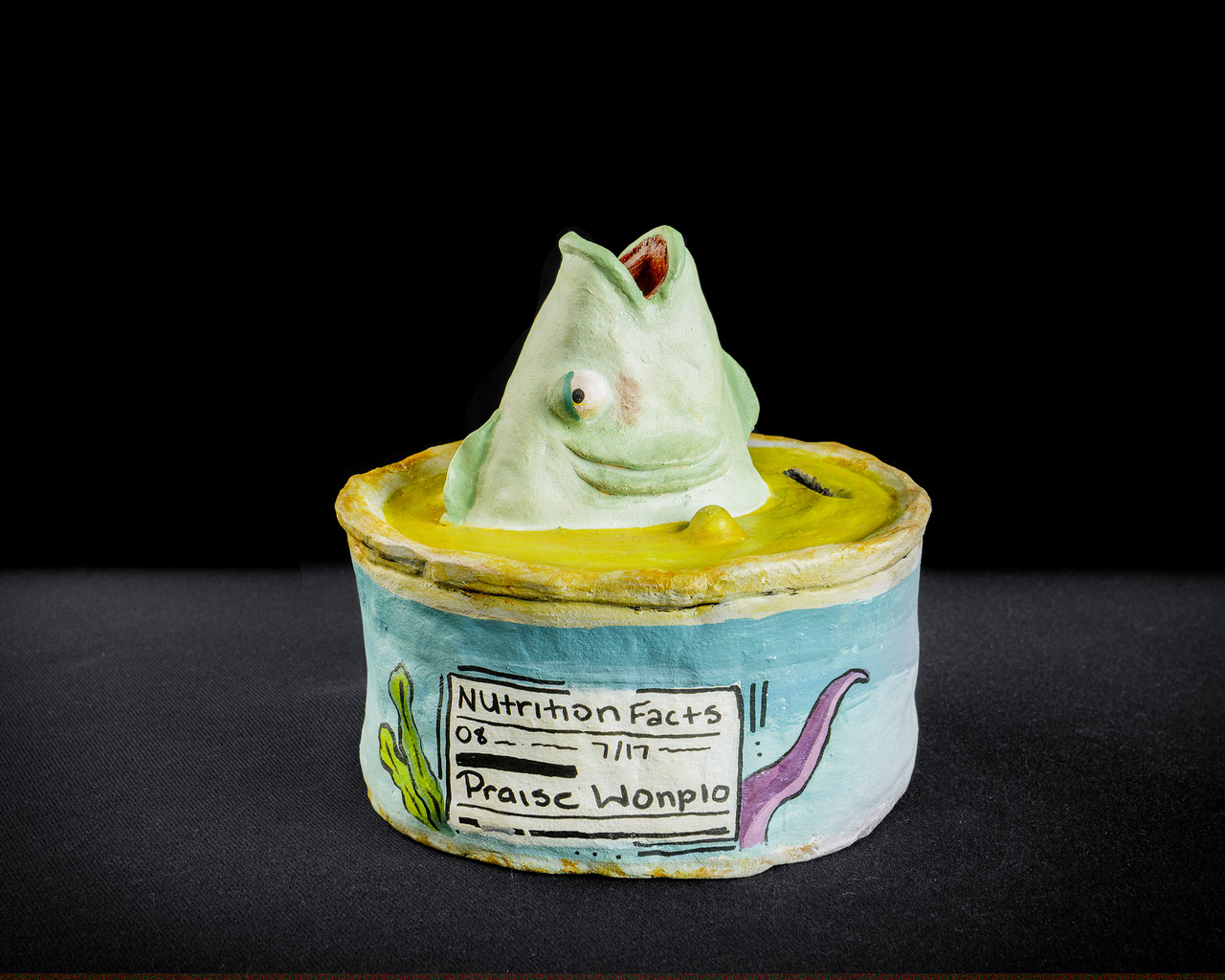
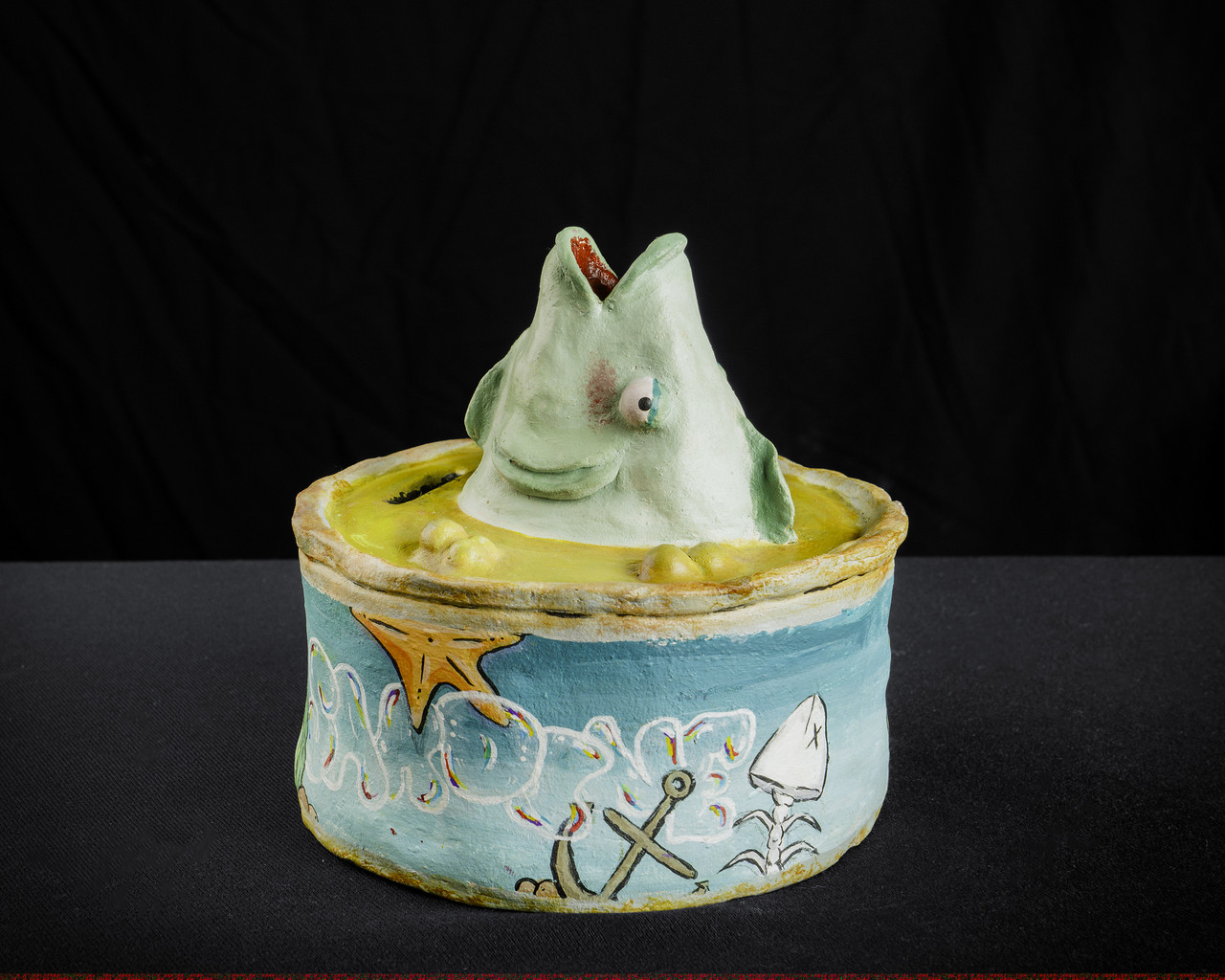
Praise Wonplo, Salt Bank, 2025. Oven baked Clay and acrylic paint, 6″ x 7″ x 7″ (mother), 9″ x 7″ x 7″ (child). South Carolina Governors School for the Arts and Humanities, SC.
Artist Statement: “My pieces are meant to be a commentary on the marketability aspect of consumerism and the use of bright and colorful design aspects in appealing to audiences.
The piece Salt Bank acts as a piggy bank to incorporate the financial/purchasing aspect of the consumerism cycle, while also commenting on the tendency of larger corporations to monopolize industries and horde wealth similar to how piggy banks act as storage units for money. My primary technique in constructing my pieces was slab building, and I utilized acrylic to achieve the necessary level of vibrancy for salt bank.”
Adrianna Wood
Adrianna Wood, Piece of Pie, 2025. Stoneware, air dry clay, glaze, 9.5″ x 9.5″ x 2.” Apex Friendship High School, NC.
Artist Statement: “I chose to make a to-scale replica of a blueberry pie. I was drawn to this idea because of how sculpture, like the process of making pie, is similar; the design of the lattice and intricacy of the crust are elements that potters use similar techniques for. To start, I created a size-accurate clay pie tin and built the pie inside of it. I had to take extensive measurements on average pies and lattice designs. The most challenging technical part of making my piece look realistic was creating the berries peeking through the woven clay. I made a stamp out of soap with a blueberry circular design, and that worked fairly well until attaching the lattice, which definitely smoothed out some texture. But, to combat that, I took extra care in defining the circles when painting to give the illusion of more depth. Color matching took a long time when finding the perfect crust color. Even more challenging was creating the burnt and golden pieces of the dough. I was able to get it very close and used a toothbrush to blend the darker paint into the base color. I initially was going to create a cherry pie, but changed it to blueberry when I came up with the stamp idea. Honestly, I feel like my sculpture is a 9 out of 10 in realism due to the color matches and intricacy of the sculpture. My advice is to be very, very patient, which is something I struggle with. But it does not look real. The second you start, you have to be patient to see results.”
Alyssa Zamudio
Alyssa Zamudio, Sacred Flame, 2026. Ceramic, 10″ x 3″ x 14.” School of Arts and Enterprise, CA.
Bring Some Culture to Your Inbox
399 N Garey Ave Pomona, CA 91767
909.865.3146 | info@amoca.org
The museum is open Fridays, Saturdays, and Sundays, 11 AM–4 PM. Plan your visit by clicking here.
For information about Ceramics Studio hours and availability, please click here for the Ceramics Studio.